
Oklahoma – where we visited the capital of the Cherokee nation, discovered the origin of la crosse, said “hey” to Woody Guthrie and joined Route 66.
Oklahoma is where the wind comes sweepin’ down the plain or so the song goes. And it is where the Cherokee, Muscogee, Seminole, Chickasaw, and Choctaw nations were forcibly swept by the white man following the introduction of the egregious Indian Removal Act of 1830.
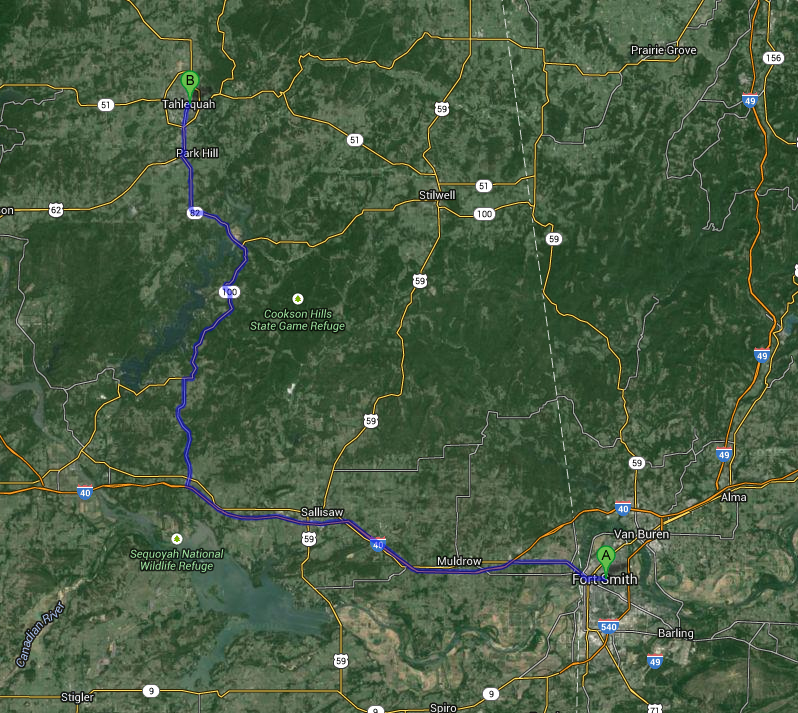
Tahlequah
Crossing the state border, we headed to Muskogee singing the Merle Haggard song, Okie From Muskogee where nothing liberal is tolerated and, after processing the lyrics, decided to keep driving to Tahlequah, the former capital of the Cherokee Nation.
We had now entered Indian territory which was new to us. We were very conscious of being politically correct in referring to American Indians as Native Americans but found they mainly refer to themselves as Indians anyway and were very relaxed about everything. Tahlequah has a recreation of a traditional Indian village (imagine Old Sydney Town or Sovereign Hill but with Indians) which was a good introduction to Cherokee culture. Michelle was fascinated with the Cherokee sport of stickball which was played to settle disputes between warring tribes when both tribes wanted to avoid war. Harrie was interested in the creation of arrowheads from different rocks and metals (“it’s just like Minecraft”) and I really enjoyed seeing the clever and stylish artistry of the double-walled weaved baskets. Thanks Merle, but the squares can have a ball in Muskogee – we would rather play stickball in Tahlequah.

The Cherokee National Museum at Tahlequah.

A recreation of a traditional Cherokee village.
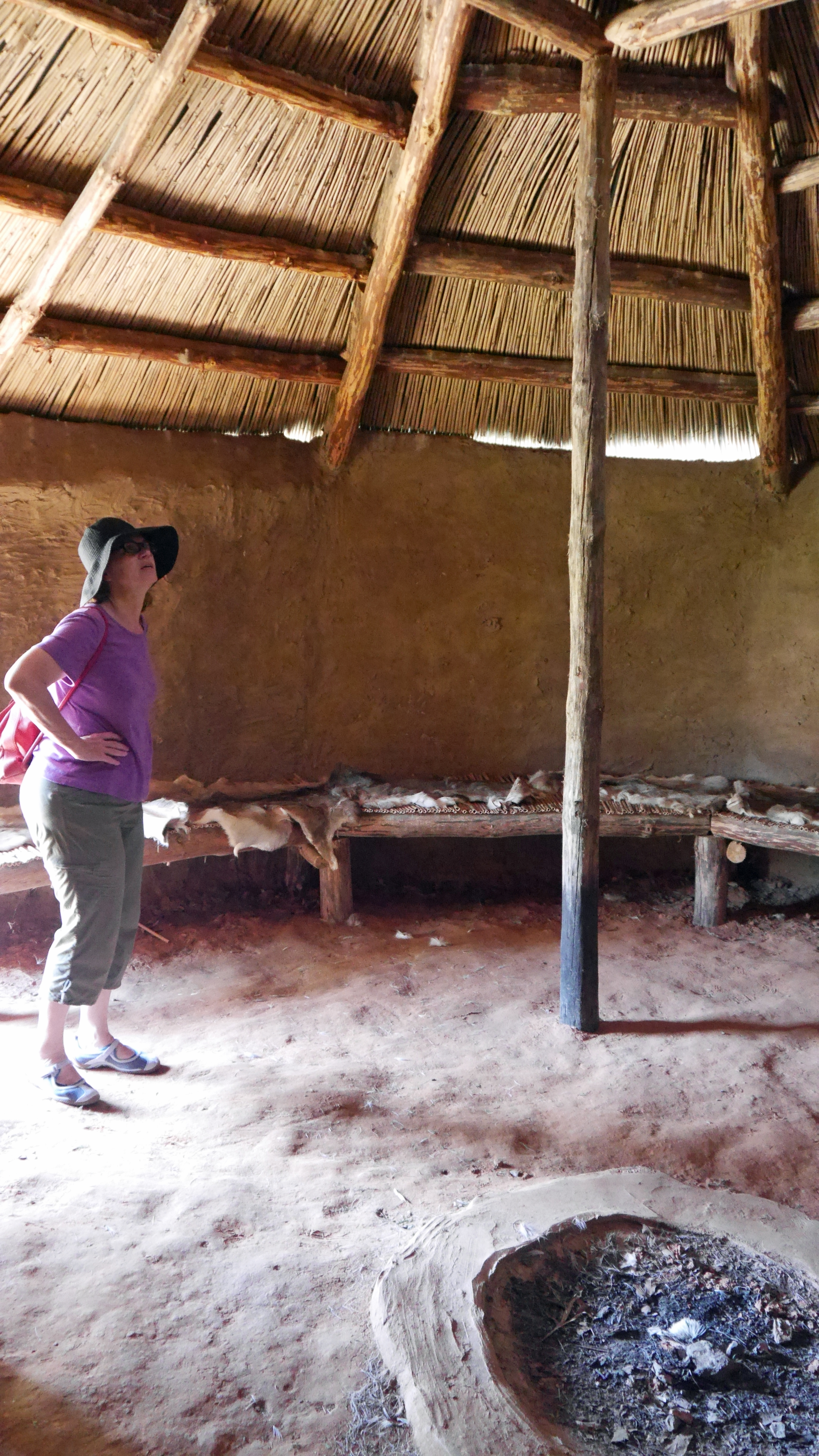
Inside a Cherokee house. It is a myth that all American Indians lived in teepees. Only the nomadic Plains Indians lived in teepees, the rest lived in mud and clay huts such as this. The roof is made of brush and river cane.
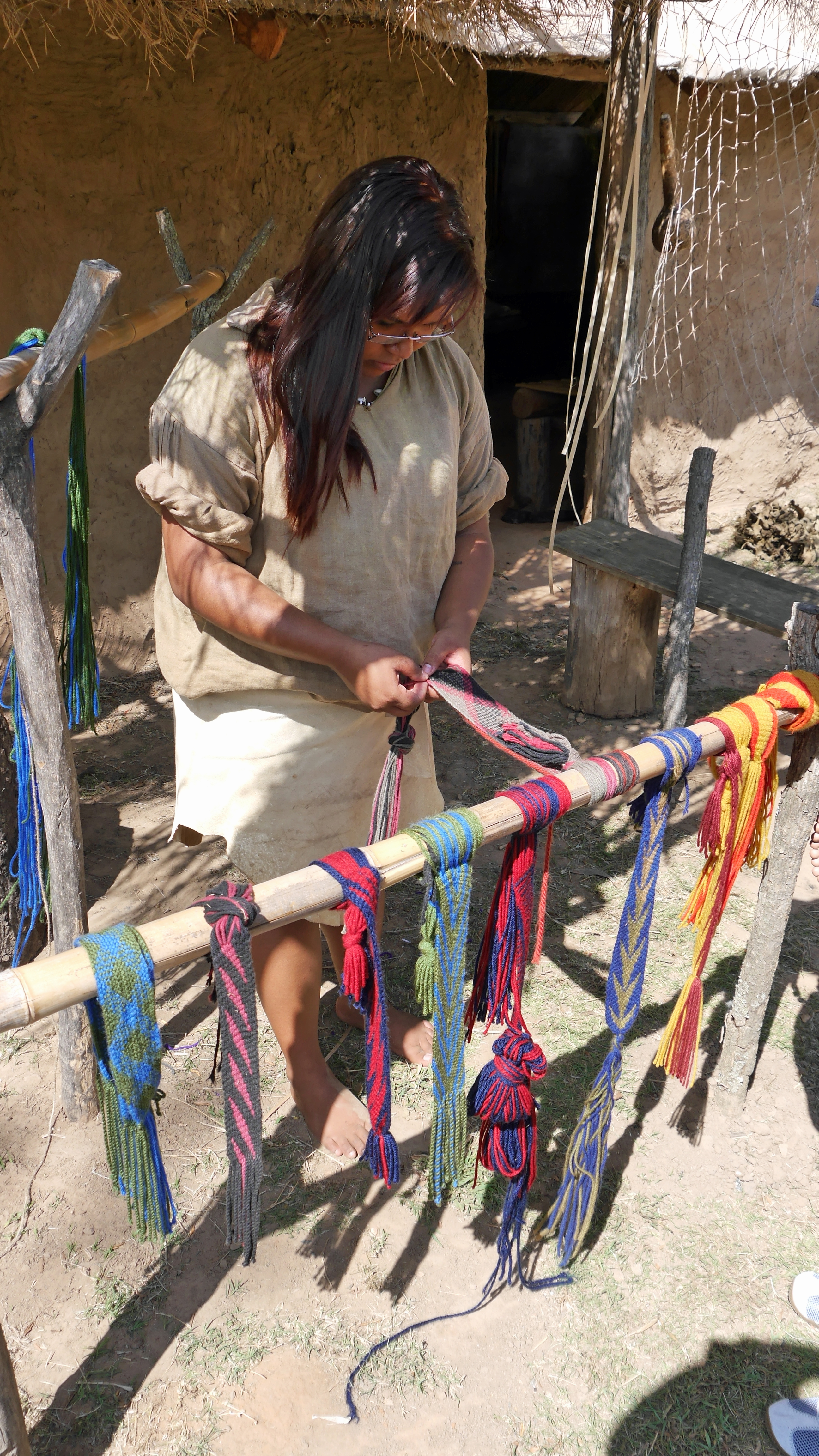
Finger weaving has a long tradition in Cherokee culture. Each tribe member would have their own unique design that would identify them.
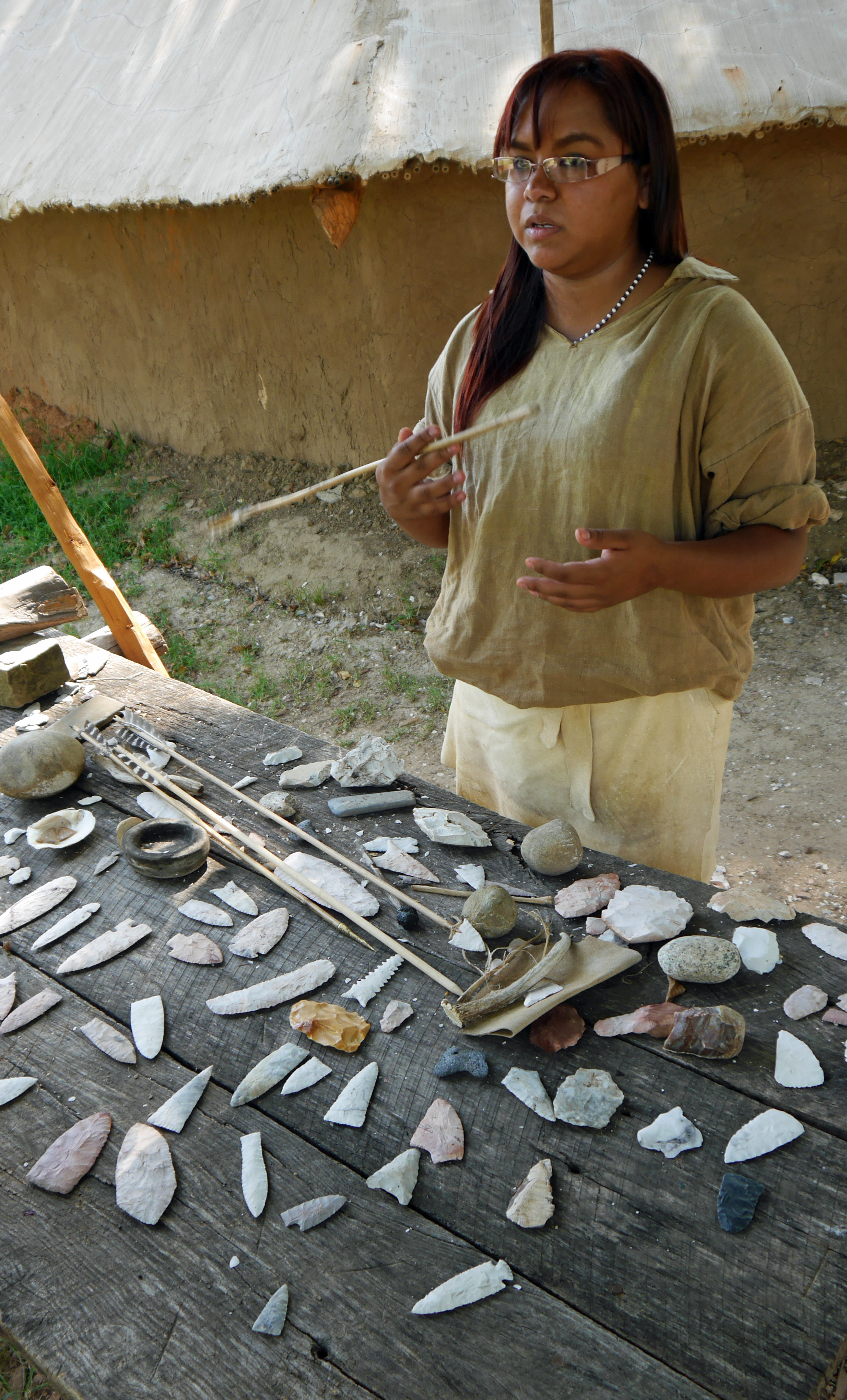
Making Arrows.

The different varieties of arrowheads for different prey. Harrie was chuffed to be allowed to craft an arrowhead from rock however it wasn’t as easy as Minecraft.

We were given a demonstration of the power of the Cherokee blow dart. The darts in the side of the log were shot out of a blowpipe about four metres away.
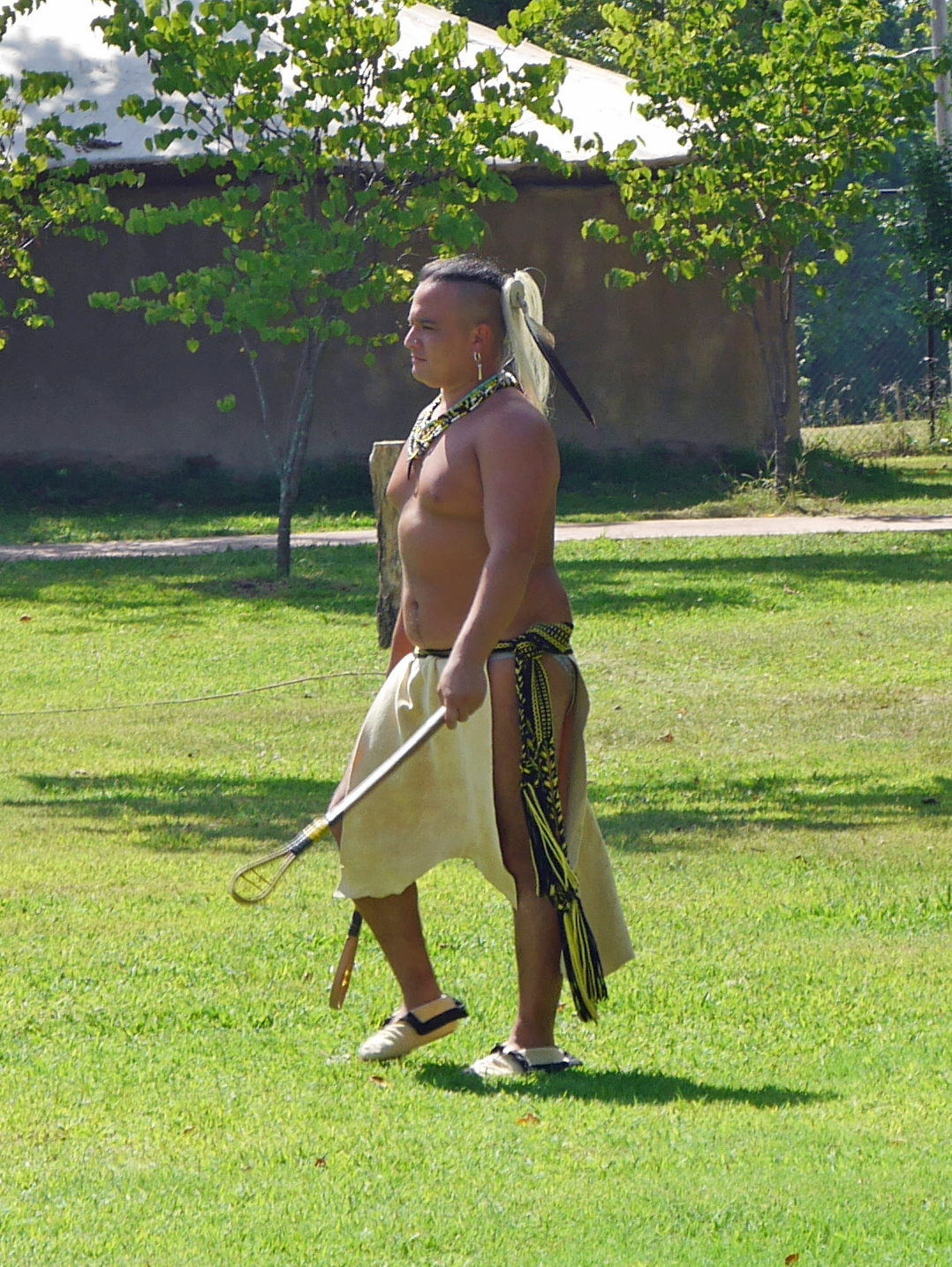
Two Cherokee indians played a short game of stickball for us. While you might not know stickball, you probably do know Lacrosse which was invented after a French missionary saw an Iroquois tribe play stickball in 1637. The missionary, Jean de Brébeuf, wrote about the game and called it “la crosse” which is French for “The Stick.” The French Canadians started to develop rules to play a white man’s version. You can see an old documentary on Stickball here.
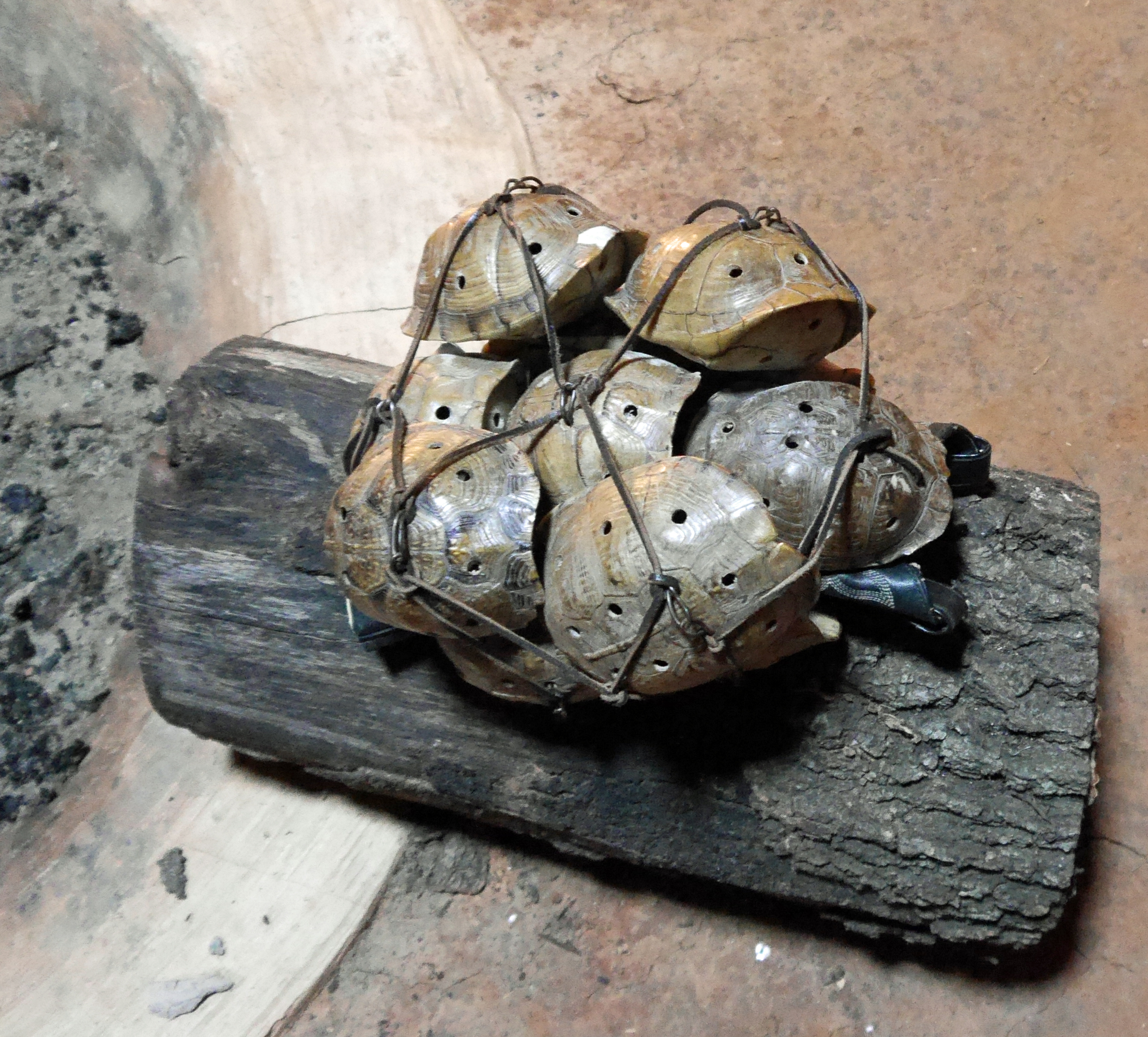
A Cherokee turtle shell shaker. These were attached to each leg and used to create percussion during tribal dances.
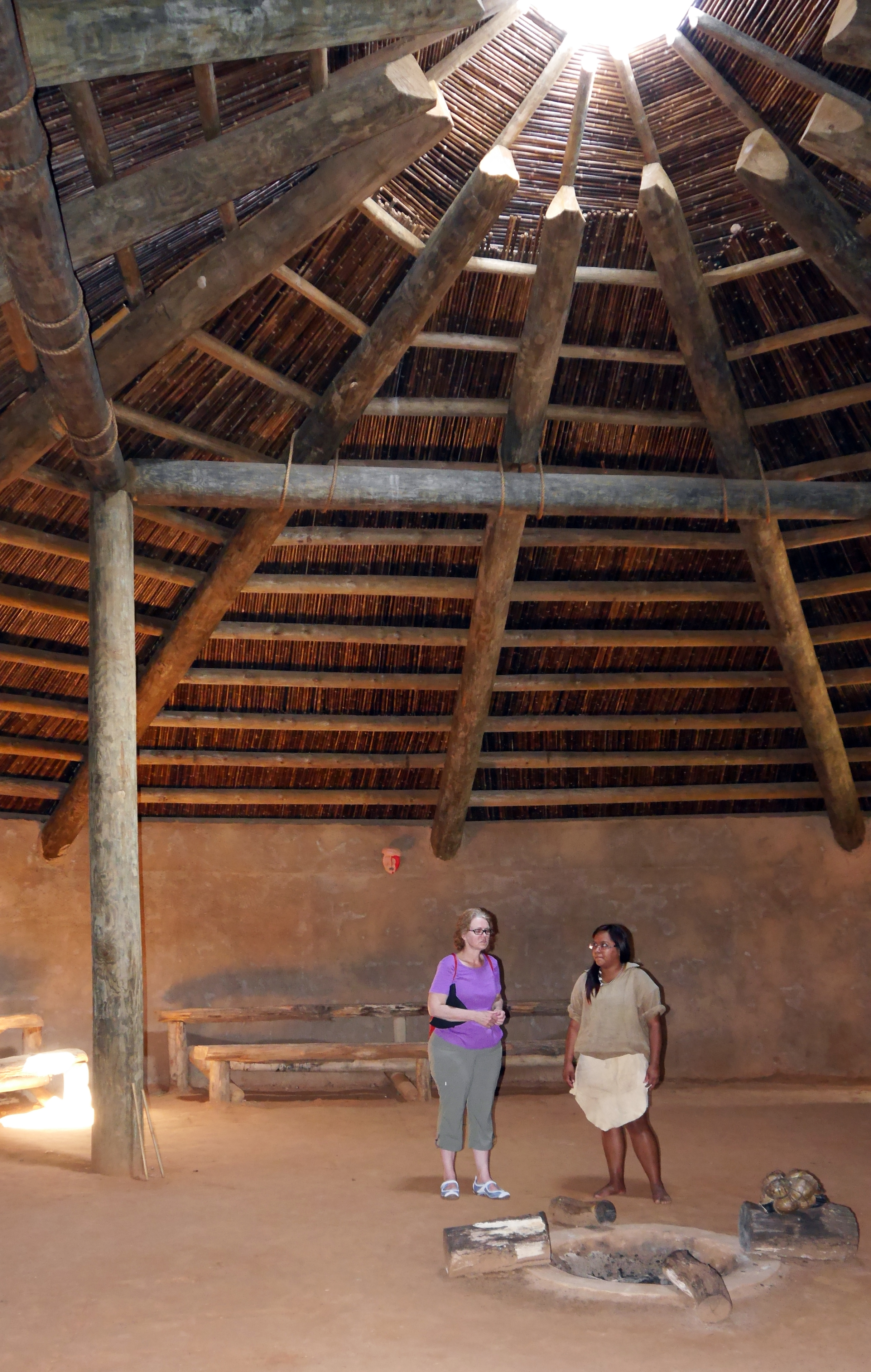
This was the central meeting hall where tribal meetings and rituals would take place.
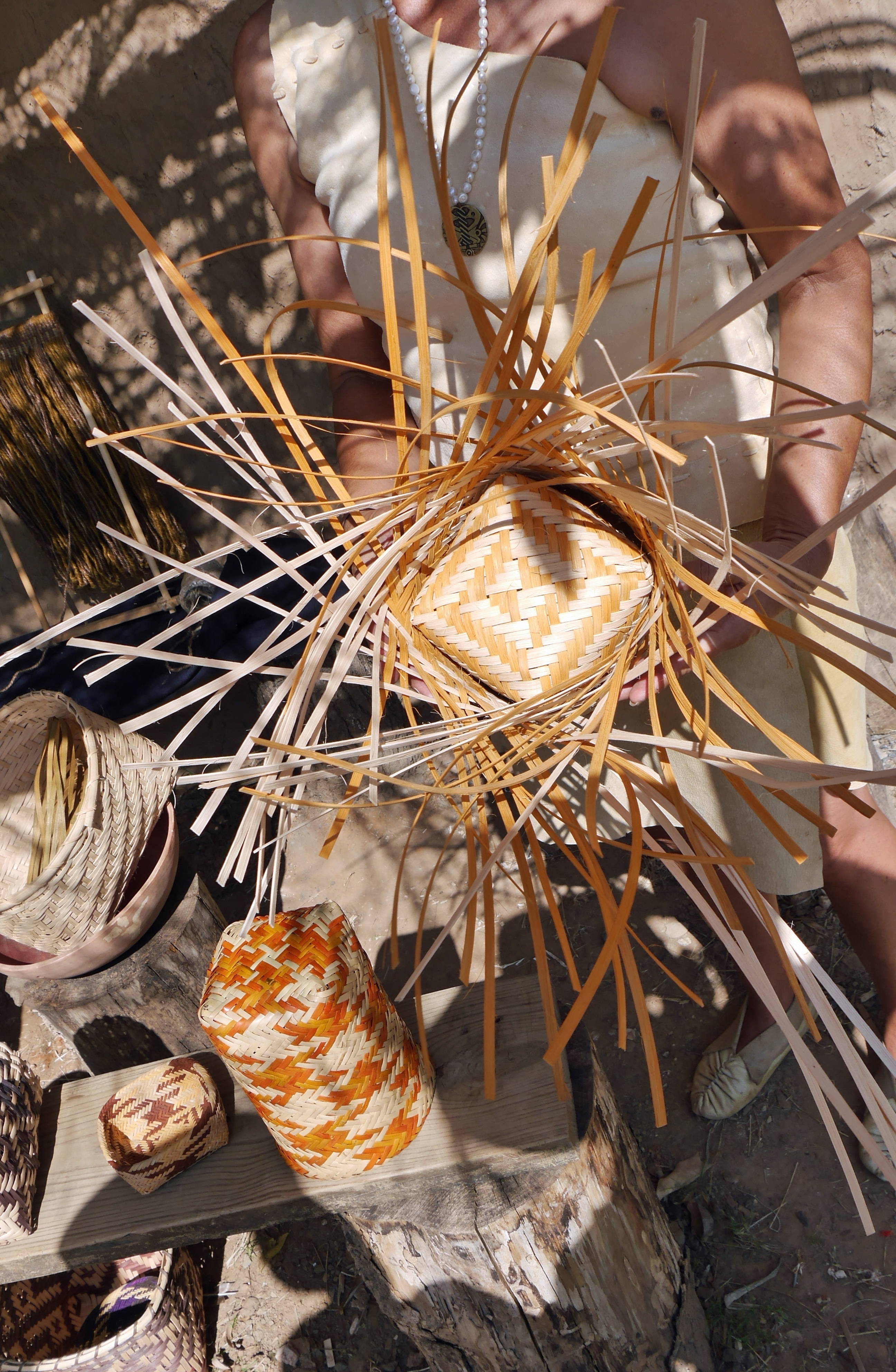
The beautiful double-walled weaved baskets. These were available to buy but were quite expensive.
Tulsa
After leaving Tahlequah we drove to Tulsa (having been 24 hours away from it in Hot Springs).

Tulsa was a lot bigger than I was expecting with a population of almost 400,000 and was full of clover-leaf freeways and urban sprawl. It did not emanate much warmth and we stayed in a hotel within a sprawling shopping mall that was sterile and forgettable.
The next day we visited the Woody Guthrie Museum which sparked an ember of warmth in this otherwise cold town. Woody Guthrie grew up in Okemah outside of Tulsa and went on to influence and define modern folk music. With his guitar that was inscribed “this machine kills fascists”, Woody would sing the songs of the working man and inspire others to grab life by the collar and “take it easy, but take it”. As Woody Guthrie’s number one fan Bob Dylan said “Woody’s songs were really beyond category. They had the infinite sweep of humanity in them.”
Unfortunately, photos were prohibited in the museum so I can’t show you any of the exhibits which were both interesting (even a diehard fan like me learned something new) and moving (such as an amazing twelve page “life instructions” letter Guthrie wrote to his niece).
The museum was set up by Guthrie’s daughter, Nora Guthrie, and is also home to the extensive Woody Guthrie Archives. I had a chat with the guy in the gift shop and he said that most of Tulsa hate the place as they think Woody Guthrie is a communist. Apparently, they even had bricks thrown through the front window. He sparked up when I said I was from Australia and said that he and his girlfriend were hoping to move there. Not surprisingly, he was looking to move from Tulsa much like Woody Guthrie and his family did in the 1930s. In the “dirty thirties”, the Okies needed to escape from the natural devastation of dust storms while today, I suspect the motivation for moving is the stifling urban and spiritual devastation of the place.
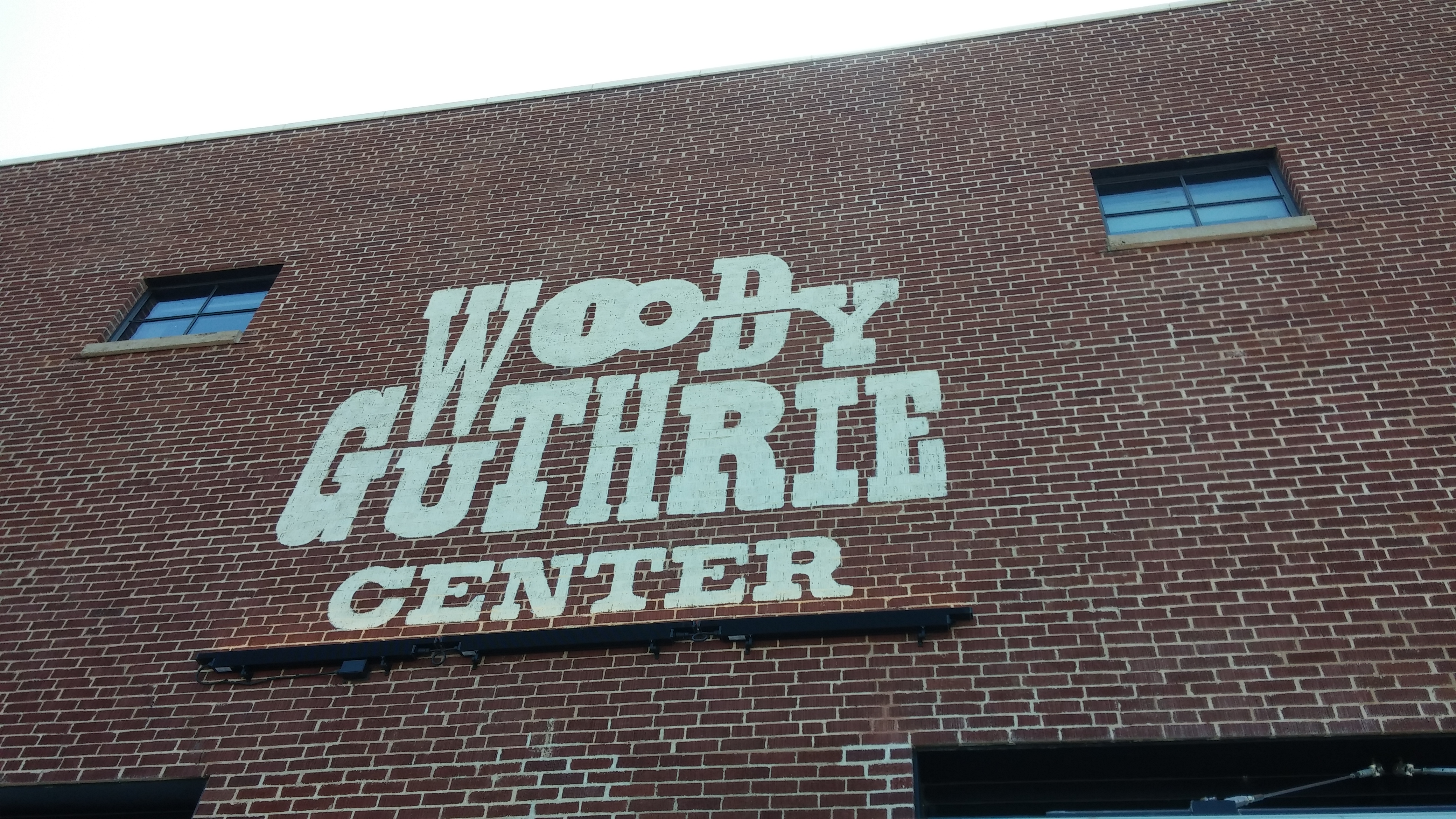
The Woody Guthrie Center in Tulsa.
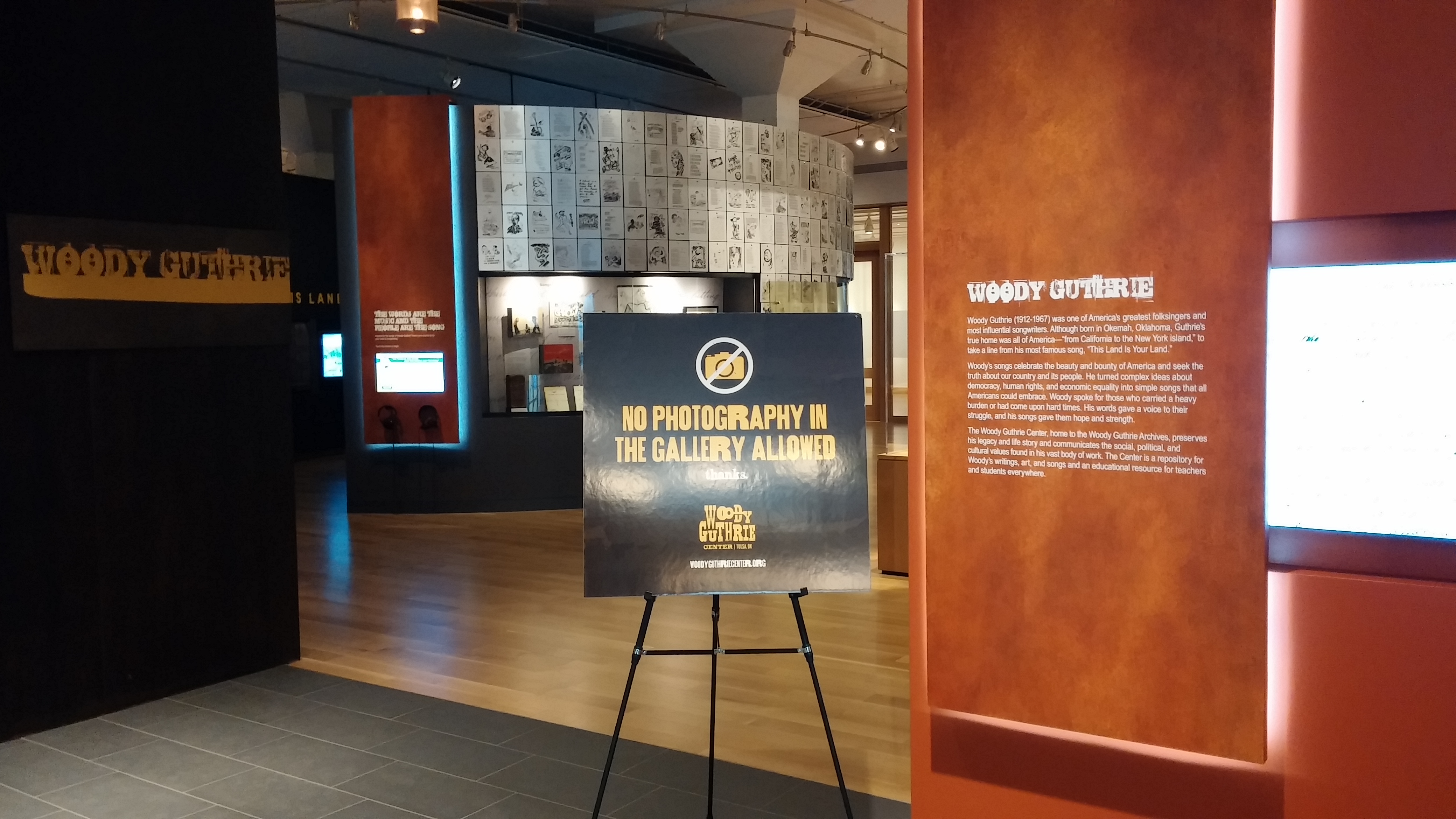
The only photo I was able to take inside. The fascists! I’m a gunna write a protest song about this.
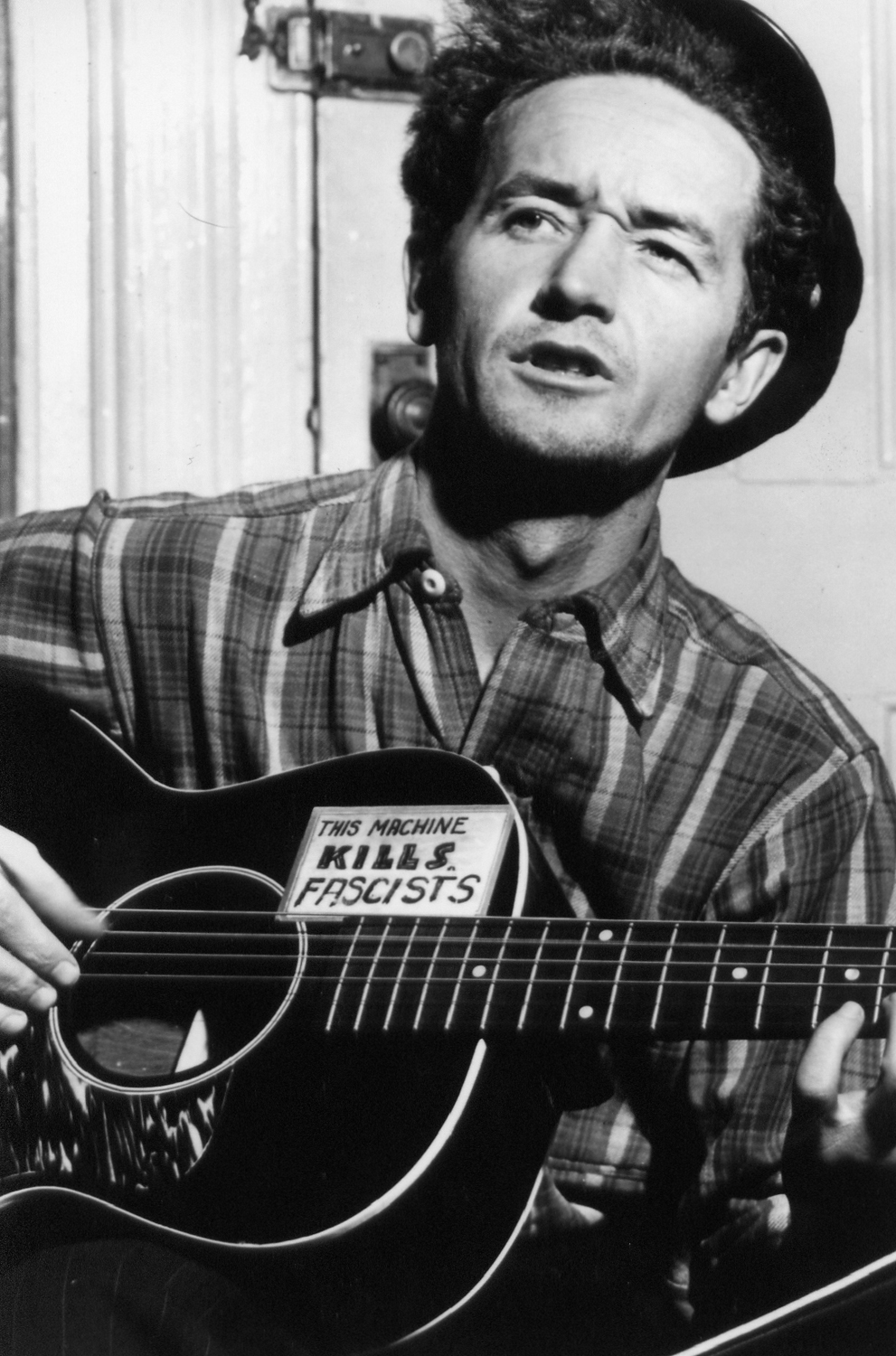
Woodrow Wilson “Woody” Guthrie, Oklahoma knew him well. Hear him sing his most famous song This Land Is Your Land here.
Oklahoma City and onwards
We began our journey on Route 66 from Tulsa. Route 66 was known as The Mother Road back in the Thirties when it served to “mother” fleeing Okies on their journey to California. It was also known as the Will Rogers Highway after Oklahoma’s famous humorist who traveled its path himself back in the Thirties.

Route 66 has reinvented itself many times and as we found, there are several different Route 66’s from the original highway built in 1926, to the major routing changes of the 1930s and 1940s to the merging with the Interstate freeways of the 1950s. When people say they have traveled on Route 66, you should ask them which era Route 66 as Route 66 has been decertified since 1984.
For us, we chopped and changed on different eras of Route 66 following an excellent series of state-based road maps called Here It Is: Route 66. This became our road bible and we would consult it daily for landmarks and interesting detours.
Driving from Oklahoma to Texas, Oklahoma City didn’t really look “ole so pretty” as in the Bobby Troup song but was instead much like Tulsa, depressing.
After leaving Oklahoma City, we were struck by the number of Indian trading posts along the road to Texas. We pulled in to a few which were both interesting and kitschy in equal measure. By the end of our trip, we would be thoroughly jaded by Indian trading posts, but at the time they were a novel attraction to us. We bought souvenirs that we thought were special but later saw at all other Indian trading posts. It seems like the paleface is still being scalped which I suppose turns the cultural-imperialism tables. In our defense, and on principle, we avoided the souvenirs that were made in China and went with the ones made in Oklahoma or the USA.
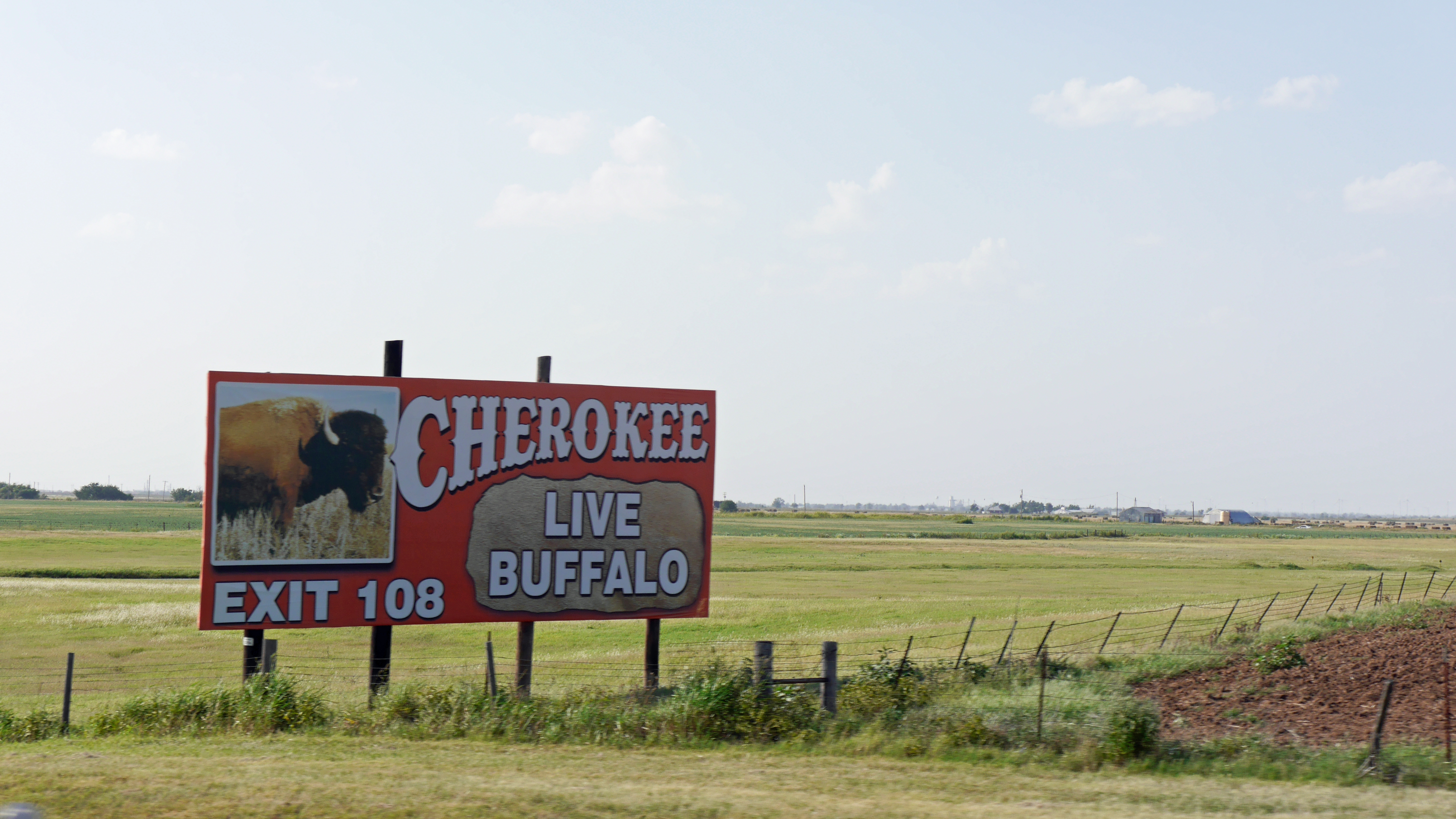
One of the many billboards for the many Indian trading posts along Route 66.
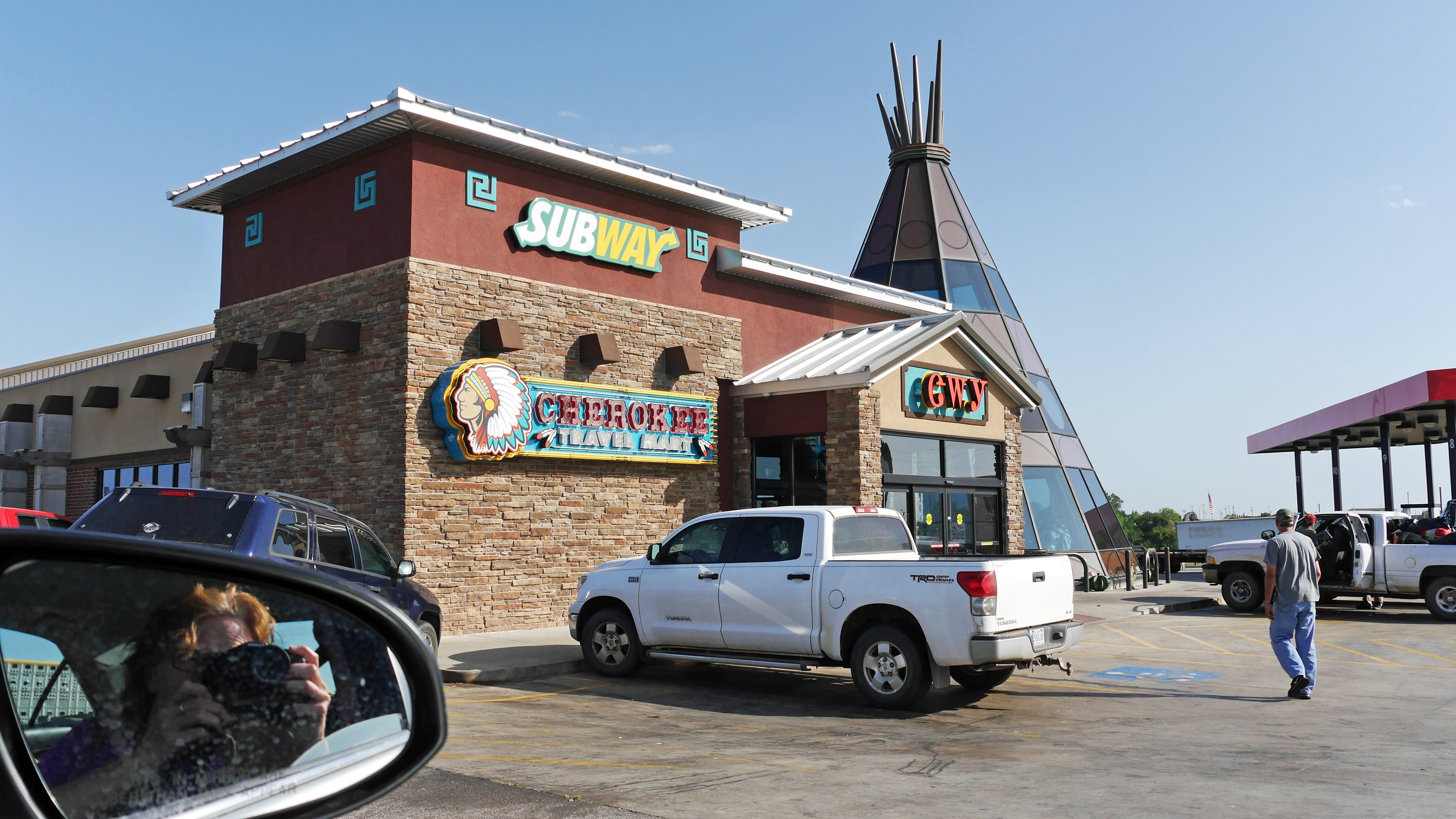
Here is an Indian trading post that we called in for petrol a few miles out of Oklahoma city. No wampum here, just credit cards and cash please. Bonus points for spotting Michelle doing an Alfred Hitchcock in the foreground.
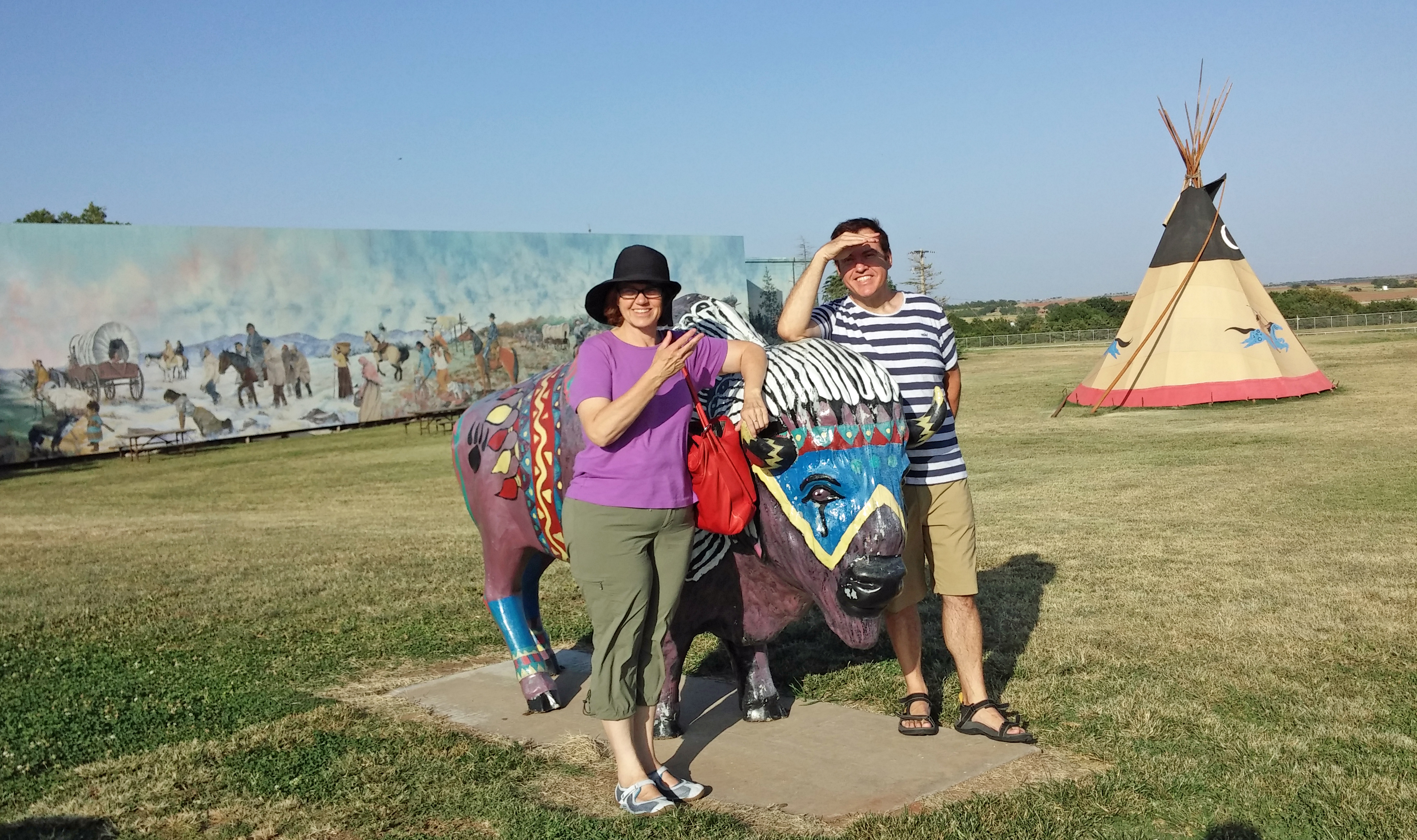
At home on the Indian trading post range where my dear and a painted Buffalo roam.
We now leave the land of the red-skin towards the land of the redneck as we venture forth to Texas. Sorry Texans, couldn’t resist the cheap shot :).
 ourtripyall.com