
Tennessee – where we dug the roots and explored the branches of country music, got religion at a gospel service, graced Graceland, rock and souled the night away, explored ancient Athens and discovered the amazing origin of the supermarket.
Nashville
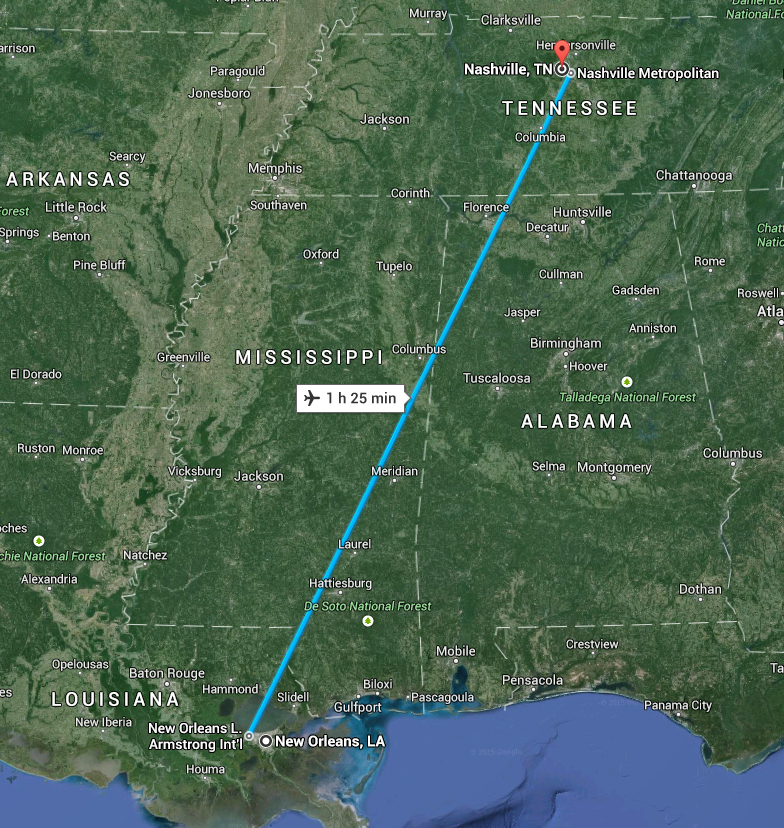
We flew from New Orleans to Nashville where we picked up our car for our big drive West. The centre of Nashville was every bit the Nash Vegas we had heard it was. Here, the building layout takes on a traditional country four-four beat – bar, boot shop, hat shop, diner – repeat. Apart from the riot of denim and boots, the thing we noticed almost straight away was the distinctive mid-southern drawl; sometimes delivered rough and sometimes silky smooth.
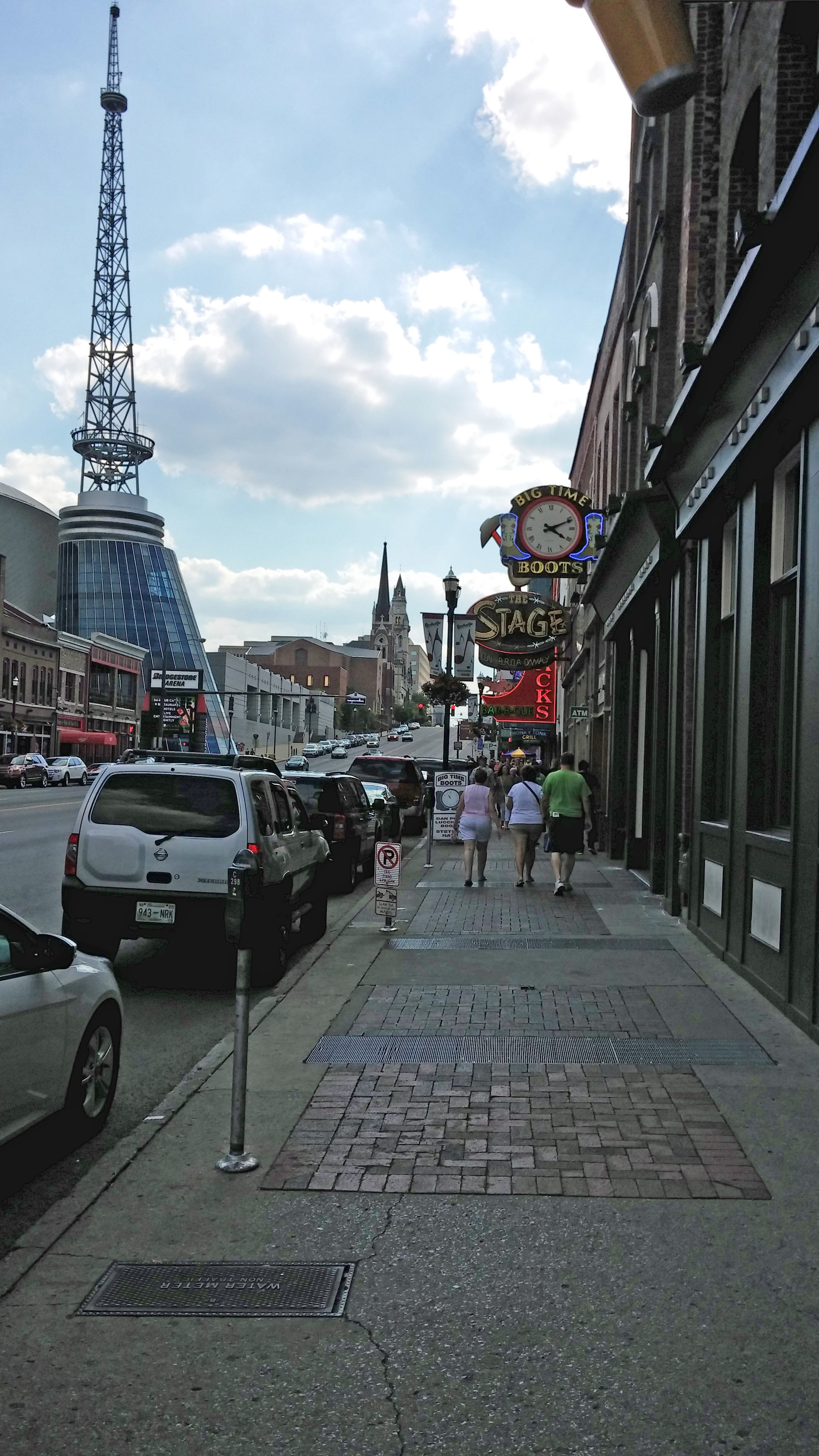
The streets of Nashville. You never have to go very far to get that much needed beer or boot.
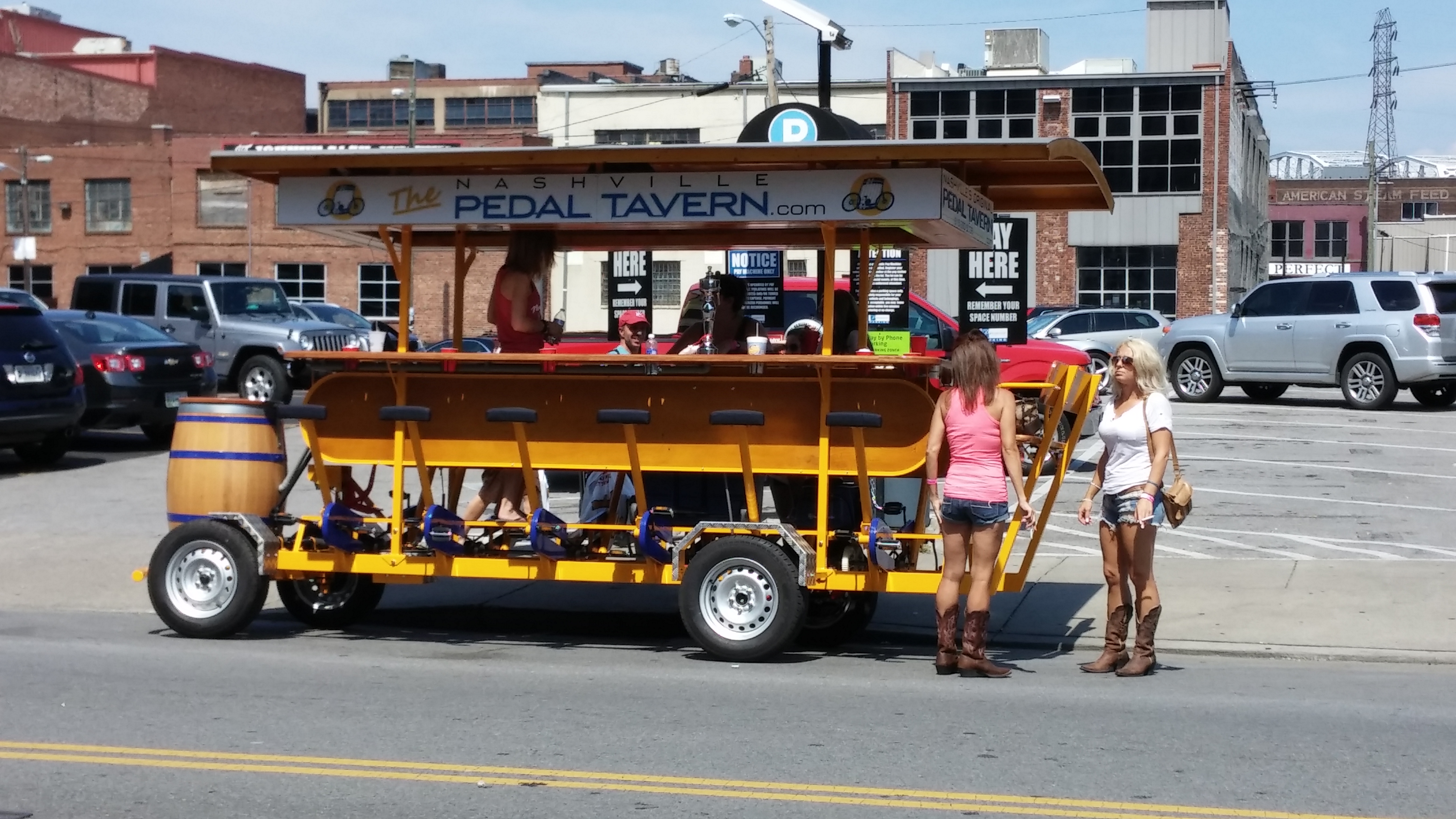
The Nashville peddle tavern – a ride on and off bar allowing people to drink and drive only slightly irresponsibly. You can see what the experience is like aboard here.
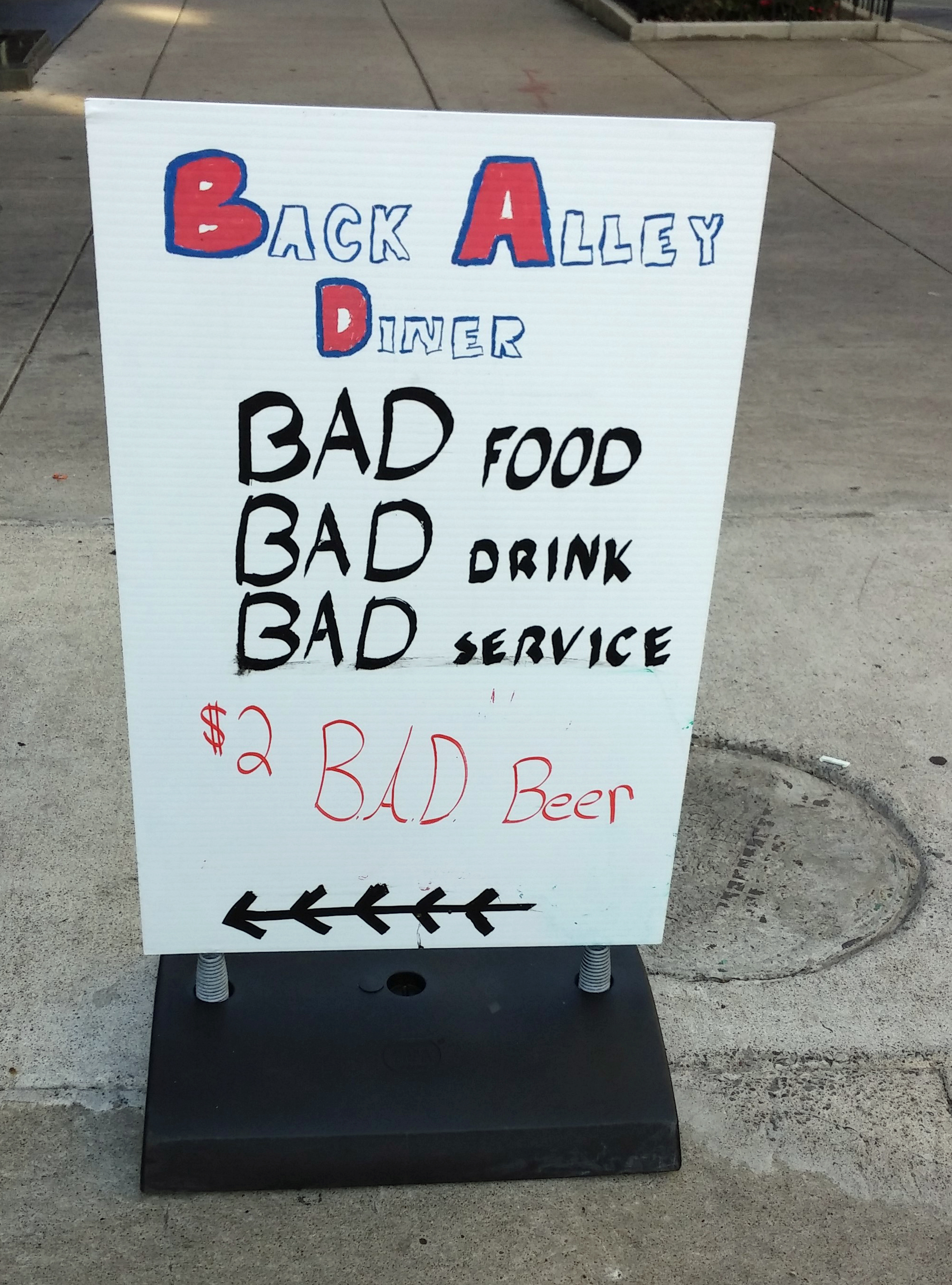
Loved this sign off the main strip in Nashville.
Gaylord Opryland
We booked in to the Gaylord Opryland hotel as we were told it was a tourist attraction in itself. Gaylord isn’t a homosexual man of royal descent but rather a family dynasty of newspaper owners and hoteliers. Although, that’s not to say they were all straight. Gaylord own this town. They own the Grand Ole Opry, The Ryman Auditorium (home of the original Grand Ole Opry), a number of saloons including the massive Wild Stallions Saloon, Rose-Acuff Music (which owns the intellectual property of thousands of popular country songs), a radio station, Country Music TV and much much more. So, on our first day in town, Michelle and Harrie took a break from sight-seeing to take in the wonders of Opryland.
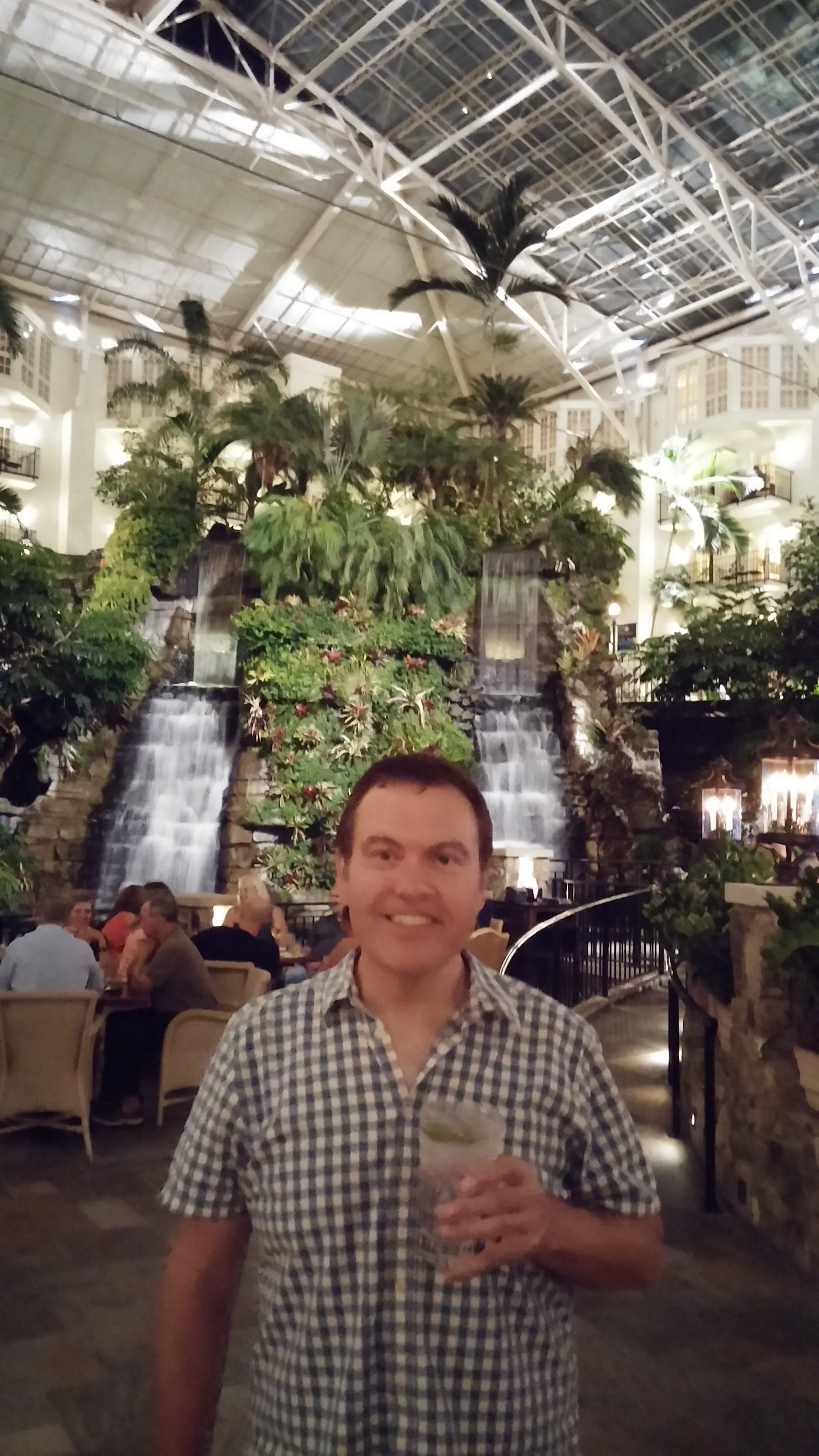
Inside Opryland. Opryland is one of the largest hotels in the world with over 3,000 rooms and fifteen restaurants.
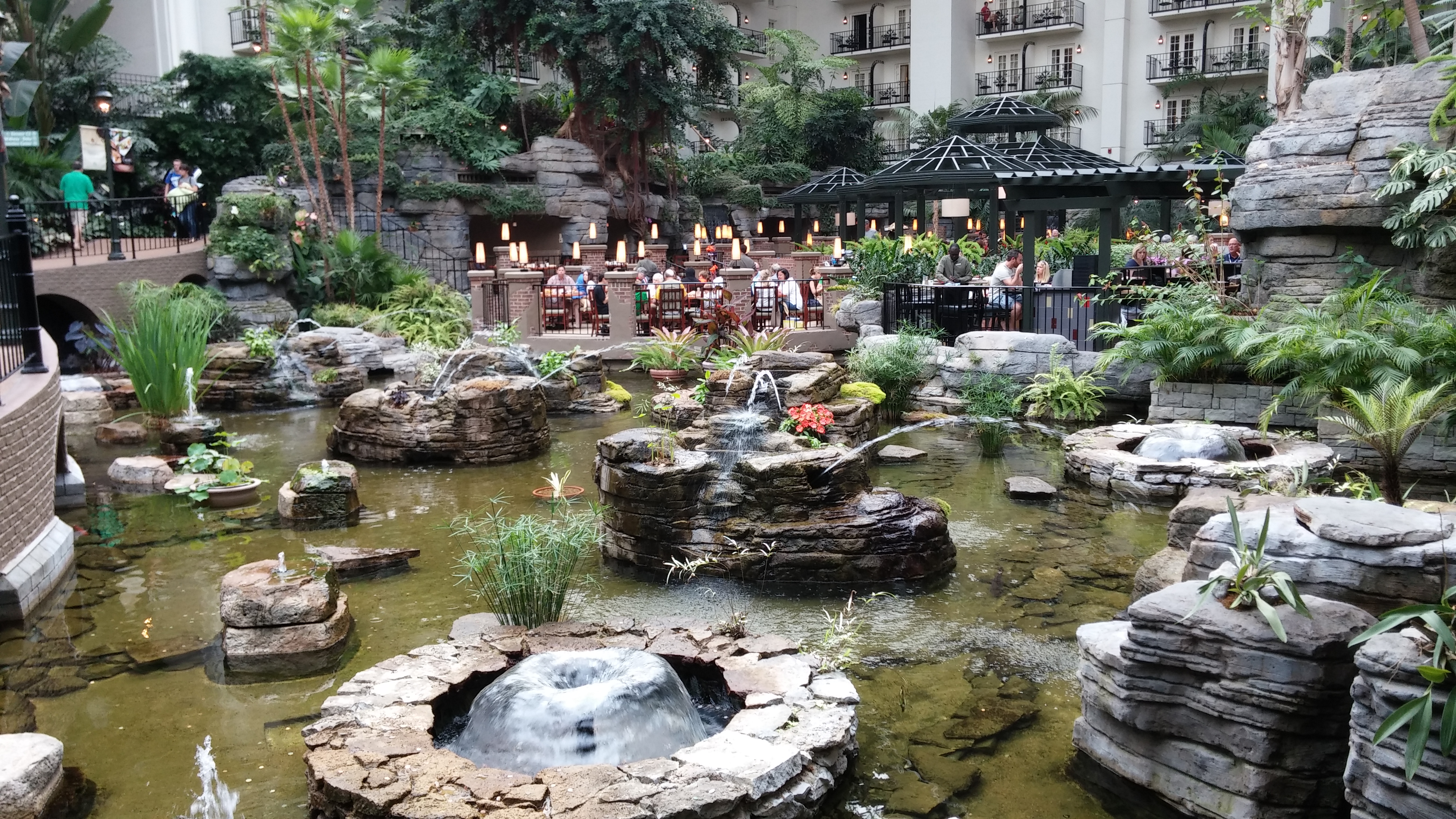
One of the giant water features that many of the rooms look out on.
The Country Music Hall of Fame
While Michelle and Harrie stayed at Opryland, I ventured downtown to the one thing not owned by Gaylord, The Country Music Hall of Fame. I caught the free shuttle bus in to town and when I walked on I had that same experience I have on all buses where everyone looks furtively at you for a second and then goes back to doing whatever they were doing. Except the difference on American buses is that everyone is usually talking to each other when you get on. However, on this bus it was silent which was strange and particularly unsettling to the gentleman that got on with me. He sat down and kept looking around anxiously. Finally, he couldn’t stand the silence any longer and said the most unlikely of things to break it which was “Y’all like Corvettes?” He didn’t wait for a response before barreling in to “Mah wife and I just went to a Corvette show in Bowling Green where they had that new Stingray coupe that they’ve been makin’ a lot of fuss over.” Well before you could say “Chevrolet”, the whole bus was talking about cars and then the army when it turned out that two strangers were both ex-soldiers. Americans seem to abhor a social vacuum.
I arrived at the Country Music Hall of Fame thoroughly entertained by the people on the bus but ready to broaden my horizons beyond Vettes and veterans. You really have to be a country music fan to truly enjoy the Country Music Hall of Fame. It is full of guitars, costumes and handwritten lyrics but with little accompanying information to help the layperson. Lots of people were gawking then asking someone to explain the significance of what they were looking at. However, if you are a fan and you look at Hank William’s Martin guitar, you know you are looking at something approaching the crown jewels. But there is scarce information to explain the songs that were composed and performed on this guitar or the scratches that show the scrapes and hardships its owner endured. This museum needs to be better curated and plays to the stereotype that country music fans don’t truck with none of that edufacation.
As you enter the museum, you walk through the Taylor Swift Education Center which aims to recruit young-uns to country music but which will probably need changing given Swift has now quit country music. The only nod to Australia is Keith Urban who we were told is a Nashville local. It was also weird to see Nicole Kidman feature on a massive billboard coming into town promoting the Nashville Public Library.
My other issue with this museum was all the exhibits on recent nobodies. There is a whole wing devoted to Miranda Lambert which hardly seems meritorious given that Johnny Cash and Hank Williams only have two exhibit cases (with apologies to Miranda Lambert fans out there). As you exit the museum you enter the Country Music Hall of Fame which features plaques of country music inductees in a circular hall with the immortal words “will the circle be unbroken” from the famous Carter Family song. Well the circle won’t be unbroken but it could be improved and less square.

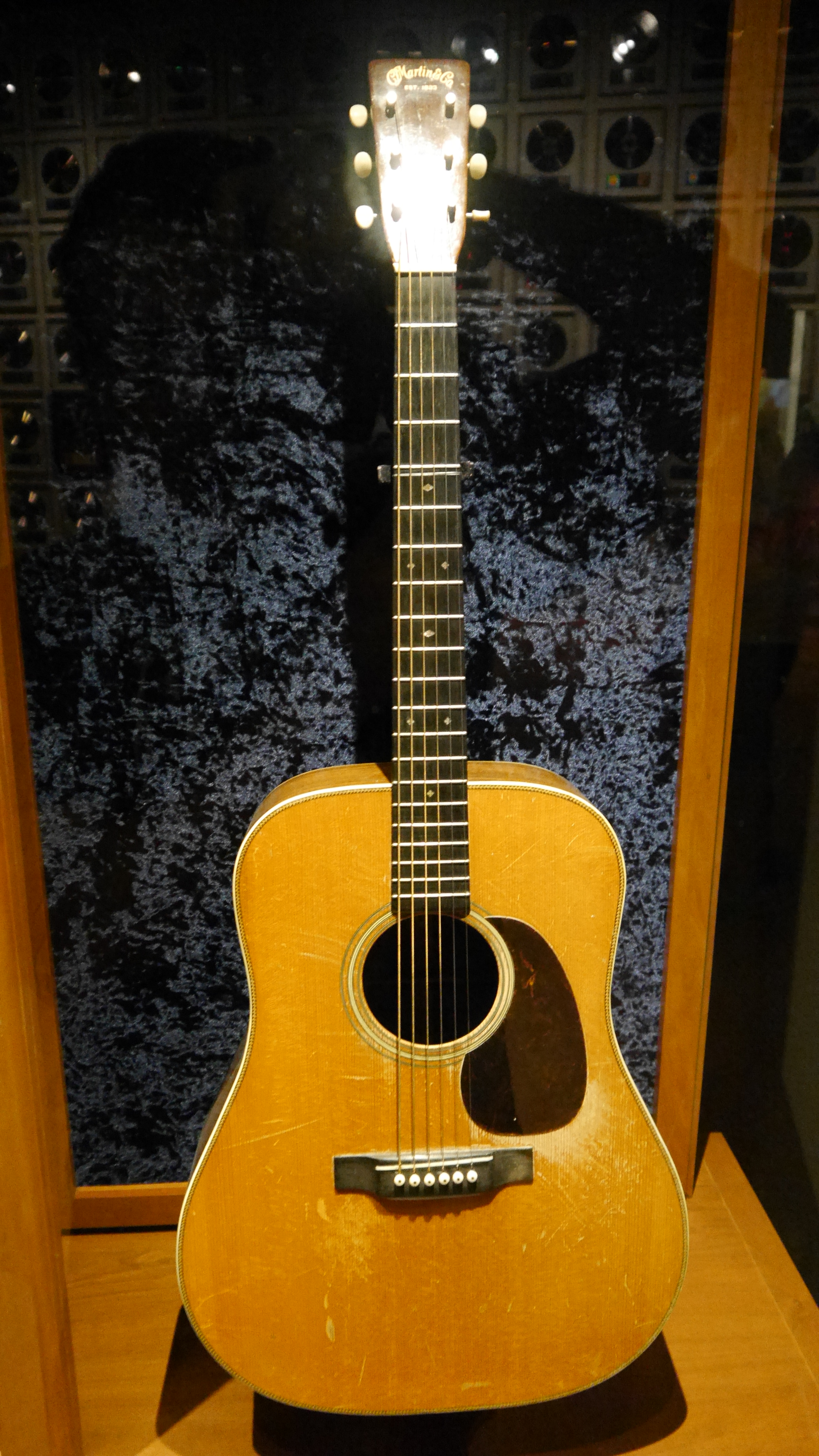
Hank Williams’ Martin D-28 Guitar – It looks like it had as hard a life as the hard-living man who owned it. We were told that there is a Hank Williams biopic currently being made called I Saw The Light with the guy who plays Loki (Tom Hiddleston) in the Avengers and Thor movies playing lanky Hank.
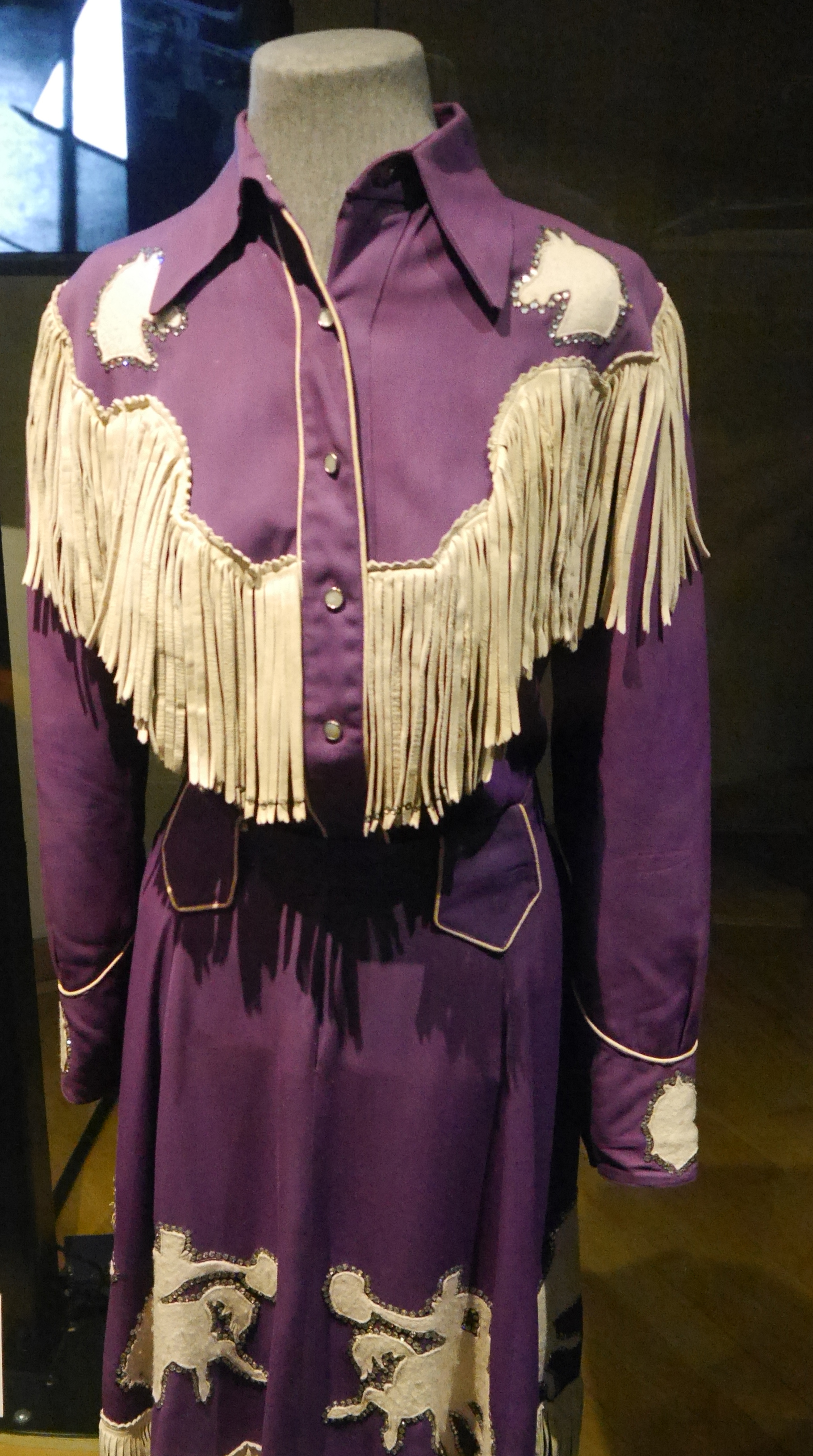
Patsy Cline’s famous cowgirl dress.
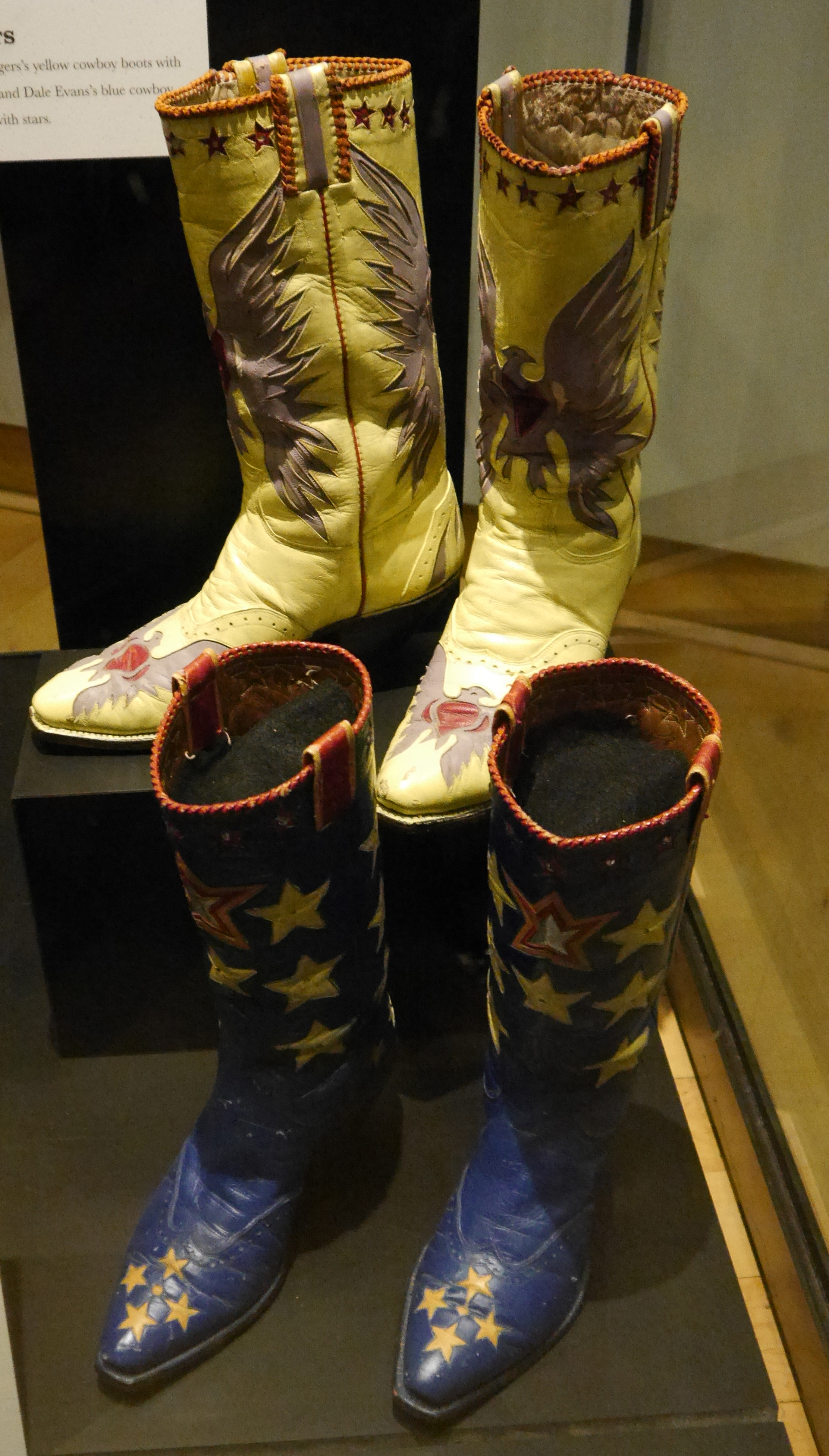
Cowboy boots of Roy Rogers and Dale Evans. Sadly, Trigger seemed to have missed out on his pairs.
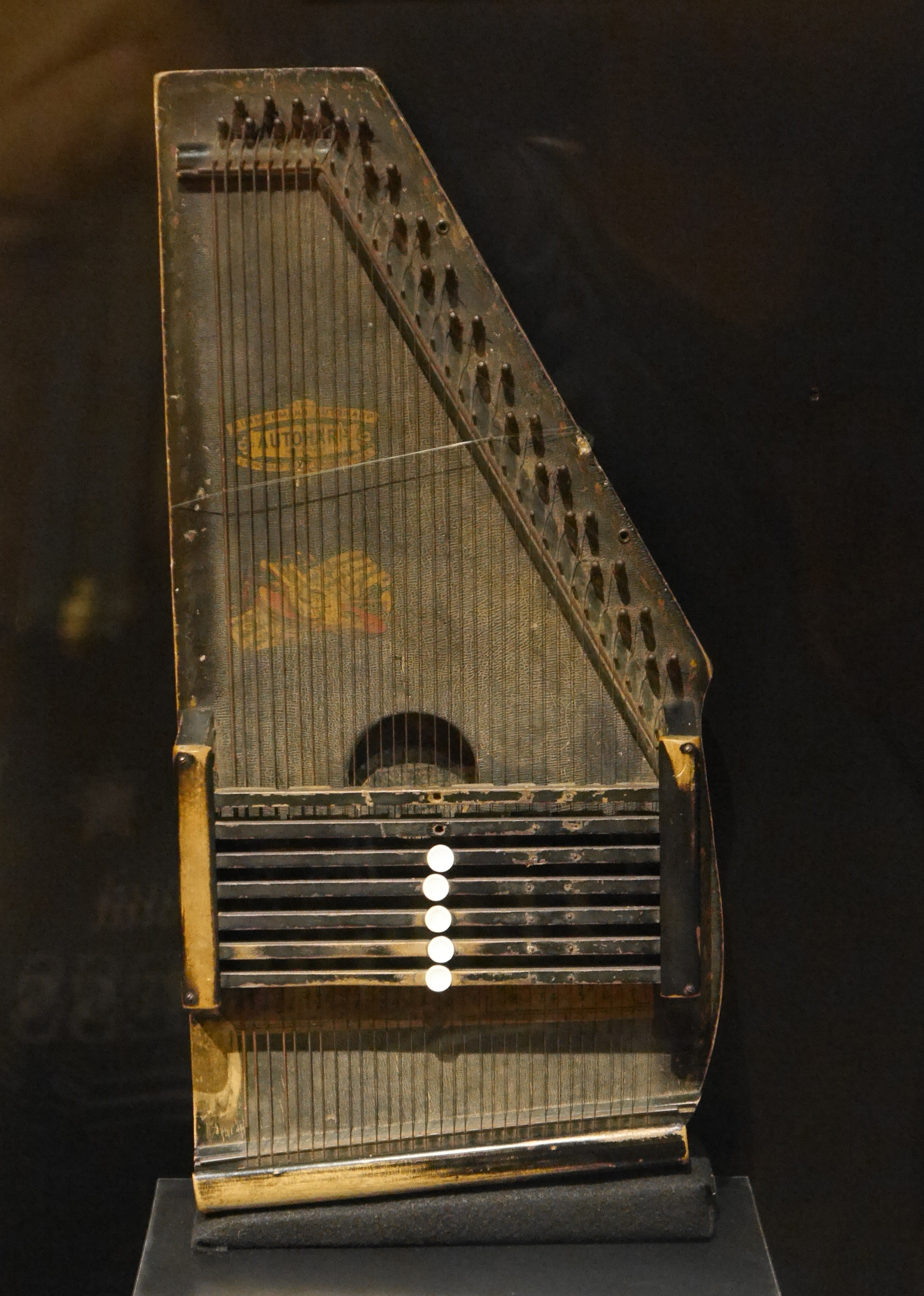
Sara Carter’s Zimmerman autoharp. You can hear Sara playing it here. Not a common instrument but it was recently revived by PJ Harvey for her classic album Let England Shake.

Webb Pierce’s customized 1962 Pontiac Bonneville. This is well before Pimp My Ride. More like Whoop-Ass My Wagon.
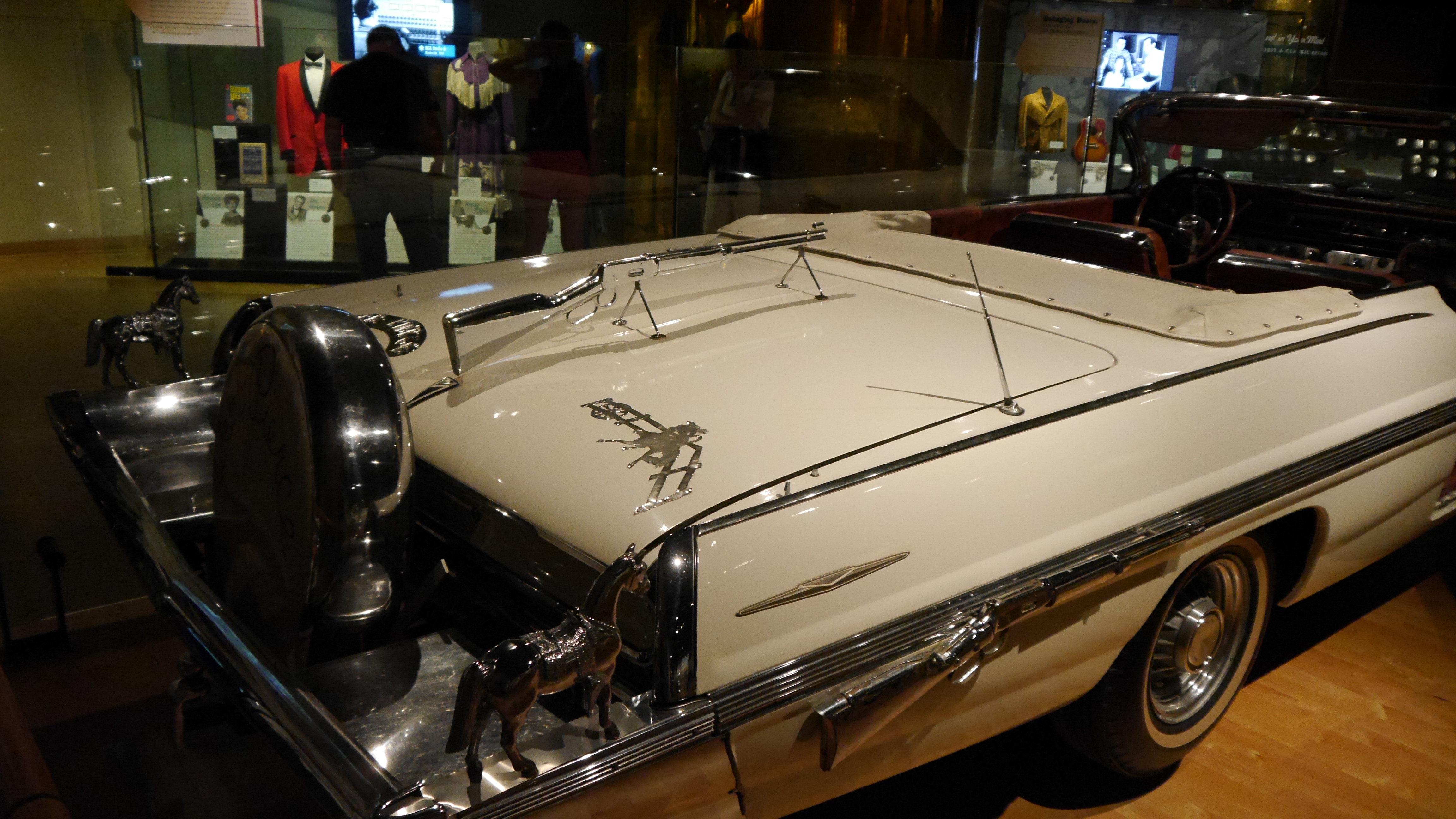
The silver rifles demand respect and earn fear.

Who wouldn’t want a pearl-handled revolver for a door handle?
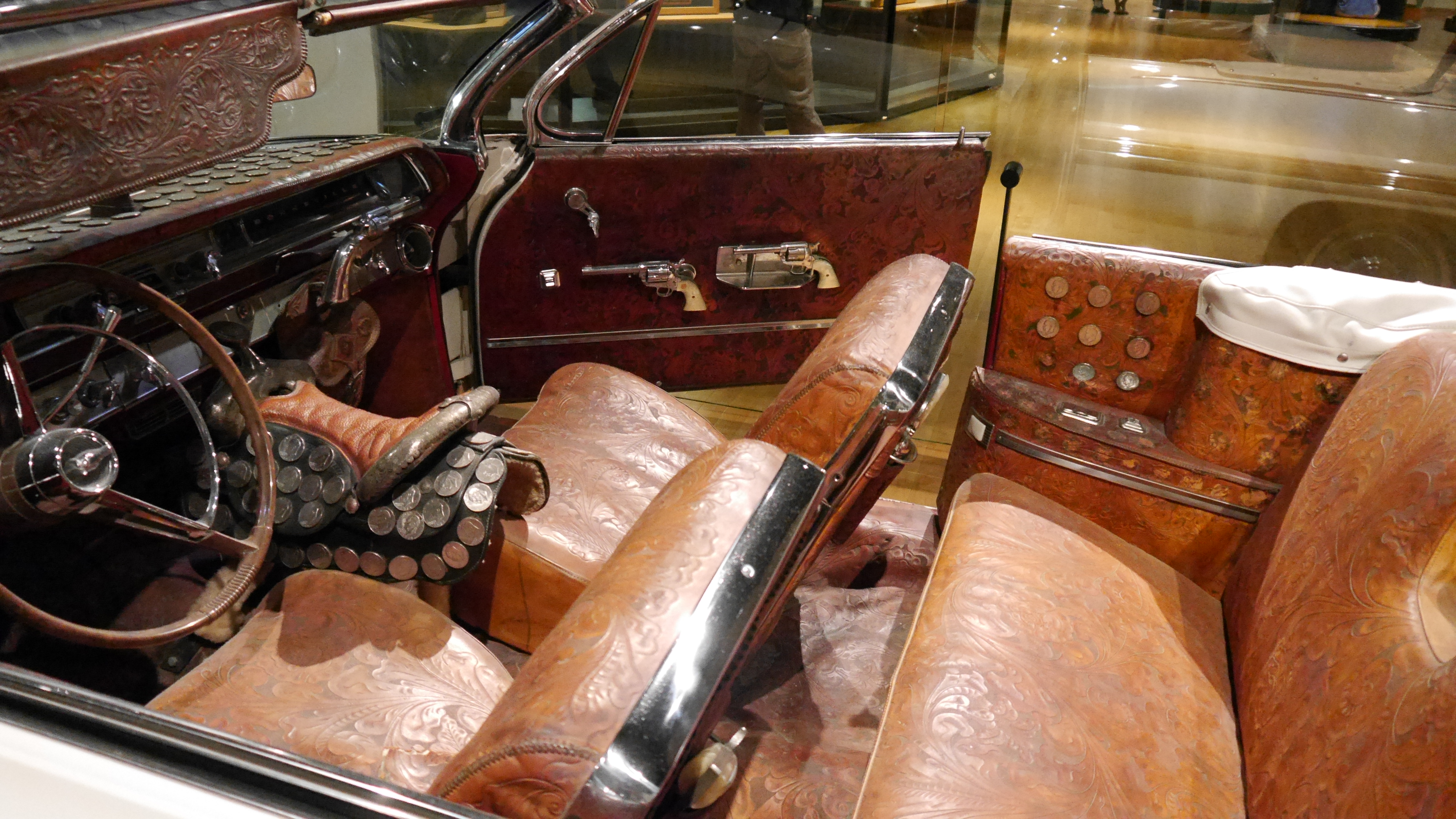
Check out the upholstery. It contains 1,000 silver dollars inlaid in it.

Jimmie Rodgers hand-written notes for his famous Blue Yodel #9 And, yes that is Louis Armstrong playing the trumpet.
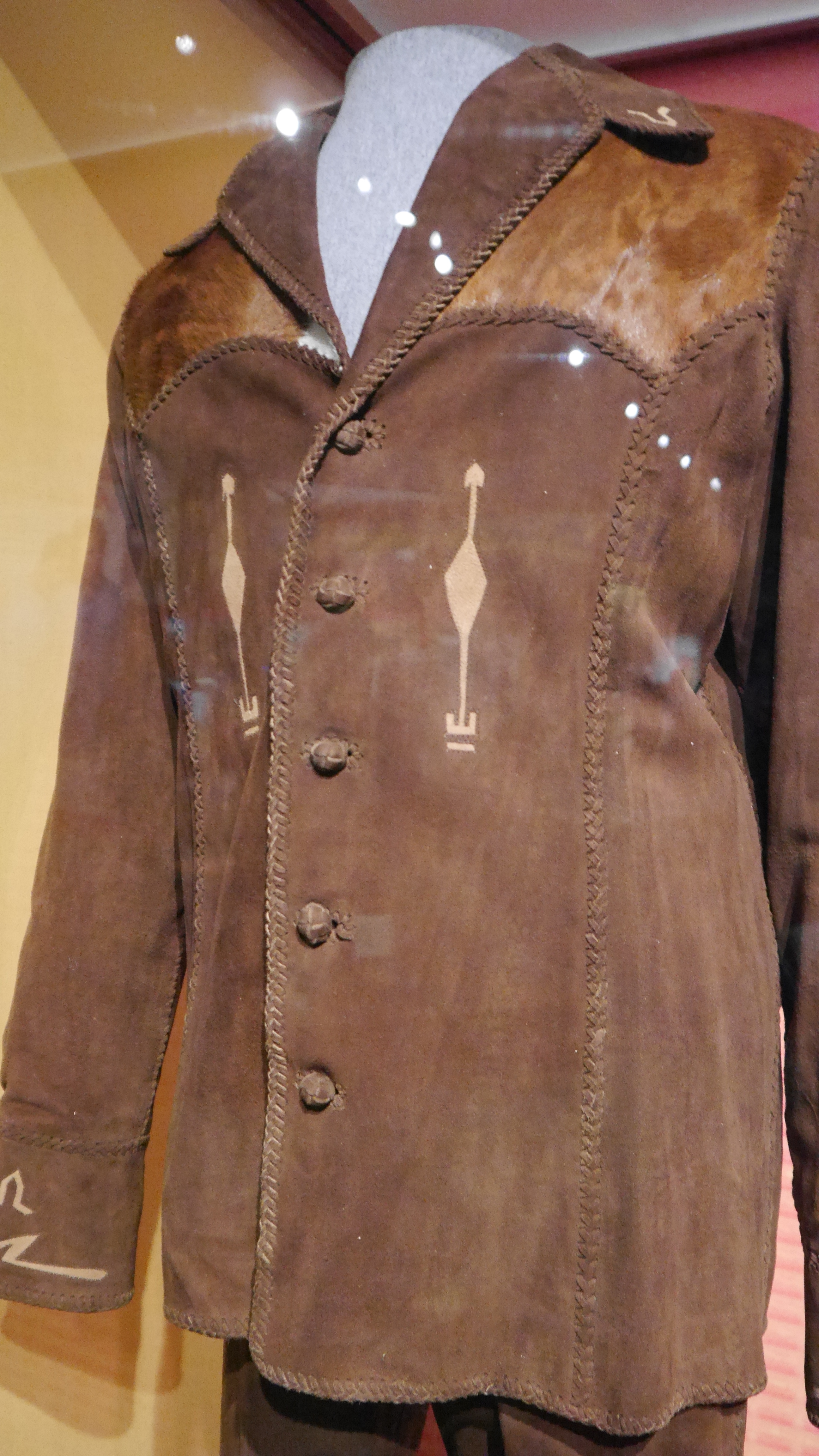
Buck Owens’ buckskin jacket. His first name was actually Alvis (not Elvis) but, as he tells it, when he was four he told his parents he loved his pet donkey Buck so much that he wanted to be called Buck too. And so they called him Buck from that point on. Buck was the pioneer of the Bakersfield Sound and his big hit was Act Naturally which was later covered by The Beatles.
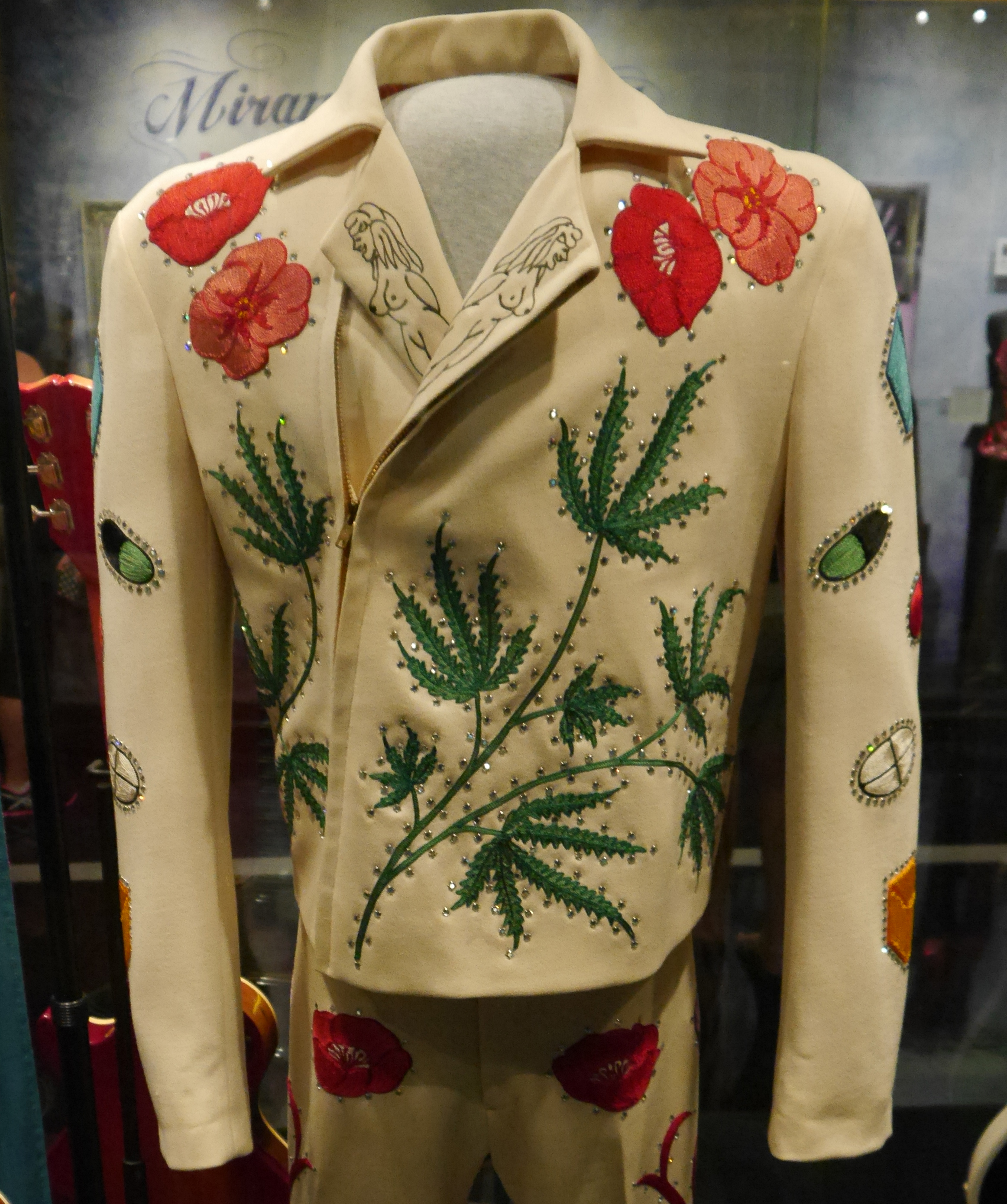
The most radical display in the Country Music Hall of Fame – Gram Parsons’ marijuana Nudie suit. Gram Parsons pioneered the American country-rock sound that went on to clog the musical arteries of the 1970s from bands like The Eagles and America. You can see him here wearing the jacket. The jacket was designed by an amazing Ukrainian tailor called Nudie Cohn (actual name Nuta Kotlyarenko). Nudie Cohn’s fascinating story from making g-strings for New York showgirls to pioneering the classic rhinestone-cowboy suit and the steerhorn car (as seen in the previous Webb Pierce Pontiac pictures) can be seen here.
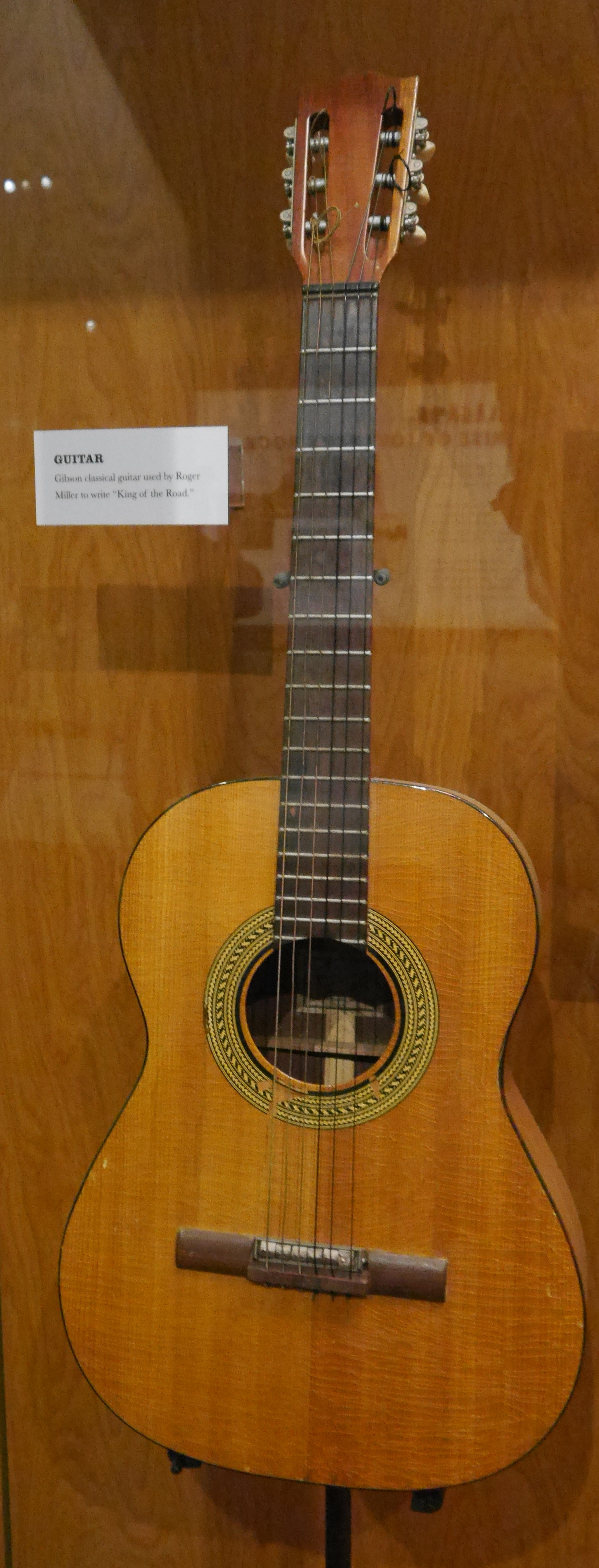
Roger Miller’s Gibson guitar on which he wrote his big 1964 hit King of the Road. Strangely enough, the first time I heard this music was back as kid in the 1970s listening to Billy Howard’s parody of King of the Road called King of the Cops (which itself owes more than a little to Stan Freburg’s records; particularly Yellow Rose of Texas which itself was making fun of Mitch Miller’s version. Okay, I’ll stop there).

Harlan Howard’s Underwood typewriter. Some great songs were written on this including I Fall To Pieces for Patsy Cline, Heartaches By The Number for Ray Price, Tiger By The Tail for Buck Owens and, my favourite, Life Turned Her That Way for Little Jimmy Dickens. Harlan Howard’s simple secret of what made a good country song was “three chords and the truth.”
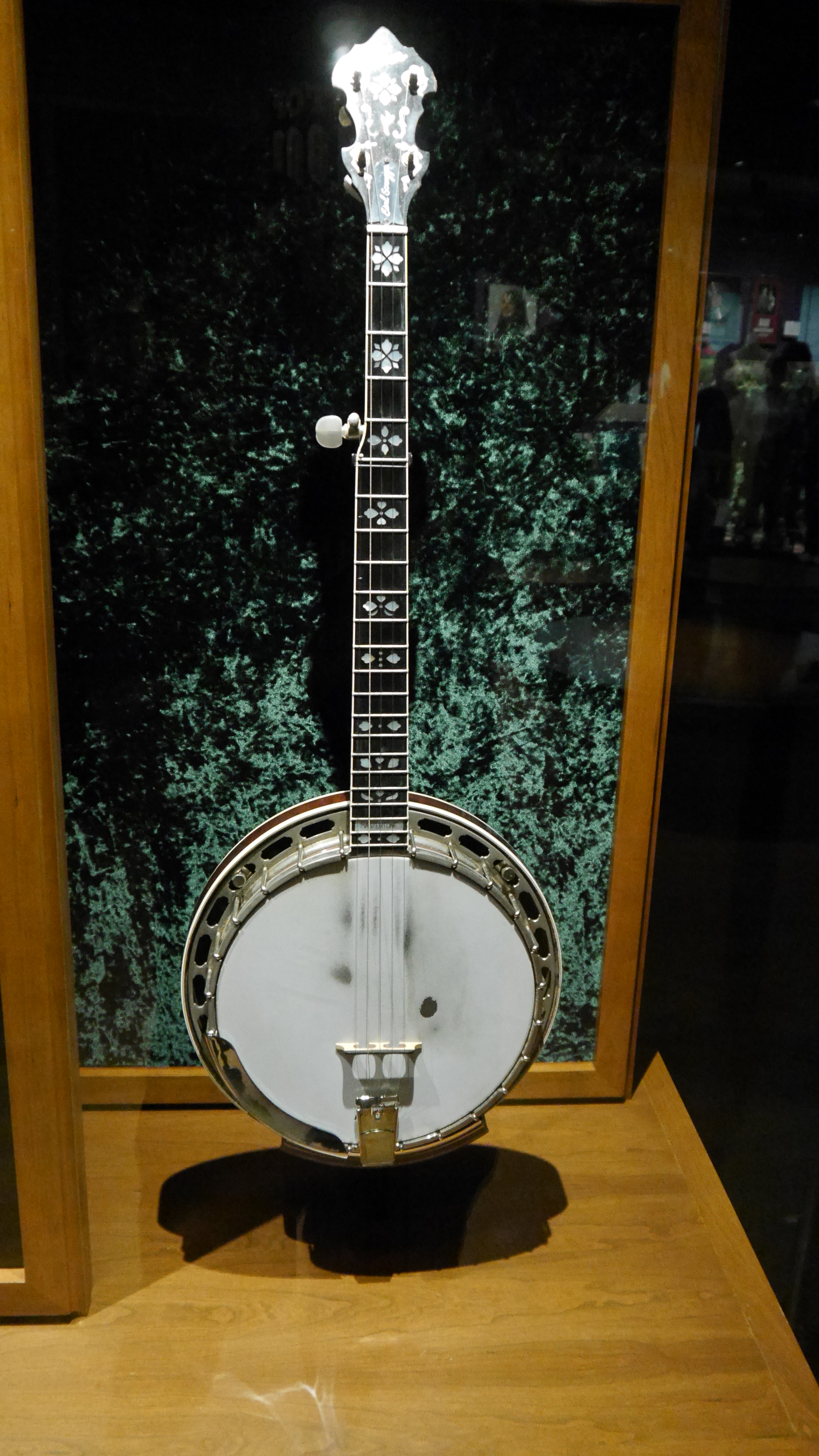
Earl Scruggs’ Gibson 5-string banjo. You might know him as the composer of The Ballad of Jed Clampett from the Beverly Hillbillies or Foggy Mountain Breakdown from Bonnie and Clyde, but Scruggs along with Bill Monroe (see below) pioneered bluegrass music back in the 1940s. It was Scruggs’ unique three-finger picking style that would go on to be a defining feature of Bluegrass.

Record producer Owen Bradley’s mixing desk. Bradley was one of the chief creators of the “Nashville Sound” in the 1950s. “The Nashville Sound” or “Countrypolitan” with its pull towards city pop rather than country roots now permeates modern country music. There is the great apocryphal story of someone asking Chet Atkins what “The Nashville Sound” was. Atkins reached into his pocket to loudly shake some loose coins – “That’s what it is.” he said.; “It’s the sound of money”
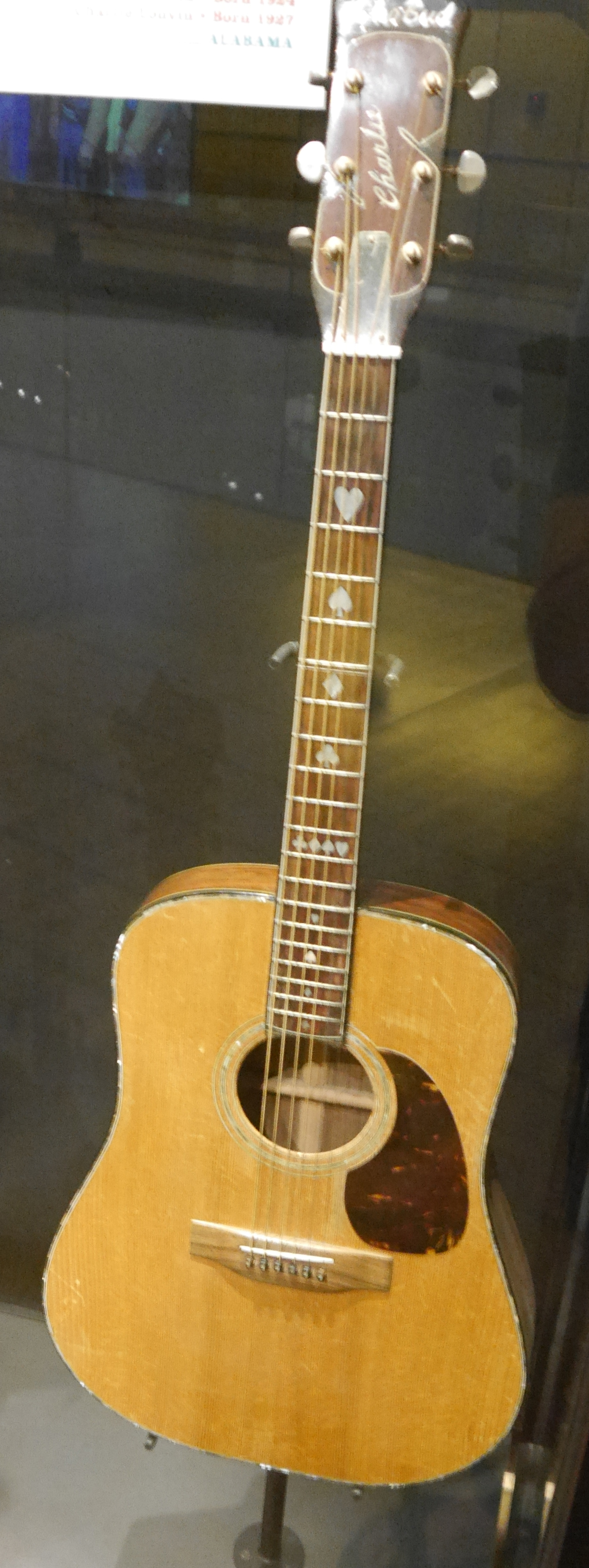
Charlie Louvin’s guitar. The Louvin Brothers beautiful harmonies influenced The Everly Brothers who in turn influenced Simon and Garfunkel whose most recent influence would be The Milk Carton Kids. Beautiful songbirds of a feather all.

Billed as the most famous mandolin in American music history, Bill Monroe’s Gibson F-5 mandolin was his second voice. Bill Monroe had a long and varied career from country dance bands in the 1930s, to what was then termed “hillbilly music” in the 1940s, to fathering bluegrass in the 1950s, to being part of the folk revival of the 1960s. The mandolin was smashed to pieces in 1985 when an intruder to Monroe’s home beat it with a fireplace poker. The Gibson Guitar company painstakingly restored it from 150 splintered pieces of wood. Hear him pick the deuce out of it here.
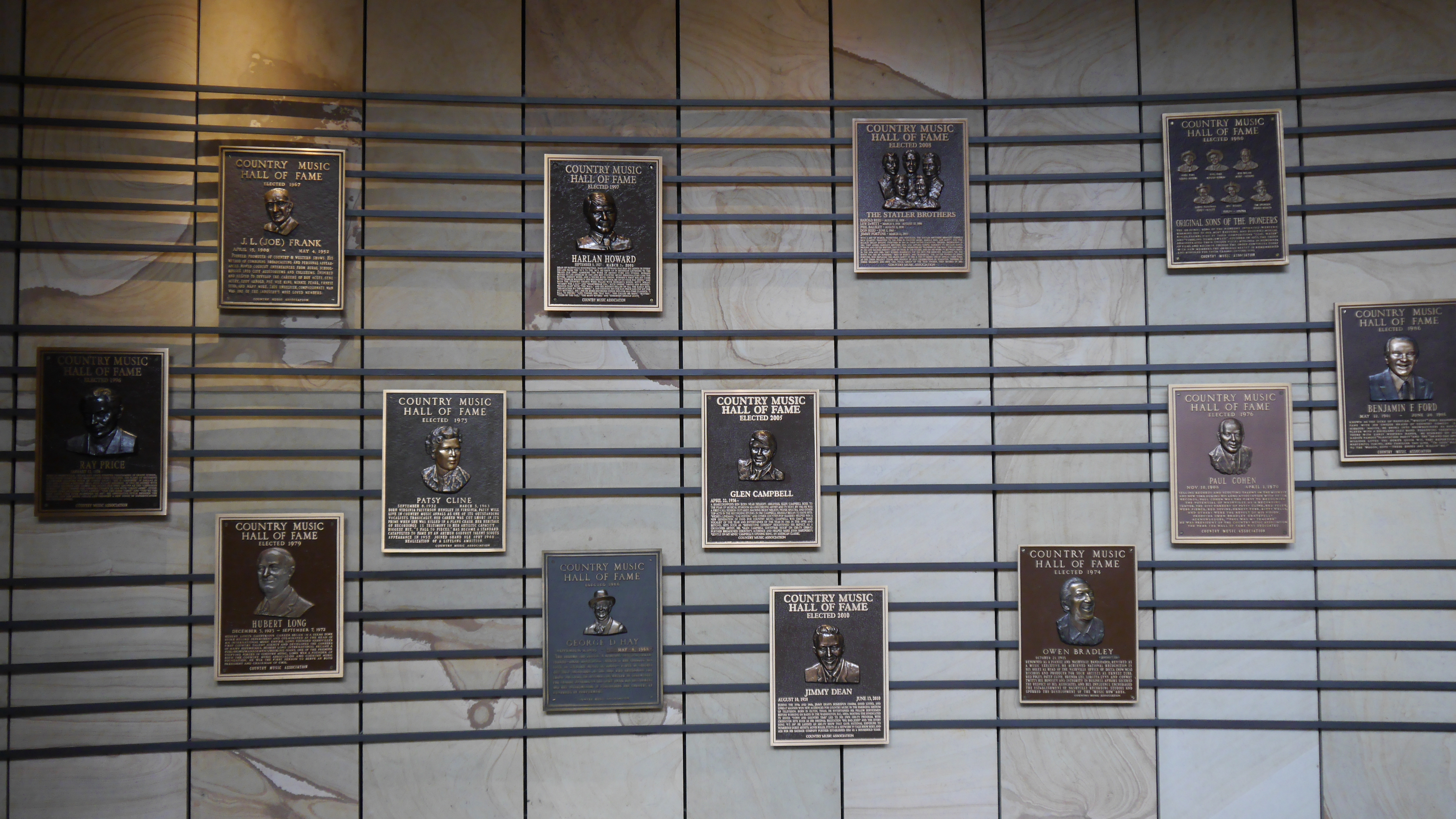
Some inductees to the Country Music Hall of Fame.
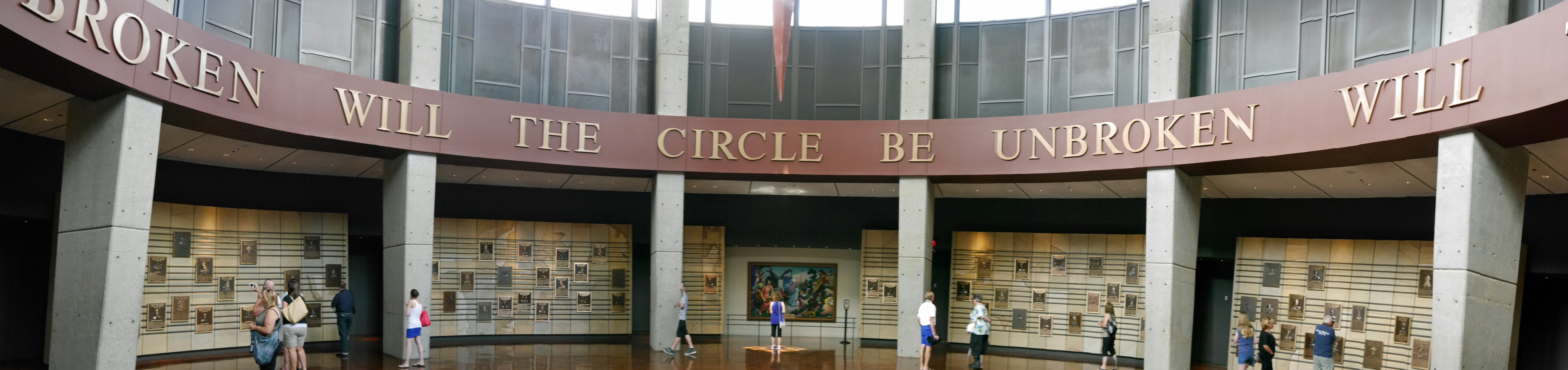
The Country Music Hall of Fame.
RCA Victor Studio B
Home of over 1,000 hits on the Billboard Top 100. It was built in 1956 to accommodate Elvis Presley and his growing success after RCA bought out his contract from Sun Records in Memphis. This is where all of Elvis’s RCA songs were recorded, often in the early hours of the morning which is when Elvis liked to record (much to the displeasure of everyone else). The Everly Brothers recorded most of their songs here as did Roy Orbison and countless others. The studio has been declared a National Landmark and is overseen by the US National Parks.
Walking through this studio, you couldn’t help feeling like you were walking on hallowed ground. The echoes of great sounds could be felt in the walls. You could almost hear a distant reverberation from the keys of the original 1950s piano that Elvis used to play. So many great songs were birthed here. There was a list on the wall of all the charting songs and reading each entry brought a smile of recognition and a deep sensation of the timeless greatness of the songs recorded here. So many songs that will endure forever – all rooted to this place.
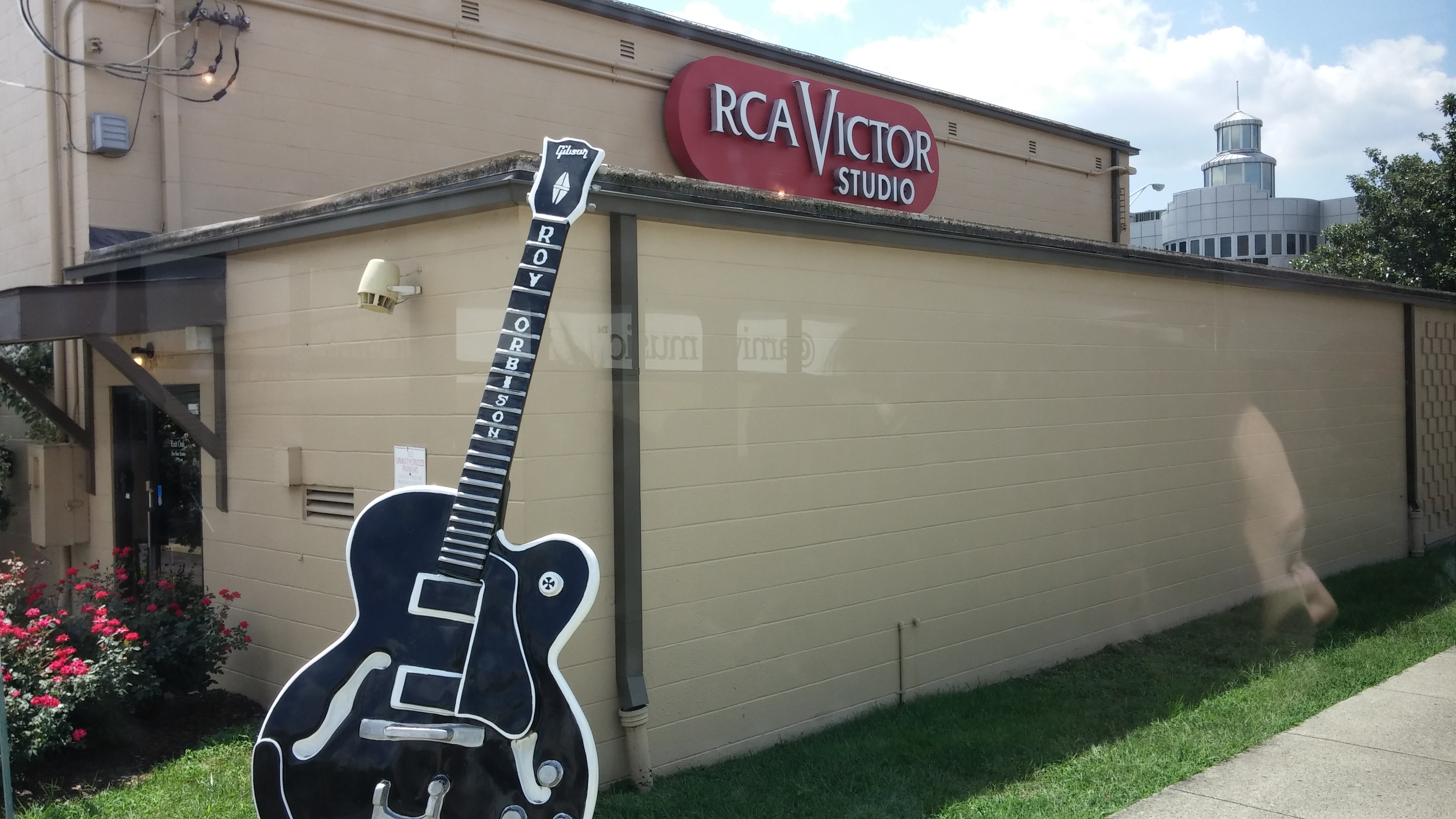
RCA Studio B, Nashville.

The original 1950s piano.

An early Ampex four track tape recorder.

These lights were installed to help Elvis get in the mood for one of his Christmas albums. Apparently it worked and Elvis became convinced that certain lights improved the mood for recording certain types of songs and continued to use them. I do have some sympathy for the sound engineers and session players who would be assisting Elvis with his nutso ways in the early hours of the morning under a green or blue light. No wonder the Jordanaires (Elvis’ backing singers) favoured the spiritual Something Within with the lyrics “there is something within me that holdeth the reigns, something within me that banishes the pain.” God give me strength.
Hatch Show Print
One of the oldest printing companies in America operating since 1879 and responsible for thousands of posters for country music acts, fairs and advertisements. They still use the traditional block printing which give their posters a certain charm and authenticity. I got to tour their plant which was like stepping back in time. 1800’s mechanical presses with lead blocks and lots of gooey ink. Fabulous tactile stuff and a refreshing change to Adobe InDesign and Quark Xpress.
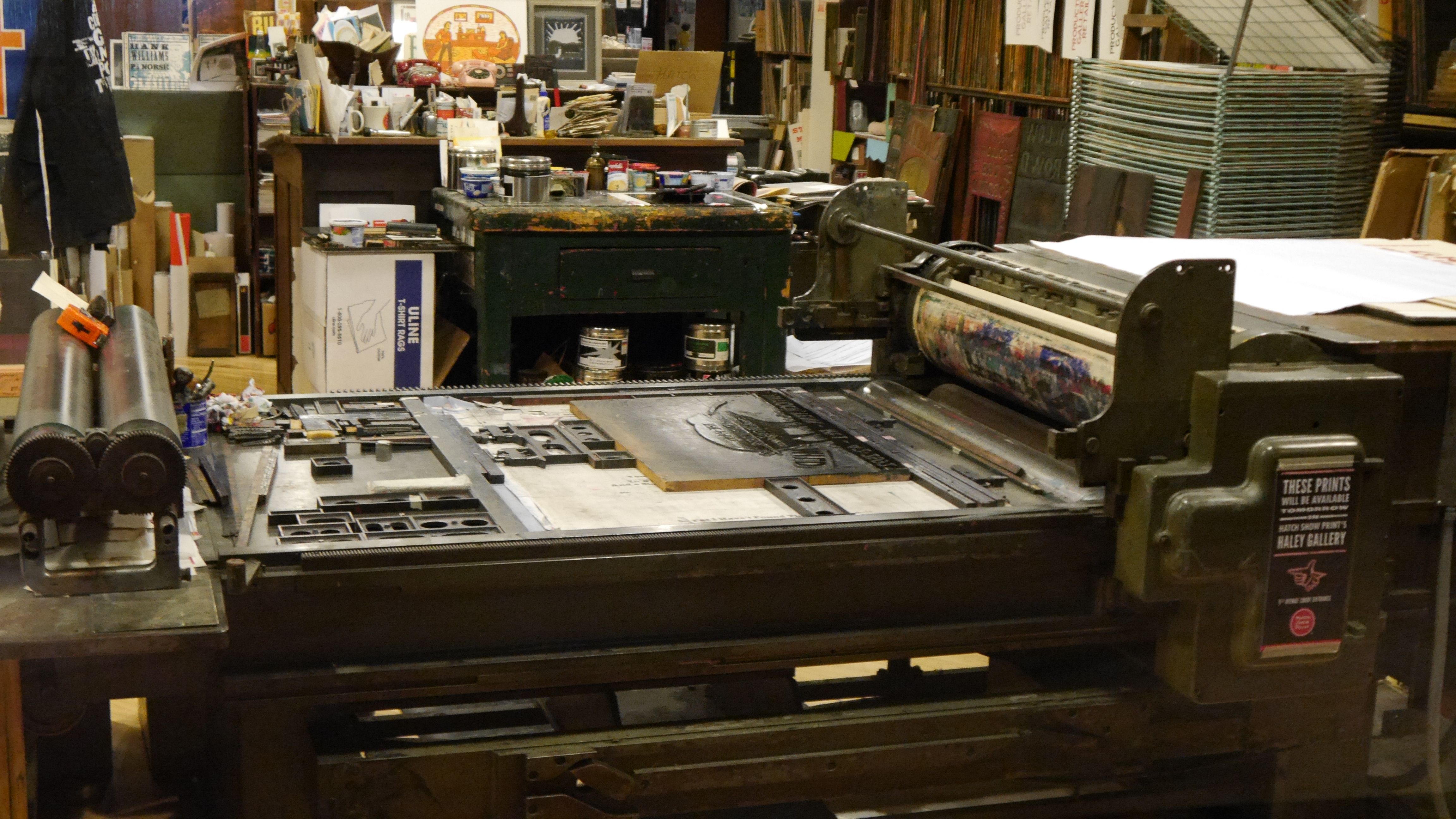
One of the printing presses at Hatch Show Print. Hatch Show Print gets its name from its founder William HATCH who PRINTed posters for SHOW business back in the late 1800s.

The Hatch Show Print workshop.

In the back you can see the shelves full of wood block letters and images.
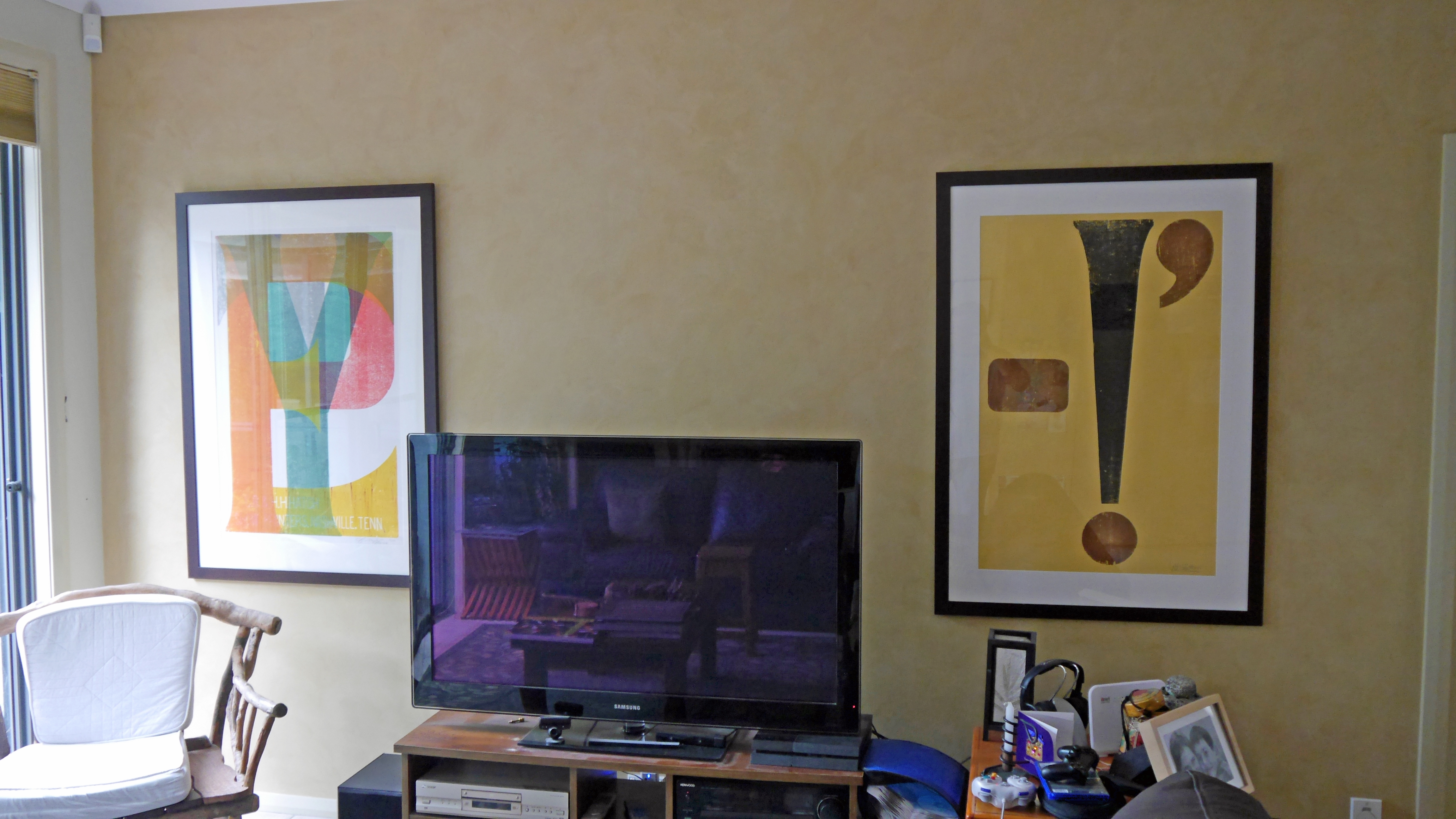
We bought these two prints from Hatch Show Print which now adorn our walls back home.
The Ryman Auditorium
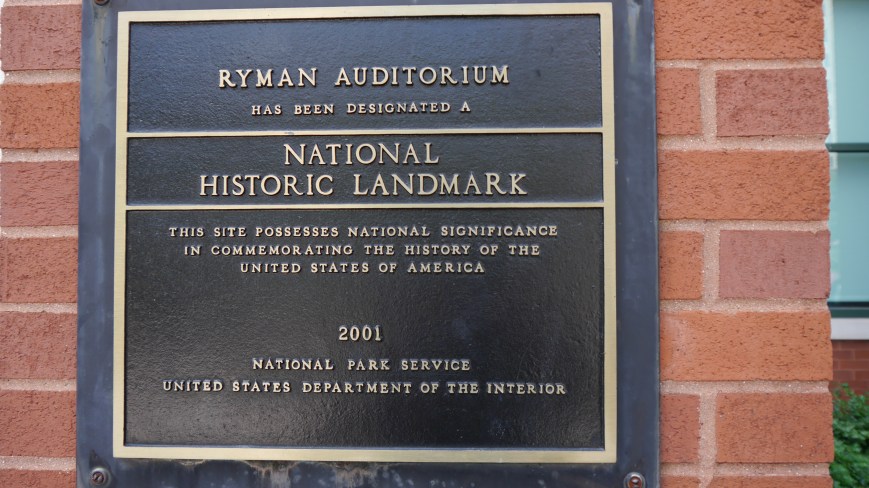
The mother church of country music and the original home of the Grand Ole Opry. Thomas Ryman was a river boat captain who attended an evangelical meeting in the late 1800s hoping to heckle the preacher but ended up being converted. After the meeting he set out to build a grand church in his hometown of Nashville to honour God. After Ryman’s death, the church started to be used as a music and theatrical venue. Everyone from Charlie Chaplin to Harry Houdini performed here. This is also where Helen Keller gave her first major public appearance where, via her teacher Anne Sullivan, she told the remarkable story of her life and managed to pack over three thousand people into a two thousand seat venue. It is also where she shocked America by revealing she was a socialist.
In 1925, the Grand Ole Opry radio show began broadcasting from the Ryman. For those unfamiliar with the Opry, you may know it as the basis for Garrison Keillor’s Prairie Home Companion movie and radio show. It was an extremely influential country variety show that broke the careers of countless country stars but which also influenced other genres such as the blues and rock & roll as it was avidly listened to by people as diverse as Chuck Berry, Elvis Presley, BB King and Isaac Hayes. It was the “alternative” music of its day before it became conservative in the late 1950s. You even had subversive comedians like the peerless Minnie Pearl.
The tour guide told us a classic Minnie Pearl joke. Minnie Pearl is eating dinner at The Cracker Barrel (a southern fried-food joint) when a “health conscious young lady” (as the guide said in his delightful southern drawl) came up to her. The lady pointed to the food on Minnie Pearl’s plate and said “how can you eat that fatty food?”. Minnie Pearl looked up and said “I’ll have you know that my mama lived to be over 100”. The lady was astonished and said “what, by eating food like that?” “No” Minnie Pearl replied “by minding her own business.”
The guide who related this story was an elderly southern gentlemen who had a beautiful old-fashioned way with words and a voice of golden honey mixed with Jack Daniels. Speaking about the time Johnny Cash got loaded and smashed out all the stage lights at the Ryman, the genteel Southern tour guide said in his slow cadence “Have y’all heard of the term ‘hissy fit’? Well Johnny Cash had one of them ‘’hissy fits’’ that night and the Ryman people, well, they had certain standards they liked to uphold, and y’all got to appreciate that Johnny Cash didn’t abide by those standards. Some of the Ryman folk also took to a view that Johnny Cash’s romance to June Carter at the time was adultery and it was that under the laws of Tennessee. But Johnny Cash smoothed that over after a while and made restitution under the law.”
The Ryman was closed in 1974 when the Grand Ole Opry moved to a bigger venue. Many artists criticised the move and called for the Ryman to be kept open. Eventually, it was saved and bought by Gaylord Entertainment and it is now an active music venue once again. There is a who’s who of artists who have signed messages professing their love for the Ryman in the back foyer. This is a venue that artists love and is possibly the best thing in Nashville.

The Ryman Auditorium – Country Music’s Mother Church.
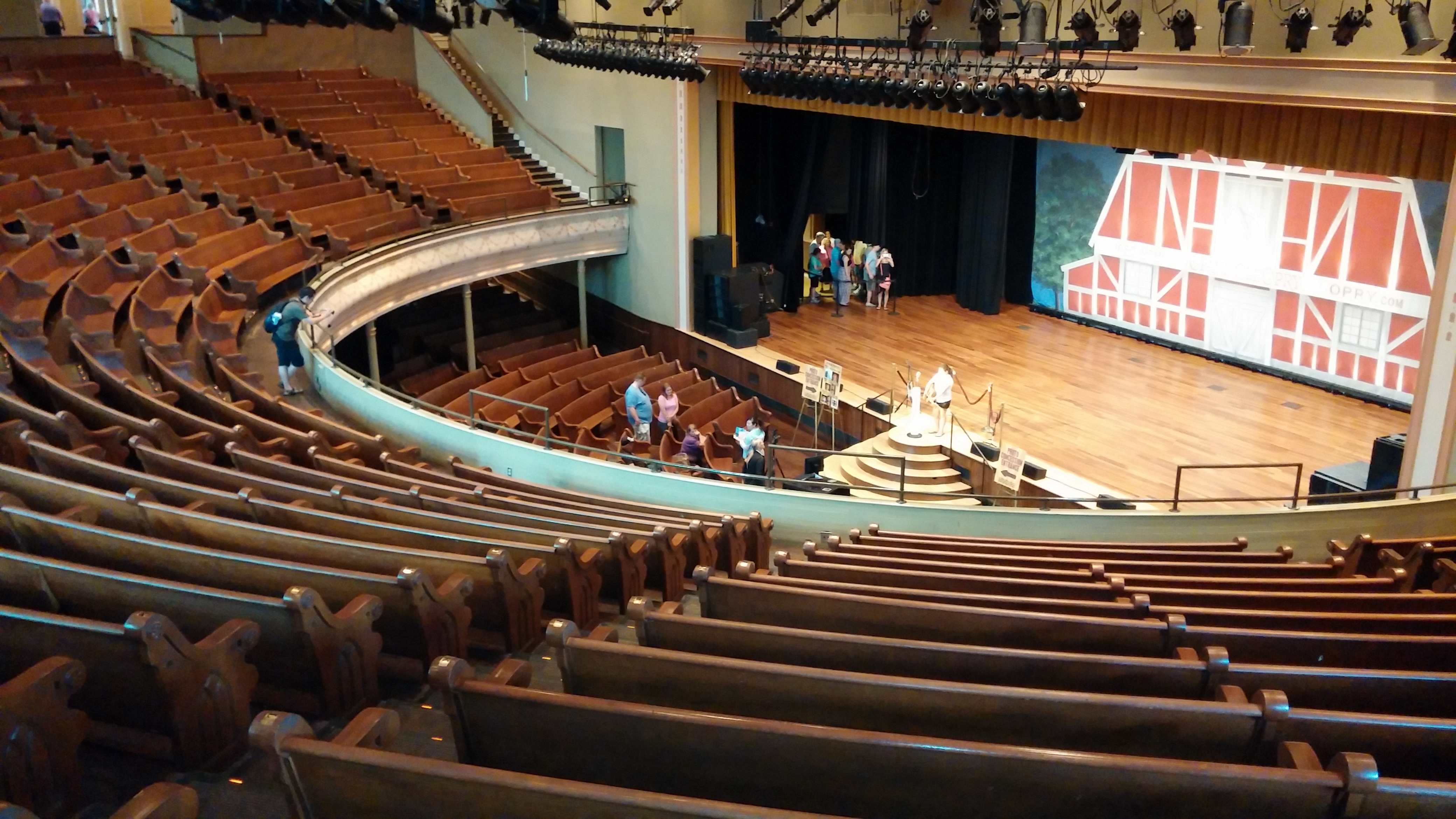
Upstairs in the Ryman.
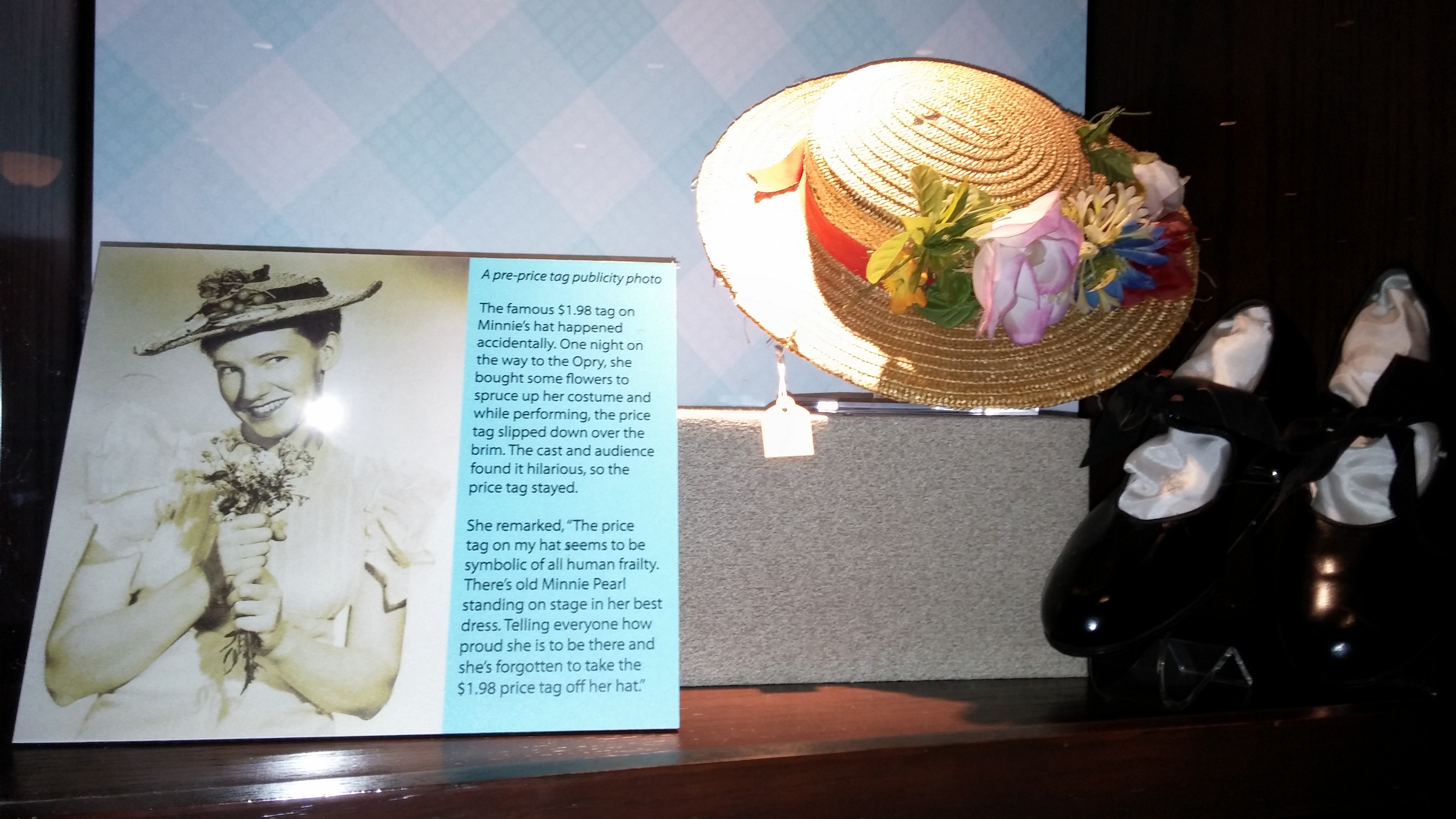
The hat with price tag still left on of the much-loved Minnie Pearl. Check out any clip from You Tube and you will find them all good. Here’s one to start.
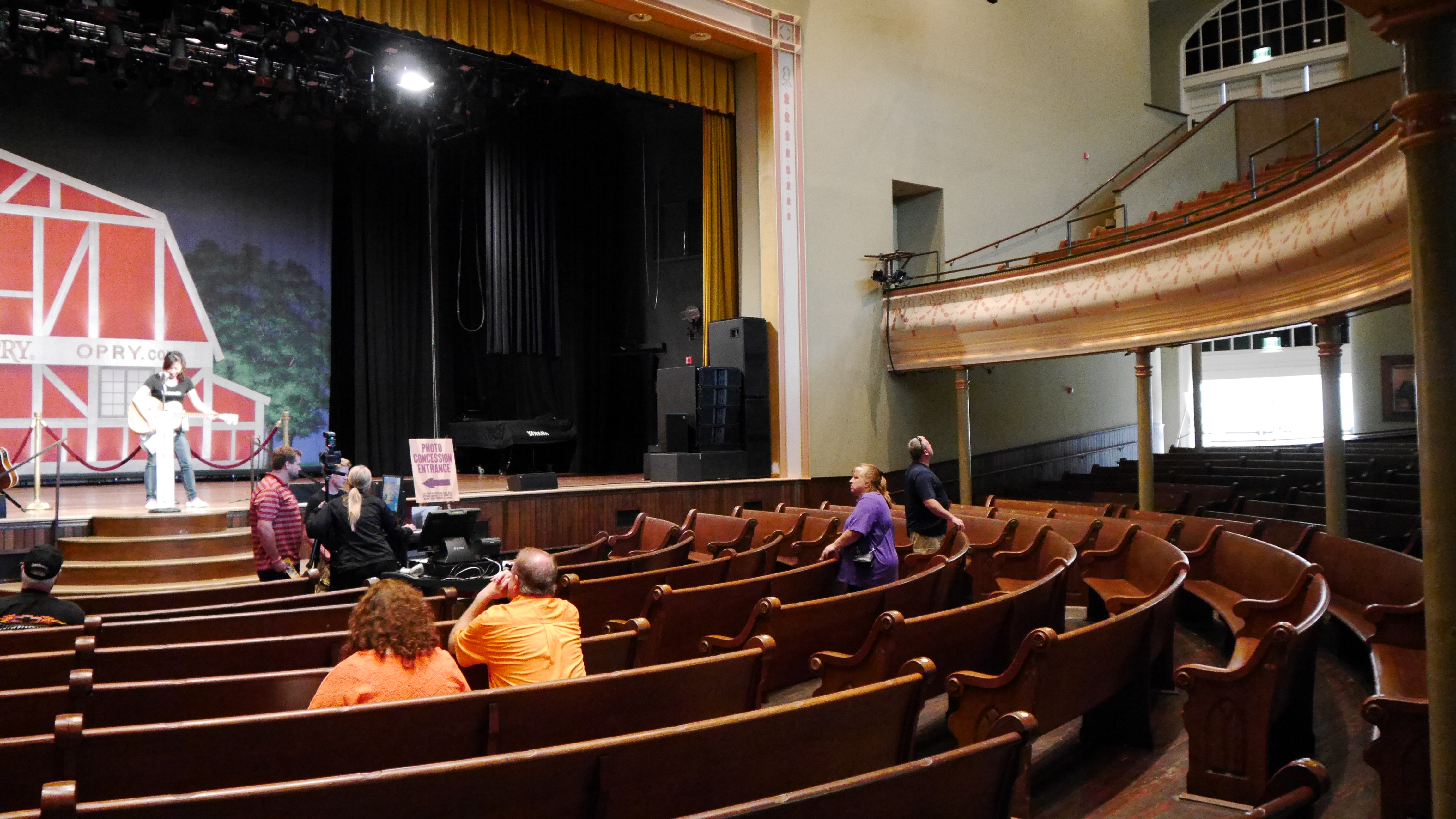
You can pay to perform on stage at the Ryman.
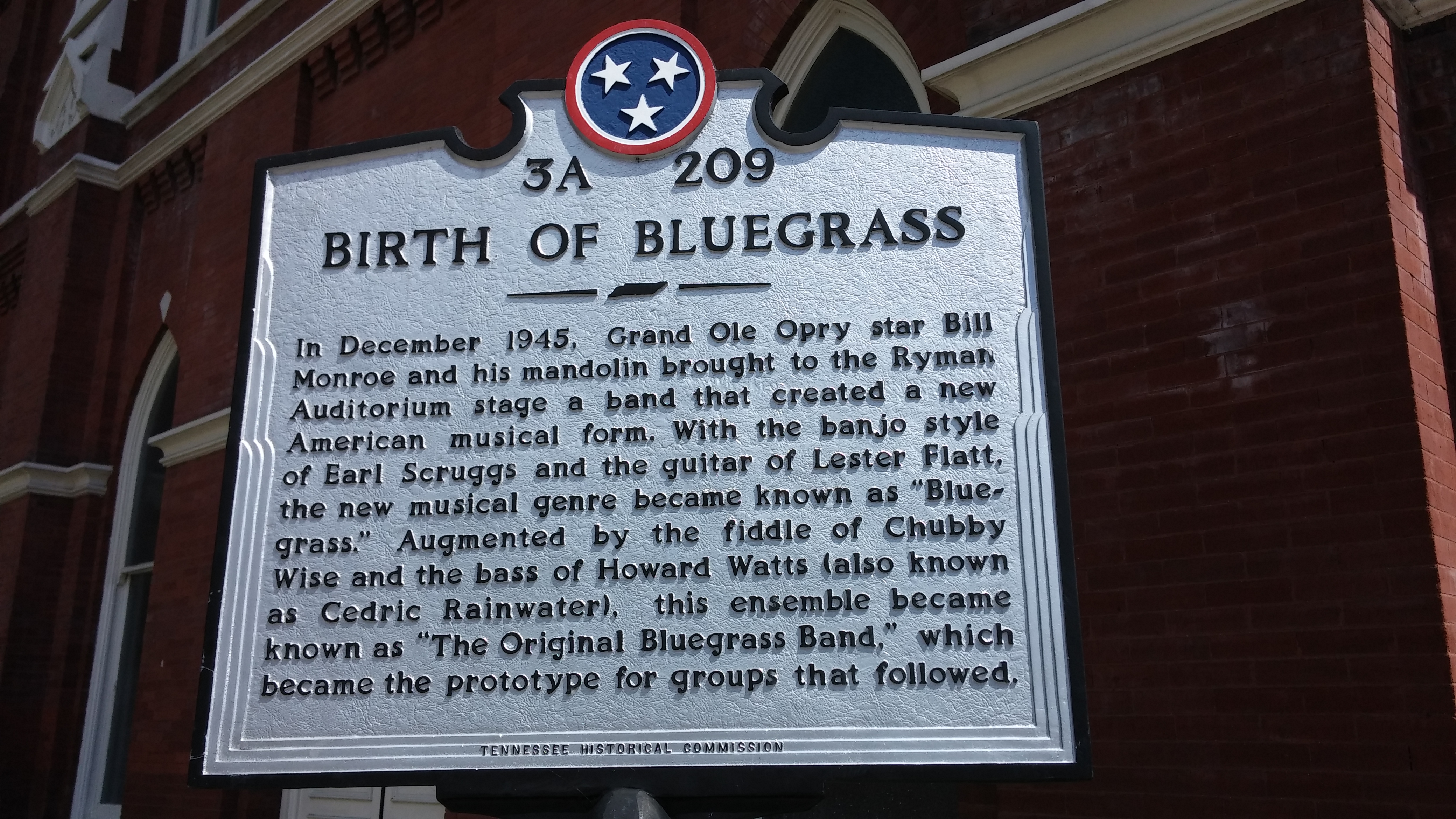
Grand Ole Opry House
We attended the Grand Ole Opry on Friday night. It was a terrific show that even Harrie, an avowed hater of country music, enjoyed. We had good second row seats and saw about ten different acts over the course of two hours. As the Grand Ole Opry is a radio show you can actually hear a podcast of the show we attended here (just click on the 15th August show).
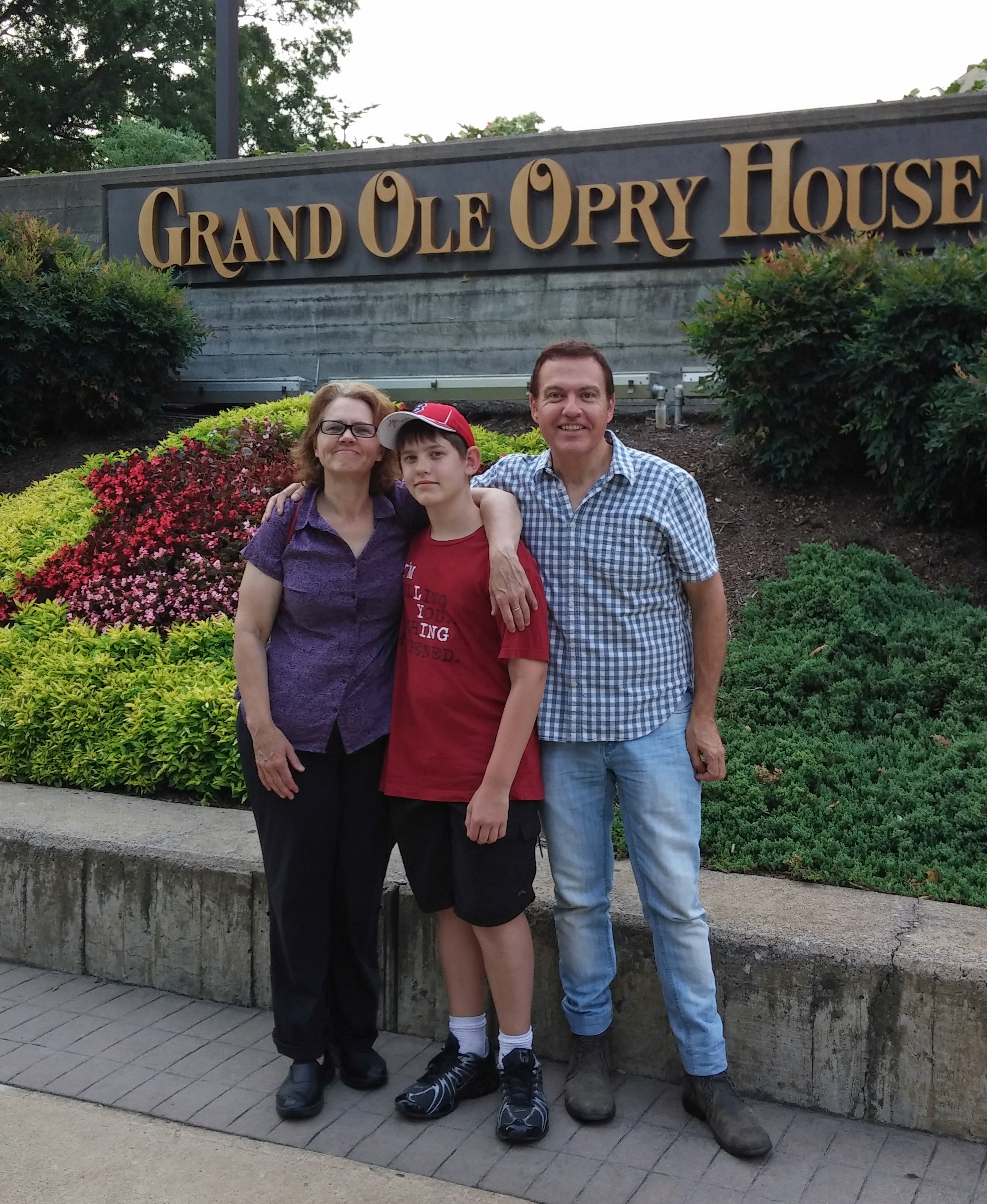
Outside the Opry. Note that I am wearing my recently purchased cowboy boots.
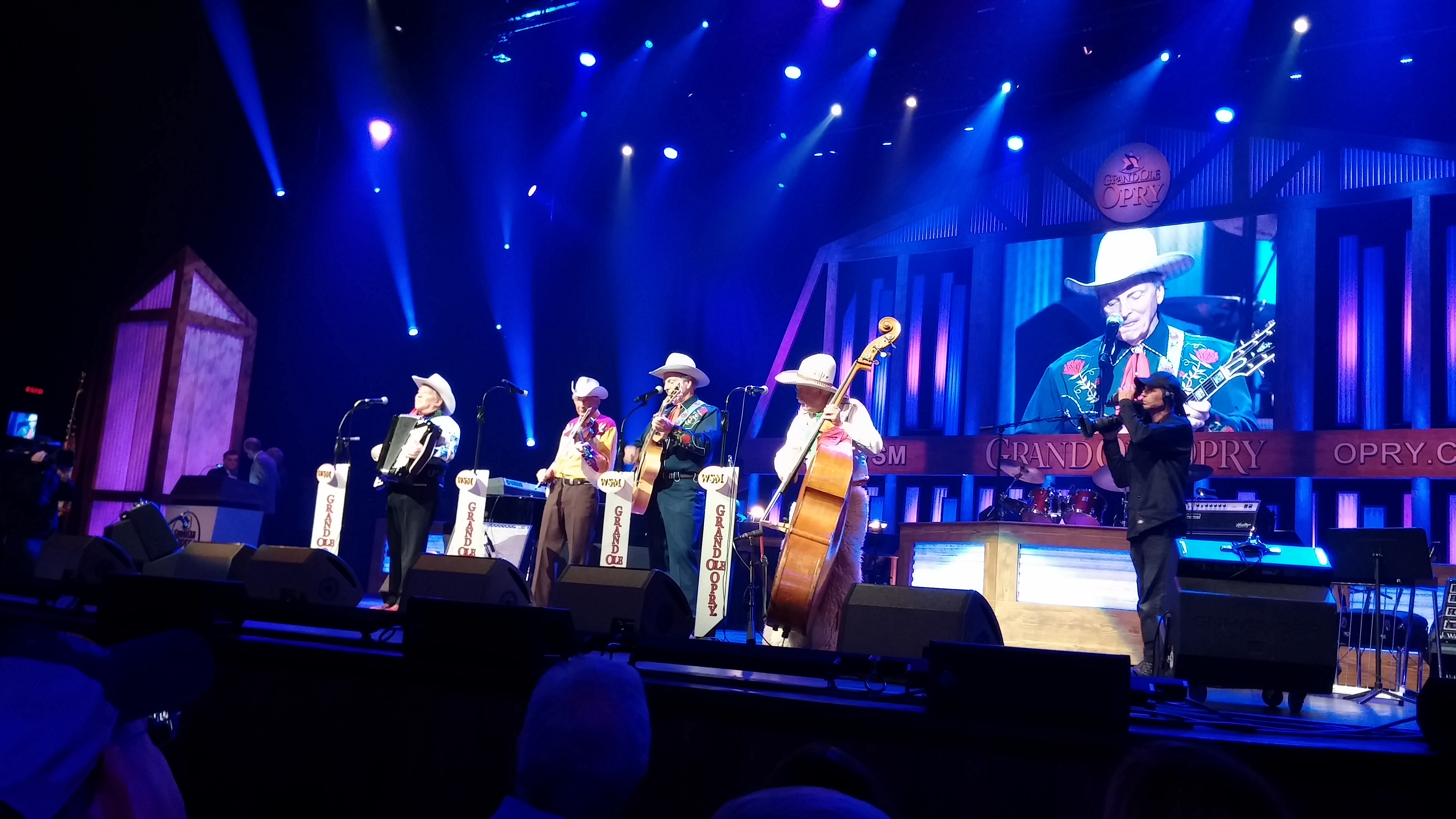
Riders in the Sky live at the Opry. We also saw Connie Smith, Kix Brooks (of Brooks and Dunn fame), Vince Gill, Sunny Sweeney, Chris Janson, The Whites, Sam Bush, Jesse McReynolds, Lindsay Ell and Tracy Lawrence.

Having our photo taken with Sunny Sweeney who reveled she was a big Kasey Chambers fan. Listen to Sunny’s song Backhanded Compliment which she performed that night.
Out and About in Nashville
We also got to catch up with Michelle’s old school friend, Anne McCue and her partner, Lisa who live and work in Nashville. Anne is a singer- songwriter and music producer and you can check out her Web site here. The last time we saw Anne was in 2000 when she was living in Los Angeles. Venturing out to where Anne lived also allowed us to see the leafier surburbs of Nashville away from the touristy centre of town.

Anne, Lisa and Michelle at the back of a Nashville coffee shop that had mastered that most difficult of things for an American barista – a flat white coffee. You can hear the first song off Anne’s new album here.

In New York we had SoHo which stood for South of Housten St. In Nashville we had SoBro which stood for South of Broadway. It’s just so bro, dude!
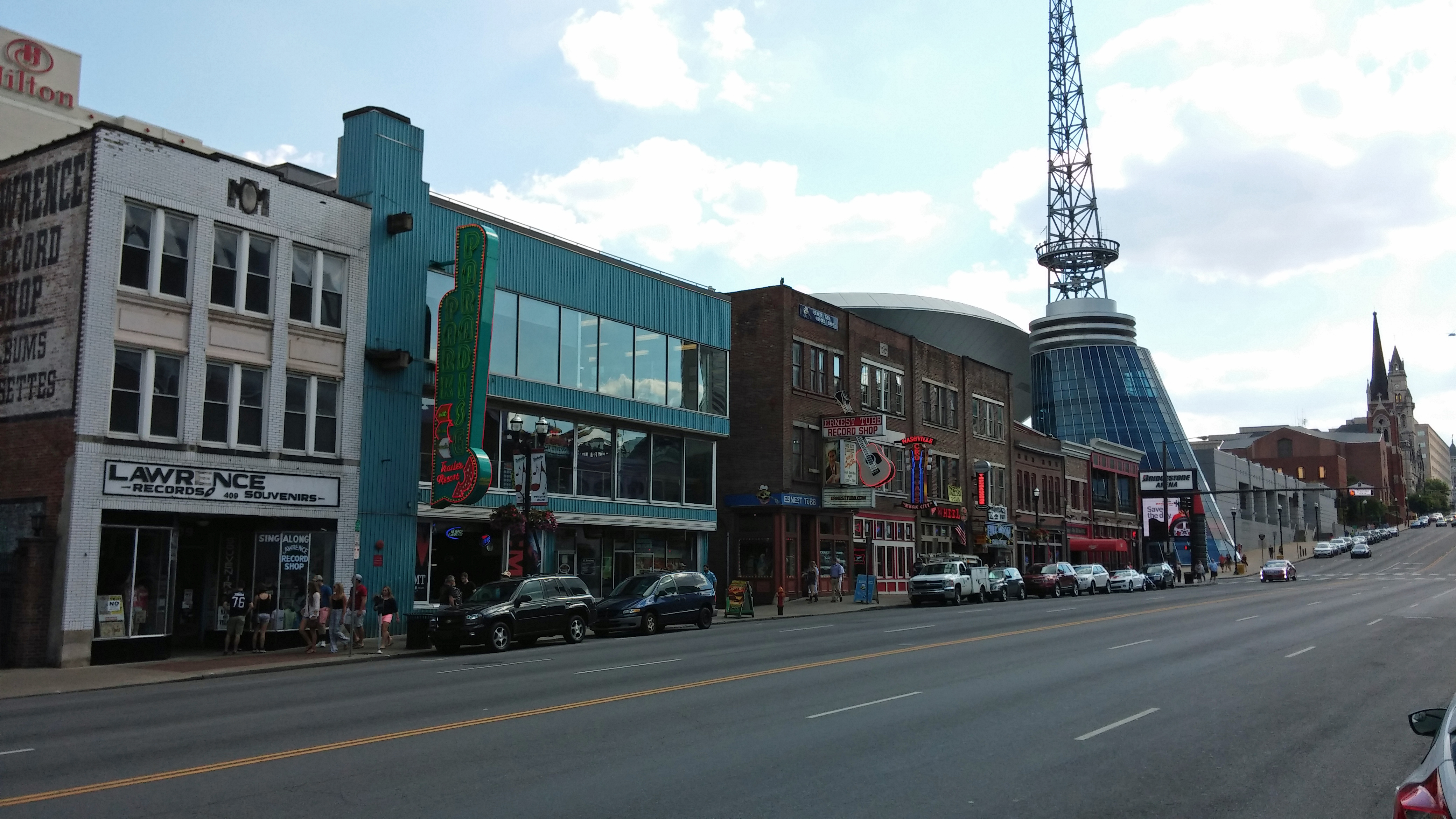
Outside Ernest Tubb’s record store. Ernest pioneered the honky-tonk sound on such hits as Walking The Floor Over You.
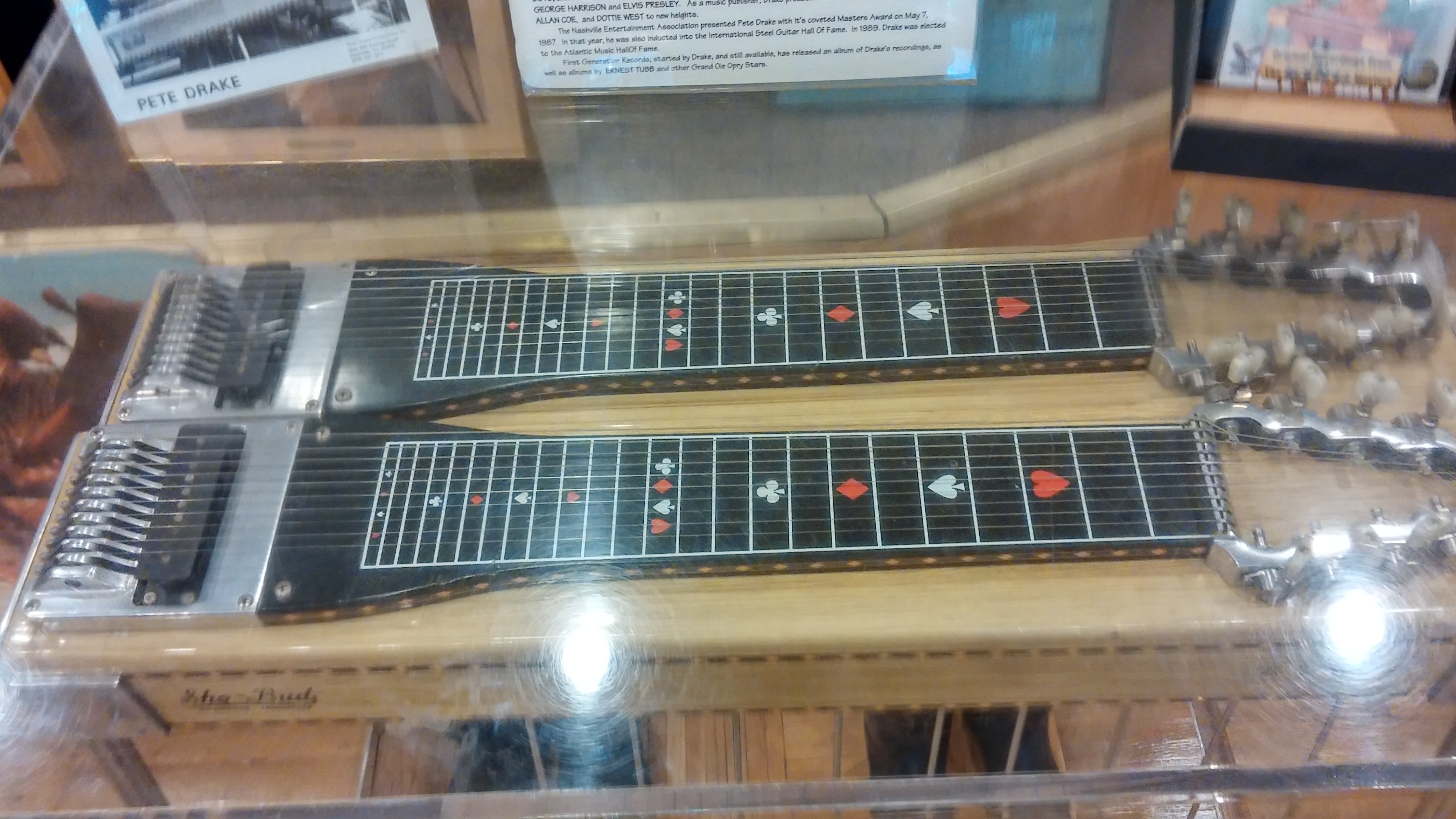
Pete Drake’s “talking” steel guitar on display in Ernest Tubb’s Record Shop. Check out the action here. He was not the first to use a talk box but he directly influenced Peter Frampton who used one on his Frampton Comes Alive album that in turn, along with Stevie Wonder’s talk box work, influenced Daft Punk’s use of the vocoder (to sound like a talkbox) on their albums.

The distinctive AT&T Building that is also known as the Batman Building. The twin towers being like the ears on Batman’s cowl.

The Grand Old Old Opera – The Schermerhorn Symphony Center just down the road from the Ryman Auditorium
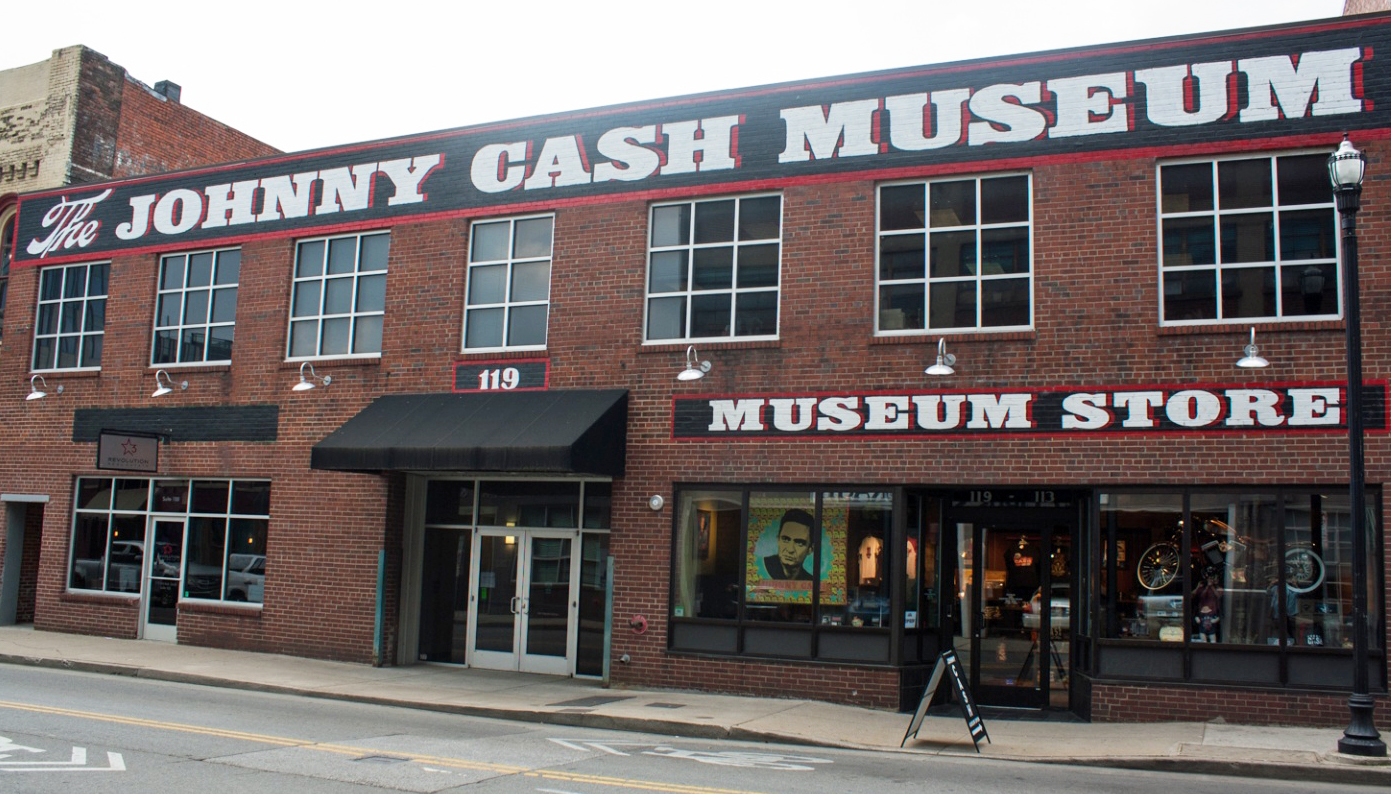
We went to the Johnny Cash Museum which was okay. Unfortunately, a lot of the good Johnny Cash artifacts are in other museums.

Johnny Cash’s prison jumpsuit from his 1969 Live At San Quentin Prison concert at the Johnny Cash Museum.
We were driving in the car and heard a riveting documentary about this goofy guy, Christopher Daniel Gay, from Nashville who holds the American record for the most escapes from custody. The story has inspired two songs and we were told a movie was in the works possibly starring Johnny Depp. I particularly liked the response from his wife when asked how she reacted when her husband first got into trouble with the law – “aahh hit him in the face with a Big Mac.” You can hear a podcast of it here.

Christopher Daniel Gay – The Little Houdini. One of his most interesting escapes was stealing Crystal Gayle’s tour bus to visit his dying mother.
The Parthenon
We visited the Parthenon. Not in Athens but in Nashville. At first we were dismissive and thought that this was the recent folly of some crazy American but we were very wrong. It was built in 1897 as part of the Tennessee Centennial Exposition which was eight years in the making and also featured recreations of Cairo, Venice, the Isle of Capri and Cuba. The decision to build a faithful recreation of the Parthenon stemmed from Nashville’s then nickname as “the Athens of the South” due to their progressive reforms such as free education for all citizens. The scale of this exposition was huge and cost almost $500,000 in 1897 when the average American made about $410 a year in wages.
The only surviving exhibit of the Centennial Exposition is the Parthenon which the organisers went to great pains to get right. Plaster casts were made of the original statue friezes from the British Museum and Athens to ensure their faithful reproduction. The Exposition organisers then consulted classical scholars of the day about filling in the “missing bits”. This included recreating the giant statue of Athena which was considered one of the greatest statues of antiquity but which is now lost to history. It was amazing to glimpse into another age; not ancient Greece, but the age of grand world fairs and expositions where imagination soared on a colossal scale.

The Parthenon in Nashville.
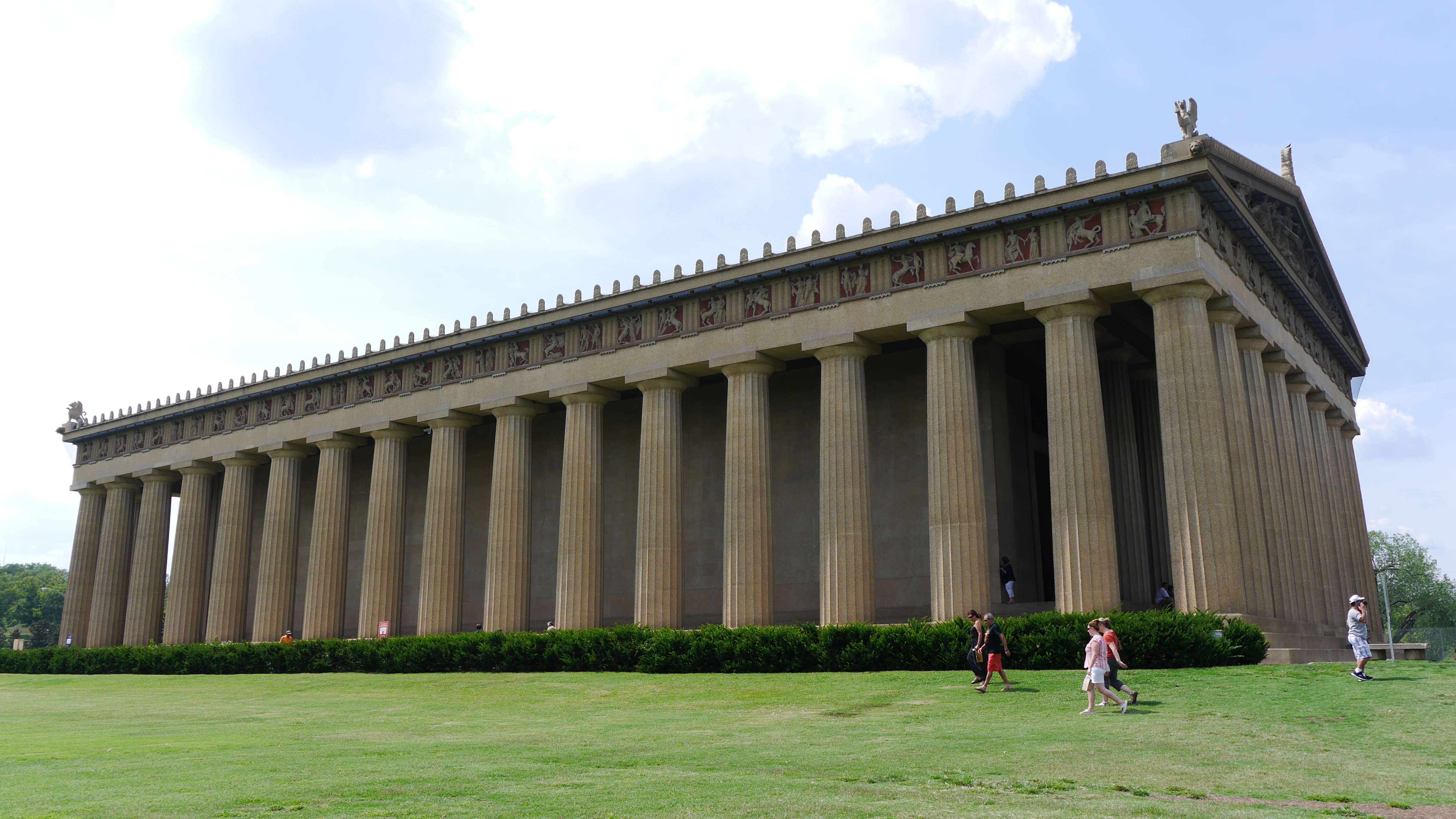
Nashville – The Athens of the South.
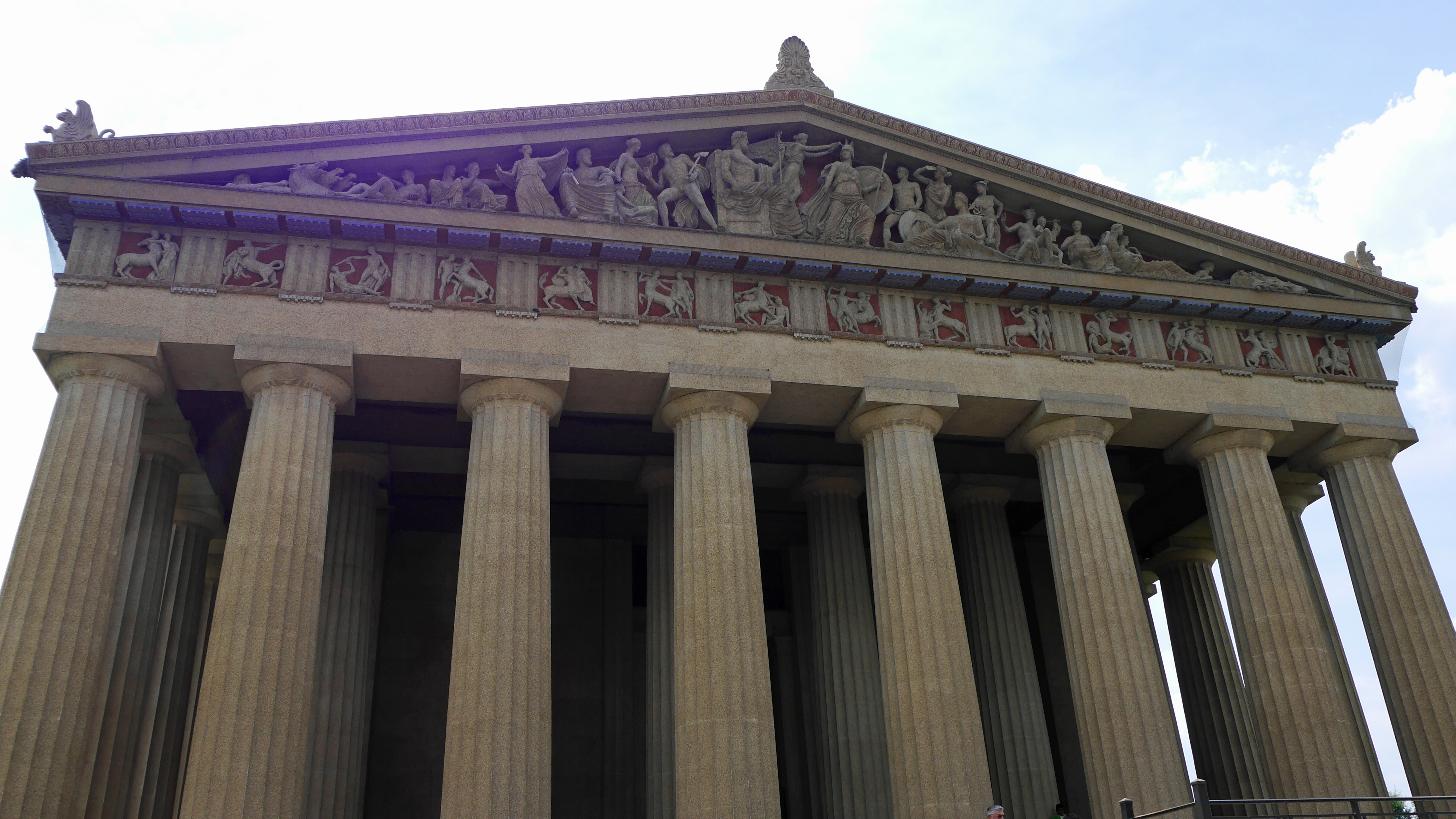
The Nashville recreation of the famous Parthenon frieze (or the Parthenon marbles). This time with the missing bits filled in.
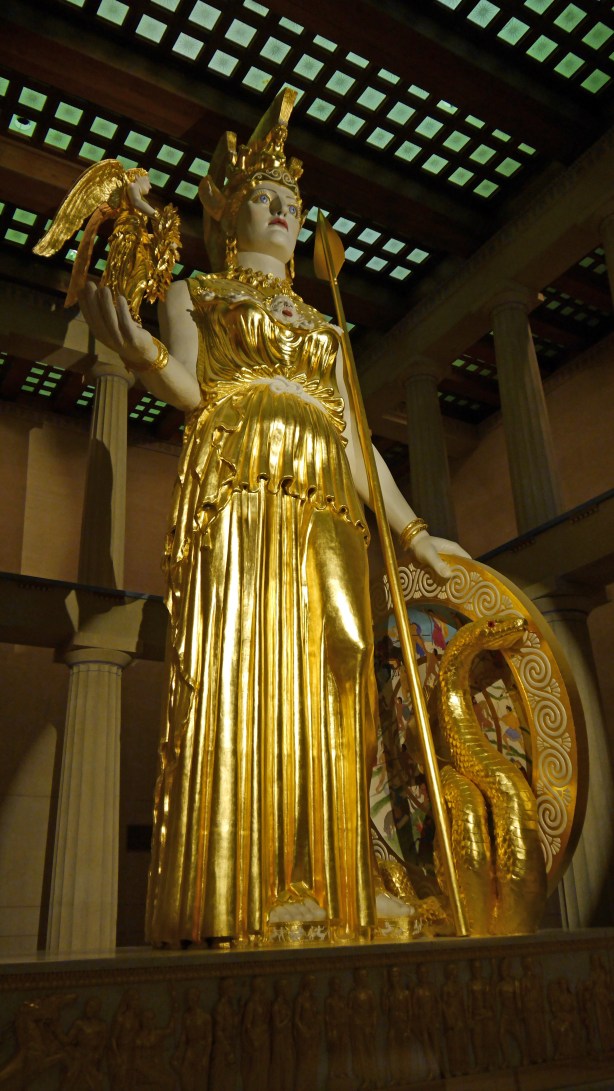
The statue of Athena Parthenos or Athena the Maiden. Athena was the protector goddess of Athens and the original scuplture was made by 5th Century BC Greek sculptor Phidias. Indeed, the Parthenon was only built to house this statue although it later became Athen’s treasury with the 1,100 kgs of gold in Athena Parthenos making up a sizeable part of Athen’s wealth. The Nashville recreation drew on the only written account of the statue by contemporary historian Pausanius who described the statue in the following terms “The statue is created with ivory and gold. On the middle of her helmet is a likeness of the Sphinx and on either side of the helmet are griffins in releif. The statue of Athena is upright, with a tunic reaching to the feet and on her breast the head of Medusa worked in ivory. She holds a statue of Victory that is aproximately four cubits high, and in the other hand a spear. At her feet lies a shield and near the shield is a serpent. This serpent would be Erichthonius. On the pedestal is the birth of Pandora in relief.” The Nashville copy is believed to be the most accurate reproduction in existence, even being made using the same processes Phidias would have used in ancient times.
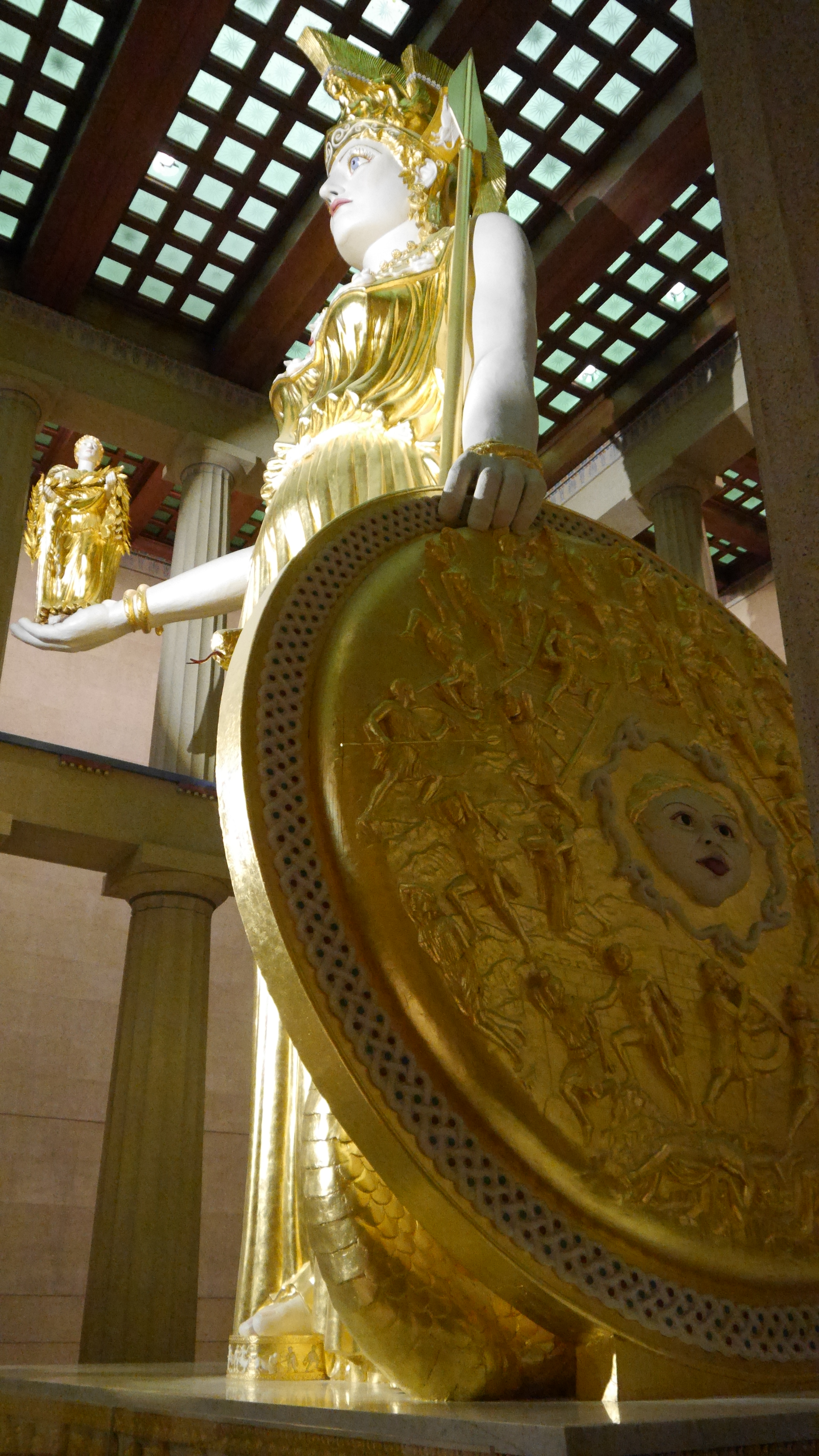
The statue of Athena – The original was stolen by the Romans when they invaded Greece but its whereabouts still remain a mystery. Was it melted for gold or was it hidden somewhere? There are intriguing accounts of people seeing it in Constantinople in the 10th Century but no mention after that. We need to get Indiana Jones on the case.

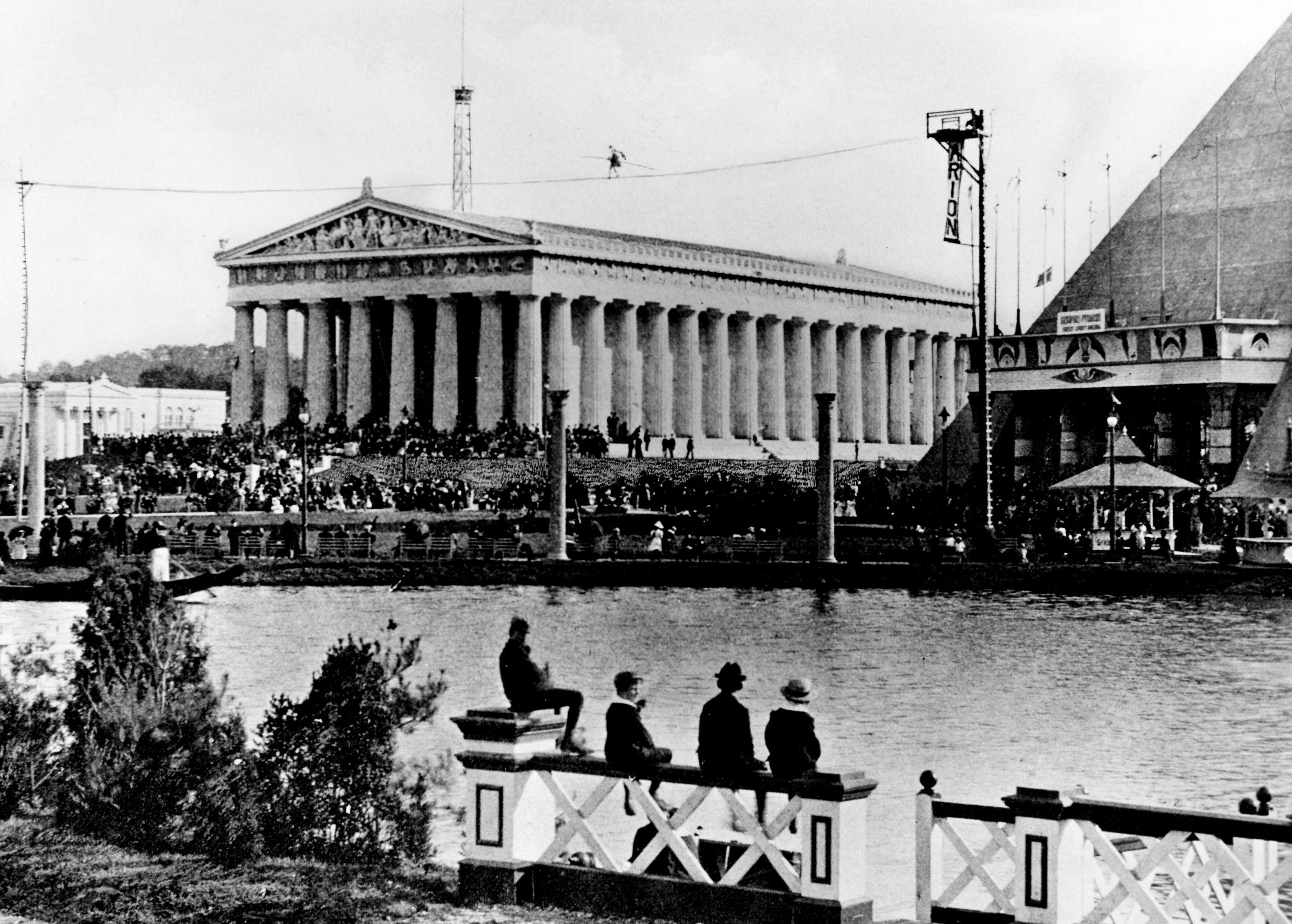
A picture of the 1897 Tennessee Centennial Exposition. Here you can see the Parthenon next to a recreation of the Great Pyramid of Giza.

A recreation of the Blue Grotto from the Isle of Capri.

A recreation of the streets of Cairo.
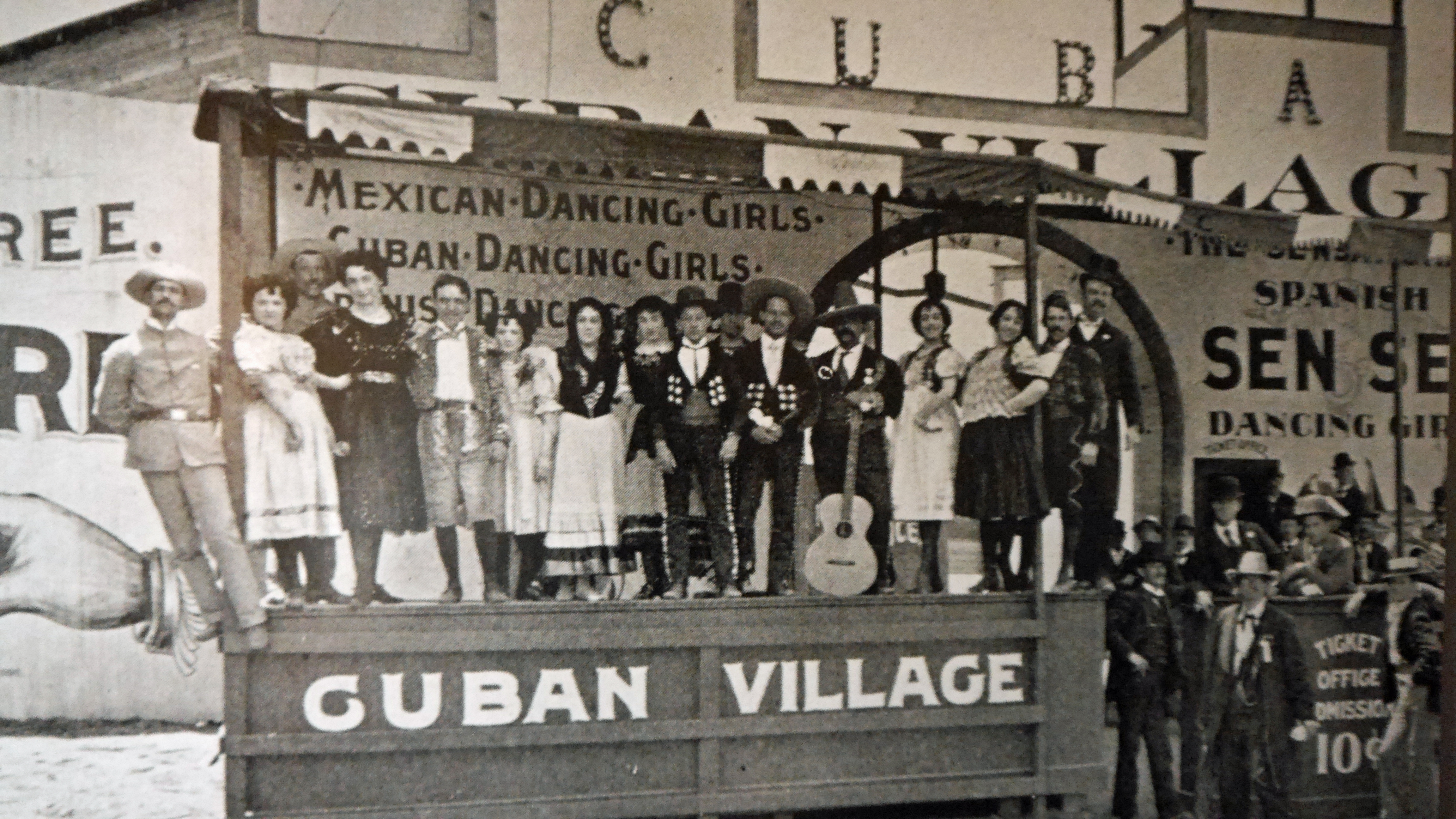
A recreation of a Cuban village.
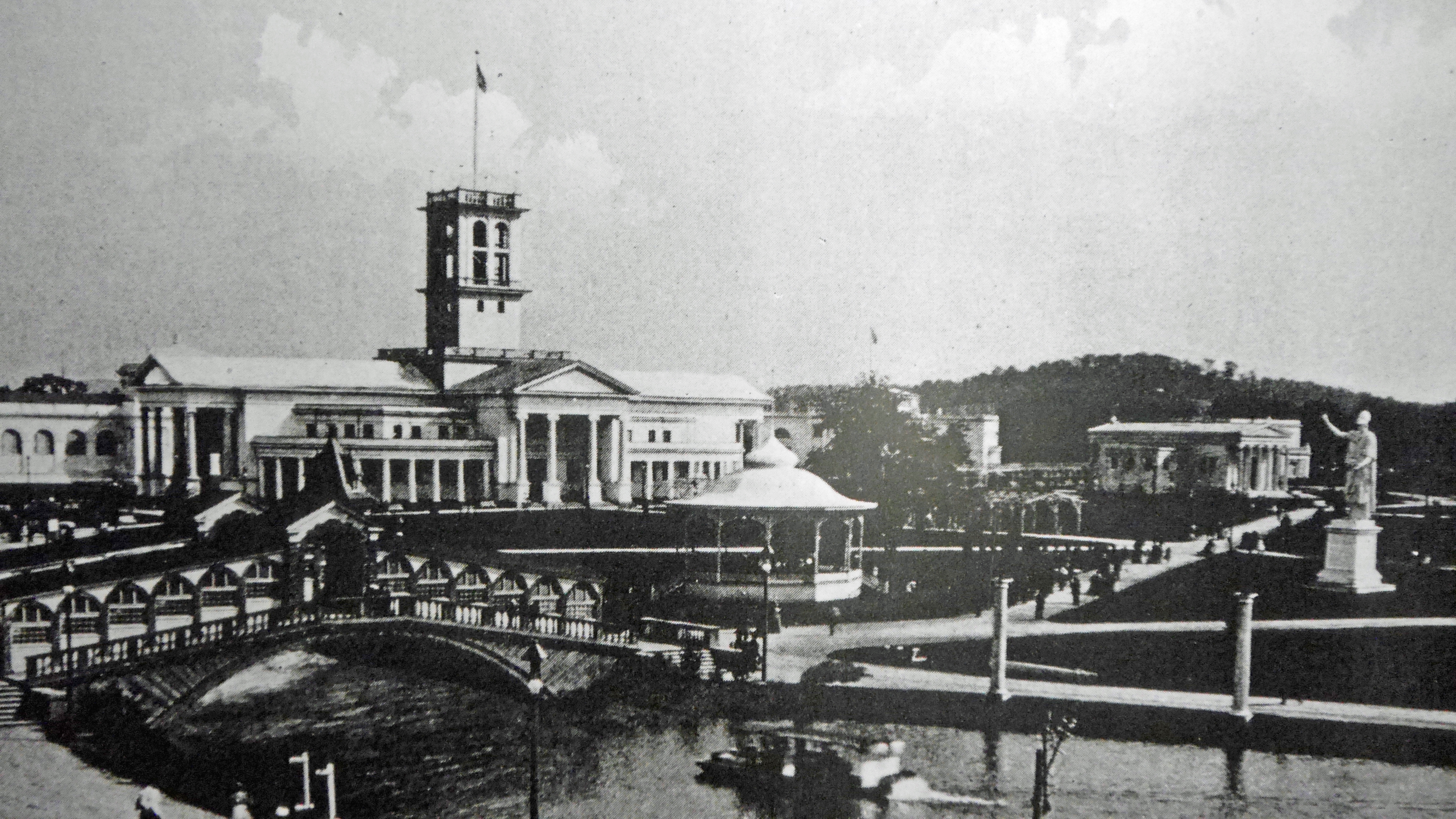
A recreation of Venice and its Rialto Bridge.

Taller than the Parthenon, the 12 metre high recreation of Athena Promachos (or Athena who fights in the front line) which originally stood on the Acropolis next to the Parthenon and was sculpted by Pheidias in the 5th Century BC. This is the second giant Athena statue lost to history. Again, it was plundered by the Romans and thought to have been destroyed in the Middle Ages. Luckily, the Athenian coins of the day had images of this statue and many recreations were made. Unfortunately, the recreation made for the Tennessee Centennial Exposiiton was only made out of plaster and decayed.

The Giant Seesaw – one of the rides at the 1897 Tennessee Centennial Exposition. It took riders 63 metres into the air.

Shooting the Chute – another ride at the Exposition.
Jackson
Driving from Nashville to Memphis, we had our choice of rest stops such as Clarkesville (but we missed the last train and didn’t know if we were ever coming home), Nutbush (a little ole town which only had a church house, gin house, school house and an out house) but we decided on goin’ to Jackson as we had been talkin’ about it ever since the fire went out.
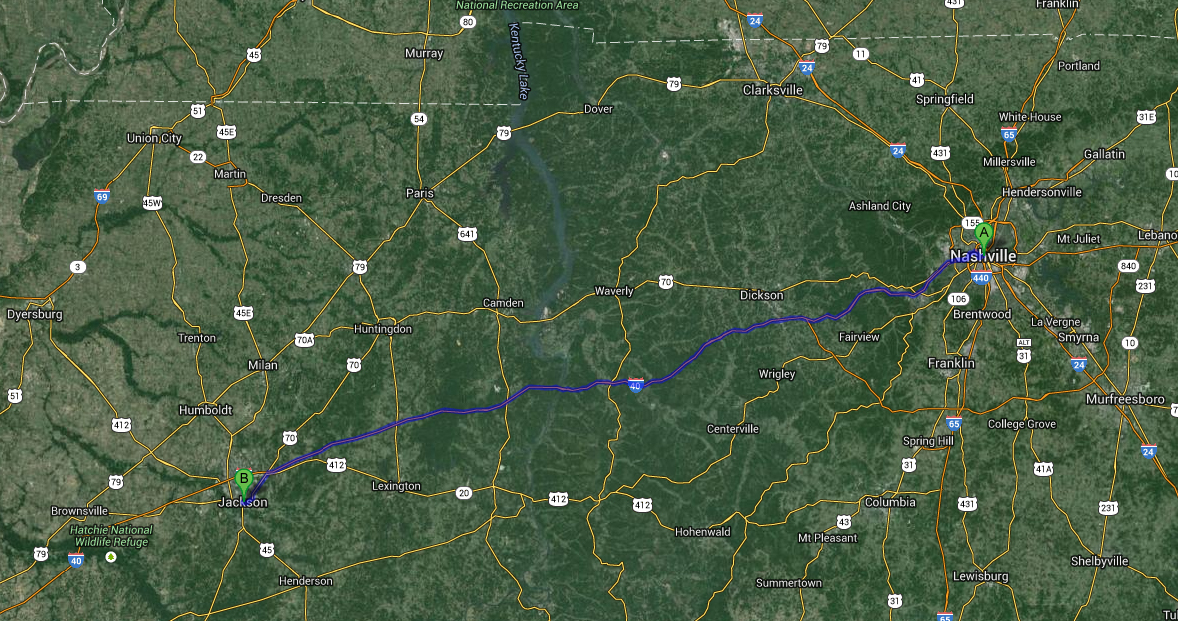
We didn’t know what to expect from Jackson but discovered it was the hometown of Carl Perkins and arguably, the birthplace of rockabilly music.
Jackson was also the home of Casey Jones, the brave engineer who died saving his passengers on April 30, 1900. He was named Casey after his birthplace of Cayce in Kentucky. There is an extensive museum next to his house which also has a full-scale replica of the infamous Cannonball Express as well an interactive small-scale simulation of the train crash. His fame in popular culture grew from his friend Wallace Saunder who wrote a ballad to honour Casey’s death. The song has been recorded by hundreds of artists and spawned a number of movies, a TV series (with Gilligan Island’s Alan Hale) and, bizarrely, a character in Teenage Mutant Ninja Turtles. It was interesting to learn of the details behind Jones’ life and anchor the popular culture myth to a real person and a true incident.
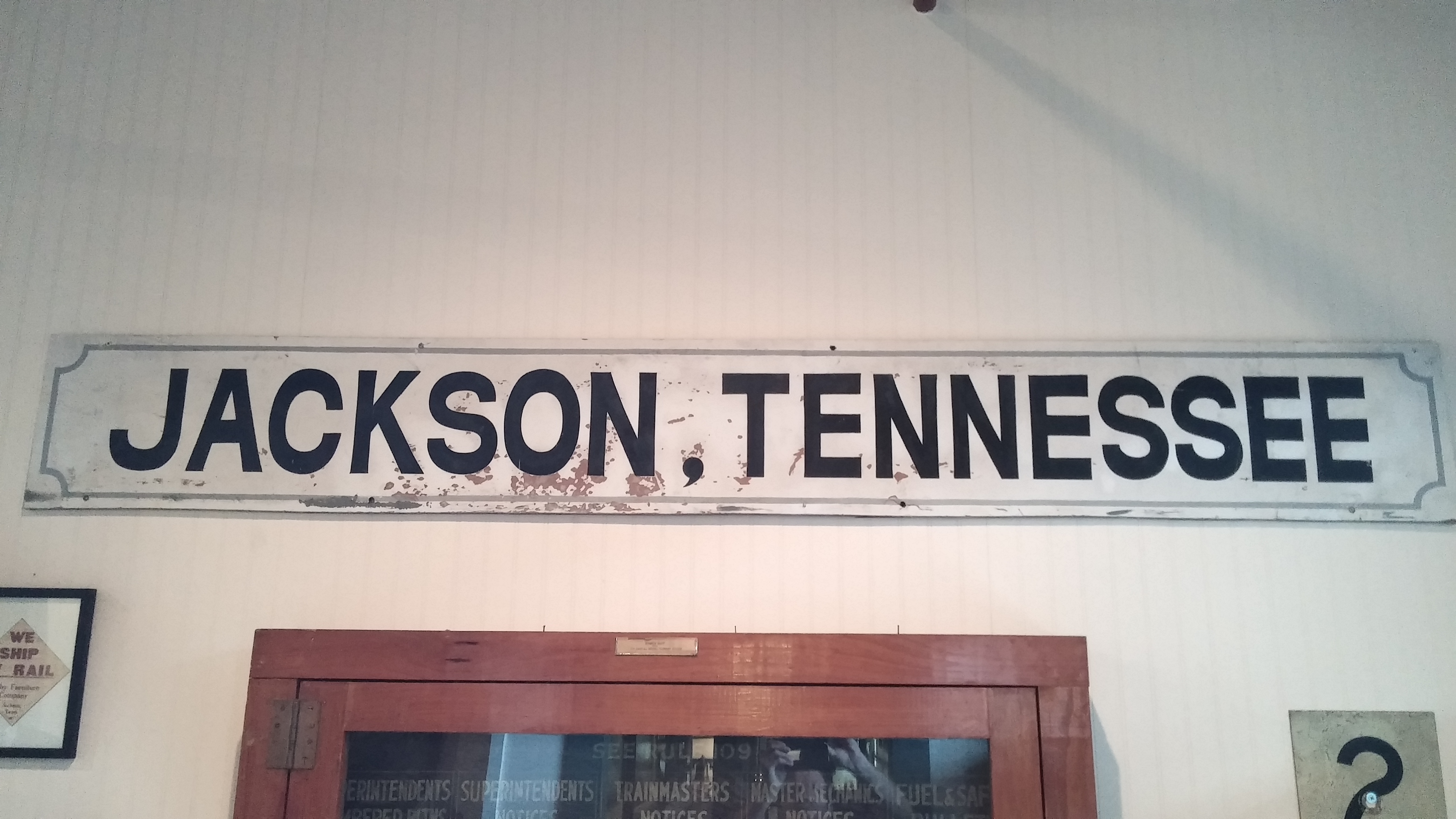
It was hotter than a pepper sprout the day we arrived in Jackson.

Outside the Casey Jones museum. I’m guessing Pete Seeger never visited here.
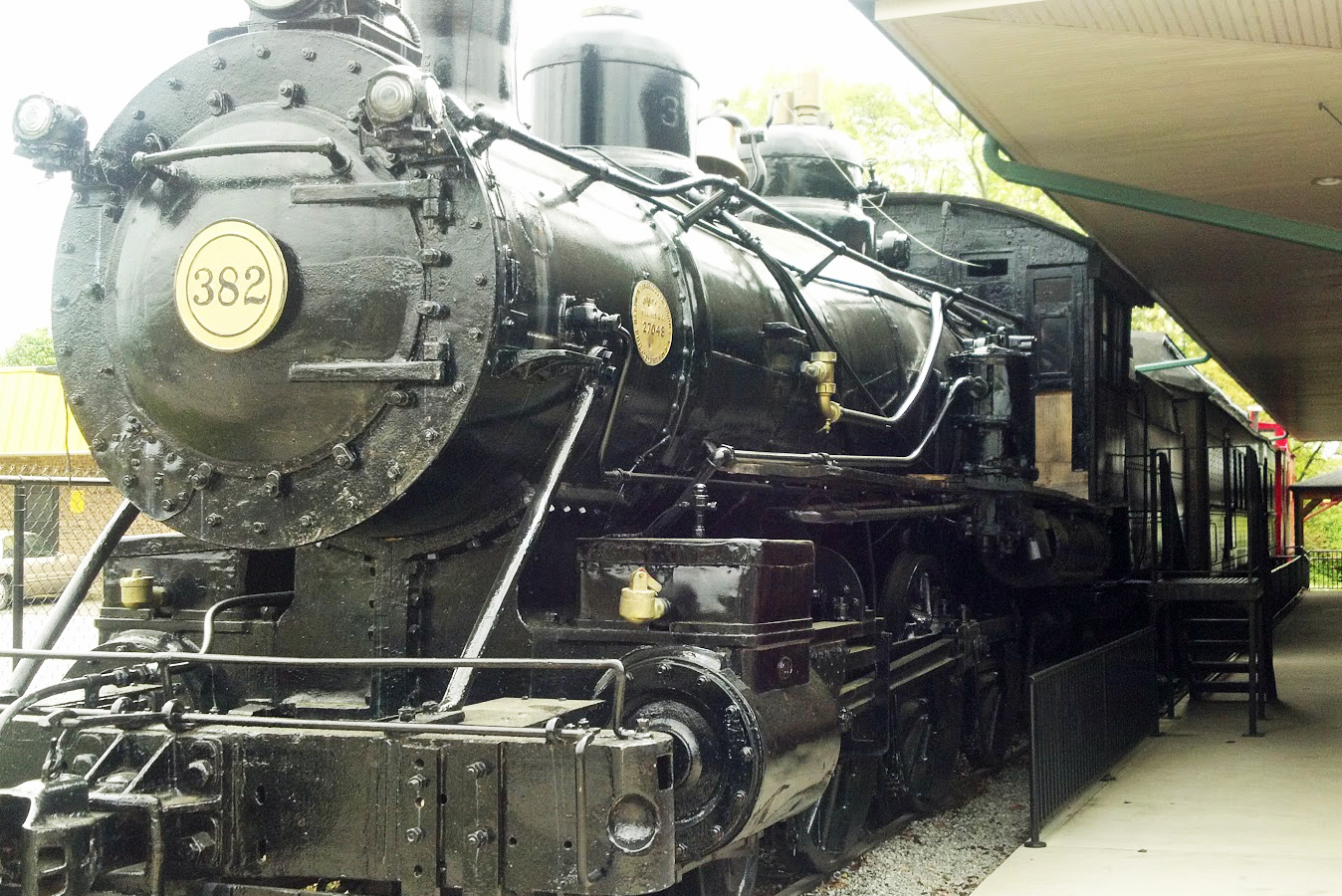
A reproduction of the 382 Cannonball Express from the famous crash. Cause they’re two locomotives and they’re bound to bump.


One of the few photos of John Luther “Casey” Jones.
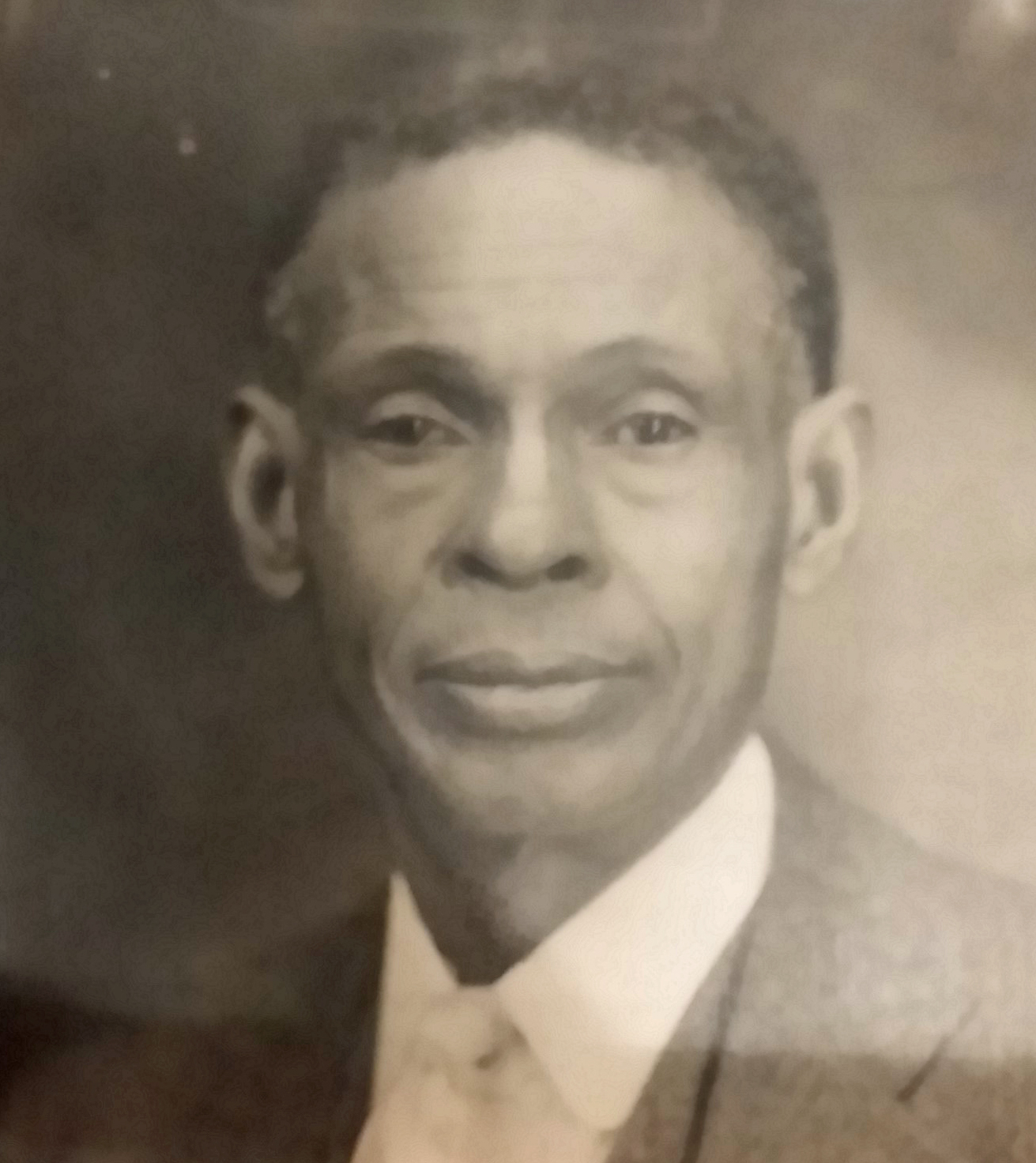
This is Casey Jone’s good friend Wallace Saunders who wrote the ballad that would start the legend. He actually ripped off a popular existing song The Wreck of the Six Wheeler changing the words and tempo to create the distinctive song we know today.
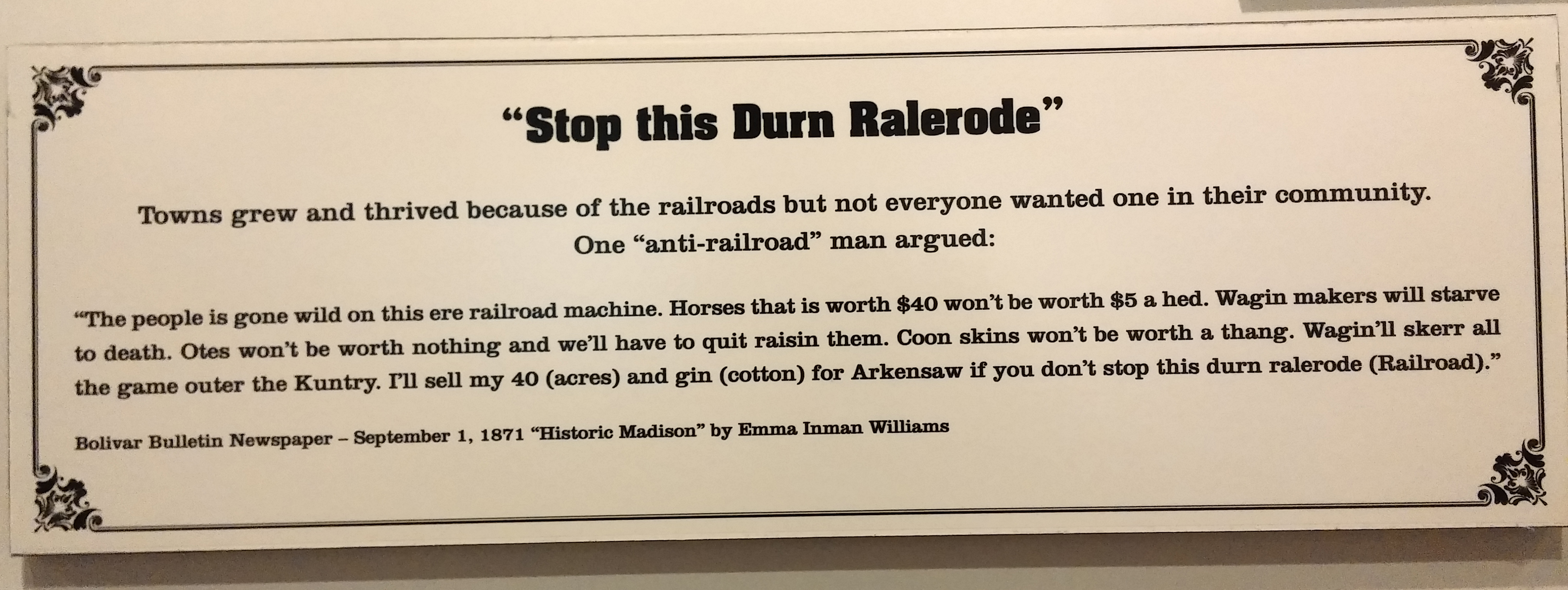
I loved this sign from the Casey Jones museum.
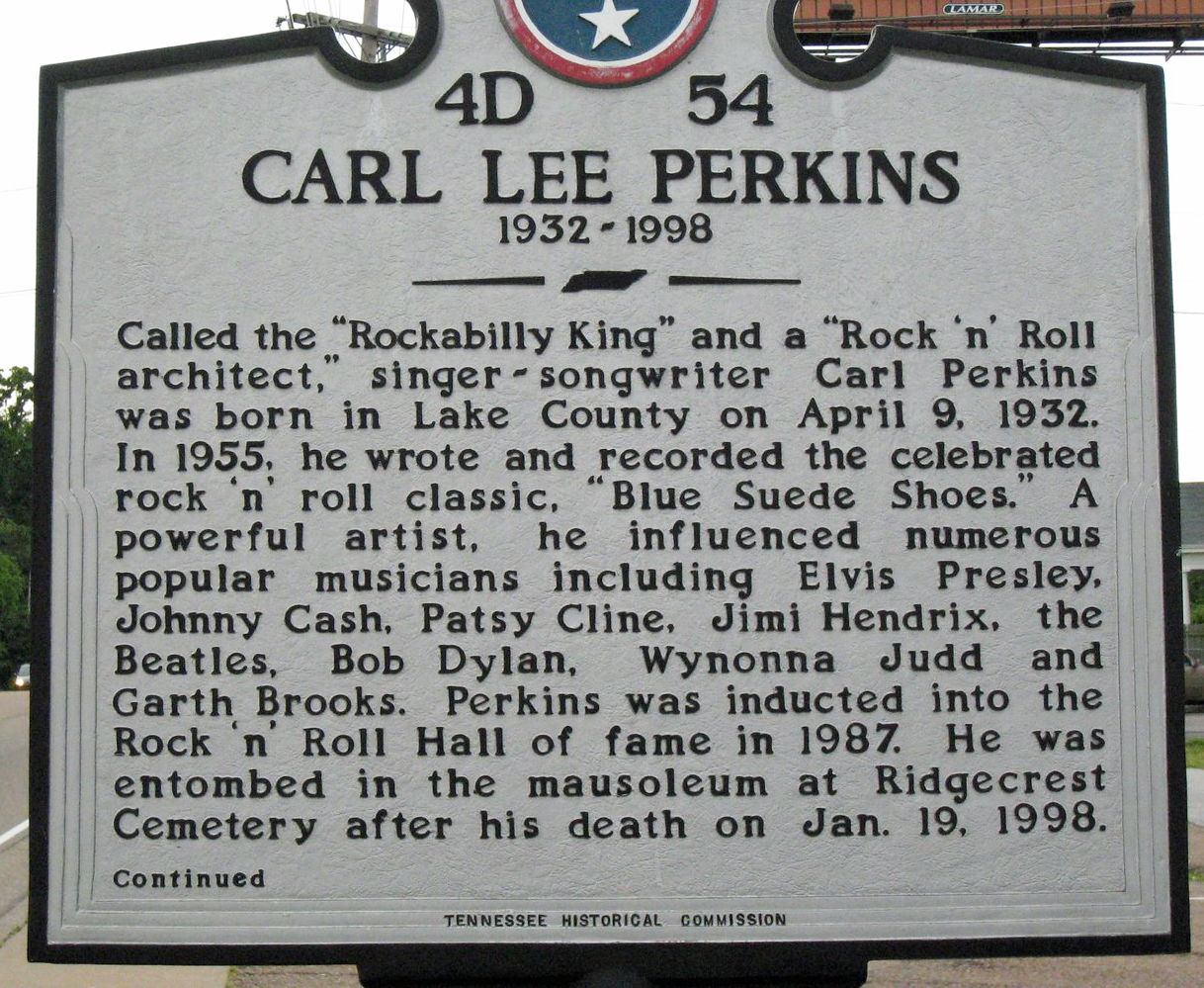
Of course, Jackson isn’t just home to locomotive drivers, it is also home to Carl Perkins who mashed rhythm & blues with “hillbilly” music to pioneer the early rockabilly sound. It’s one for the money… Perkins rebuffed critics of rockabilly at the time by saying “If it weren’t for the rocks in its bed, the stream would have no song”
Memphis
We drove from Jackson to Memphis and arrived just as the sun was setting.

Full Gospel Tabernacle Church
When we woke up on Sunday morning, we thought it only appropriate to go to church at the Reverend Al Green’s Full Gospel Tabernacle Church. Unfortunately Al Green was recovering from an operation and was not there but the service was no less interesting in the capable hands of the Reverend Valentine.
We caught a cab there because I was sick of driving. When we told our cab driver where we wanted to go, his eyes widened. He introduced himself as Reuben Fairfax Jr, the co-writer of the Al Green song Belle and the producer of several of his later gospel albums. We had a great chat about Al Green and the music scene in Memphis as well as the recent shooting in Ferguson (he grew up in St Louis). These are the chance encounters I love about America.
The gospel service itself was fantastic and even Harrie the heathen enjoyed it. Almost everything in the service is sung. Oh but how; with beautiful harmonies and gut-wrenching conviction from the different solo singers. It also involved the full participation of the parishioners. This included us as we were drawn in to clapping and response calls. We were also incorporated into one of the sermons. Reverend Valentine loudly and proudly proclaimed that people from as far away as Australia had come to witness God’s glory.
The other noticeable difference from traditional services, was the humour and warmth. These guys made sure everyone felt at home and was entertained. And this made the message a better sell. As Harrie said, “It was like going to see a free concert.” We all walked out on a natural high. Praise the Lord!
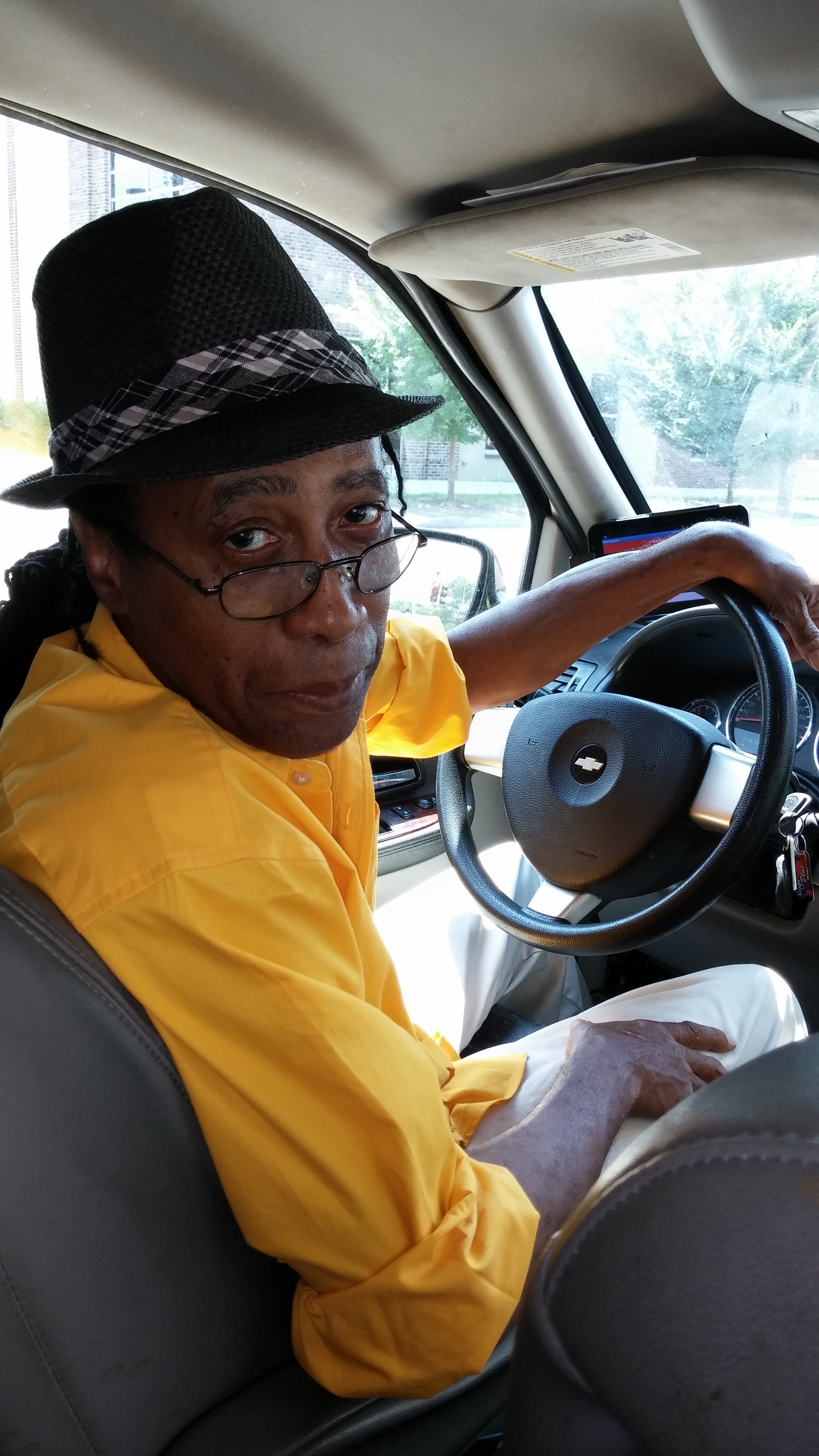
Here is Reuben Fairfax Jr, record producer, composer and session guitarist but who also needs to drive a cab to make ends meet.
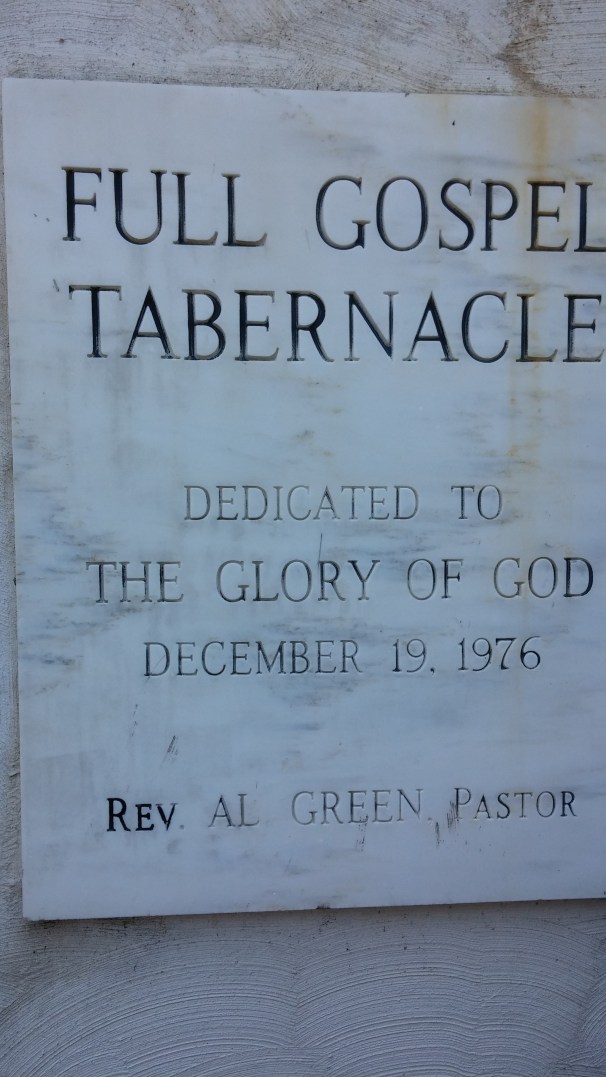
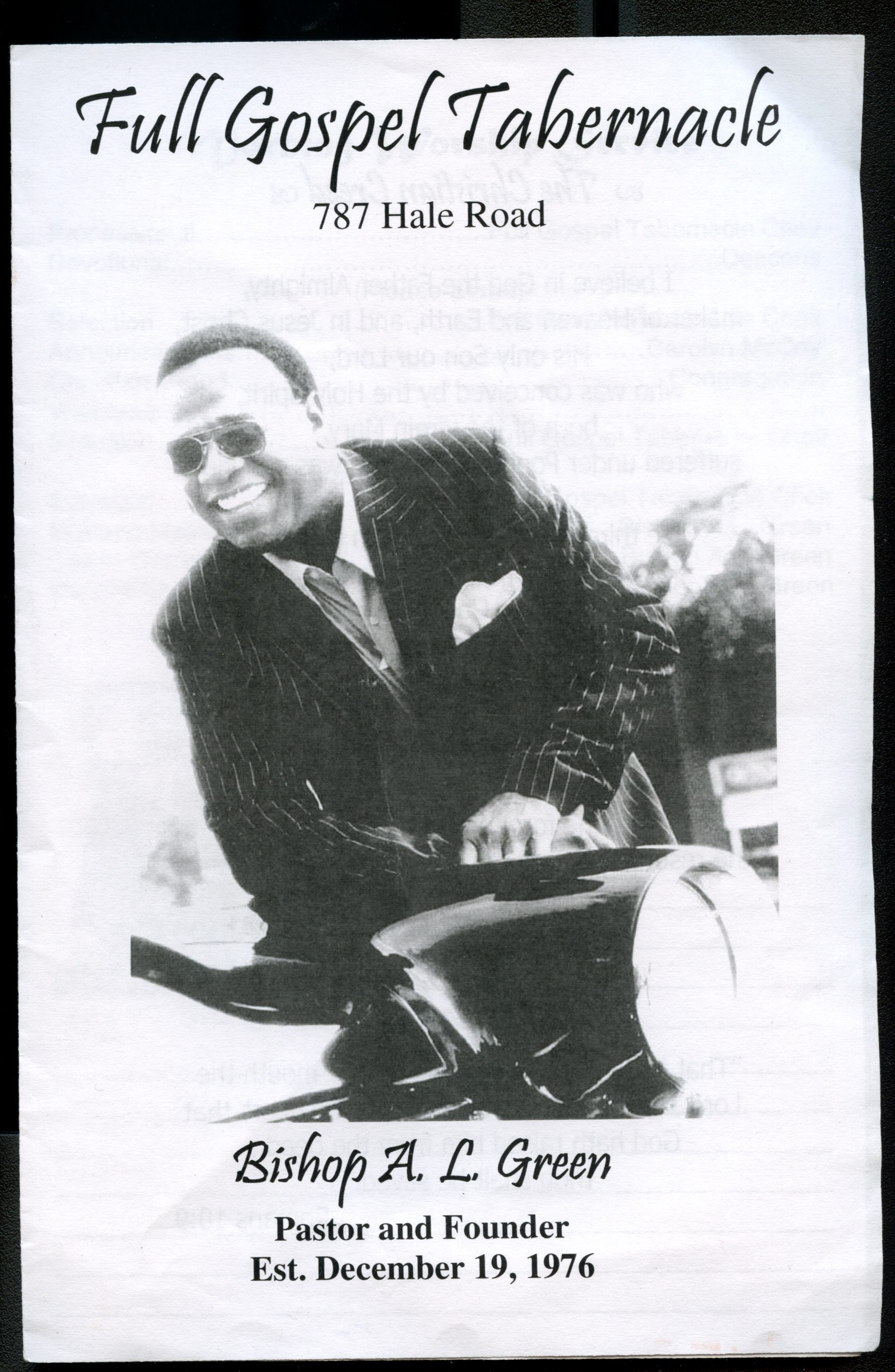
The service sheet.
Beale Street
Having sampled the sacred, it was now time to partake in the profane. And what better place than Memphis’ answer to New Orleans’ Bourbon Street – Beale Street. When the twenties roared, Beale Street thundered. It was a raucous roost for gamblers, gangsters and guitar-slingers. Blues music could be heard inside the bars and out on the streets there was a carnival-like atmosphere. Some of that spirit abides today but, like Bourbon Street, it has been commercialized for tourists like us.
We had a delicious Southern-style meal at the Rum Boogie Cafe while we listened to a local Blues band, Darren Jay and the Delta Souls. This place had a good vibe and seemed to be well liked by the locals. Reuban Fairfax Jr had actually recommended it to us. We enjoyed it so much that we returned for more the next day.
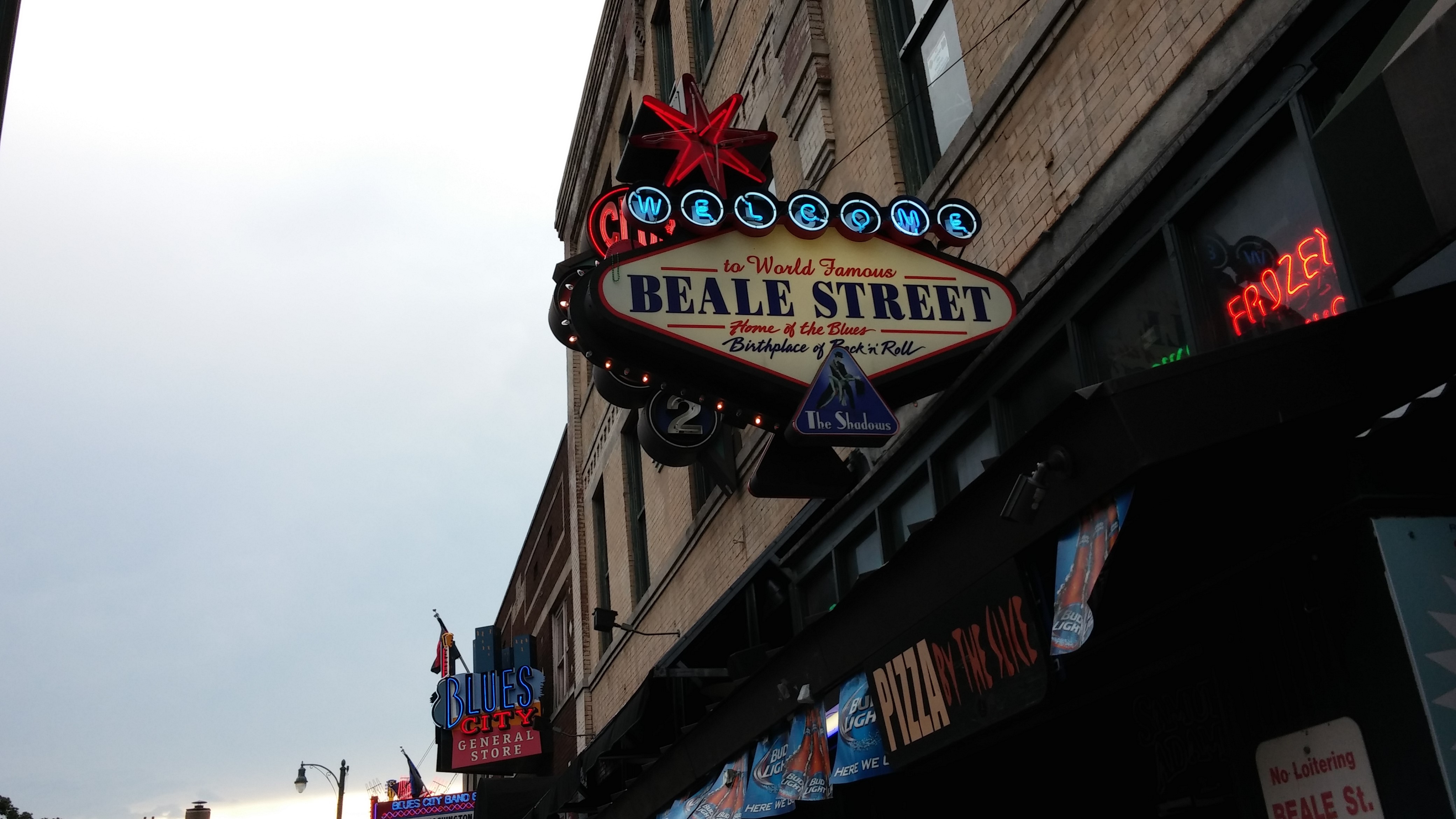
Walking in Memphis with our feet ten feet off of Beale.
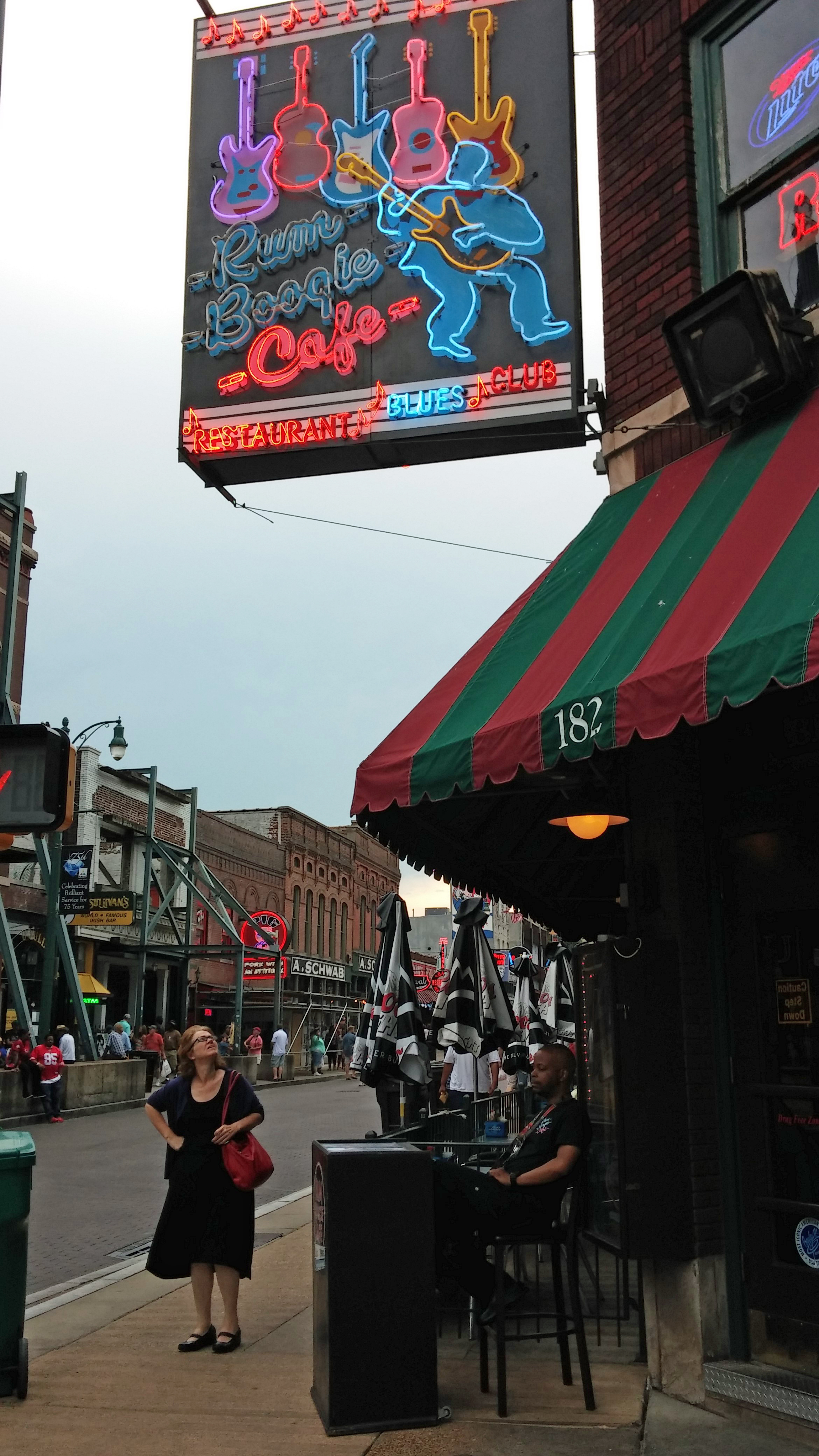
Outside the Rum Boogie Cafe.
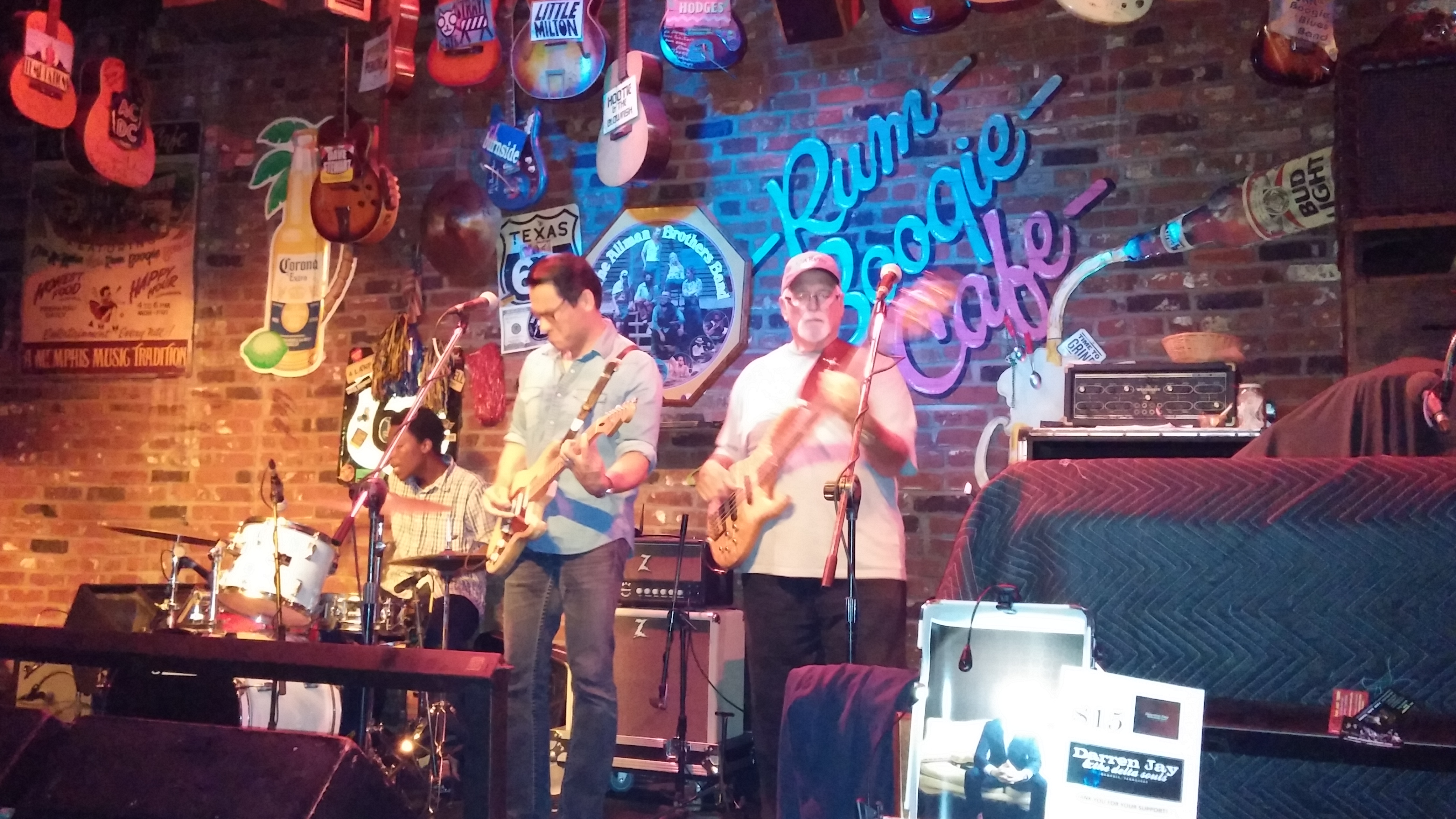
Darren Jay and the Delta Blues performed while we ate.

Who is that meanie stealing Harrie’s french fries at the rum Boogie Cafe?
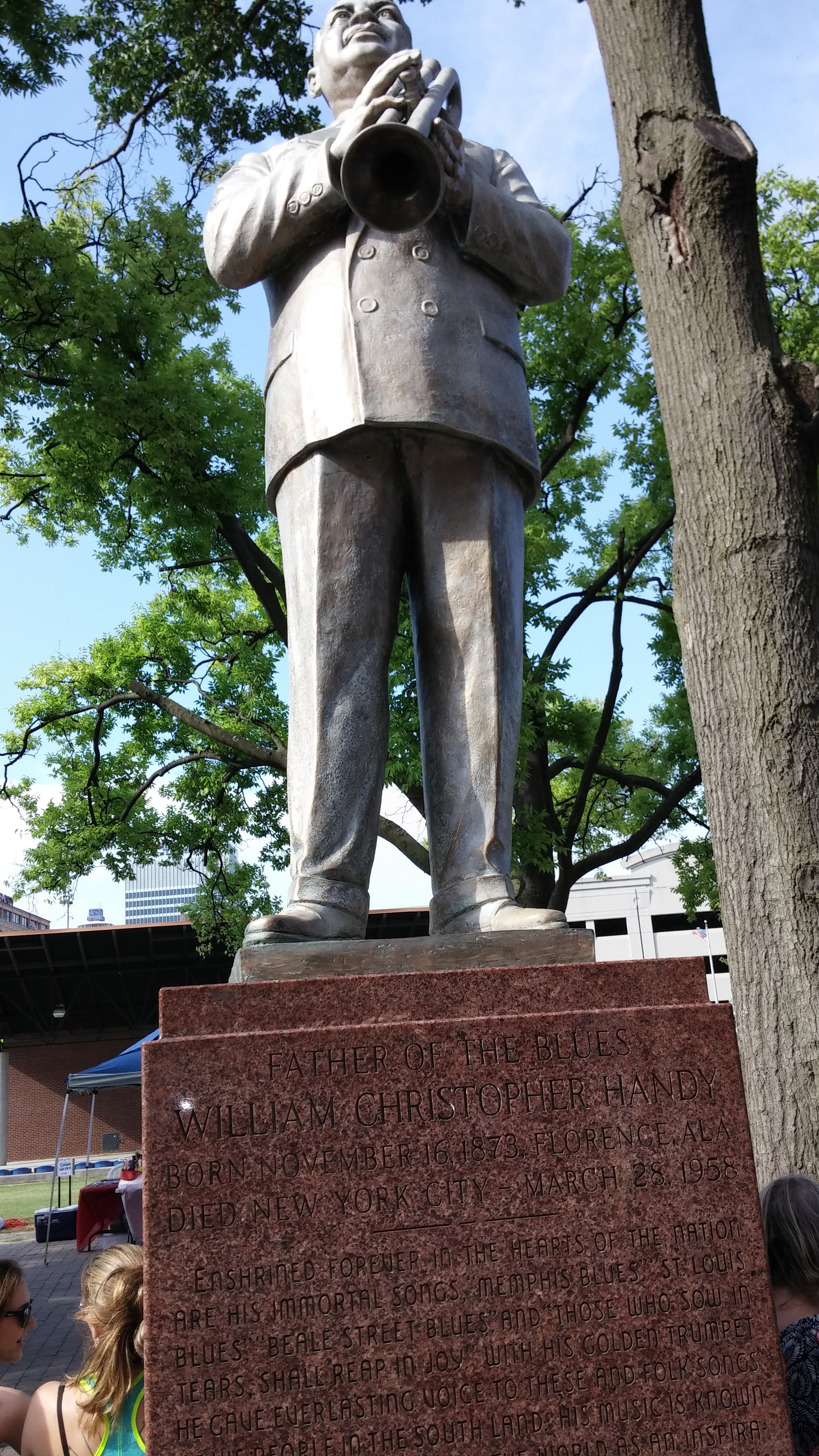
A statue of WC Handy in Beale St. Handy is considered the “The Father of the Blues” not so much for inventing it (although he did pioneer many Blues standards) but more for popularizing it through recordings, sheet music and touring. Strangely enough, his 12-Bar blues led directly to the invention of the foxtrot dance step. You can find out about this and his other influences in the 1958 film St Louis Blues starring Nat King Cole.

The Gibson guitar factory off of Beale St.

Spotted in the window of a music shop in Beale St. They are called Jammin’ Johns and you can check out their web site here. The company’s slogan is “Music to your rear.”

Spotted in a shop exhibit in Memphis, White House Improved cigars with tobacco from Havana when Cuba and America still smoked the peace pipe (although Obama seems to be relaxing the tough U.S. Stance). Did we ever have an Australian Lodge Improved ciggie? I can see old Bob Hawke having a sly draw on one of those.
STAX Records
Founded by Jim STewart and his wife Estelle AXton, Stax Records was home to Otis Redding, Isaac Hayes, Booker T and the MGs, Carla & Rufus Thomas, the Staple Sisters and countless other soul artists. The original studio was torn down in the 1980s after STAX went bankrupt but a museum which recreates the original studios has been built on the same site.

The distinctive clicking fingers of the STAX Logo
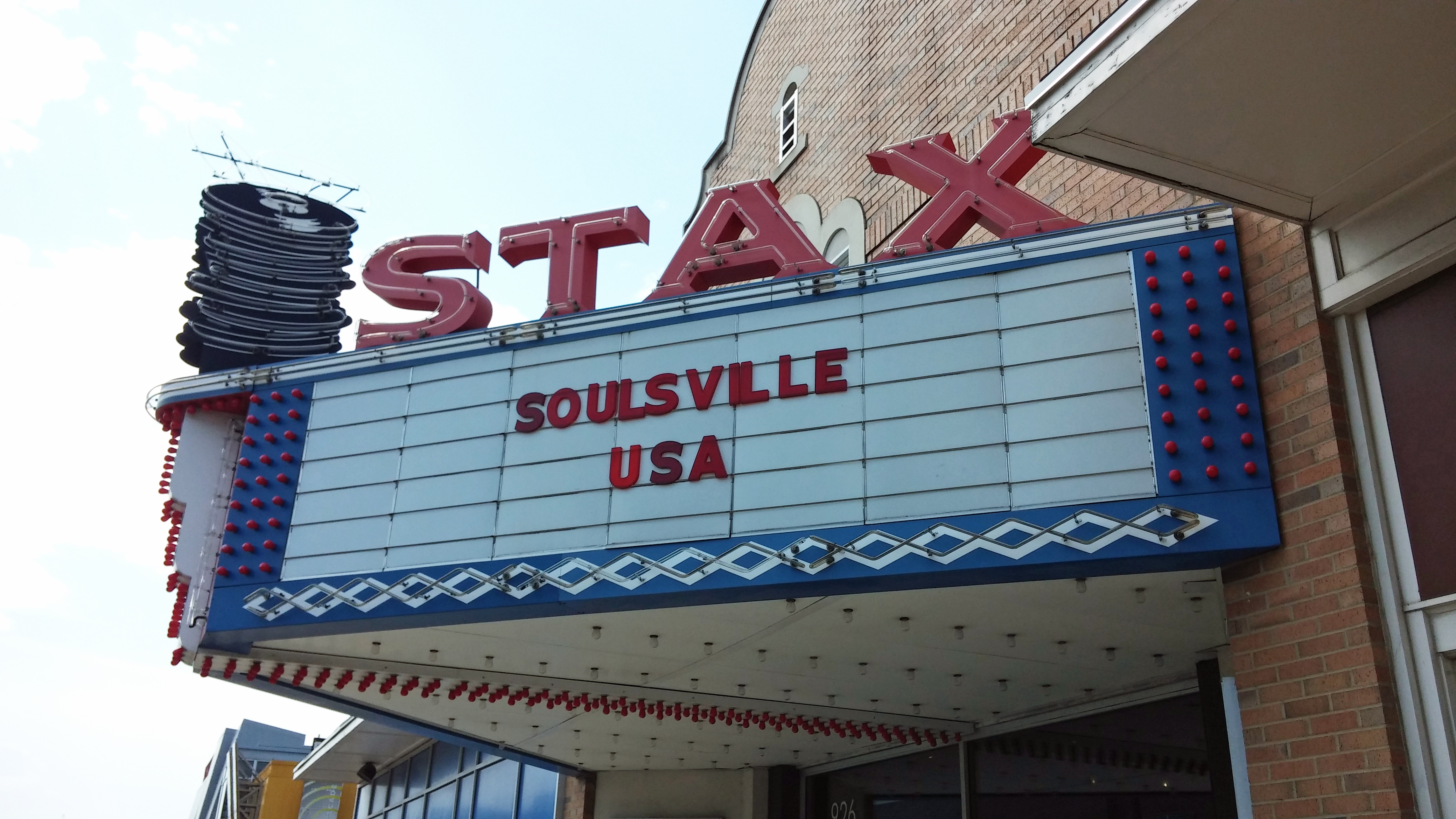
STAX Records


This is the piano on which Booker T and the MGs wrote and performed Green Onions.

This was Otis Redding’s favourite suede jacket which he wore on many album covers
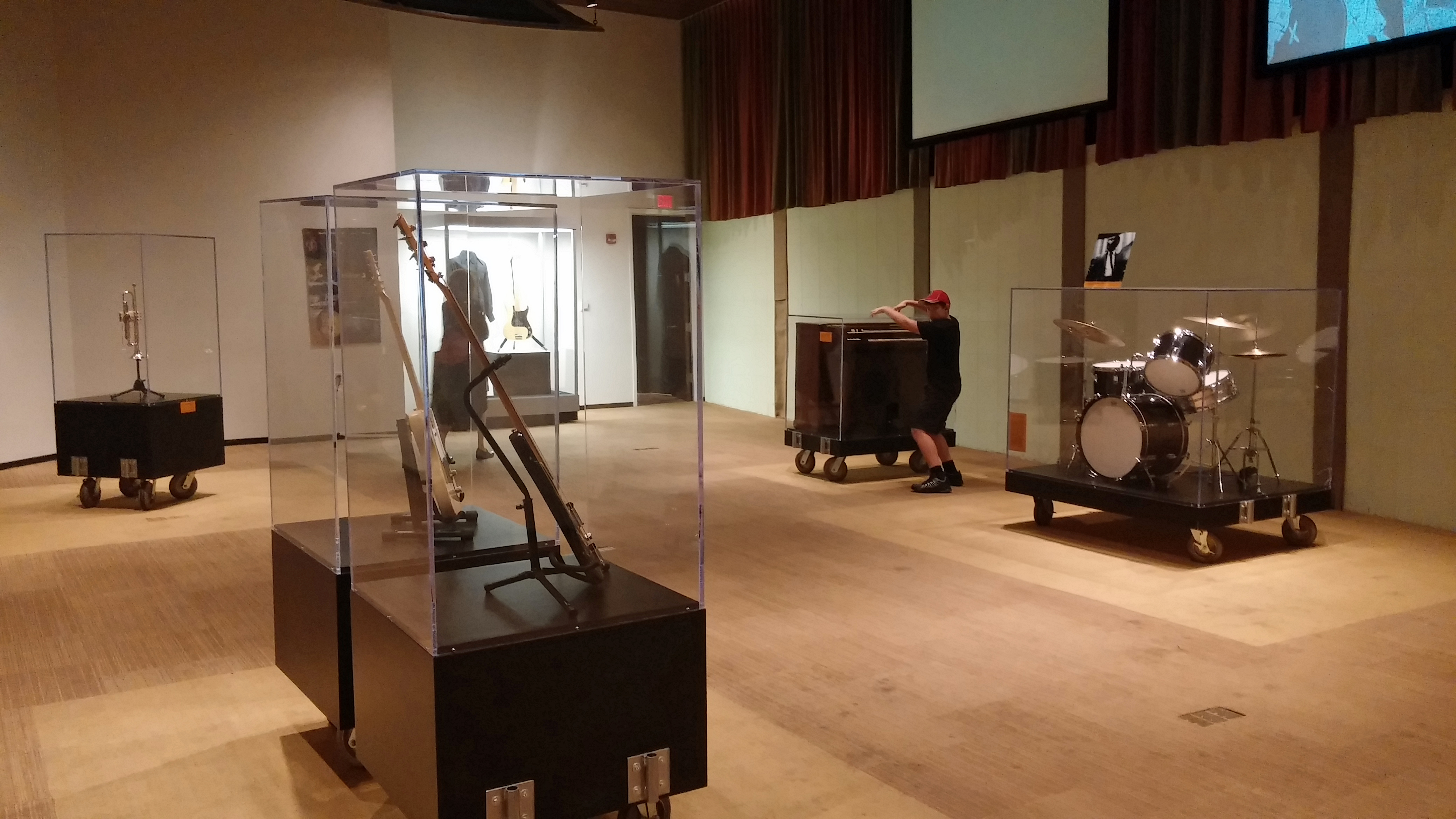
This is a recreation of STAX’s Studio A. It was a bit strange how the instruments were all boxed up but I could sort of imagine the studio vibe that would have existed with say, Isaac Hayes on the piano and Jim Stewart at the control panel during a Sam and Dave session. Actually, there was a funny story about Sam and Dave’s big hit Hold On I’m Coming. Apparently, Isaac Hayes was tinkling on the piano while Dave Prater (the Dave of Sam and Dave) was tinkling in the toilet. Hayes came up with a killer groove and was annoyed that Dave was taking too long in the toilet. “C’mon Dave” he kept yelling. Finally Dave came running out of the toilet pulling up his pants in the process while yelling back “Hold on, I’m Coming!” which became the lyrics to the song.
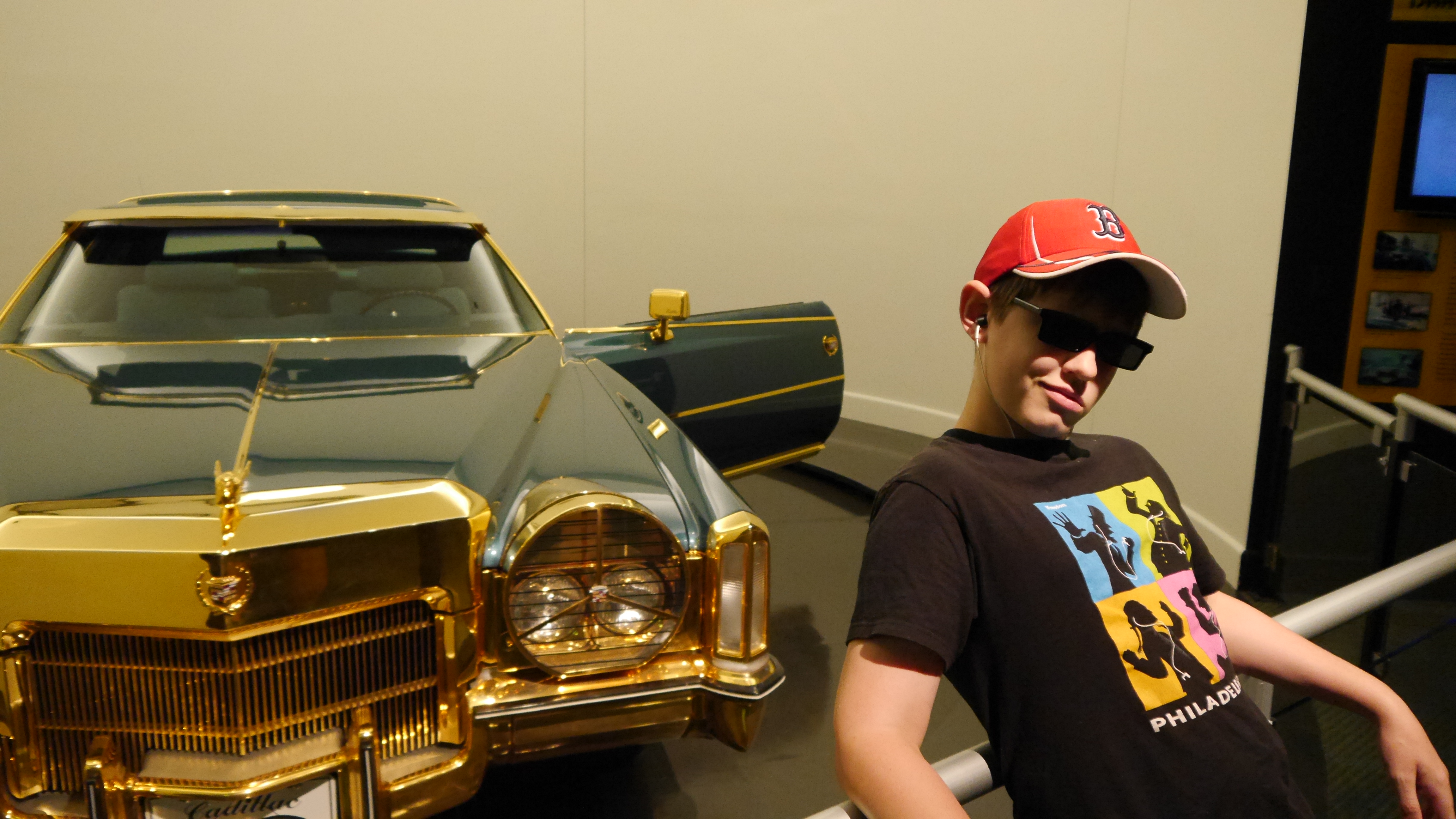
Isaac Hayes’ 1972 gold-plated Cadillac. Can Ya Dig it?
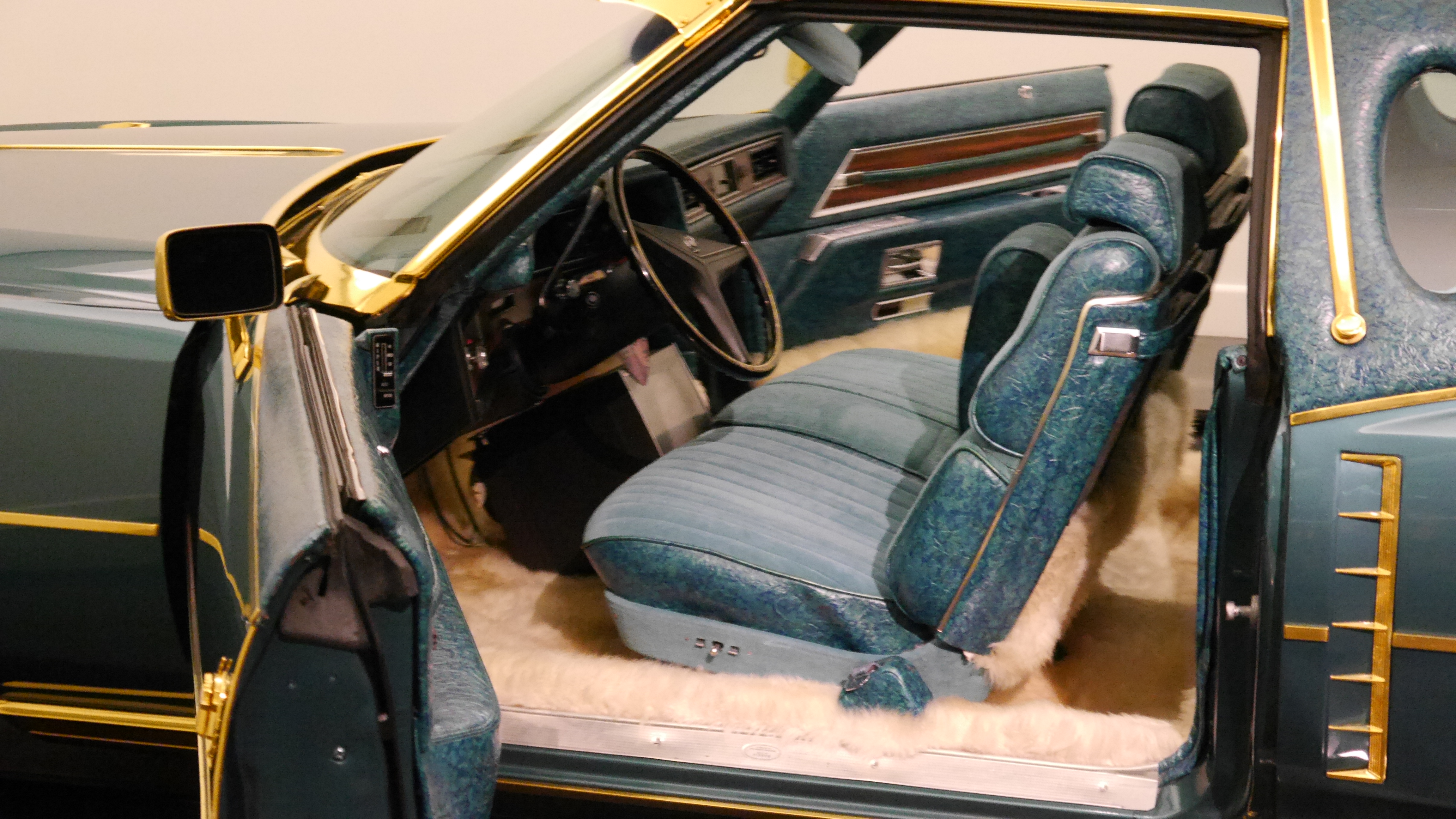
Check out the shaggin’ pile on Haye’s Caddy. This is definitely a John Shaft car.
W-HER and W-DIA Radio Stations
Memphis was also the home of the first all-black radio station and the first all-women radio station. Right on brothers and sisters! I particularly loved the call signs of these stations. W-HER for the women’s station (founded in 1955) and W-DIA, originally named after DIAne the original owner’s daughter but changed to We Did It Again when it became an all-black station in 1948. When WDIA upgraded to a more powerful transmitter in 1954, they introduced a slogan that has become my all-time favourite radio tag line: WDIA – Broadcasting 50,000 Watts of Goodwill. This was also namechecked in the Pixies’ song Bam Thwok.

WHER wasn’t just the first station in America to be run by women, it was the first station in the world.

An original WHER radio mike.
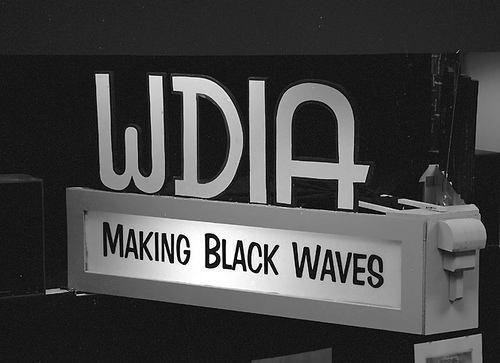
WDIA – We Did It Again – broadcasting 50,000 watts of goodwill to Memphis.

The Peabody Hotel
We stayed in the regal Peabody Hotel in Memphis. The Peabody is also the home of the Peabody Ducks. Back in the 1930s, the general manager of the Peabody Hotel returned to the hotel from a hunting trip with his duck decoys. Having knocked back a few Jack Daniels (whose distillery in Tennessee we unfortunately didn’t get to see), he thought it would be a capital idea to put the decoy ducks in the hotel foyer fountain. Apparently, this was a hoot to all present and celebrated for some time afterwards (obviously back when people were easily amused).
That may have been the end of the story but for the arrival of a circus trainer in 1940. The circus trainer met with the hotel general manager and offered to train live ducks to march into the fountain. The general manager thought that this would be even funnier than decoy ducks and hired him on the spot. Thus began the tradition of the daily duck march that has happened every day since at 11am with a return march at 5pm. The ducks live in the Duck Palace on the 12th floor and are marched down to the foyer by the Duckmaster (not sure of the recruitment processes for this position). The ducks stay in the fountain until they are marched back to the palace in the evening. Past Duckmasters are immortalised in a Duckmaster walk of Fame on the hotel’s footpath. A gloriously stupid tradition.
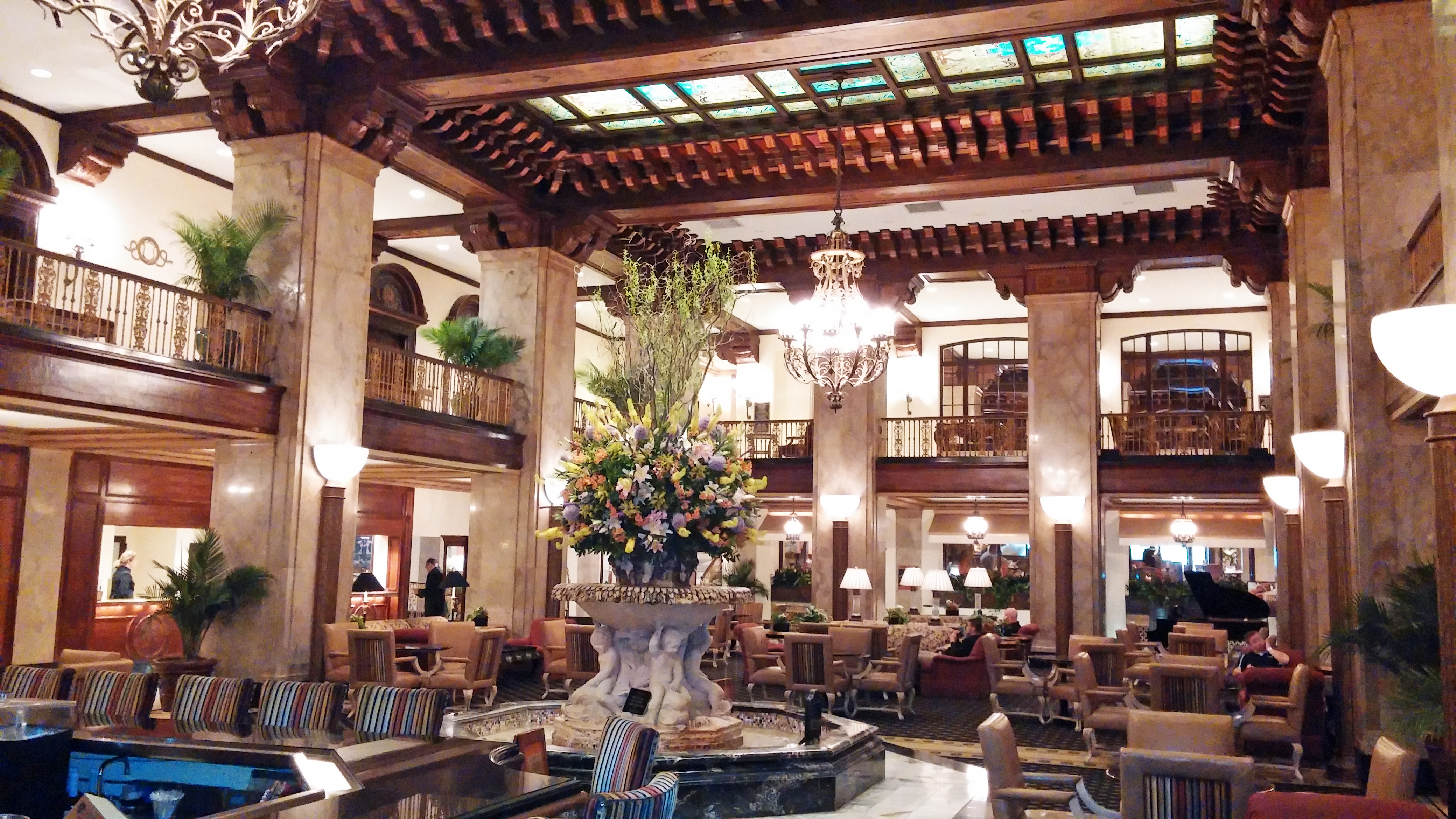
The beautiful Peabody Hotel lobby.

Our Peabody room key. We had duck-shaped soap, duck-shaped butter on our morning toast and a rubber duckie for our bath.

The Peabody Ducks in their fountain.
The Rock n Soul Museum
This was set up by the Smithsonian to house parts of their music collection and is naturally enough in Memphis, music city. Yet another great Memphis music attraction.
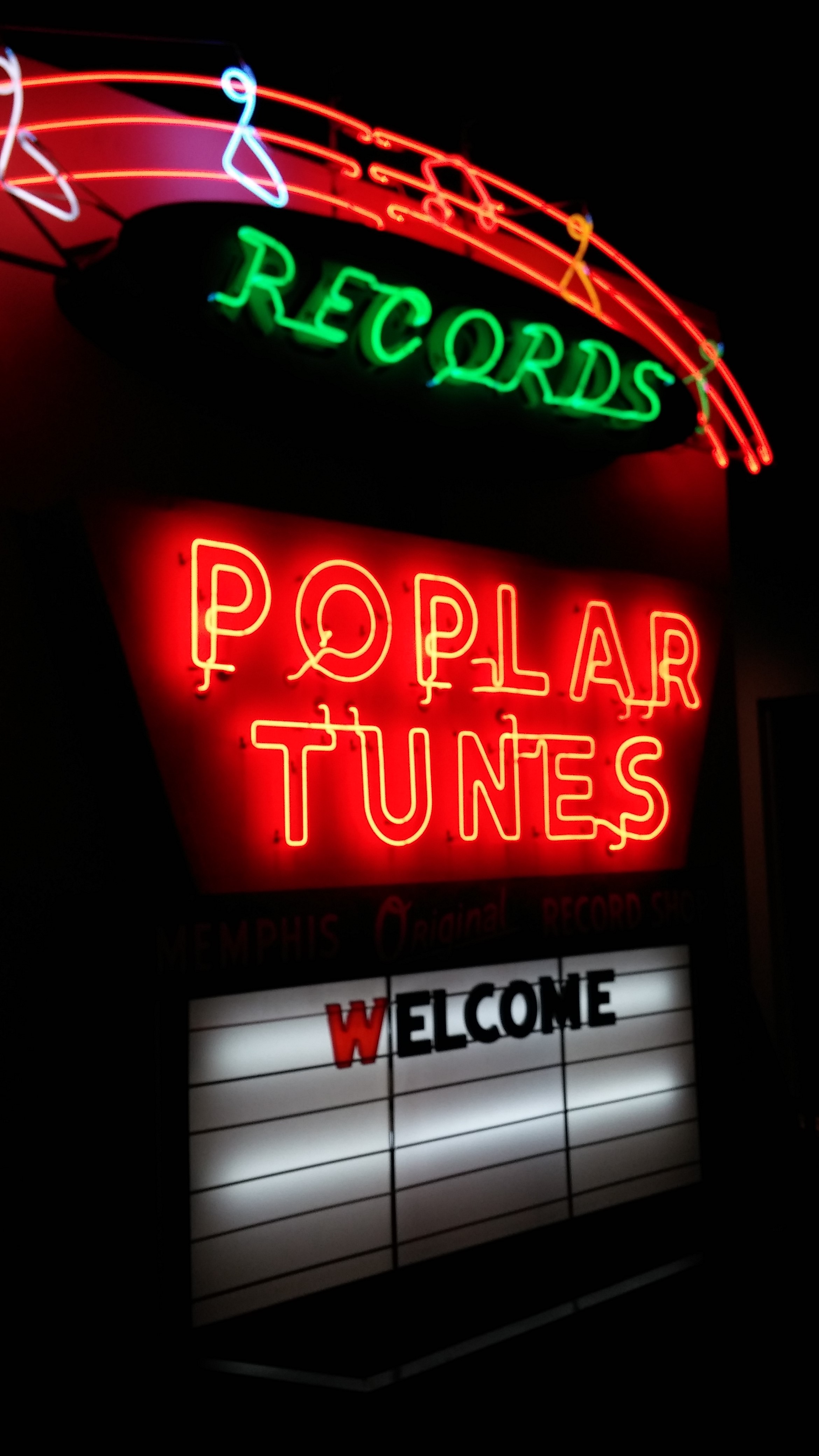
The Neon shop sign of Poplar Tunes, the record store that helped launch Rock and Roll. Opened in 1946 , it supplied records to jukebox joints all over Memphis as well as to the public. It stocked lots of rhythm and blues records that black people loved and which white people would come to love when it was adapted by people like Elvis. This is where a young Elvis Presley used to hang out and listen to the latest R&B records. It is also the first shop in America to stock Elvis’ first record. Elvis would often give Poplar Tunes exclusives due to his love of the shop as a youth.

The iconic 1946 Wurlitzer 1015 “Bubbler” jukebox. The story goes that a Wurlitzer salesman spilled a bottle of Dr Pepper down the front of a Wurlitzer jukebox and liked the effect of the bubbles over the neon lights. This then led to the design of floating bubbles in the inner tubes of the 1015 jukebox.
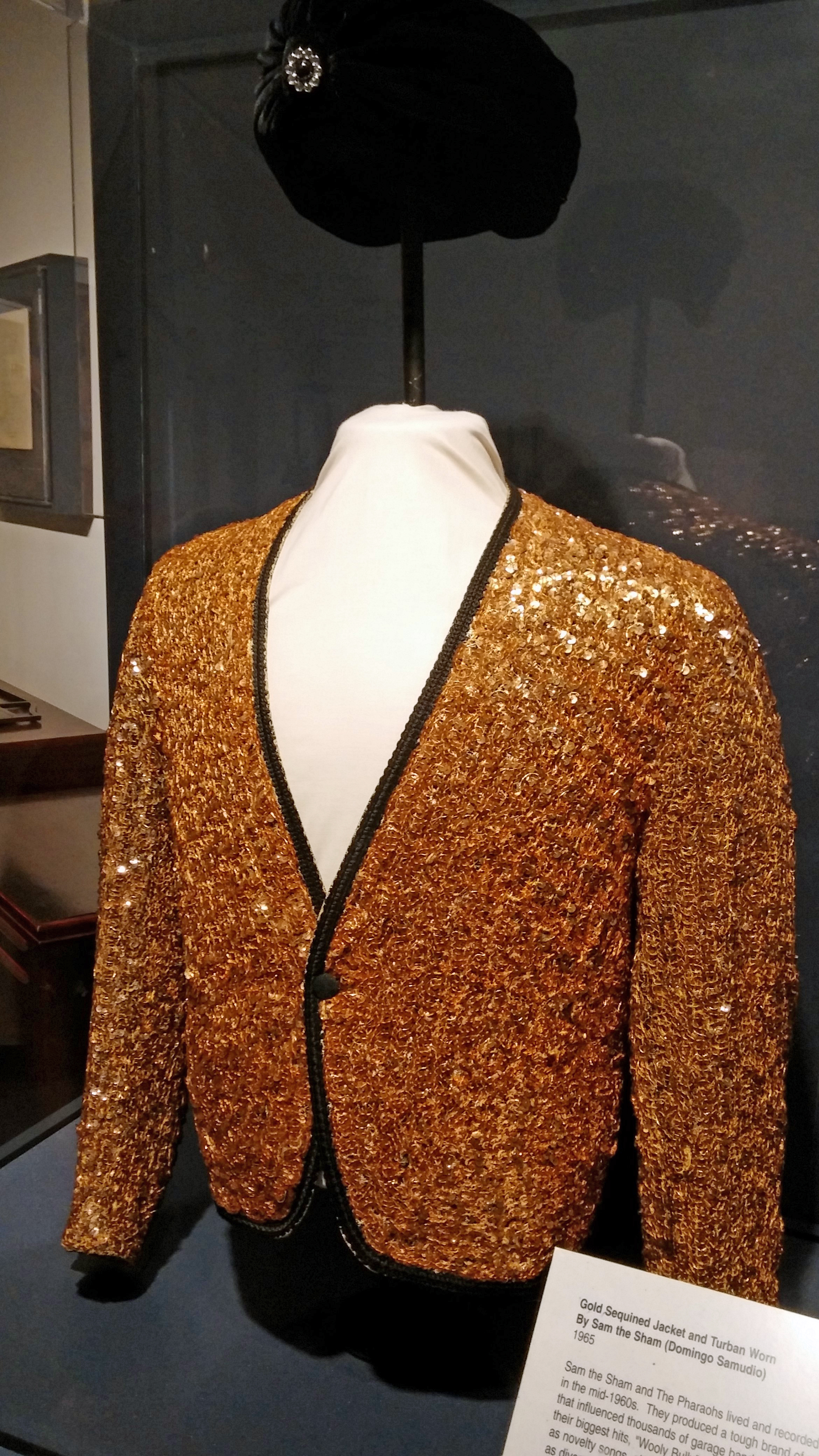
You can have your Elvis gold lamé jacket or your Rhinestone Nudie suit – give me Sam the Sham’s gold sequined jacket and turban any day. Sam the Sham and his Pharoah’s were one of a kind (or should that be five of a kind) . They were strange and primal and had that garage sound long before garage rock. Sam the Sham wrote many sensible songs about his cat (Woolly Bully), Little Red Riding Hood and voodoo (Ju Ju Hand).
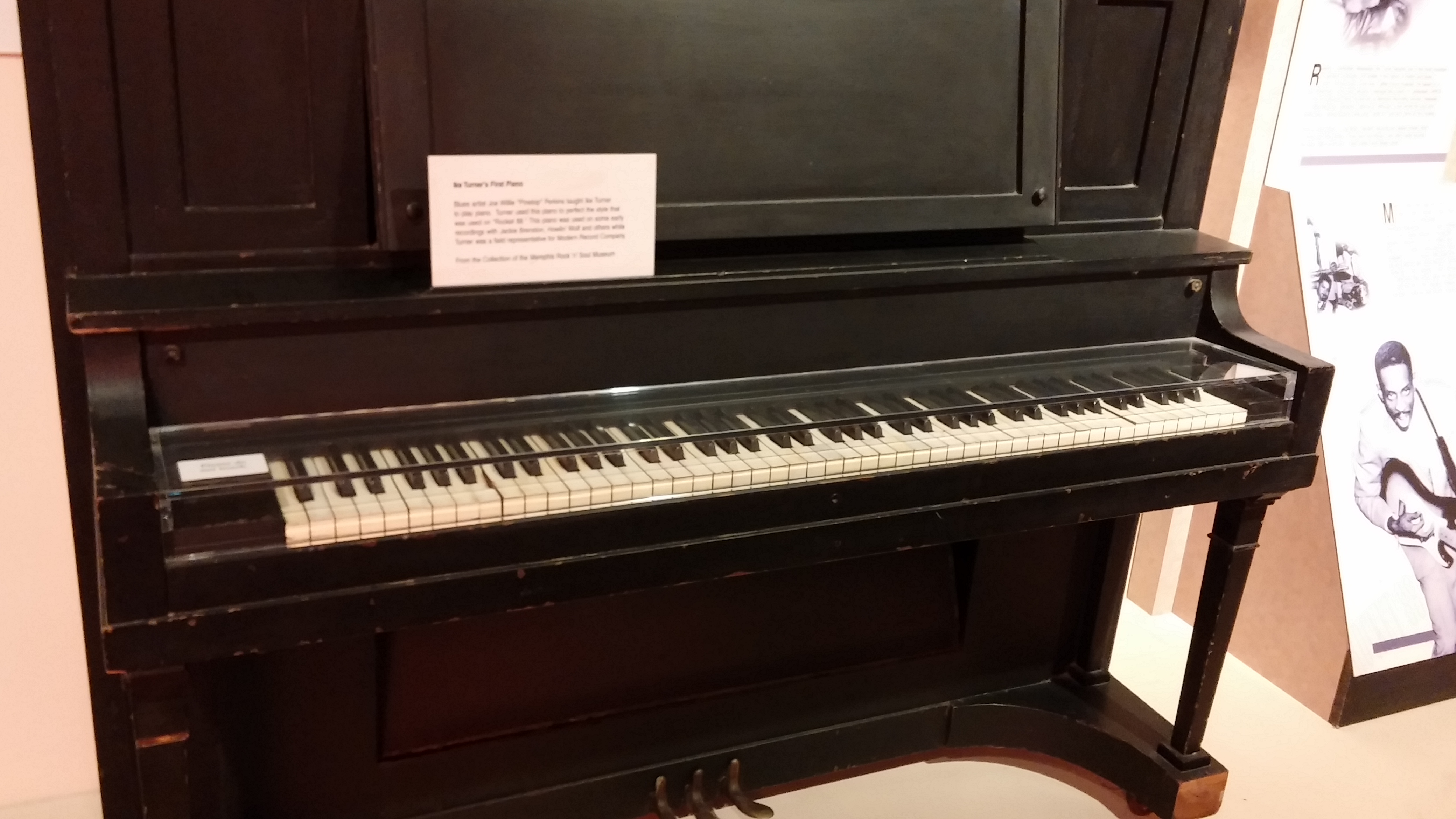
This is Ike Turner’s first piano on which he co-wrote and performed what is considered to be the first real rock and roll record, Rocket 88 with Jackie Brenston.
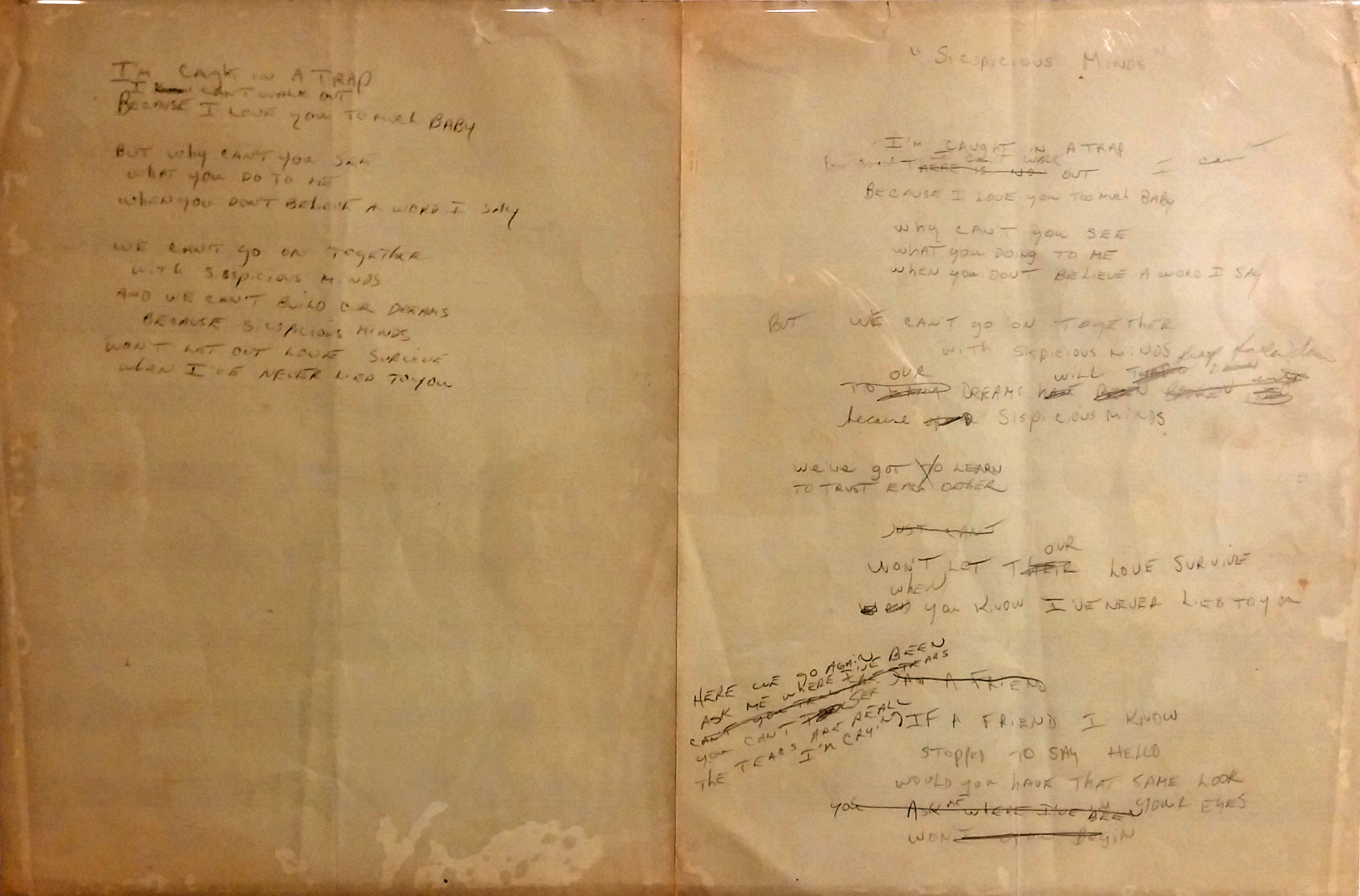
The original hand-written lyrics to Suspicious Minds by Mark James. You are probably familiar with the Elvis Presley and Fine Young Cannibals versions, but listen here to Mark James’ original version.
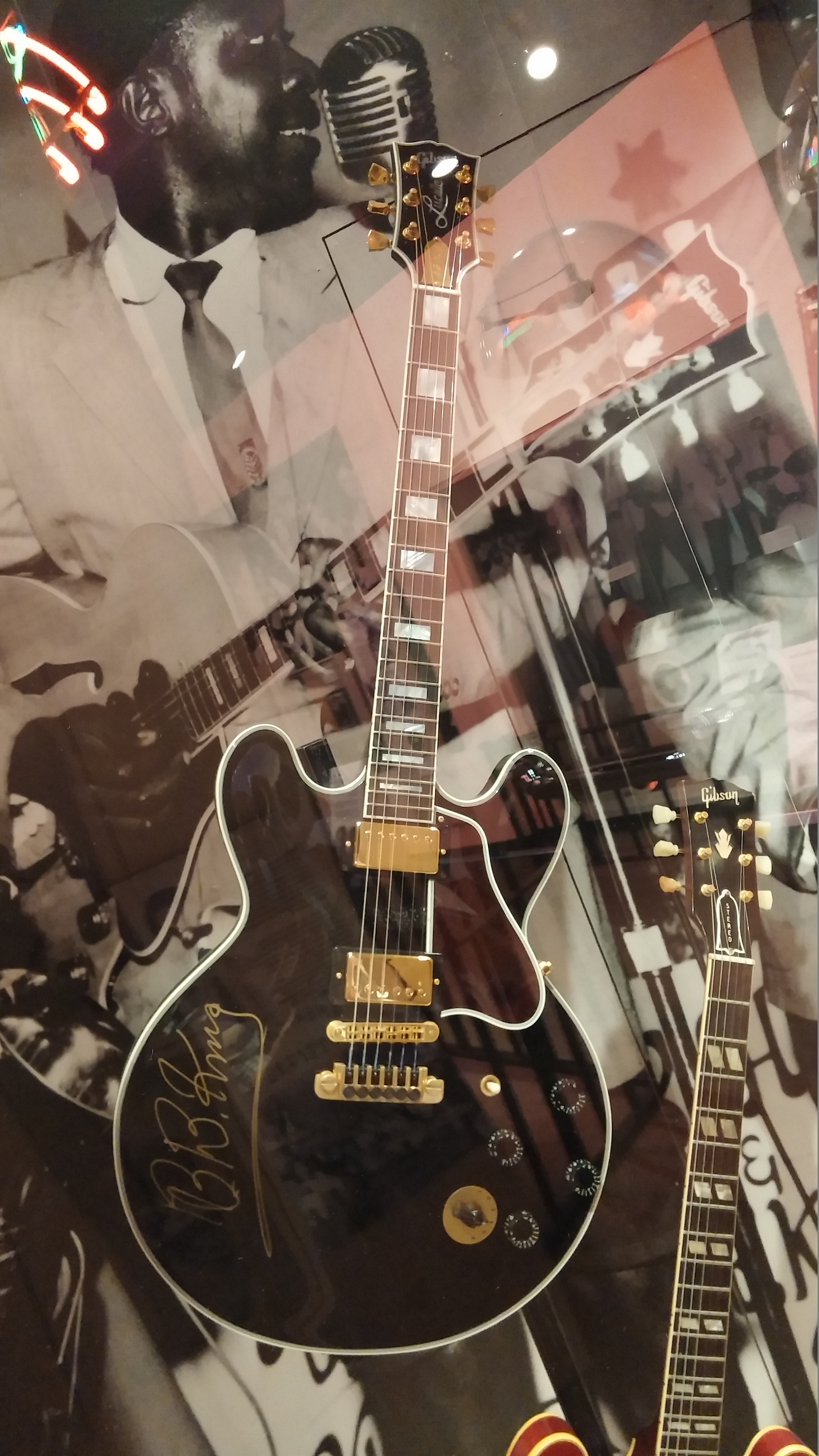
BB King’s Lucille guitar. BB King called his guitar Lucille after playing at a dance hall in Arkansas where two men started a fight and knocked over a barrel of burning oil (apparently this was a cheap way of heating the room) which ended up starting a fire. Everyone was evacuated including King who then realised that he had left his guitar inside. King ran into the burning building to retrieve his guitar and rescued it from the flames. By that evening the whole building had burnt down and two people were dead with several others injured in hospital. King later asked what the initial fight was all about and it turned out it was over the love of a woman called Lucille. King then named his guitar Lucille as a reminder not to run into a burning building or fight over a woman. Of course, Lucille was also one of BB King’s signature songs. By the way, the BB in BB King stands for Beale St Blues Boy (his stage name should really be BSBB King).

This is the Sun Records mixing console that recorded all the early Sun records of Johnny Cash, Roy Orbison, Elvis Presley, Carl Perkins and Jerry Lee-Lewis.
Graceland
Now for the part you have all been waiting for. Graceland – the grand and goofy home of The King.
We caught a cab there and the cab driver told us that Elvis still lived upstairs in the part that is off-limits to tourists. He was quite passionate about it and said “I mean, they insist you put on these headphones (which they do, although these days they are accompanied by an ipad) so you can’t hear what’s goin’ on upstairs. But, I’m tellin’ you man, I took them headphones off and I could hear people walkin’ around up there.”
I’m not sure if the King still lives there but I can tell you that Graceland is certainly treated like a priceless holy relic. There are security people in every room officiously policing everyone, and the audio tour that you listen to through the imposed headphones is almost religious in its tone as it reverentially details all aspects of Elvis’ life. Every object in Graceland is fetishised as some sort of quasi-religious artifact. This was particularly evidenced when we went on the separate Elvis Archives tour where two women put on white gloves to show us Elvis’ school report. We were told this was just one of the 80,000 “artifacts” housed in the archives. God knows what else they hold – Elvis’ old receipts, Elvis’ old bus tickets?
Graceland has separate museums for specific Elvis movies such as Blue Hawaii and Viva Los Vegas (all for separate entry fees) as well as six different gift shops. My favourites were the Elvis automobile gift shop and the Elvis kid’s gift shop. The mixture of commerce and worship reminded me of the industry of religious hawkers around the Vatican in Rome.
But what about Graceland itself? Well, it is worth the visit to see what happens when money and lack of taste collide. Elvis’s famous Jungle Room and Taking Care of Business Den are more gaudy in real life than any picture can do justice to. He seemed a restless soul though. The house is a mish-mash of the different passions he had at different points in his life. From karate, shooting, horse riding and cars to his love of Hawaii, he never settled on anything for too long, which his house reflects. There was also a telling quote from Lisa Marie Presley about the sort of dad he was:
“He was always up to something, shooting off firecrackers or guns, running around, driving golf carts or snowmobiles. He’d pull me in a sled and scare me to death. On that long, steep driveway that goes up to Graceland he’d be pulling me up and falling at the same time. He’d call me Buttonhead or Yisa. He’d never call me Lisa unless he was mad at me.”
As you leave the house you are invited to spend time near the Pool of Reflection where one can reflect on Elvis’ work. This is where I reflected on Elvis’ sometimes great but mostly tragic life. His early years were electrifying. But when you are young, such exuberance and energy is endearing. However, as he got older, Elvis’ crazy energy was increasingly viewed as just crazy. As his fame grew, he became cossetted in a world of yes-men and was a restless soul chopping and changing his activities to find happiness. Finally, facing the enuui of mid-life he, like many celebrities, took comfort in drugs. These were prescription drugs from his doctor, George Nichopoulos, who later confessed “Elvis’s problem was that he didn’t see the wrong in taking too many drugs. He felt that by getting it from a doctor, he wasn’t the common everyday junkie getting something off the street.”
Looking around the Pool of Reflection, I saw people praying and crying as if Elvis was a saint or a religious deity. Fast forward a few generations when no one is alive to contradict Graceland’s Gospel According to Elvis and I’m confident that Elvisism will be a religion. I’m with the cab driver, the holy ghost of Elvis has not left the building.
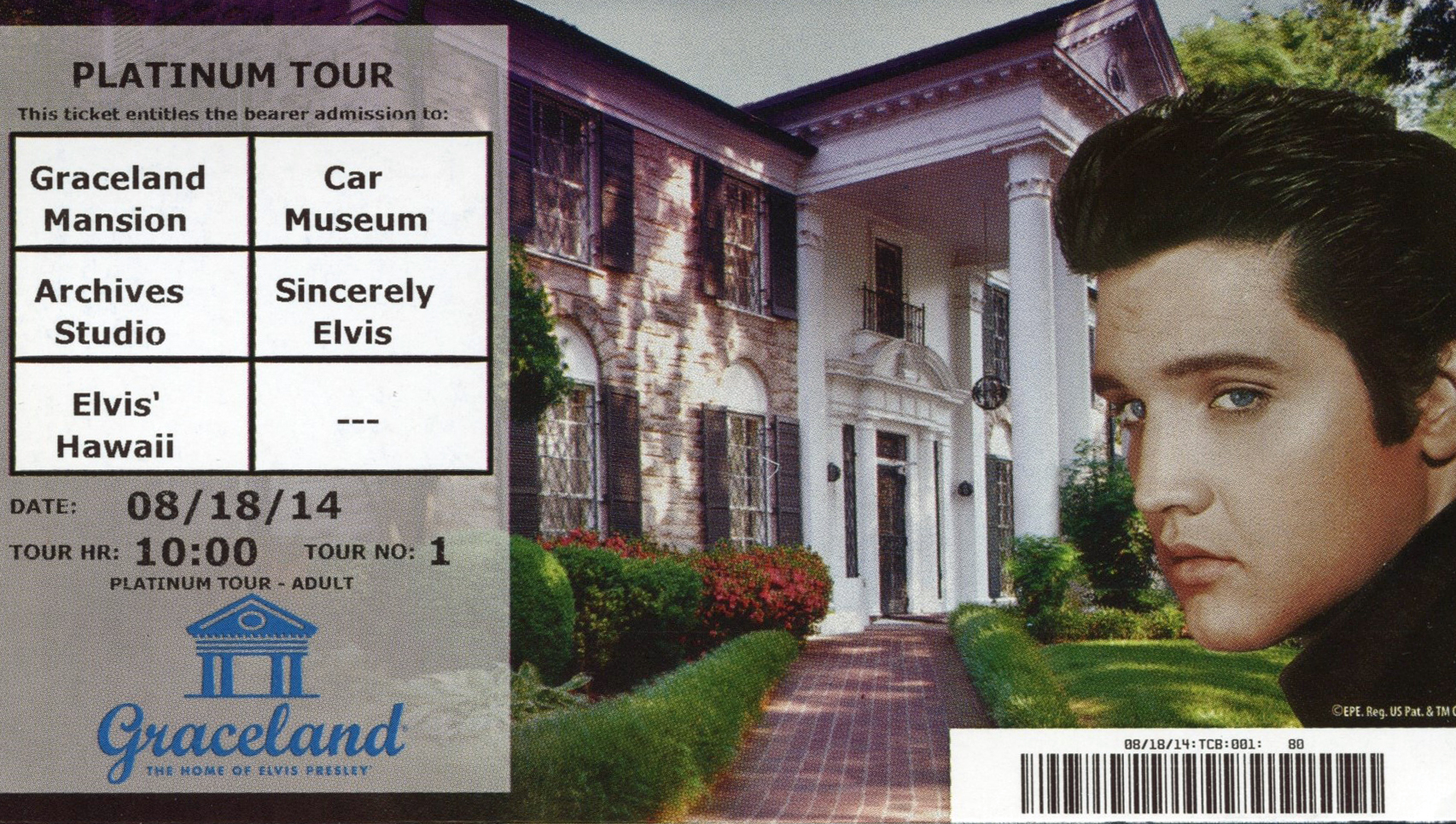
Our ticket to Graceland. We only did five out of the six museums. We didn’t check out the Elvis airplane museum.
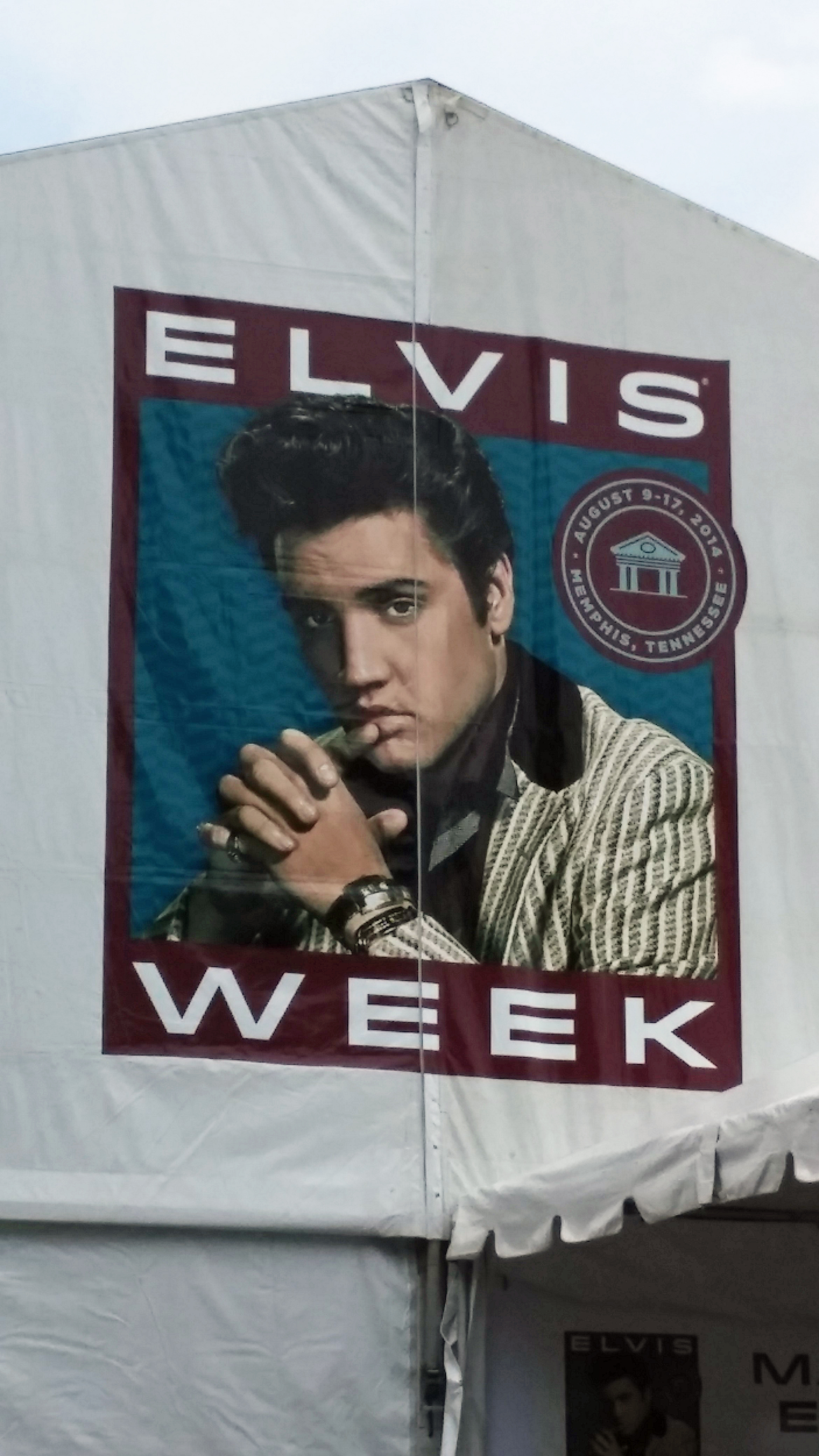
We arrived in Memphis during Elvis Week which is held every year to mark his death on 16 August 1977.

Michelle and Harrie out the front of Graceland with their regulatory Graceland headphones and ipads.

This is the front parlor room as you walk in the door. You will note the TV in the background. Elvis had a TV in every room in the house. This was back when television sets were very expensive.
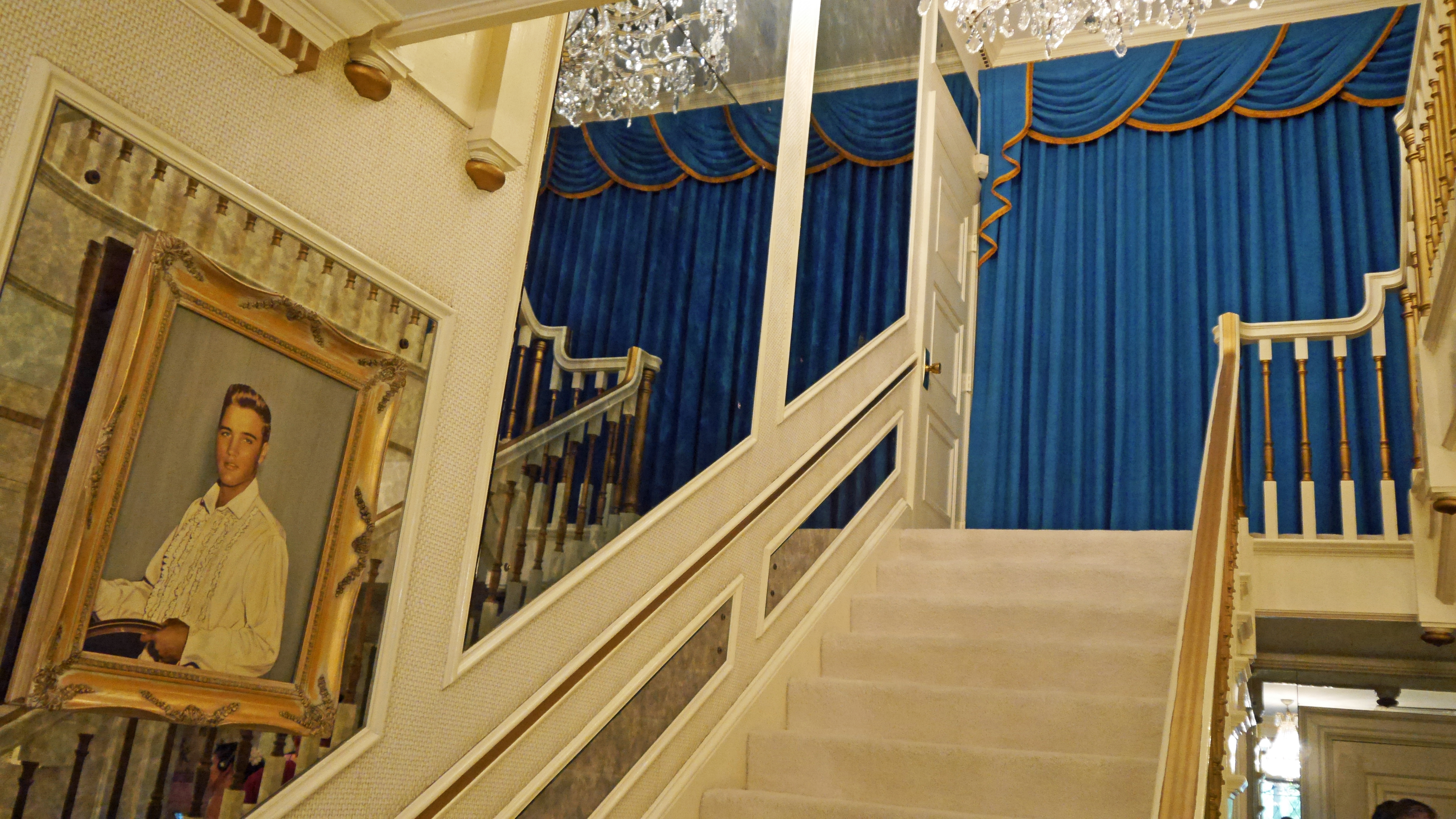
The upstairs area that is off-limits to the public. C’mon Elvis, we know you are still living up there.
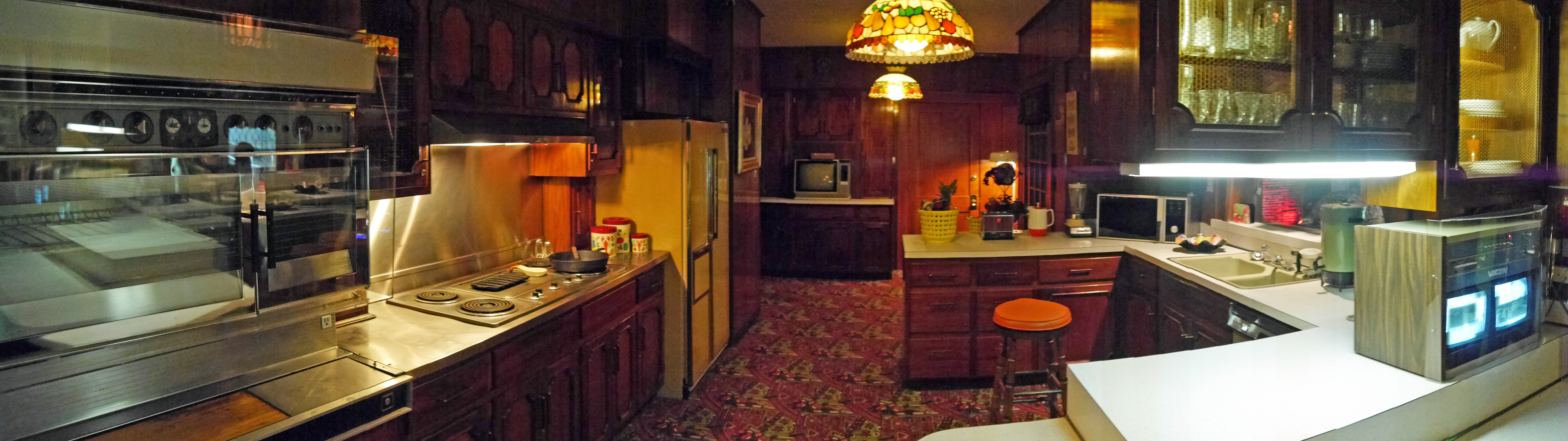
Elvis’ kitchen where he would have one of his Taking Care of Business crew cook him up a cheeseburger at 3am in the morning.

Elvis’ Billiard Room with 366 metres of pleated cotton. The gaudy oppressiveness of this room has to be experienced in person.

Elvis’ Taking Care of Business room or the TCB Den. The Taking Care of Business crew or The Memphis Mafia as they were also known, were essentially Elvis’ yes men. They were paid flunkies who looked after him and went along with his crazy ideas such as riding golf buggies into Memphis at 2am in the morning or playing “The Whip” which involved hurling live fireworks at each other. Here is a quote from TCB crew member Billy Smith from the book Elvis and the Memphis Mafia: “The Rainbow Skating Rink would close to the public at around midnight. Elvis would get the guys and would take it over until daylight. We didn’t roller skate like most people, we played games Elvis would make up like “War” where we’d choose up sides and line up at each end of the roller rink. Then at the count of three we’d all skate towards each other and knock the hell out of our opponents. Elvis loved it. We’d have a big box of elbow pads and knee pads and every hour we’d go to the bathroom and see who got hit the hardest. Elvis didn’t care how rough it got as he’d taken these “happy pills” he got from the dentist. So I guess he wasn’t feeling any pain.”

The TCB Den is where Elvis would hang with the TCB crew and watch competing TV sets (there were originally 16 TV sets in the room) or watch movies on his 16mm projector. The lightening bolt on the wall is the TCB logo.
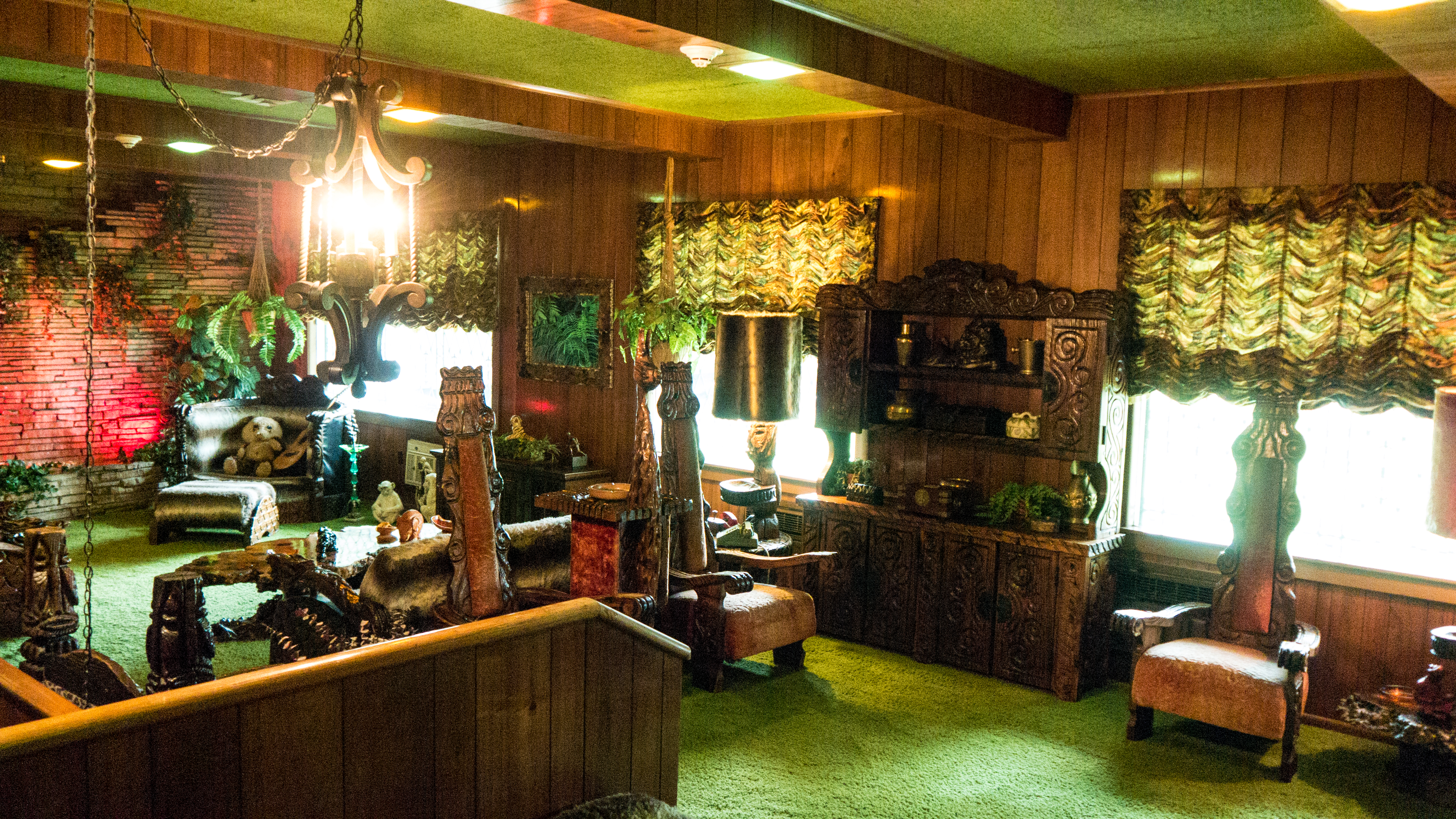
The famous Jungle Room. This is also where Elvis recorded his final albums in the 1970s when he could barely leave the house due to his addiction to amphetamines and sedatives. Colonel Parker still made him tour but the result was tragi-comic perfomances such as this one.
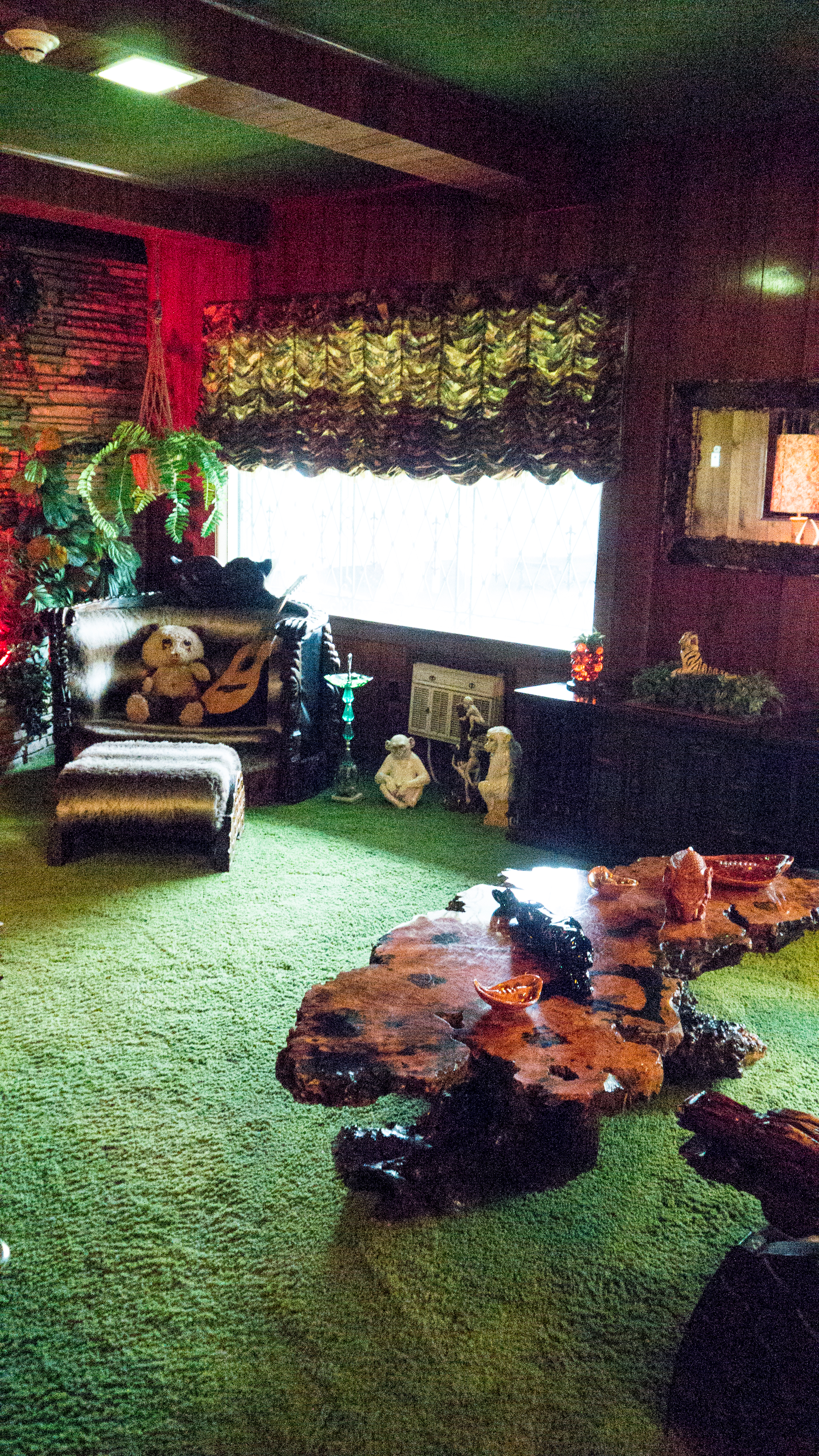
Love the green shag pile on the floor and ceiling. Sorry, that should have read loathe.

A suitable throne for The King.

The back of Graceland.
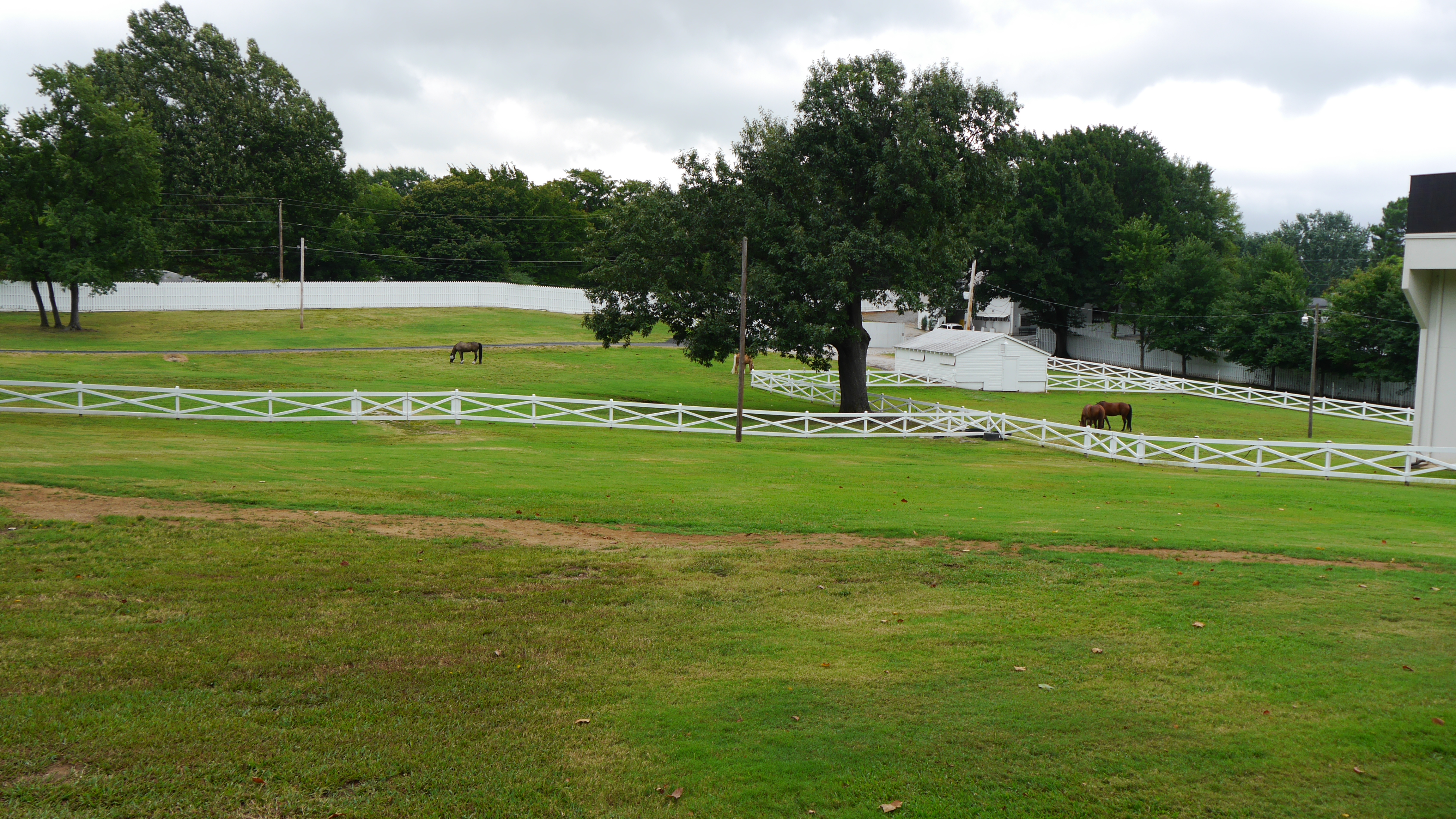
Elvis’ horse ranch at the back of Graceland.
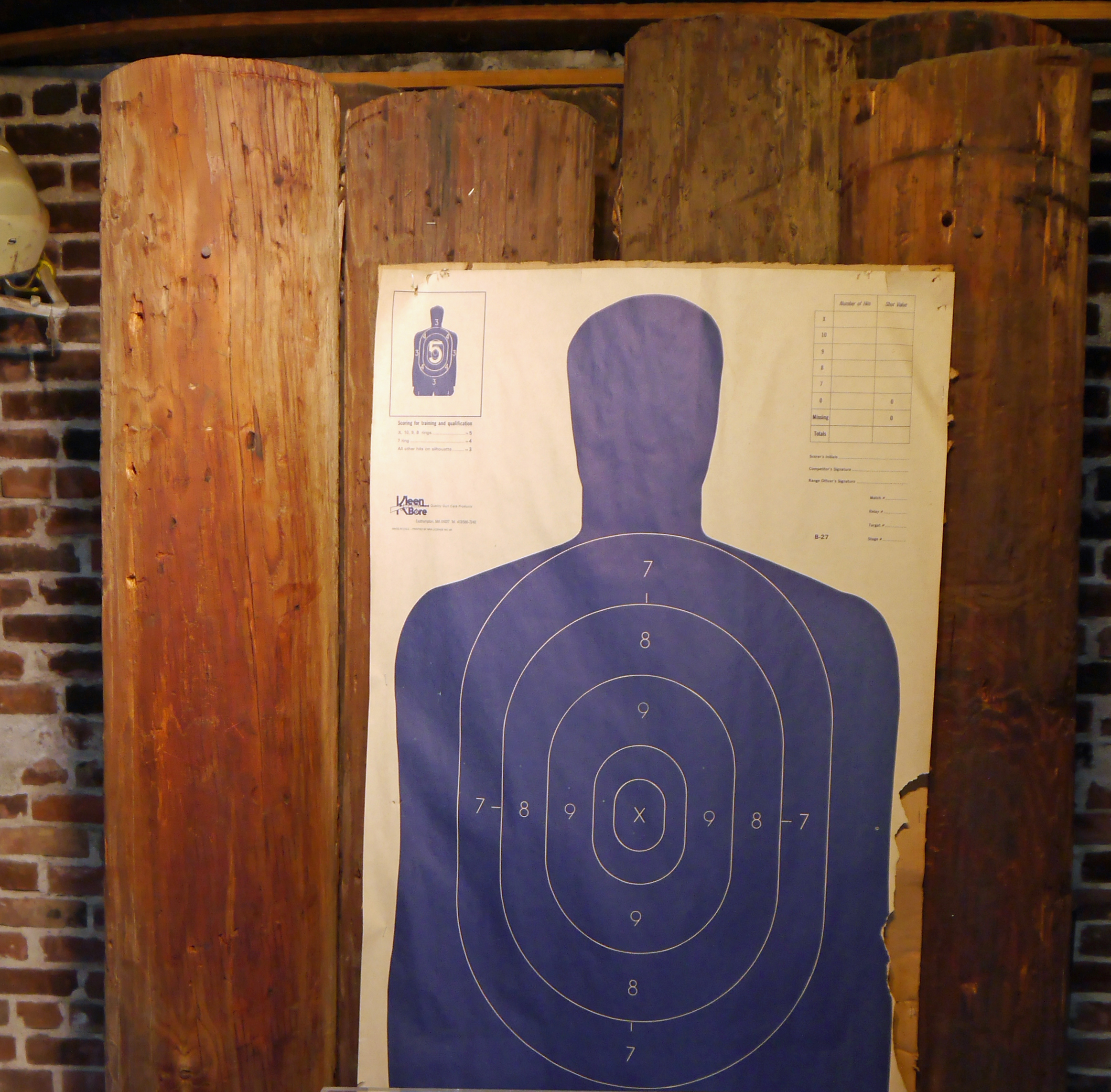
Elvis’ shooting range.
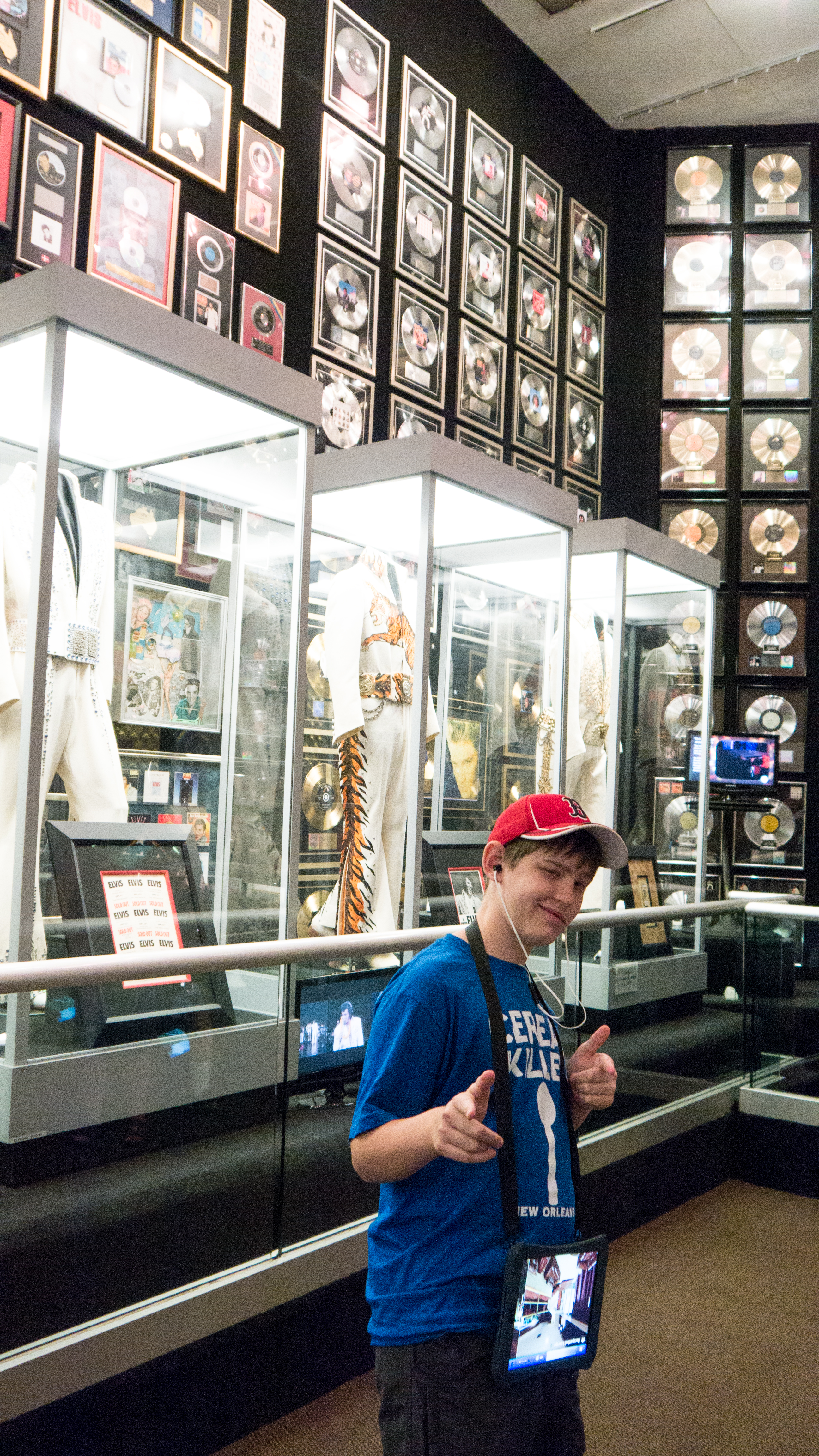
Elvis’ trophy room.

Where The King would swim and host wild pool parties.
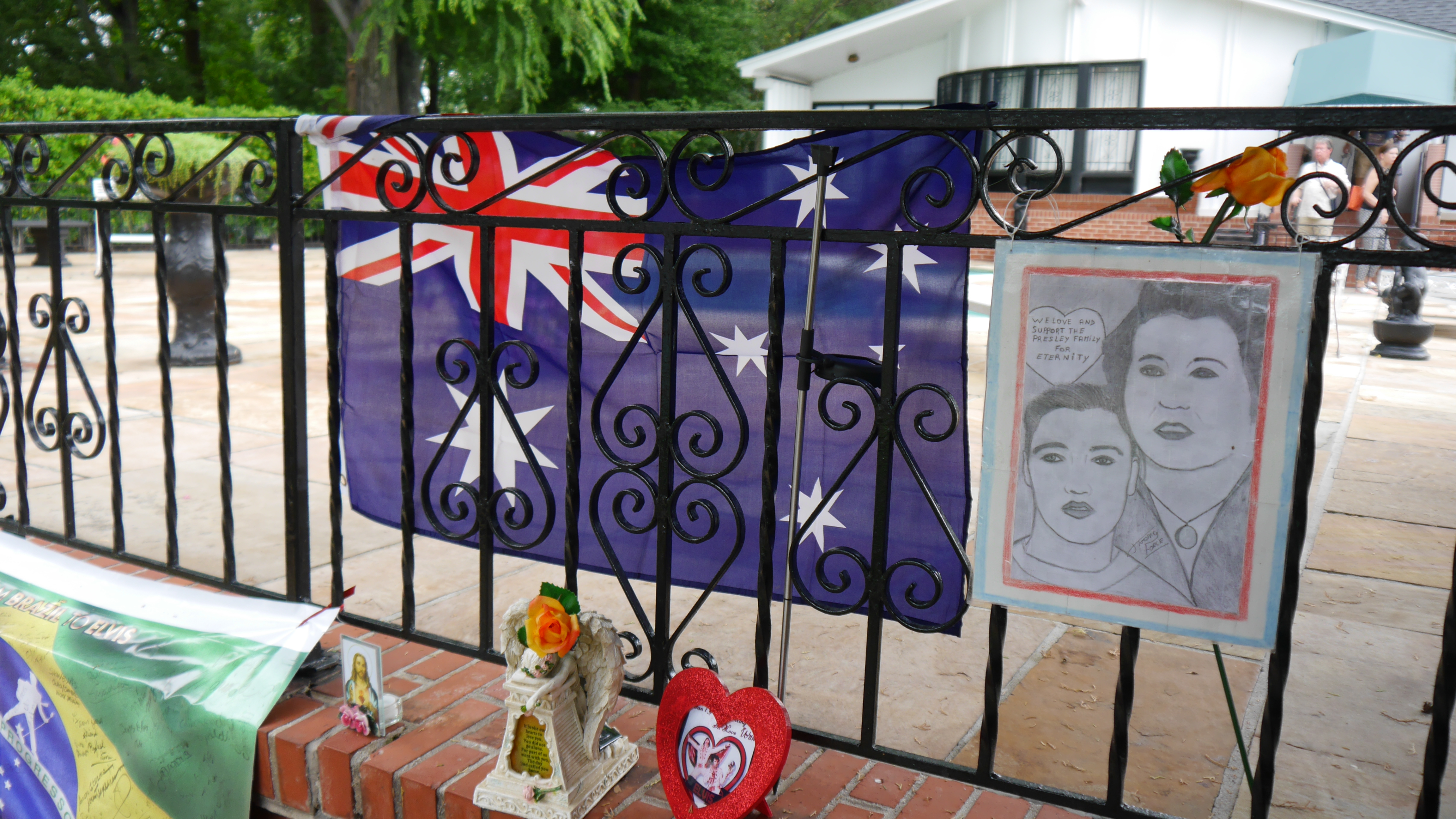
An Australian flag draped over the fence near the Pool of Reflection.

Elvis ‘grave. Elvis was actually buried at Forest Hill Cemetery in Memphis next to his mother, father and brother. All Presley graves were later moved to Graceland. People used to be able to visit The King’s grave for free and this just didn’t sit right with the people at Elvis Presley Enterprises.

There was a strong Australian presence at the grave site with many Australians travelling to Memphis for Elvis Week.

Dad of the Year.

The rarely-seen lumbersexual Elvis.
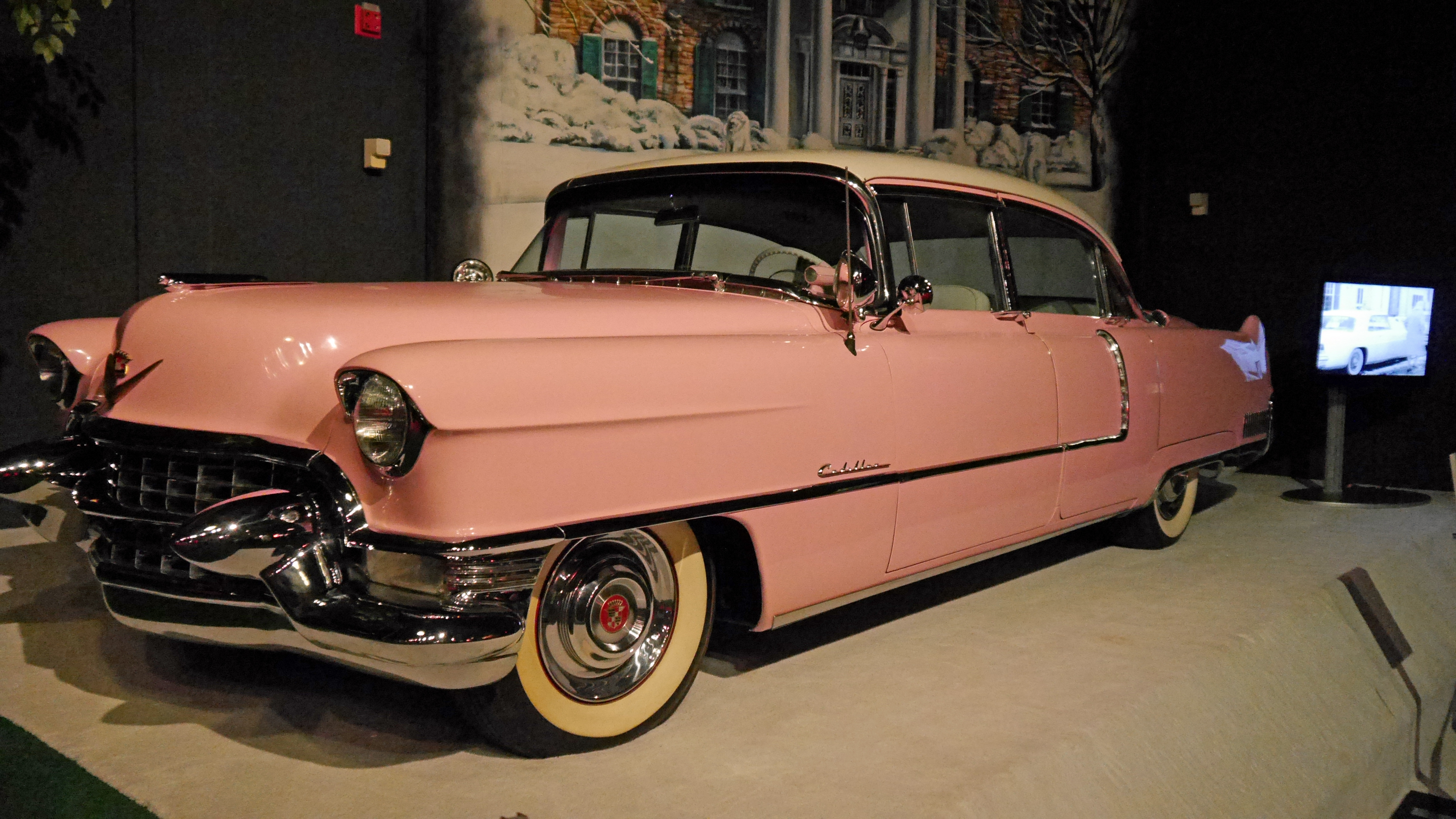
Elvis’famous 1955 Pink Cadillac which inspired the song by Bruce Springsteen and the movie starring Clint Eastwood.
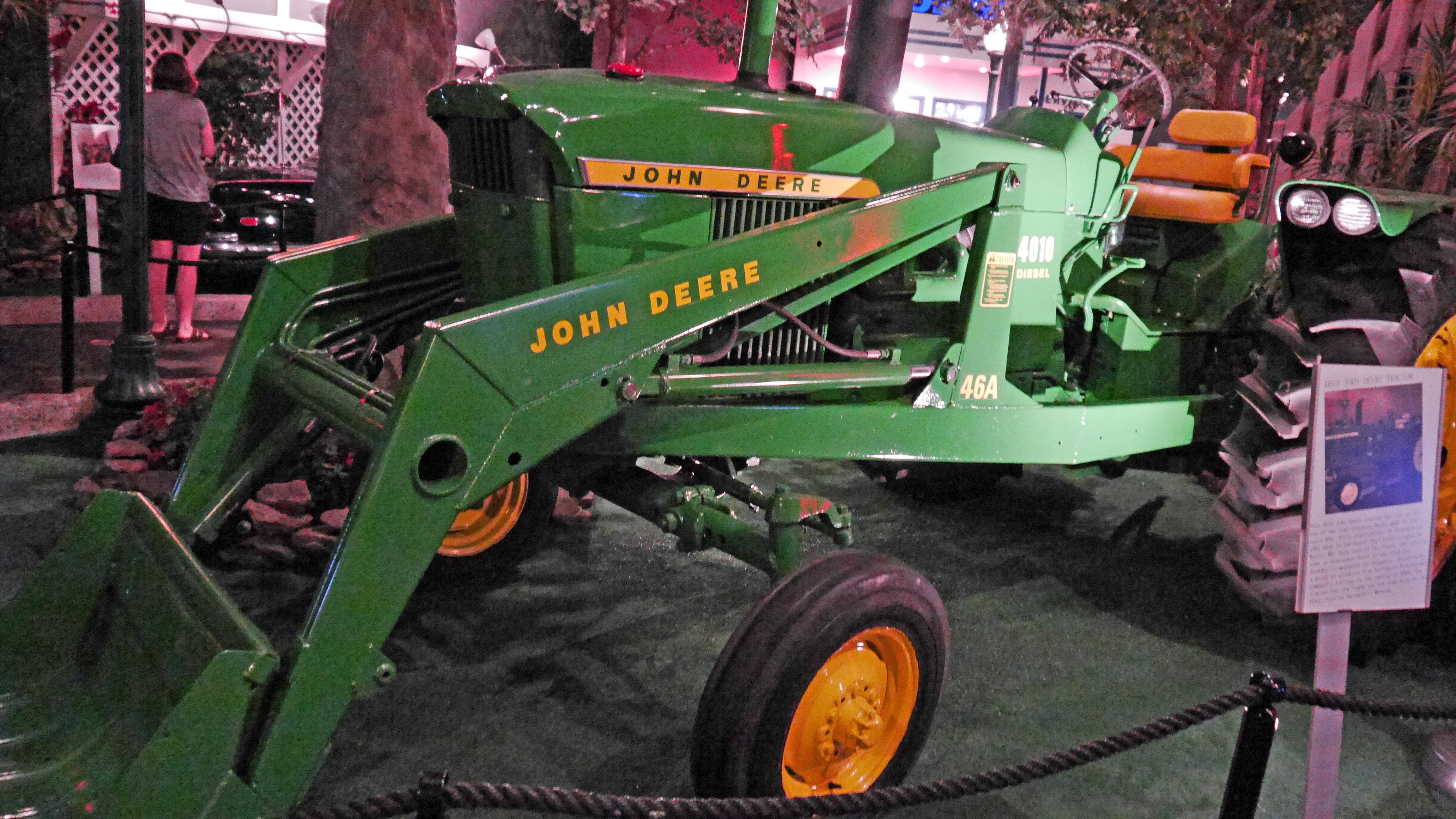
Another example of the crazy phases Elvis went through. Apparently, in 1963 Elvis took the notion to become a farmer and commissioned a pimped-up John Deere 4010 tractor which he used to plough fields on a ranch he bought in Mississippi.

Elvis’ 1962 Lincoln Continental with an alligator-skin roof and “suicide” doors (the term dates back to when facing doors were used on horse-driven coaches and where the back occupant would be flung out by the airflow if they opened the back door and reached to try and close it).
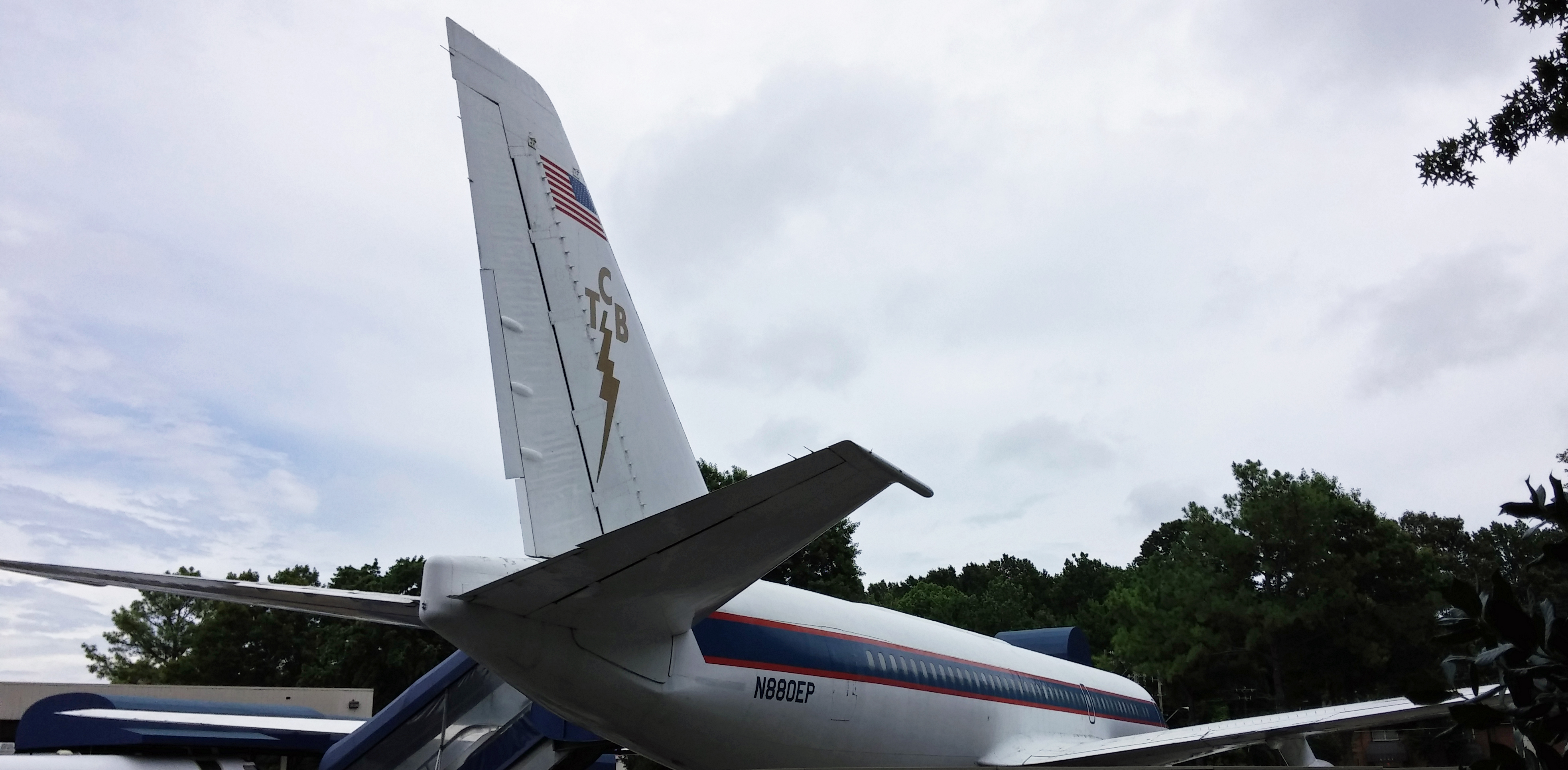
Elvis’private plane. Named The Lisa Marie and featuring the Taking Care of Business logo.
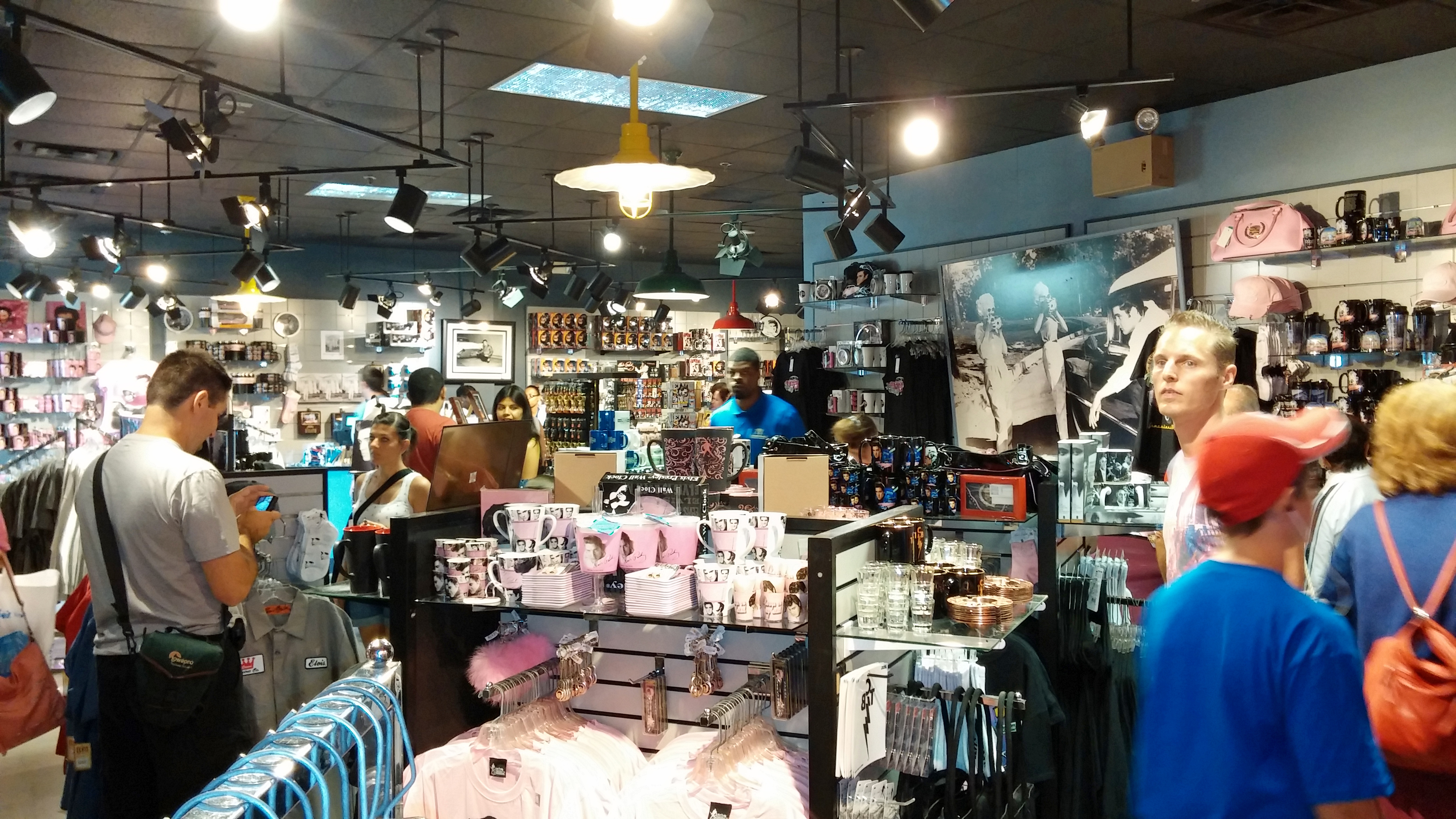
Now this is what it is all about. One of the six gift shops at Graceland.
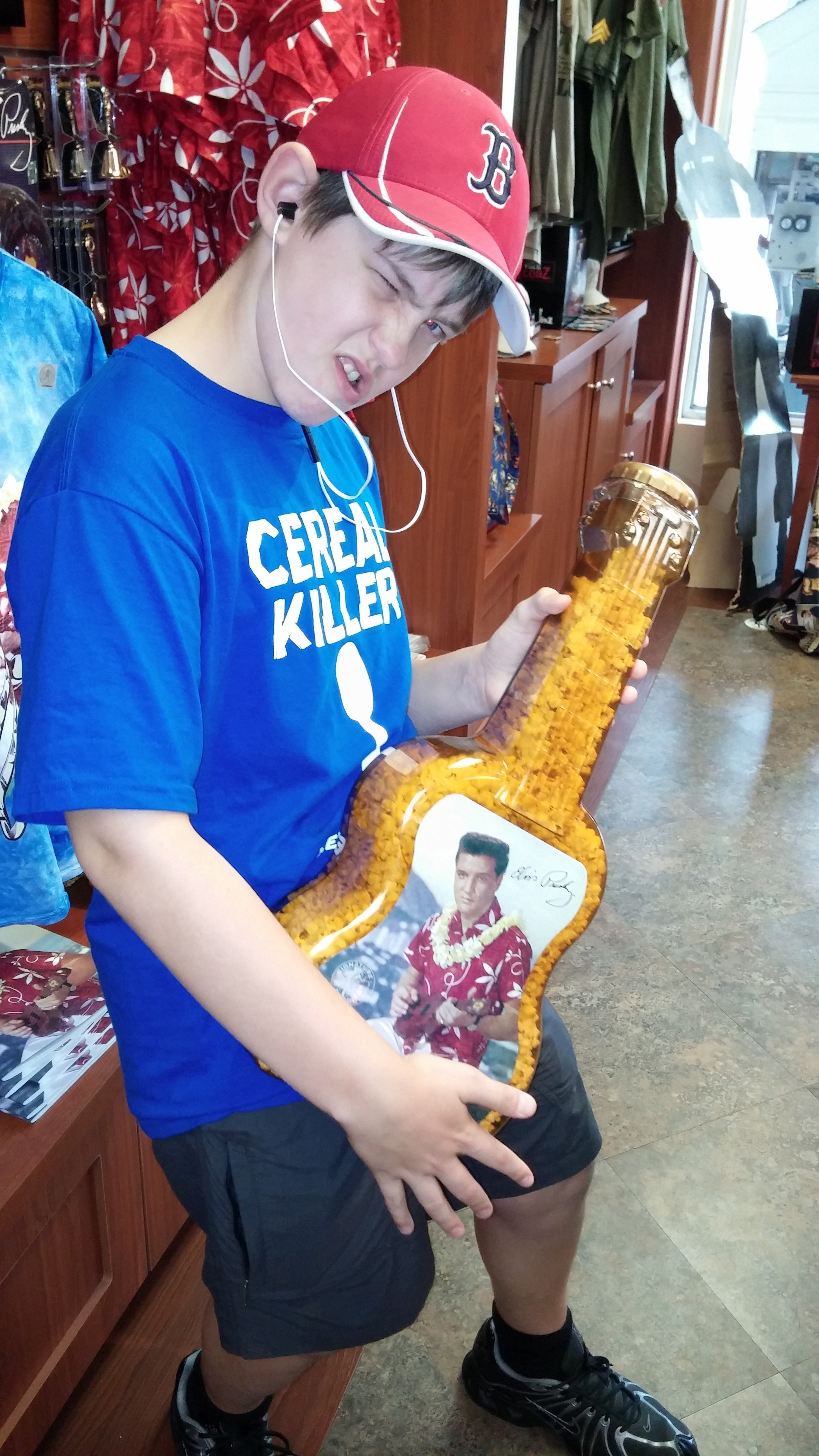
Harrie rockin’ out with the tasteful Elvis Blue Hawaii guitar-shaped popcorn.

You can actually buy a facsimile of Elvis’ shirt when he was a delivery driver for the Crown Electric Company before becoming famous.

Lunch at the Elvis Presley Chrome Grille Cafe.

Elvis getting All Shook Up over Michelle.
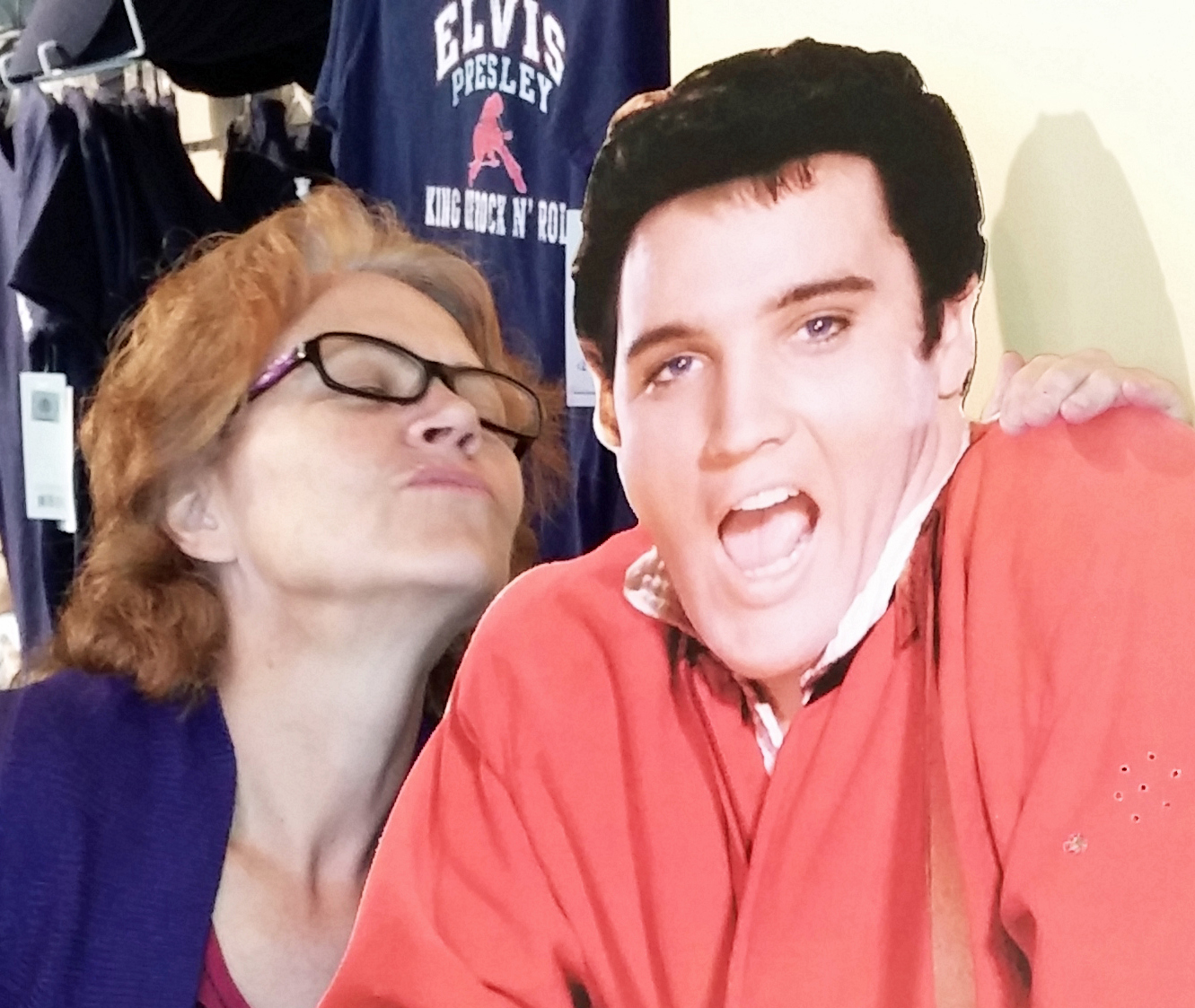
Kiss Me Quick – Thank yuh very much ma’am.
We are all moving towards the perfect being of Elvis – That’s why they call it Elvislution
The National Civil Rights Museum
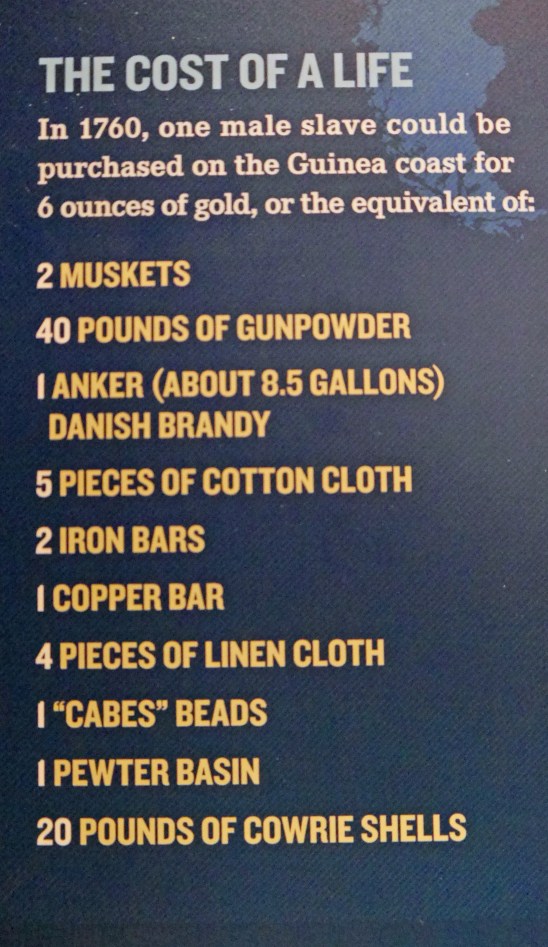
The National Civil Rights Museum is located in the Lorraine Hotel where Martin Luther King was assassinated. It is a large museum that charts the history of slavery in America through to the civil rights movement and present-day inequalities. There are some very moving exhibits such as a gallery with about a hundred pictures of houses, empty fields and highways which seem innocuous at first but which are all the crime scenes from Klu Klux Klan murders; some as recent as a few years ago.
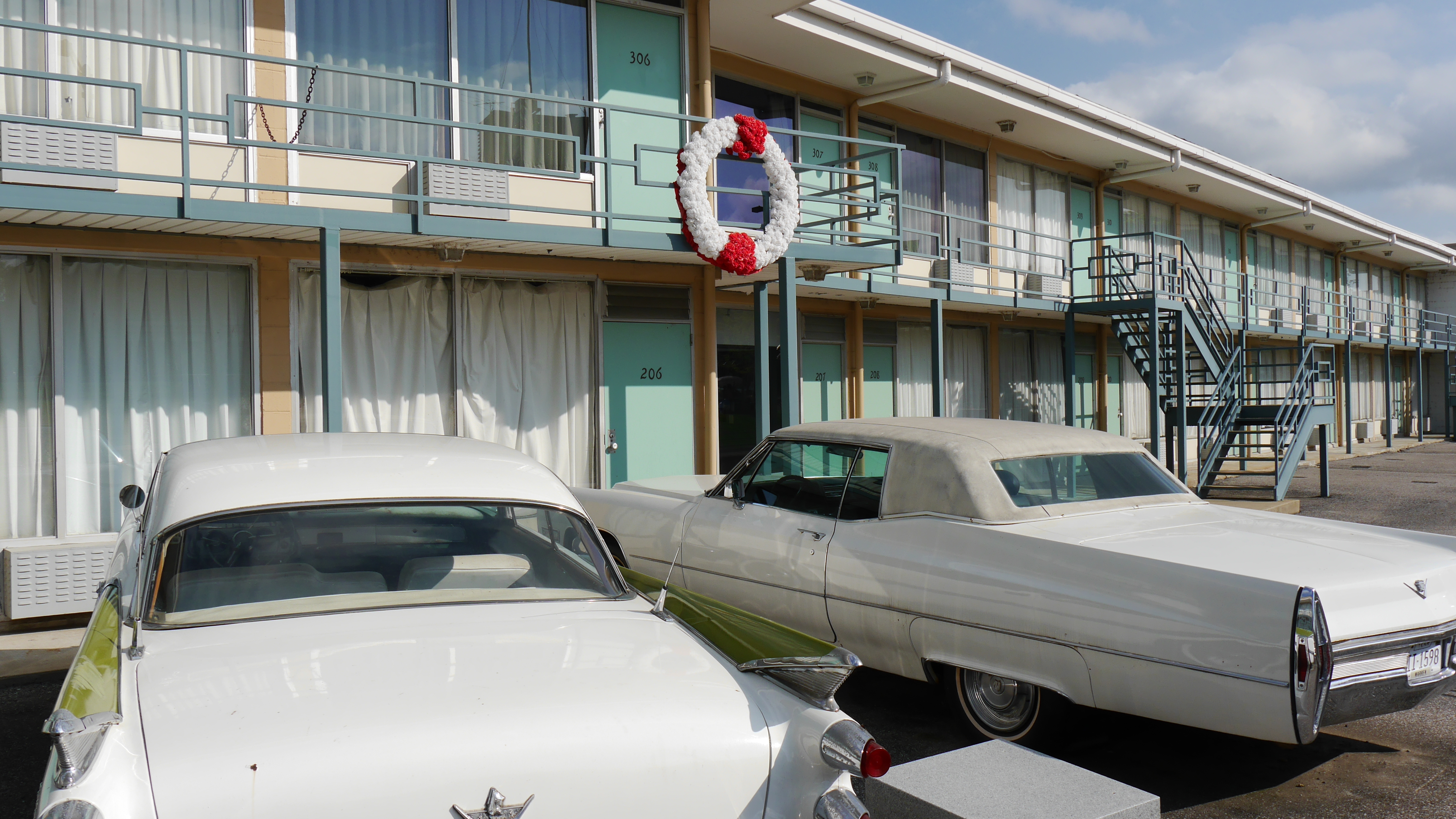
The hotel suite where Martin Luther King was assassinated has been preserved as has the building across the street where James Earl Ray shot King. This makes it all hugely fascinating but also vicariously creepy and somehow wrong. It was unpleasant to see people snapping photos posing where Ray fired the lethal shot. However, it was also incredible to stand in that spot and test the many conspiracy theories about whether that is where the shot came from. I felt quite conflicted about the whole experience and more so when we left the building and met Jacqueline Smith who has been keeping a daily vigil protesting against the museum since it opened. She used to be a resident in the Lorraine Hotel (she worked there) and believes Dr King would have hated the idea of a museum “celebrating” his assassination and would rather the site be used for housing poor black residents. She has a very persuasive point but the exhibits in the building are also a powerful educative experience; particularly in the way they culminate in walking into the room where Dr King was assassinated. I have thought about this experience many times since and still am unsure about how I feel about this museum.

The Lorraine Hotel where Martin Luther King Jr was assassinated in 1968 and now home to the National Civil Rights Museum.

A moving sculpture of conditions aboard a slave ship.

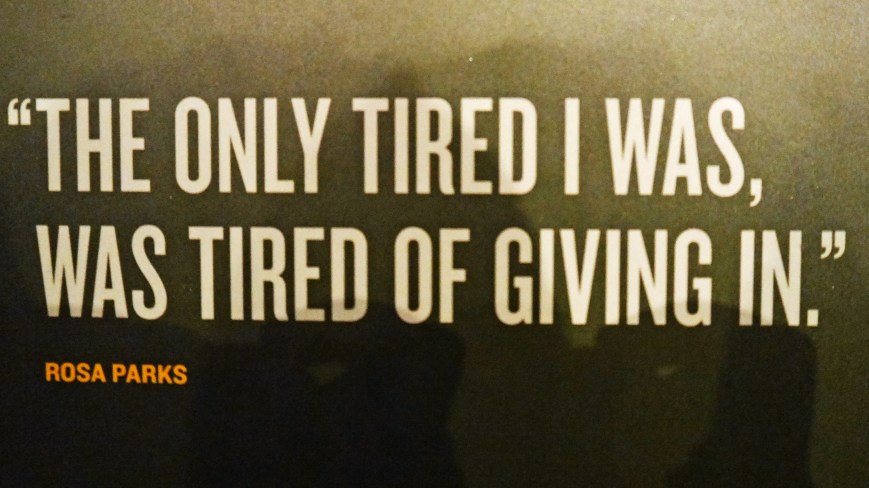
This is the sort of bus that Rosa Parks would have ridden in Montgomery when she refused to give up her seat to a white man. The actual bus that she protested on is in a museum in Alabama.

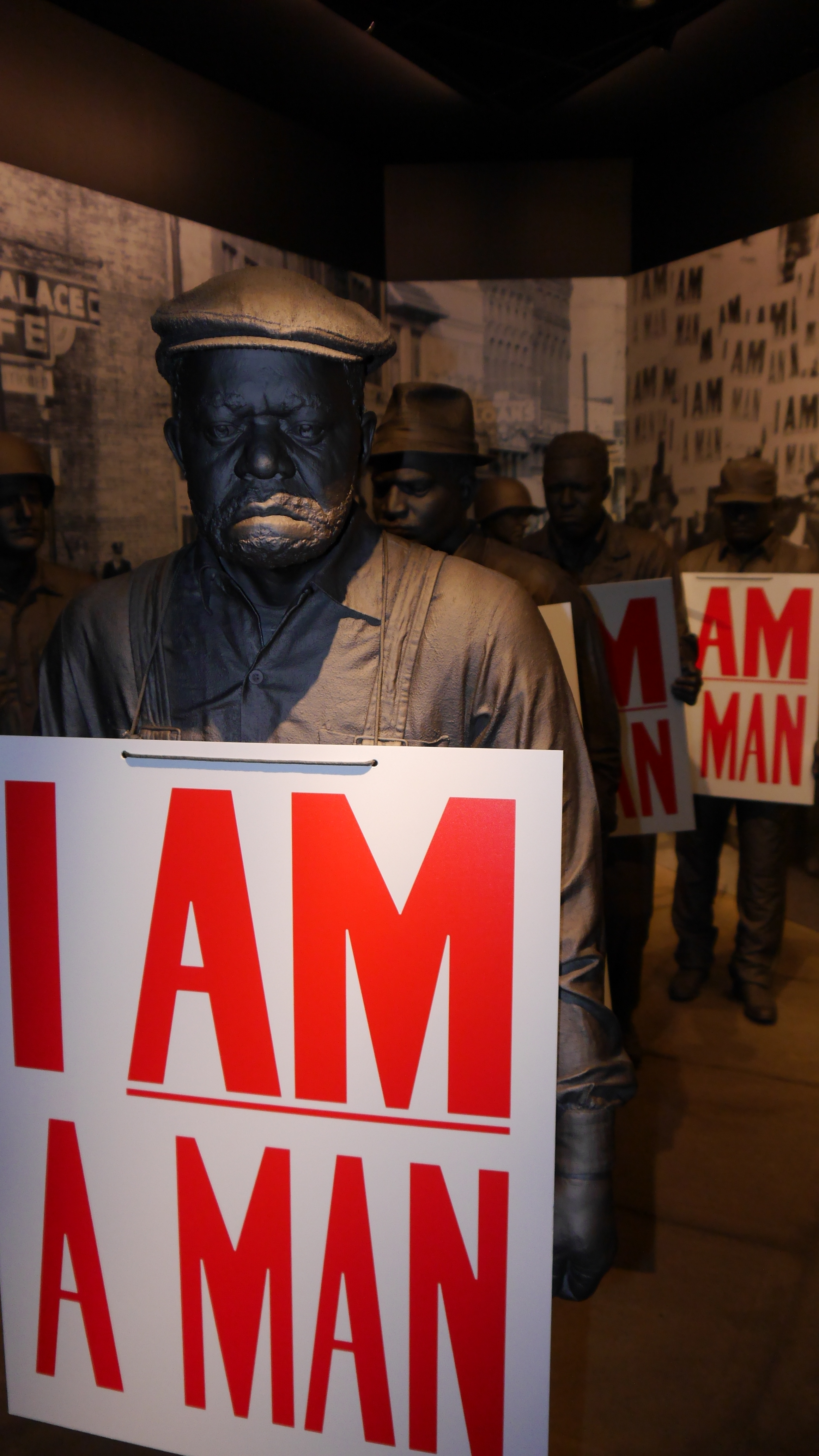
Statues of the Memphis Sanitation Workers strike. This was the strike that bought Martin Luther King Jr to Memphis where he was assassinated. Most sanitation workers in Memphis were black and were treated as second-class citizens with poor pay, dangerous working conditions (the death of two workers actually prompted the strike) and discrimination (the white working-class unions wouldn’t support them). When Memphis’ Mayor Henry Loeb declared the strike illegal and refused to meet with the black workers, Dr King decided it was time to fly to Memphis to help. A few days later he was dead.
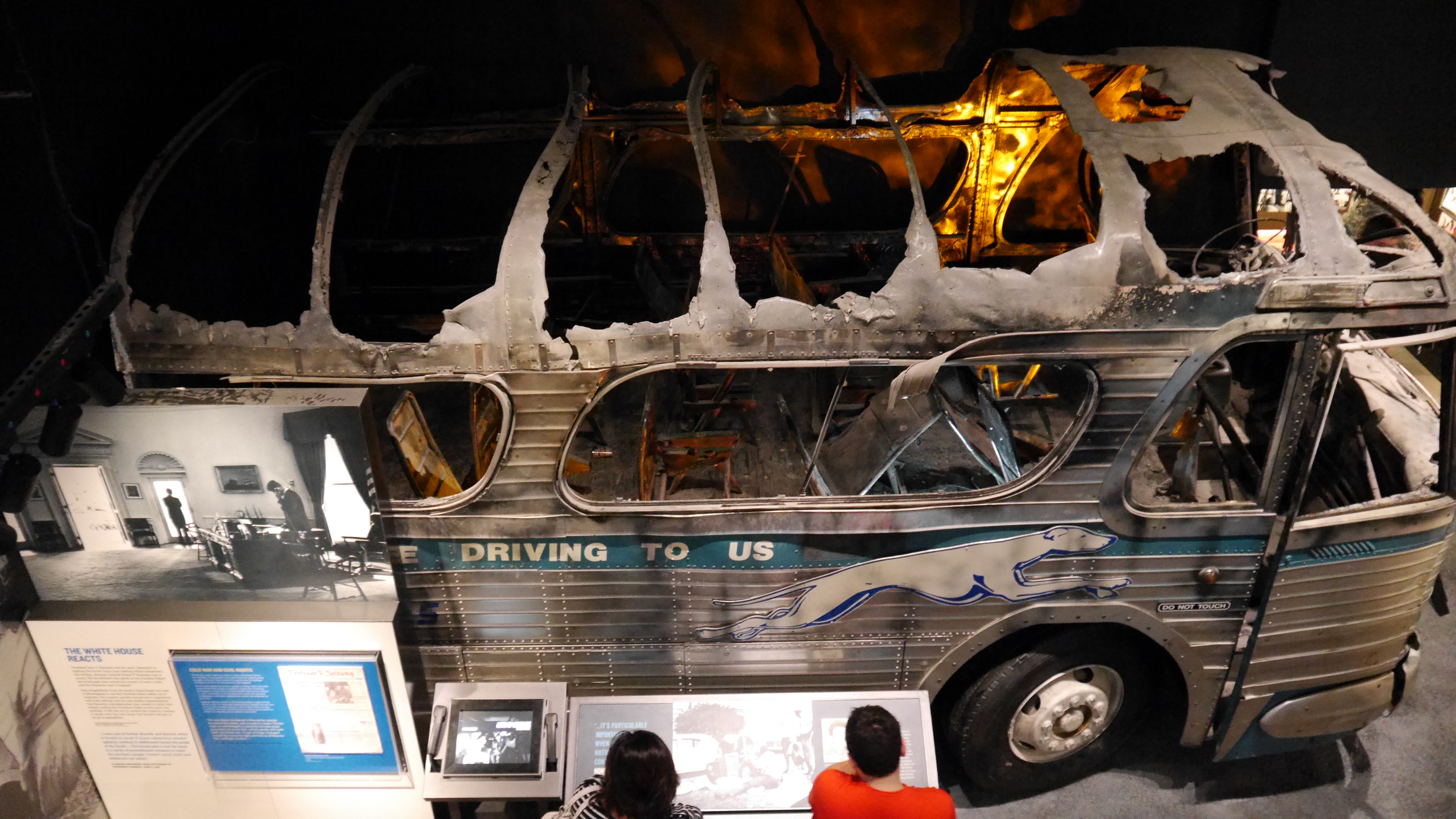
One of the bombed buses from the 1960s Freedom Rides. The Freedom Riders traveled from all parts of the country to the Southern segregated-states to protest against racial discrimination. More often than not, they were met with force from the local police during the day and local rednecks (including the Klu Klux Klan) during the night.
The room where Martin Luther King Jr was shot. Preserved as it would have looked back in 1968.
Memphis 13th Scout Group
While we were in Memphis, we thought it would be cool for Harrie to catch up with a local Scout group. Michelle got in touch with the Memphis 13th Scout Group. Harrie is a member of the 13th Scout Group in Canberra so it was with some serendipity that the two groups met. Of course, thirteen is often considered to be an unlucky number so that is why the Memphis troop call themselves the Lucky 13 and have a lucky horseshoe for a logo.

Lucky Harrie got to hang out with the Lucky 13, the oldest scout troop in Memphis.
Sun Studios
The legendary recording studio where founder Sam Phillips introduced the world to the cream of early rock and roll. This is where Elvis Presley, Carl Perkins, Howlin Wolf, Roy Orbison, Johnny Cash and Jerry Lee Lewis all had their first recordings.
Unlike, the other museums, Sun let you muck around in the studio and use the microphone used by all of these fifties greats. They still record albums in this studio too and the whole place has the lived-in feeling I always imagined Sun would have. Even to park in this place is an experience as you have to quickly cut across a crossroads into a narrow lane that you would swear a car would never fit. It is exactly the leap of faith that you would expect from a place where a guy buys a single acetate LP cutter and the next day proclaims to be running a major record label.
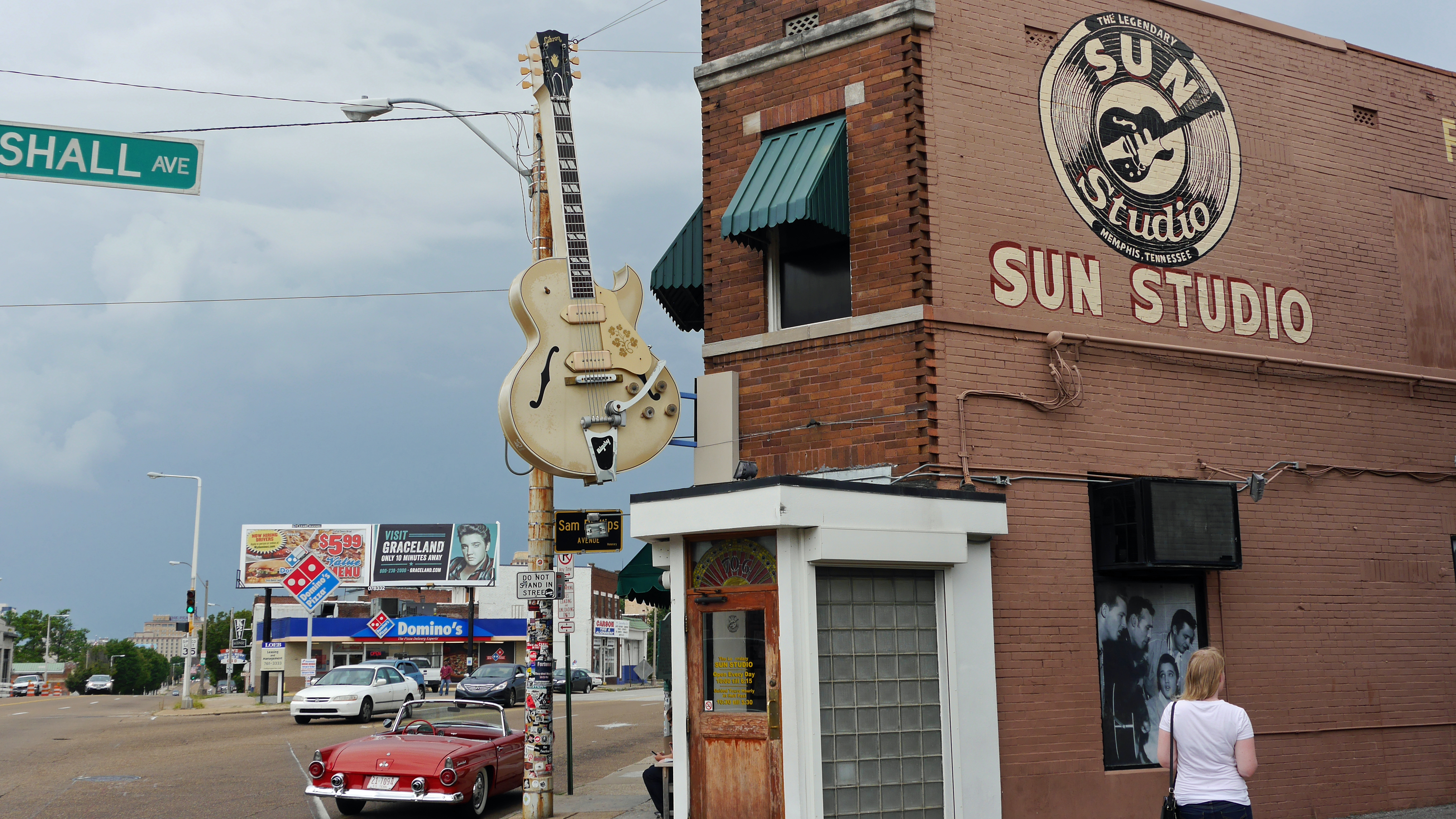
Out the front of Sun Studios in Memphis.

The street that Sun Studios is in is now named Sam Phillips Avenue after Sun founder Sam Phillips.

This is the acetate LP cutter that launched the label. Basically, you could record a master directly onto an acetate record and then make vinyl copies from that.
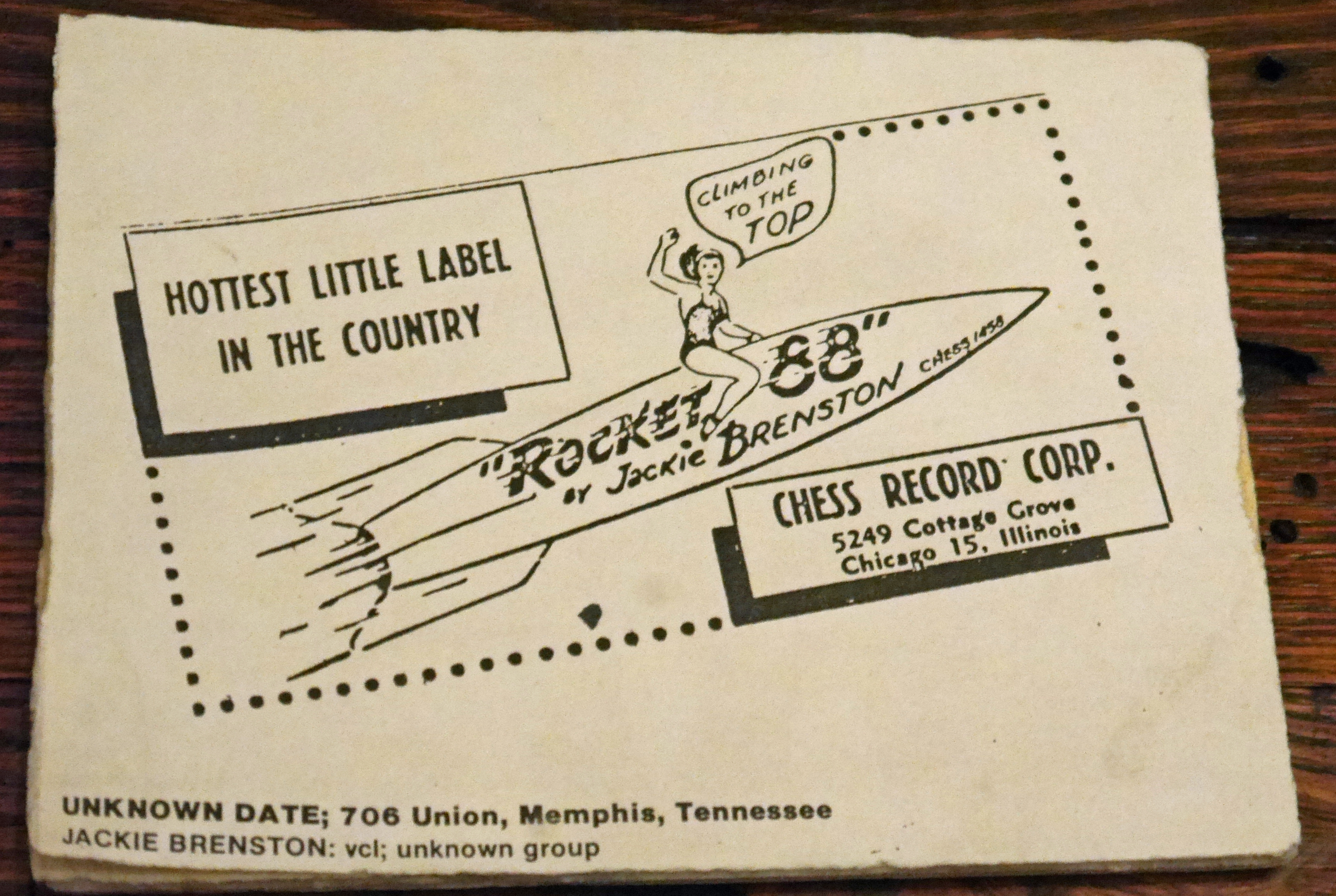
Rocket 88 was actually recorded by Sam Phillips when he ran his part-time Memphis Recording Studio while he worked full time as a sound engineer at WREC radio station . The story goes that after recording this record (often referred to as the first true rock and roll record), Sam Phillips quit his job and set up Sun Records with the belief that Rock and Roll was the future of music.
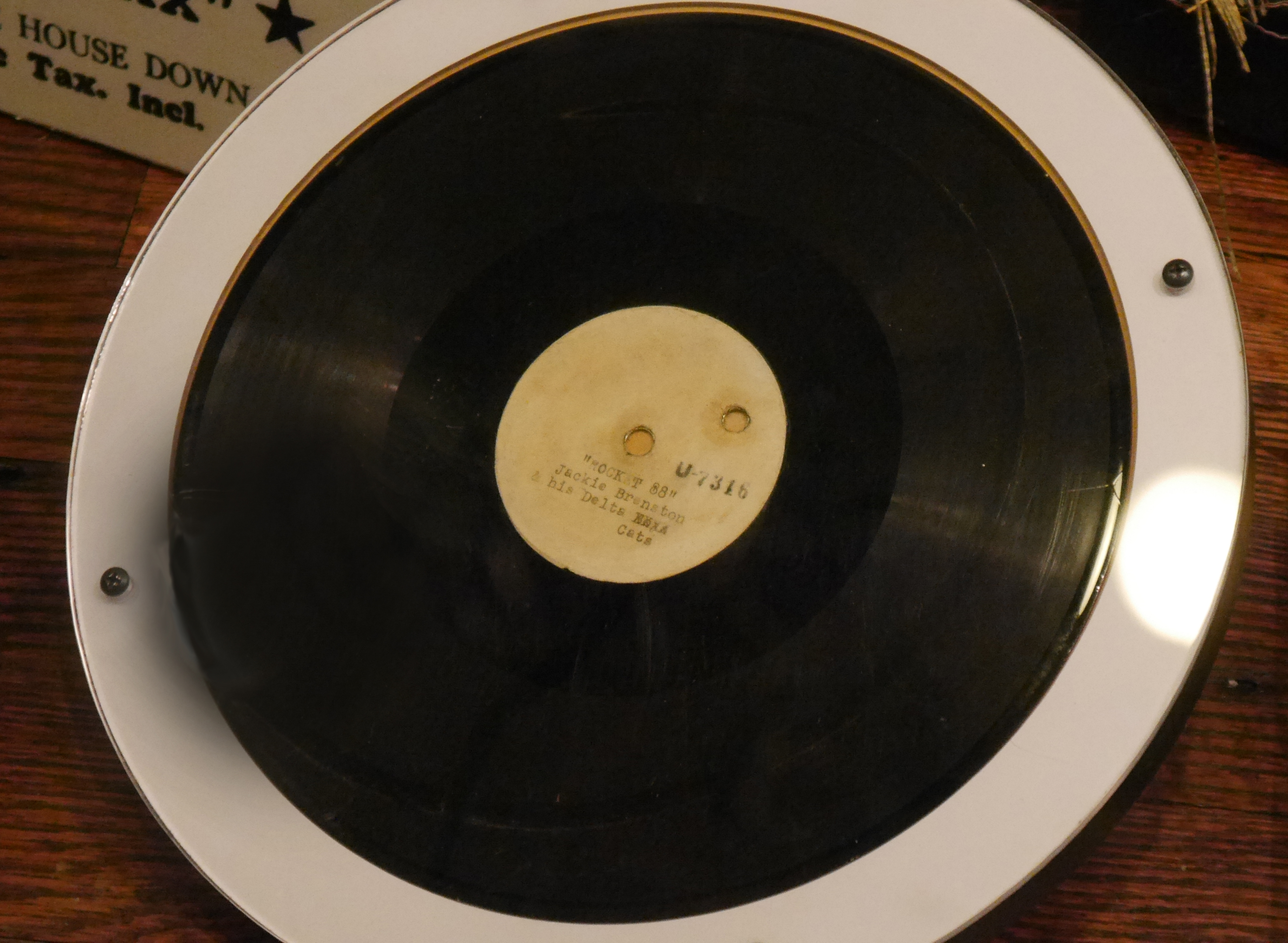
The acetate master of Rocket 88.
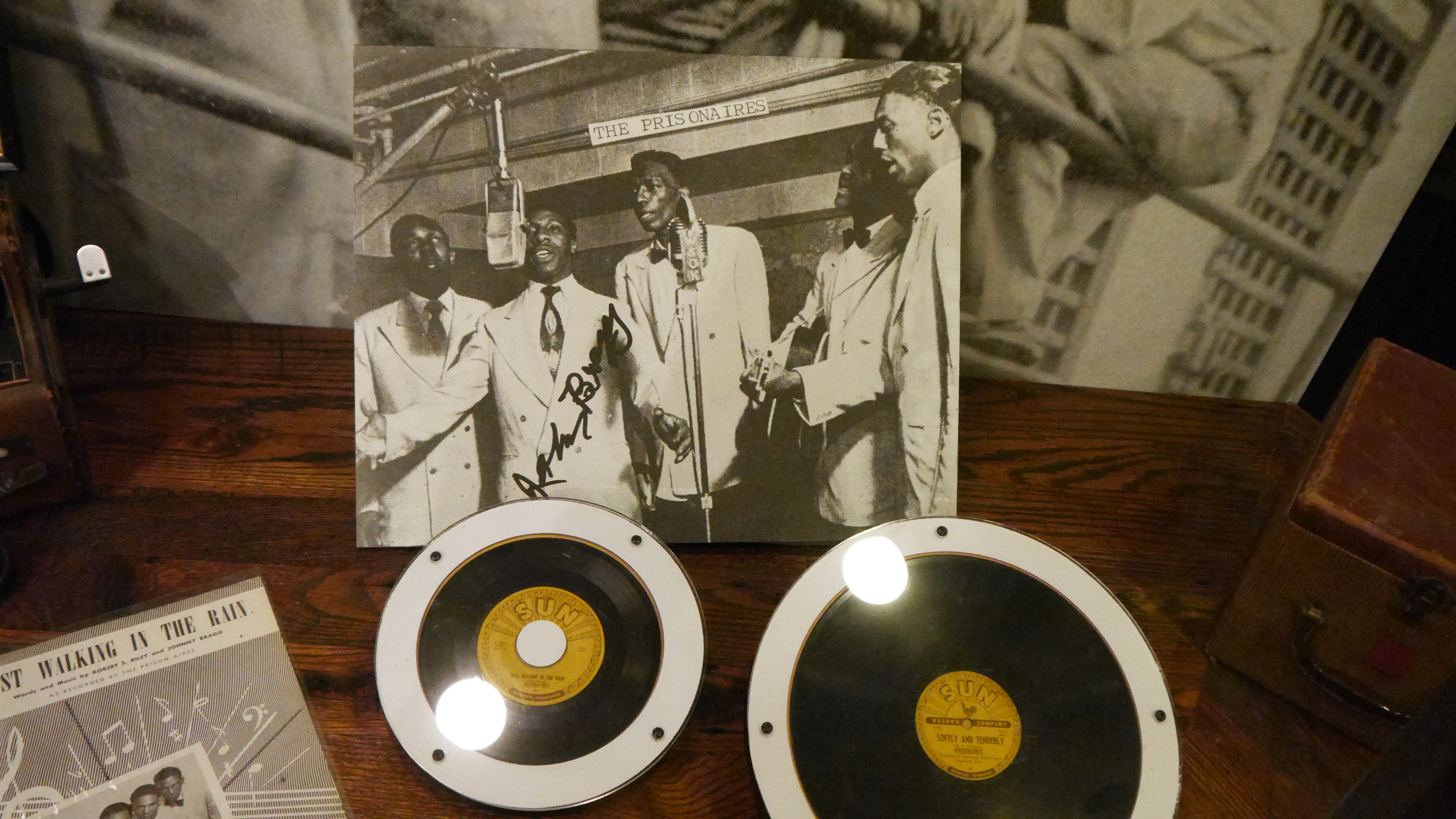
In 1953, Sam Phillips worked with the Tennessee State Penitentiary to record a group of prisoners who would become known as The Prisonaires. Cohen Brothers fans would recognise the Prisionaires as the basis for the Soggy Bottom Boys in O Brother Where Art Thou?. Here they are singing their big hit Like Walkin’ In The Rain which became an even bigger hit for Johnnie Ray.

An original WHBQ studio now situated in the Sun Studios building. WHBQ was the radio station that played rhythm and blues back in the 1940s and 1950s. This was the home to Dewey Phillips, the wild Daddy-O disc jockey that broke Elvis and other rock and roll artists.

Harrie crooning in Sun Studio.
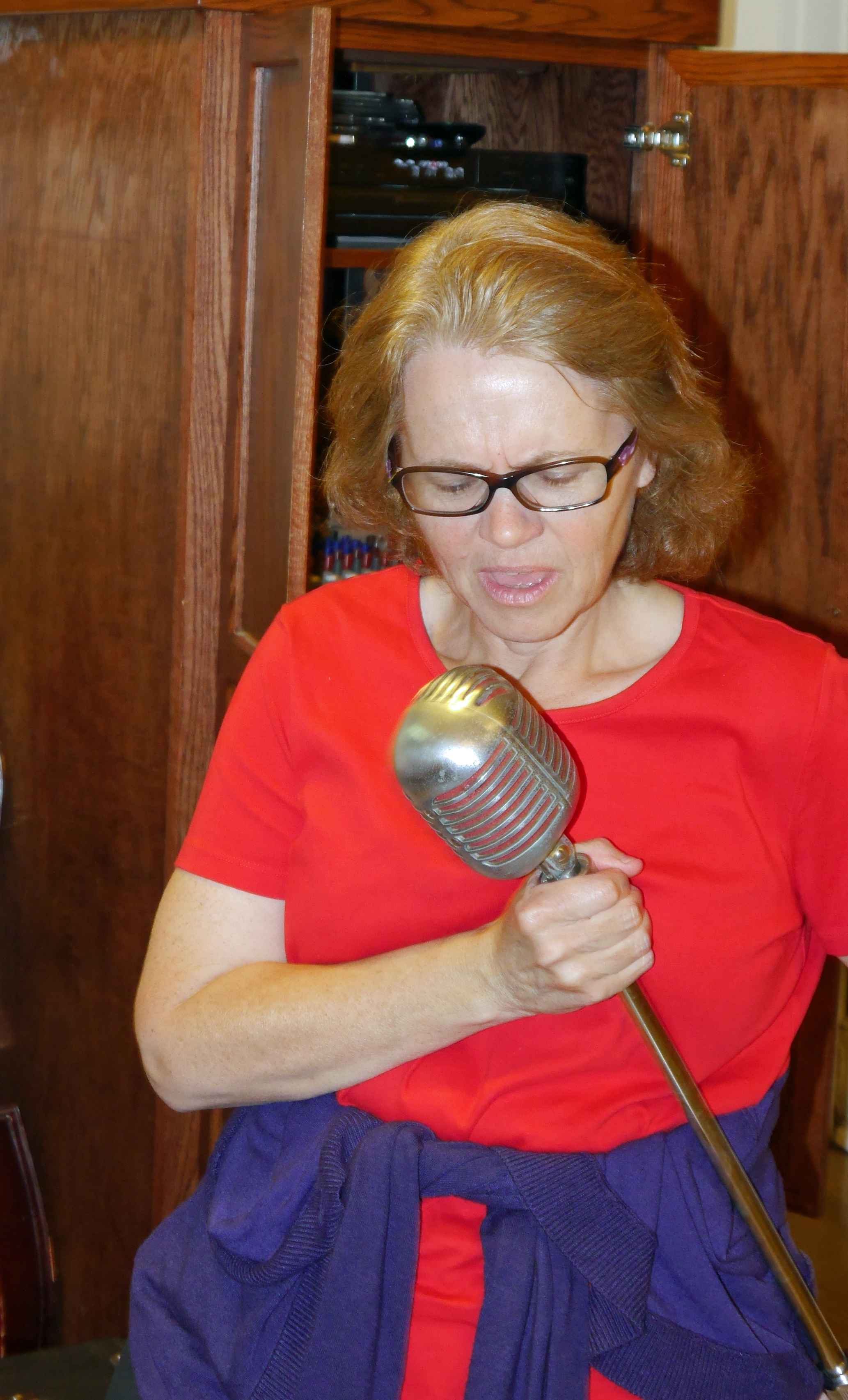
Michelle showing the Sun A&R Men what she’s got.

Here I am singing the tinpantyhesis of melody while Sam Phillips and Elvis look down in dismay.

The Lynehamaires
Piggly Wiggly and the Pink Museum
Ever wondered where the modern self service supermarket came from? One minute you were having to ask the grocer what you wanted and the next minute you were taking the items from the shelf yourself.
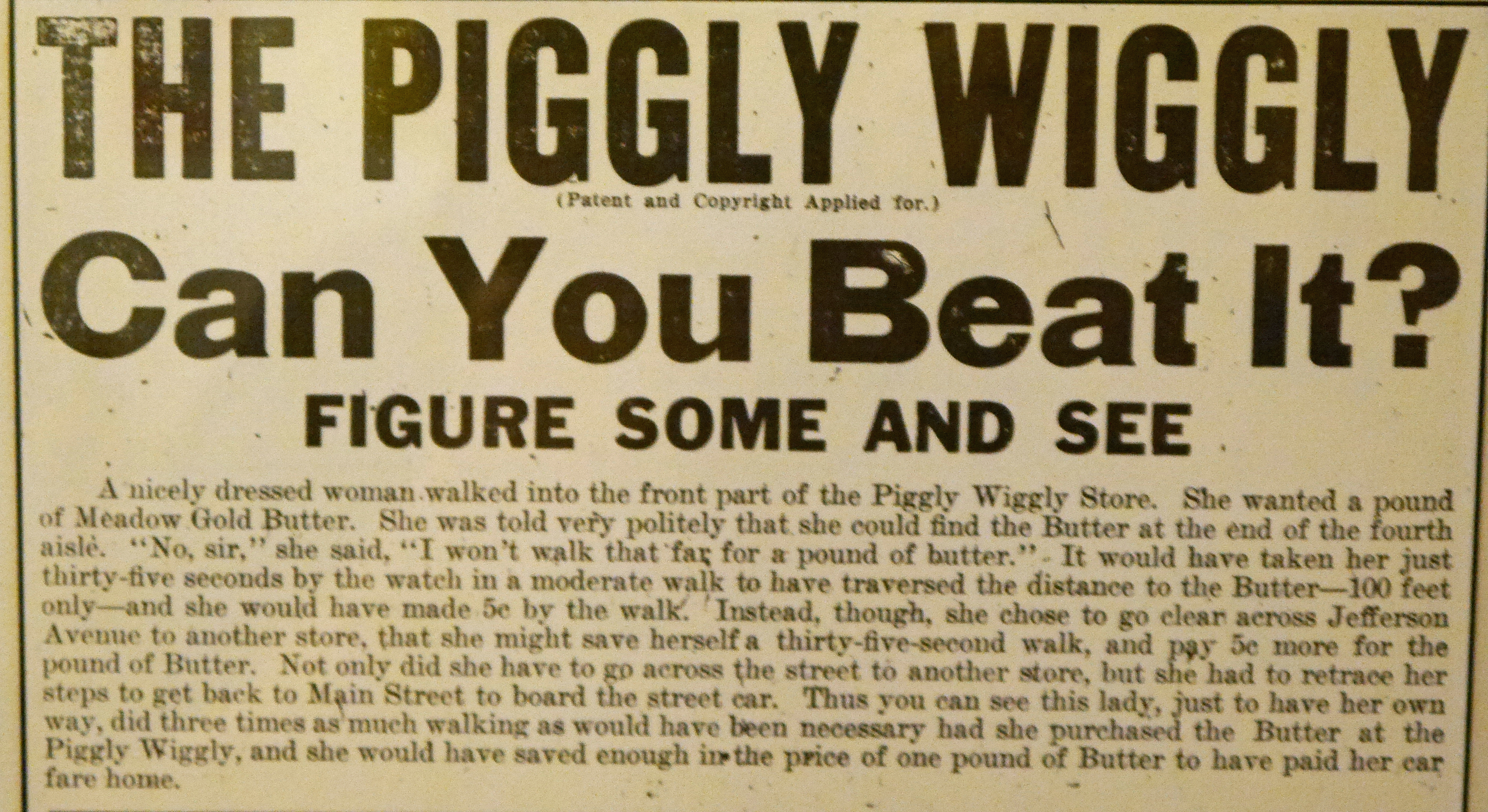
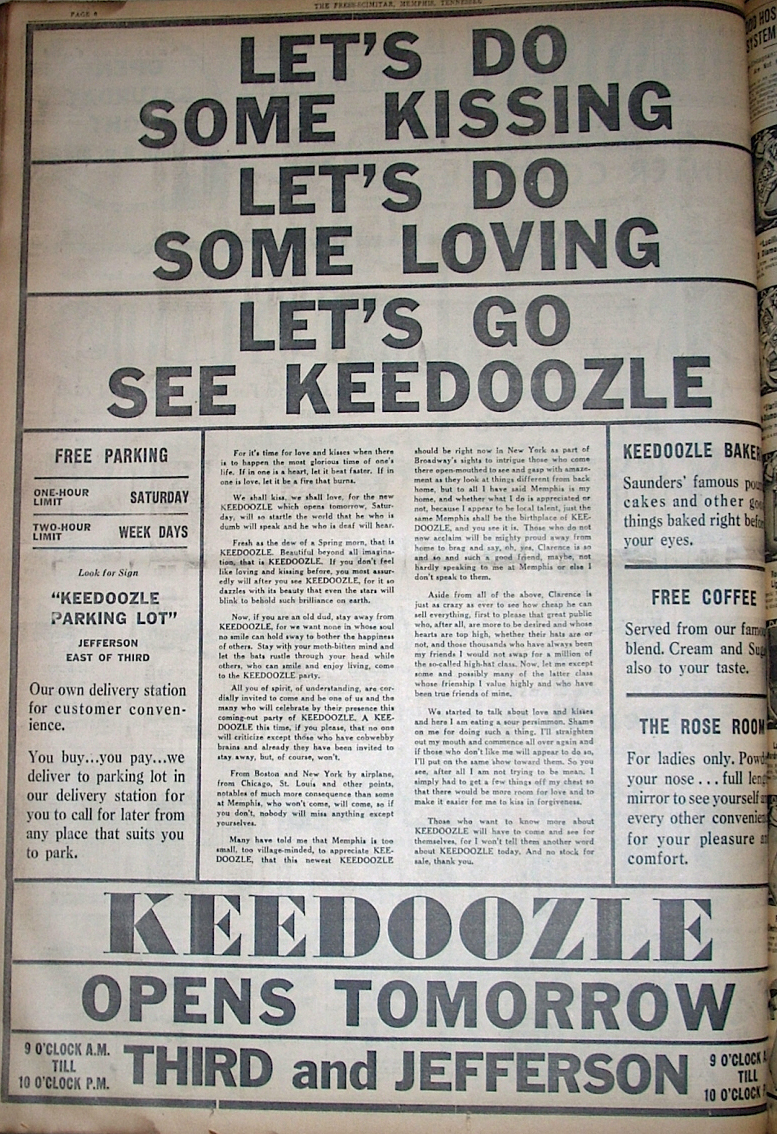
Well, it all changed in Memphis, Tennessee in 1916 when Clarence Saunders founded the Piggly Wiggly self-service supermarket. We visited Clarence Saunder’s Pink Palace museum where there is a recreation of the first Piggly Wiggly. The early consumer and trade advertisements for Piggly Wiggly were fascinating and hilarious. The indignity or freedom of having to choose your own goods. Some predicted people would steal while others wondered whether consumers were capable of choosing their own goods without a grocer’s help.
The self-service concept was patented and licensed to other “supermarkets” in the teens and twenties (my favourite knock-off supermarket was Selfy Helpy) before Saunders went bankrupt in the late twenties. The first self-service grocery store in Australia was Claude Fraser’s Cash and Carry Store in Brisbane which opened in 1923 but self-service supermarkets didn’t really take off in Australia until the 1950s.
Clarence Saunders returned in the 1930s with his own store amusingly called Clarence Saunders – Sole Owner of My Name. It was also in the 1930s that Saunders developed the Keedoozle store where you had your own key which would be used in aisles of vending machines. The goods would then go from the vending machine on to conveyer belts to be tallied and bagged ahead of your arrival at the checkout. Apparently, mechanical problems plagued the store but it didn’t stop Clarence Saunders who came back again in the 1950s with his Foodelectric concept which was essentially a version of the modern self-service checkout where you bag your own goods. He had the idea of every shopper having their own computer (yes, a computer back in the 1950s) to log each item and function as a personal cash register. A fascinating bloke and yet another unexpected surprise in the city of Memphis.


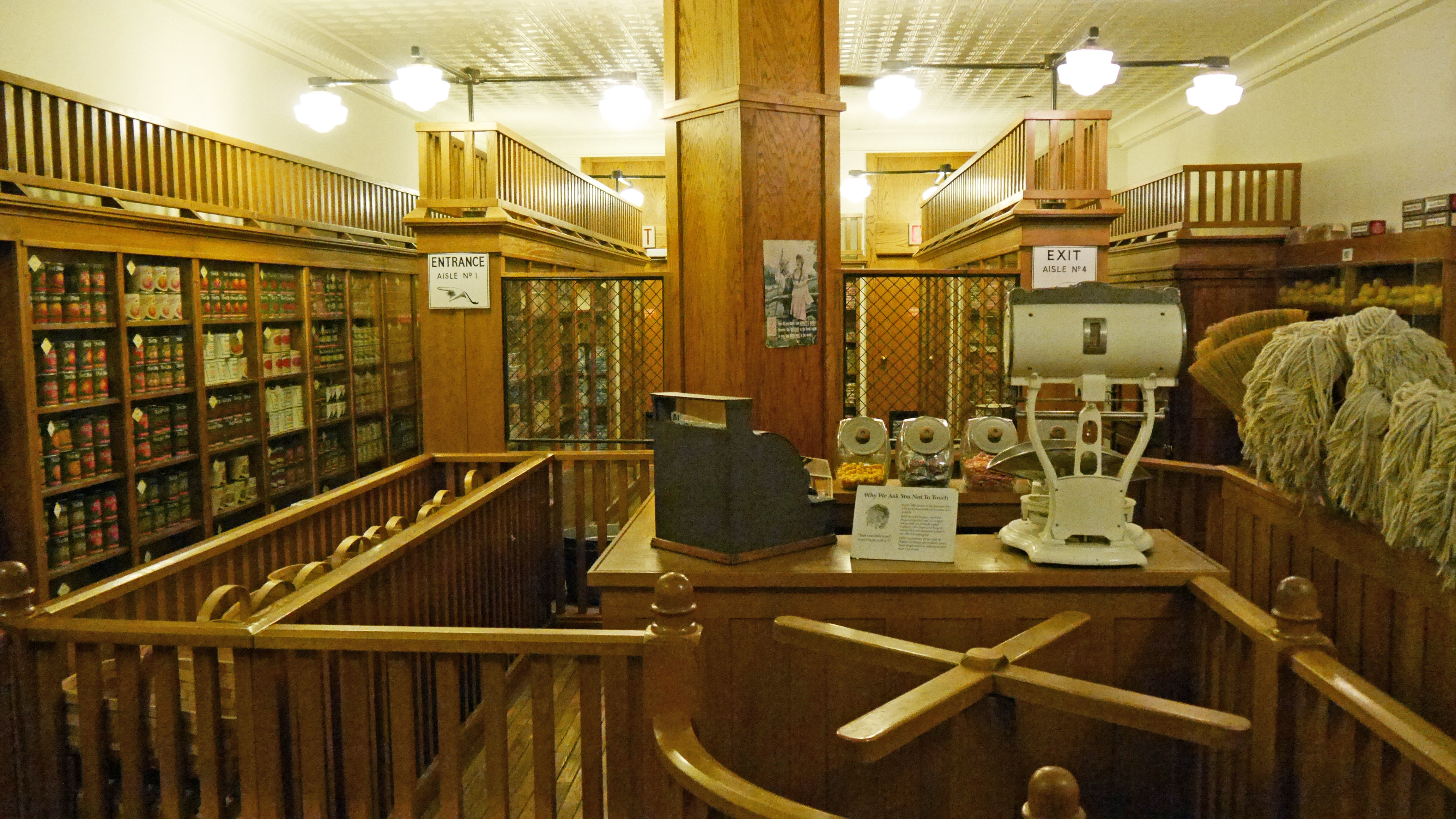
The replica of the original Piggly Wiggly store in the Pink Museum.
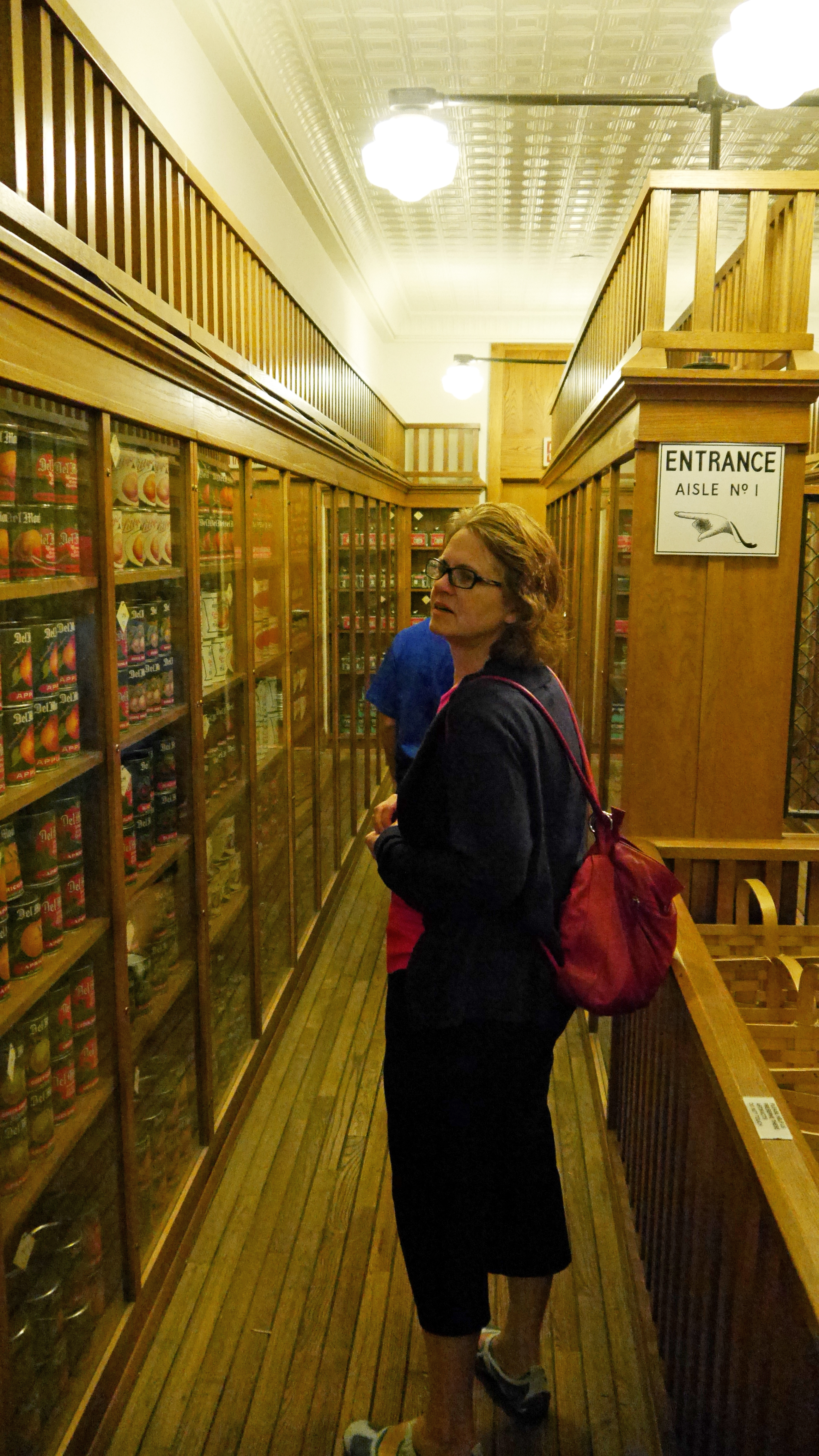
How is she ever going to choose what she needs without a grocer’s help? Luckily, there is a sign telling her where to start.

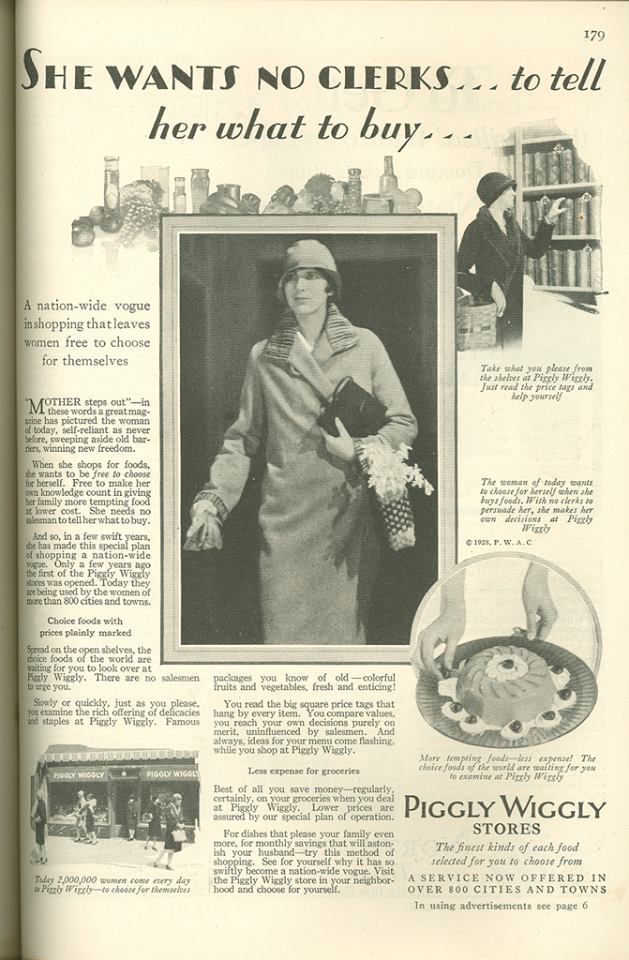

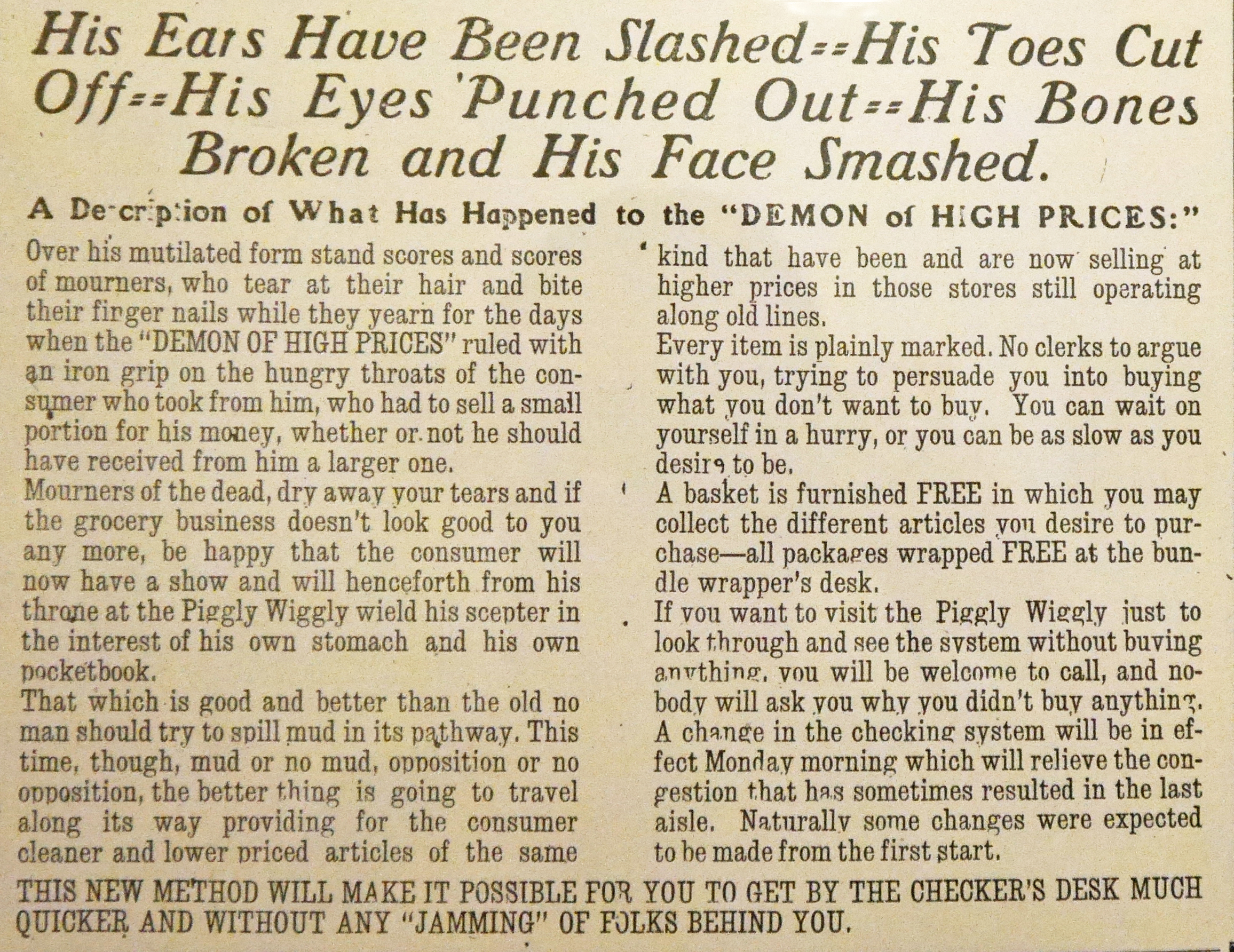

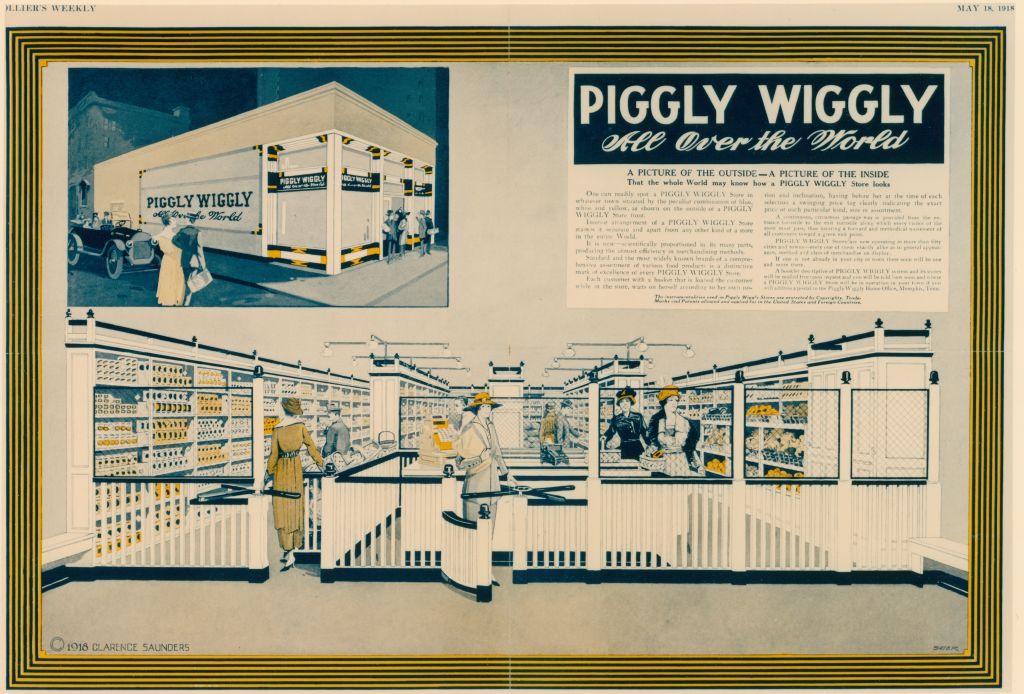
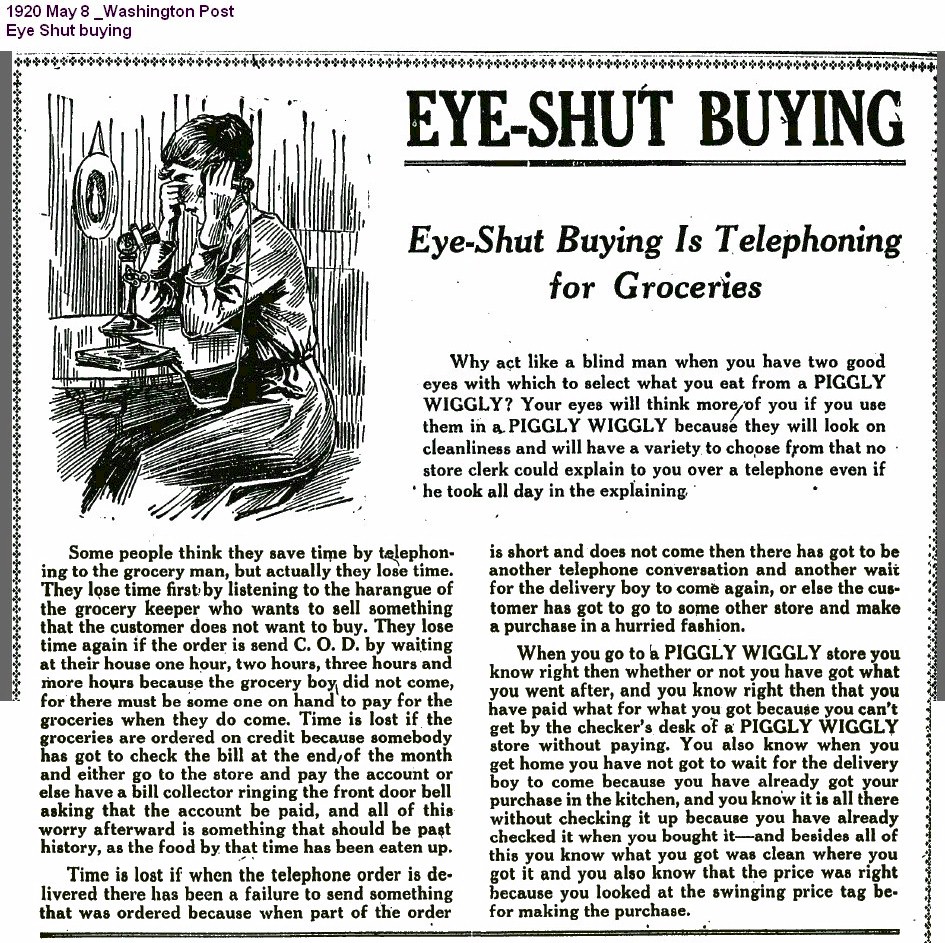


After he went bankrupt and lost the rights to the Piggly Wiggly name, Clarence Saunders came back with a shop name that they could never take away.
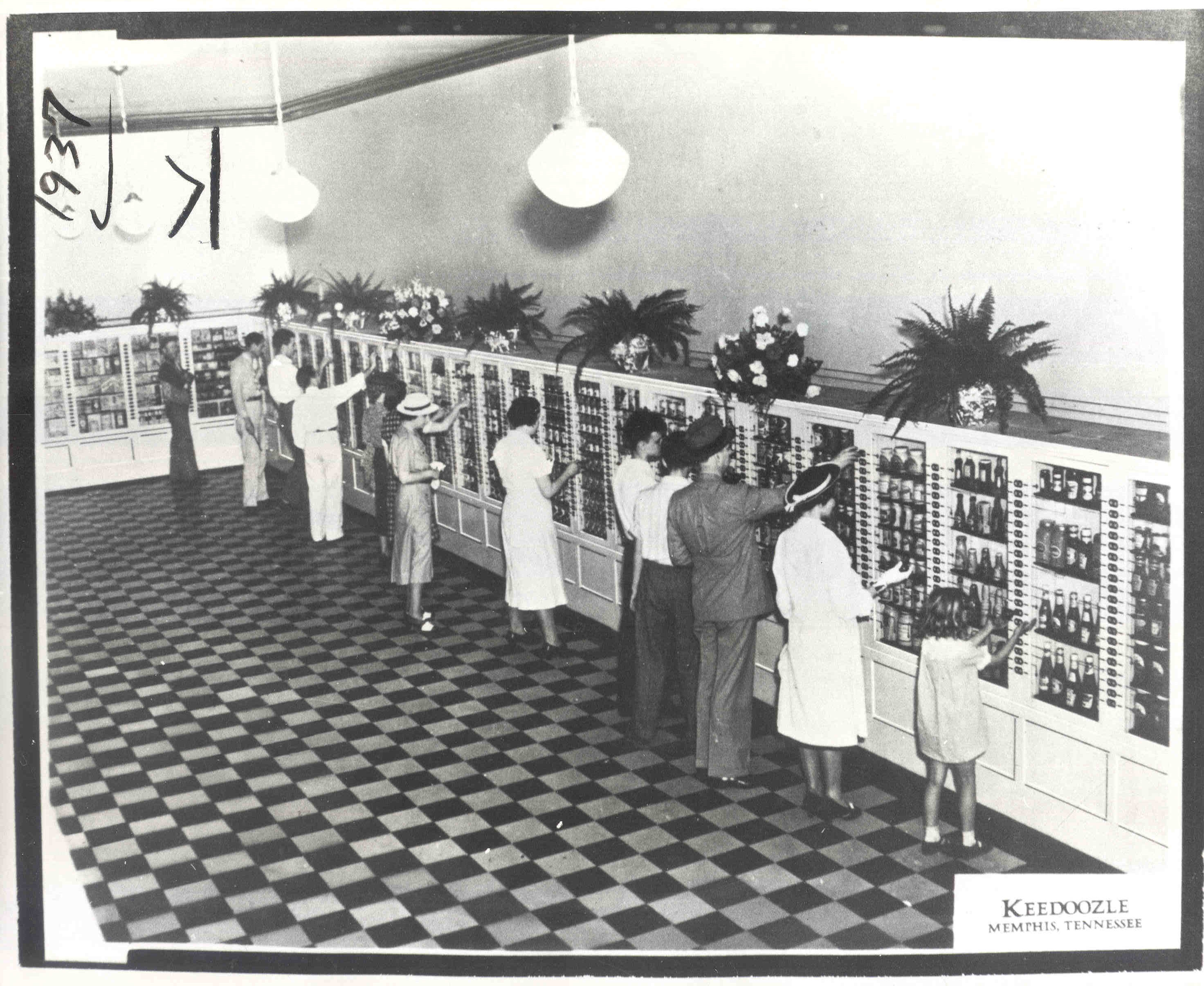
The fascinating Keedoozle automated supermarket in 1937.
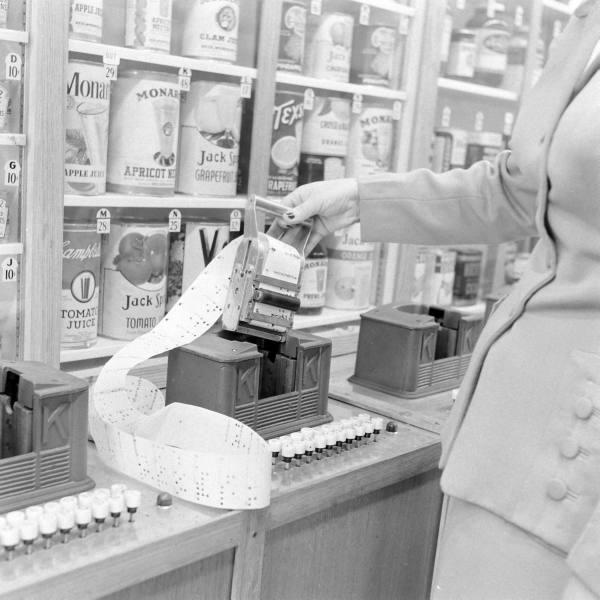
This is the actual “Key” used at the Keedoozle which was essentially created a long punch card that recorded the details of the item and prices for the clerk at the cash register. These days we do it via barcodes.
More interesting exhibits at the Pink Museum in Memphis…

The Pink Museum had a Twice Bitten exhibit with giant animatronic insects such as this praying mantis as well as several live spider exhibits.
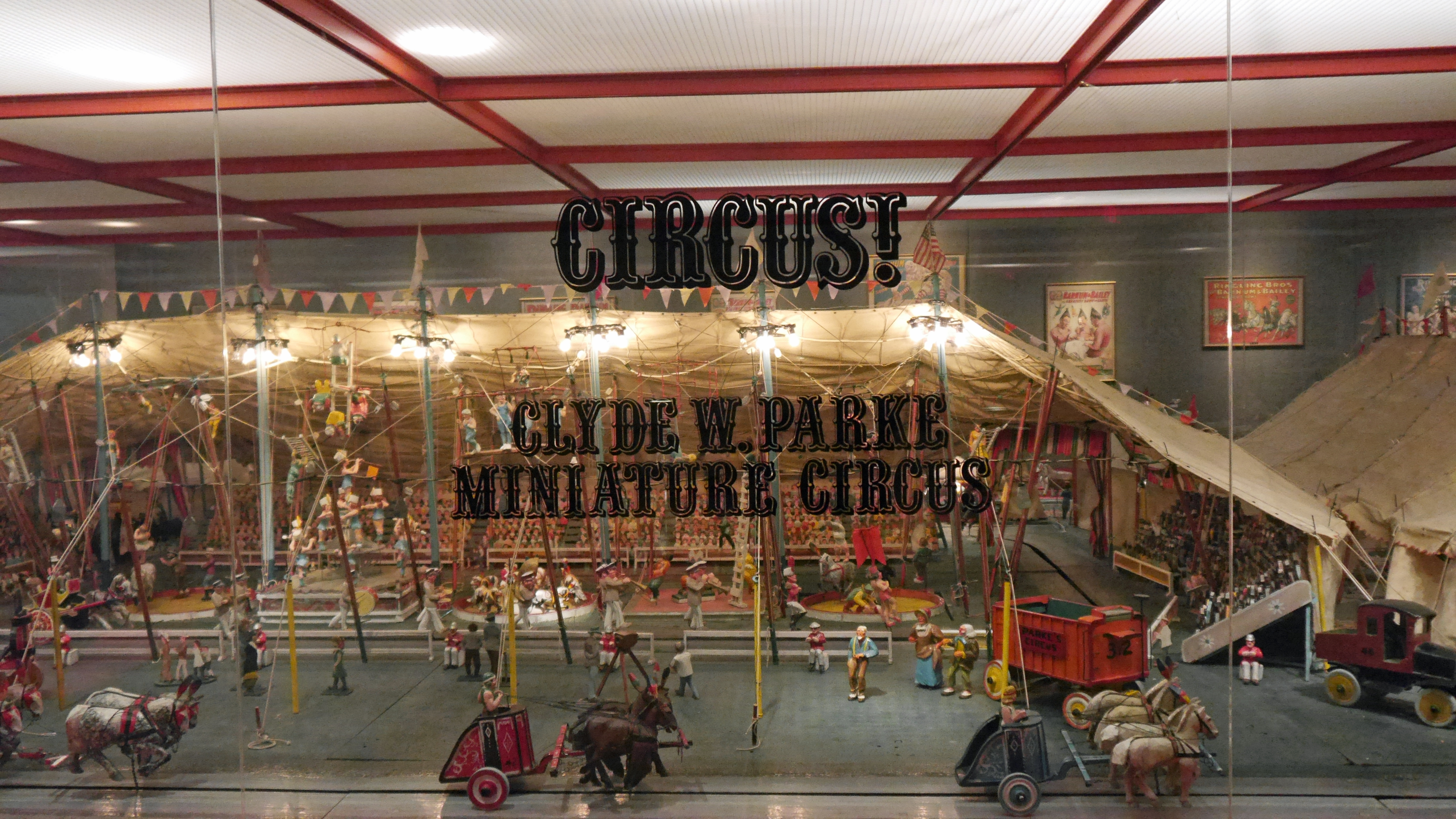
This is Clyde Parke’s miniature circus. Parke started making it during the Great Depression when he lost his job. He scrounged old cigar cases and wood from packing pallets and spent up to 18 hours a day carving the figures and exhibits. He would then spend the next thirty years perfecting it; adding extra areas and then devising an elaborate mechanical control system to move the figures in time to music. You can see the circus come alive here.
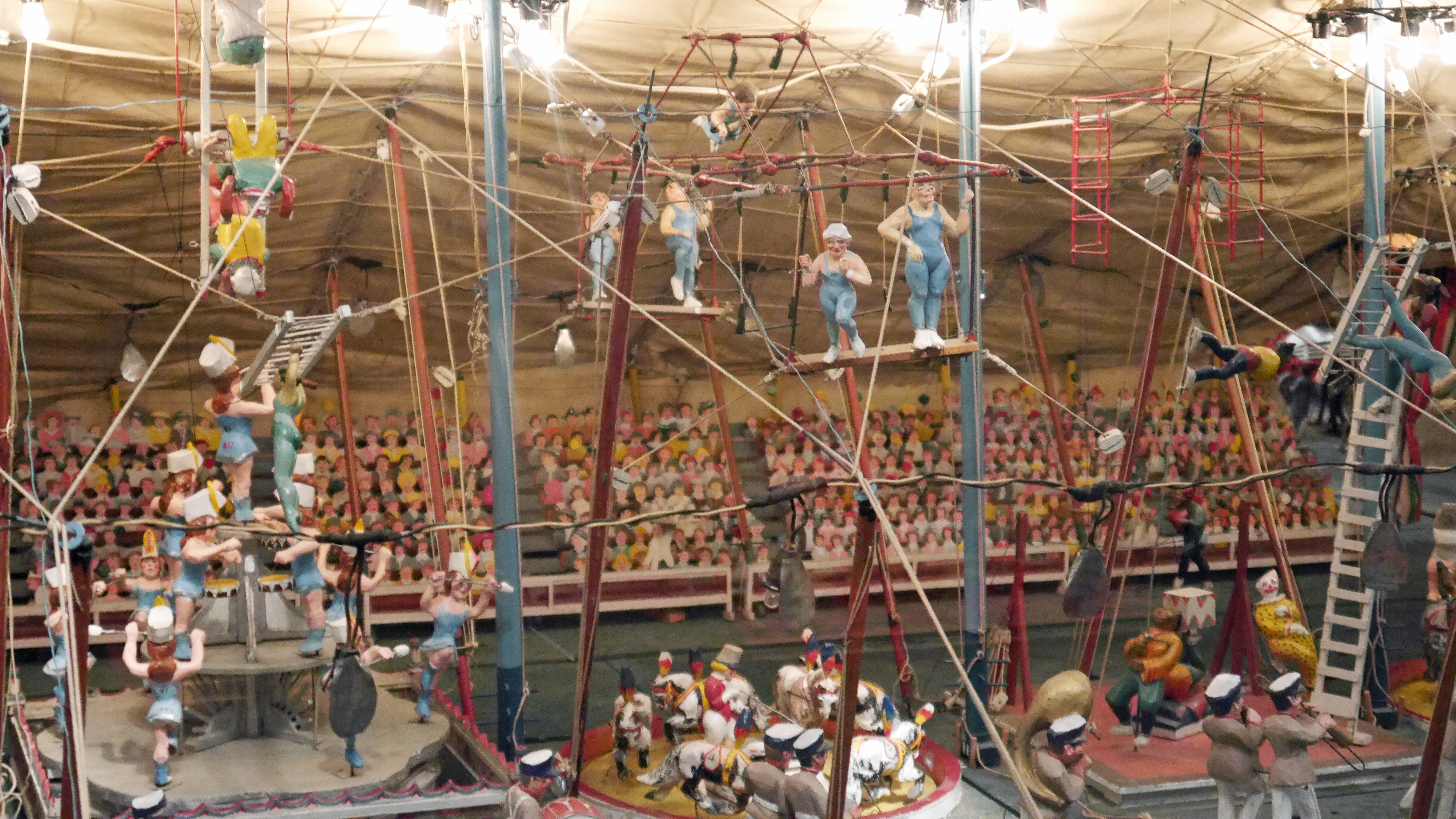
The hand-carved acrobats in Clyde Parke’s circus.
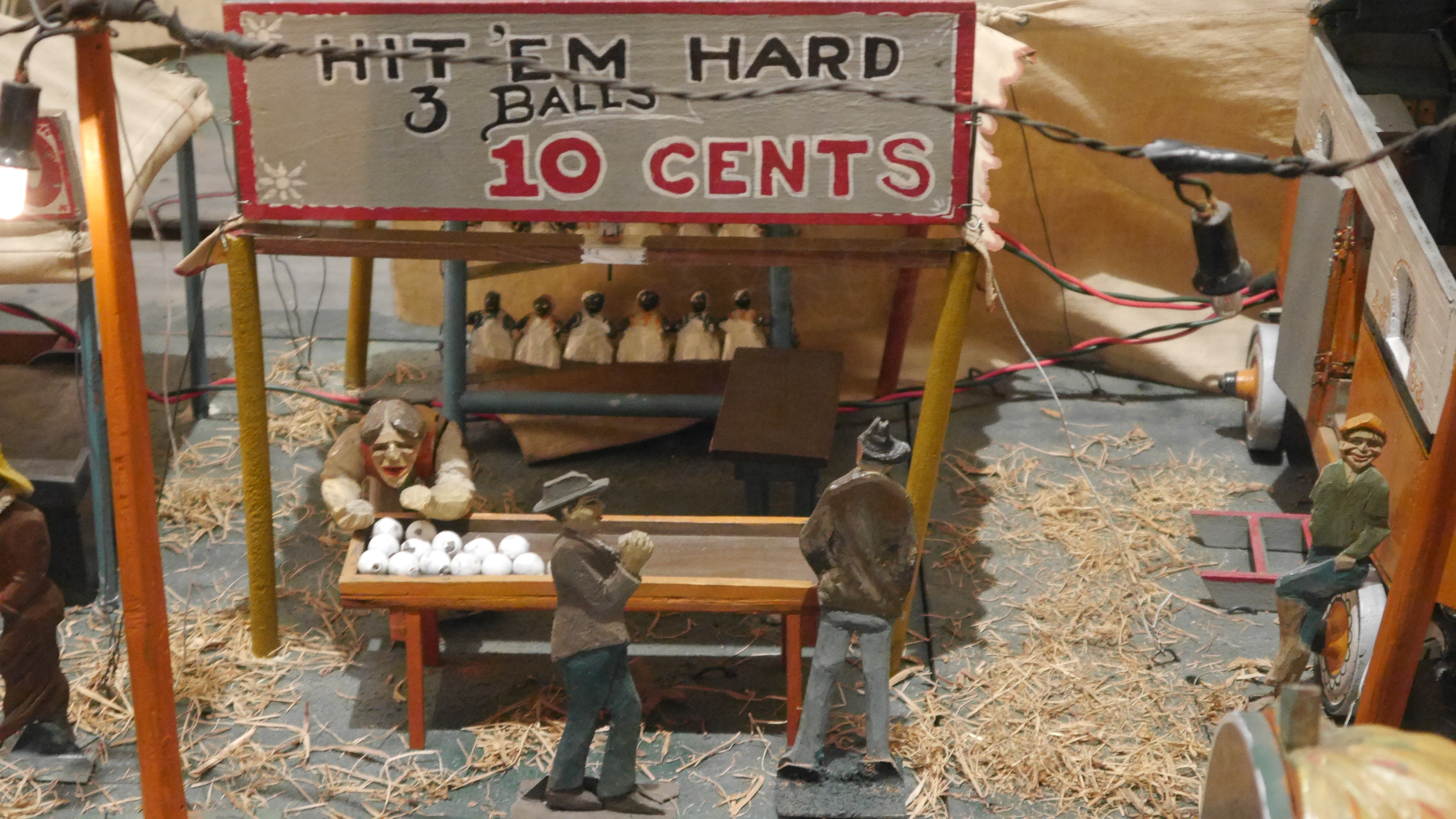
One of the many sideshow alley stalls in Parke’s circus.
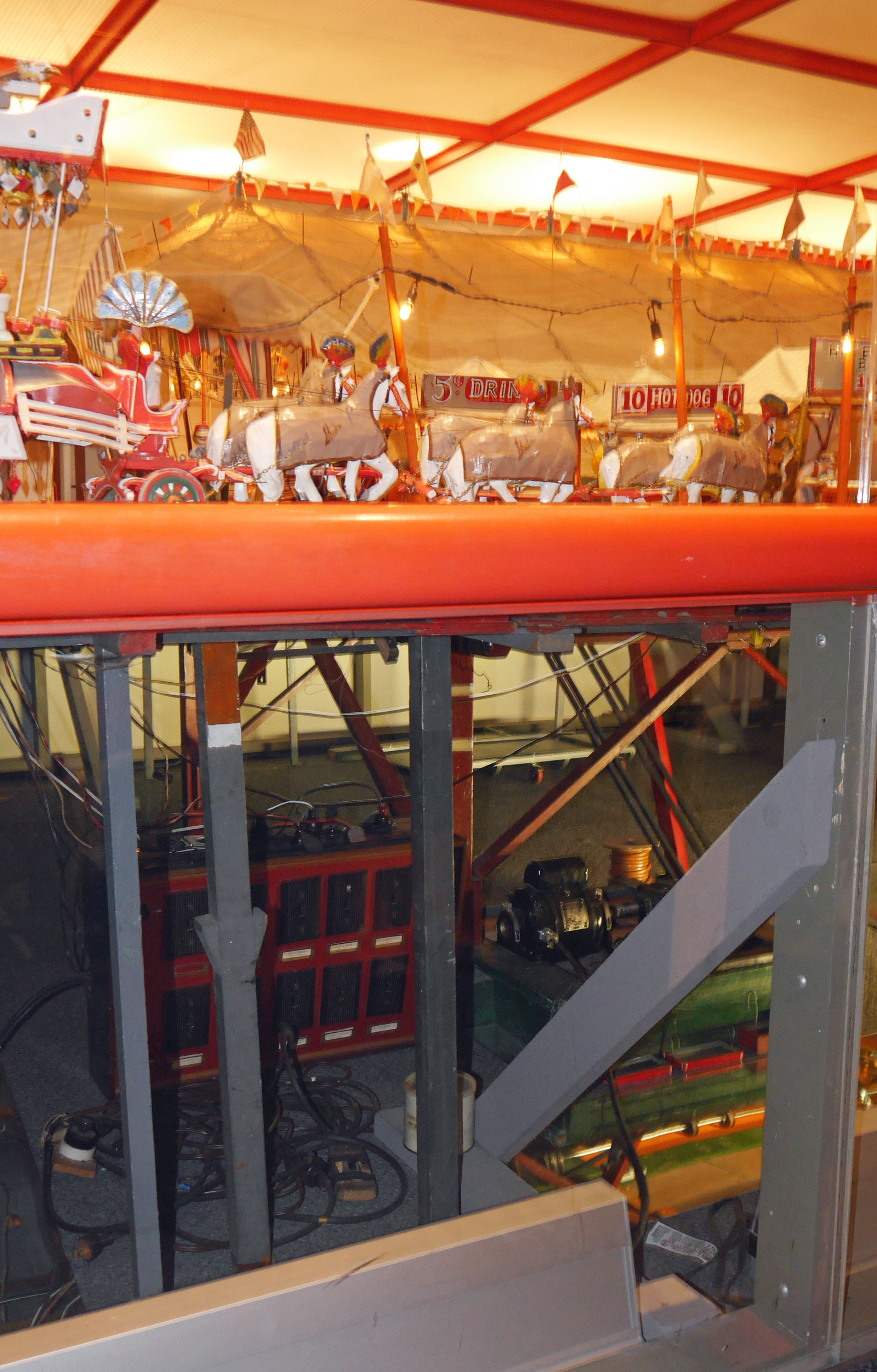
Here you can see the motorized underpinnings of the circus.
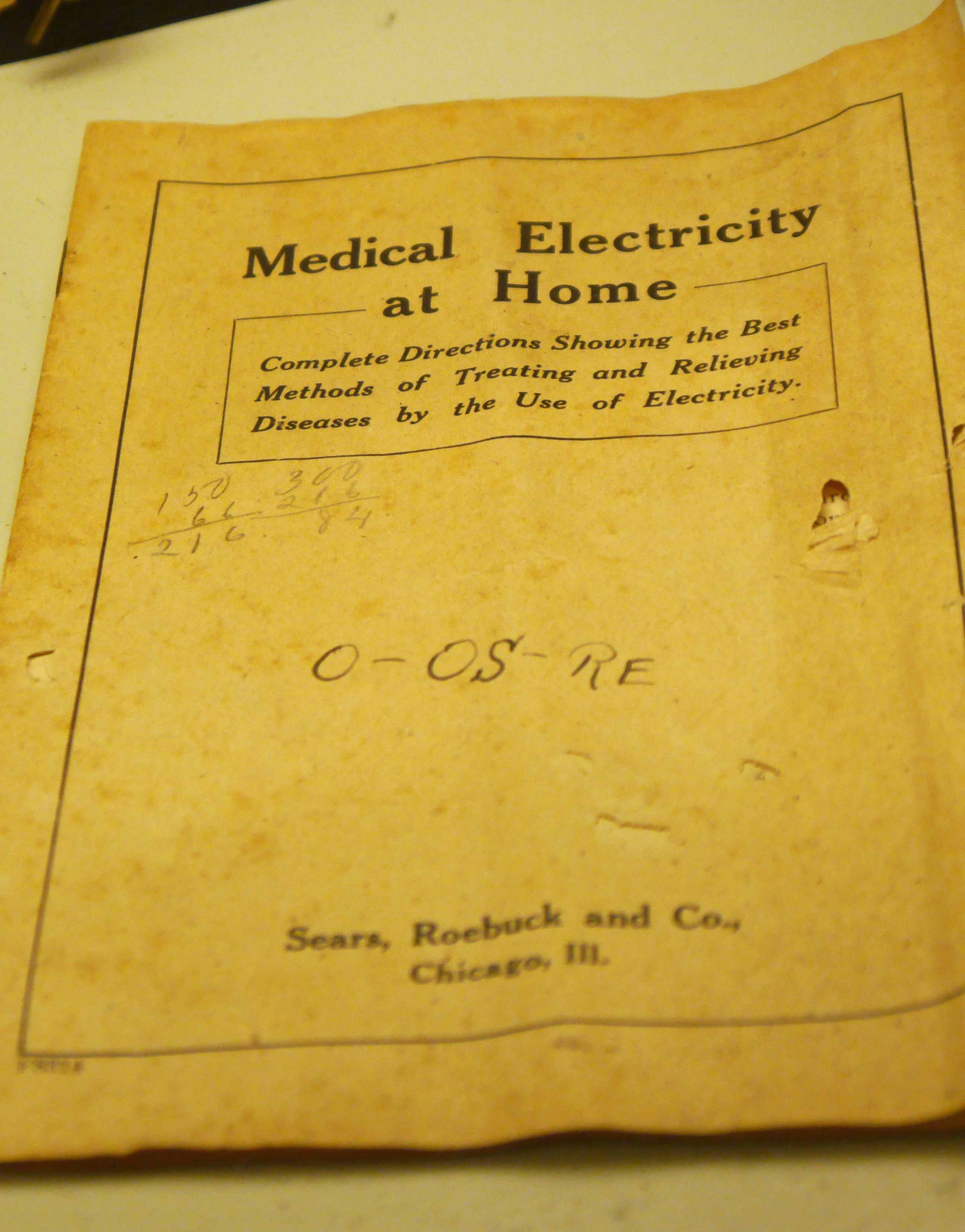
The non-professional application of electricity to the body – what could possibly go wrong? Actually, there seems to be a resurgent interest in electrotherapy as a recent scientific study found it really worked to cure wounds.

Here is one of the home electrotherapy machines from the early twentieth century.
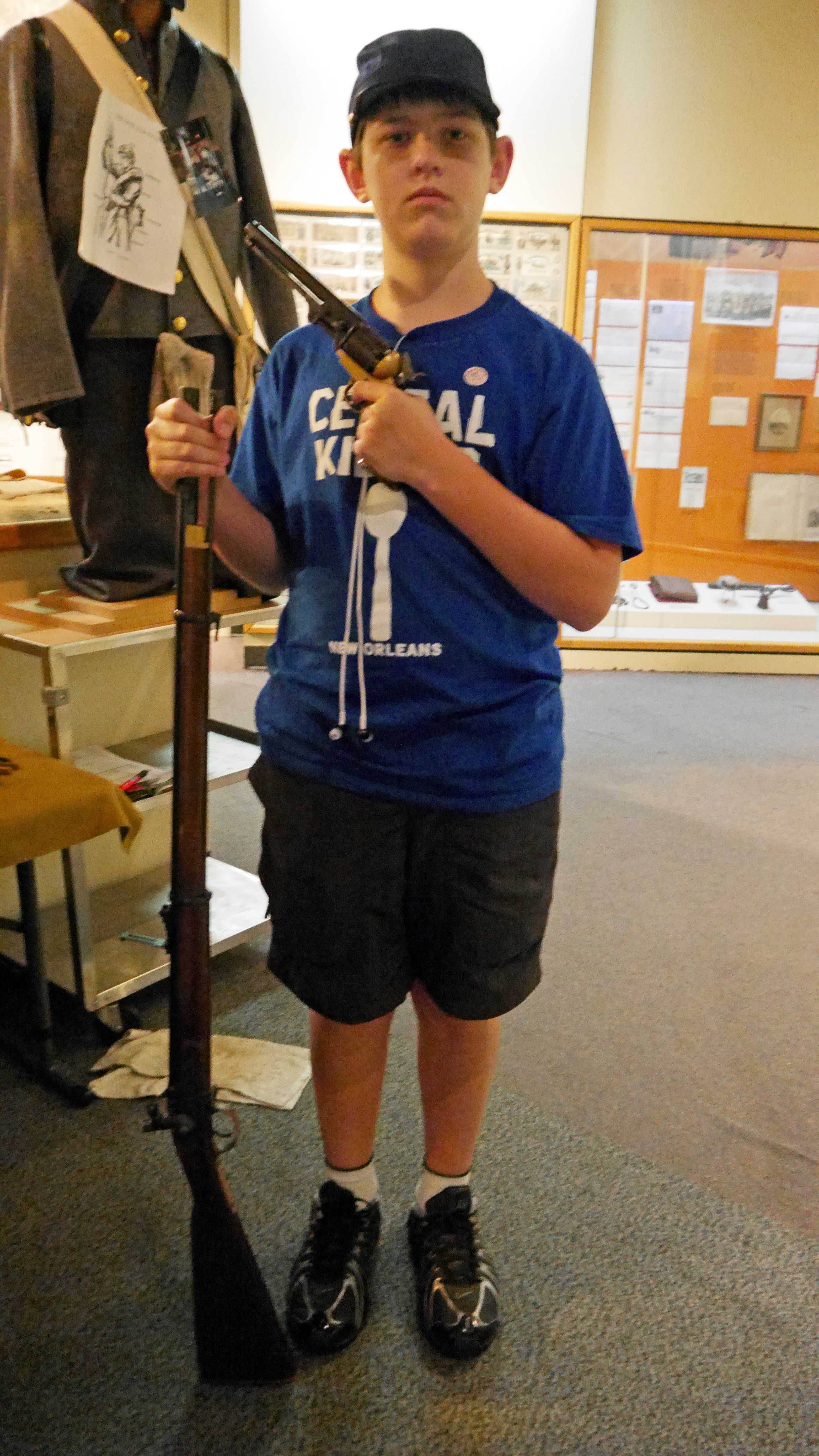
Harrie with a Revolutionary War musket and a Civil War revolver. Of course, being in the South, he is wearing a Confederate cap.
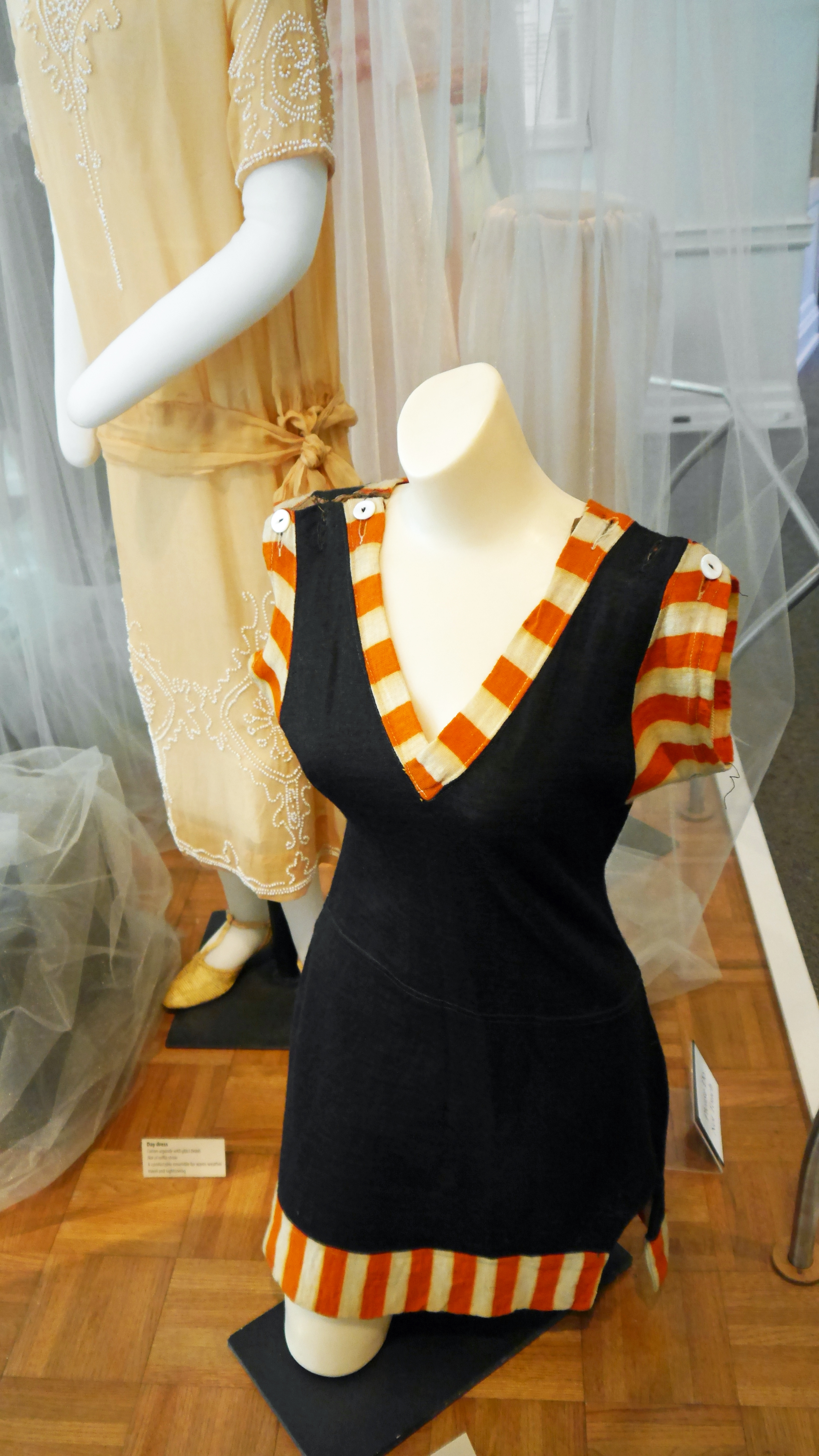
There were lots of exhibits of period clothing such as this daring ladies bathing suit from the 1920s.
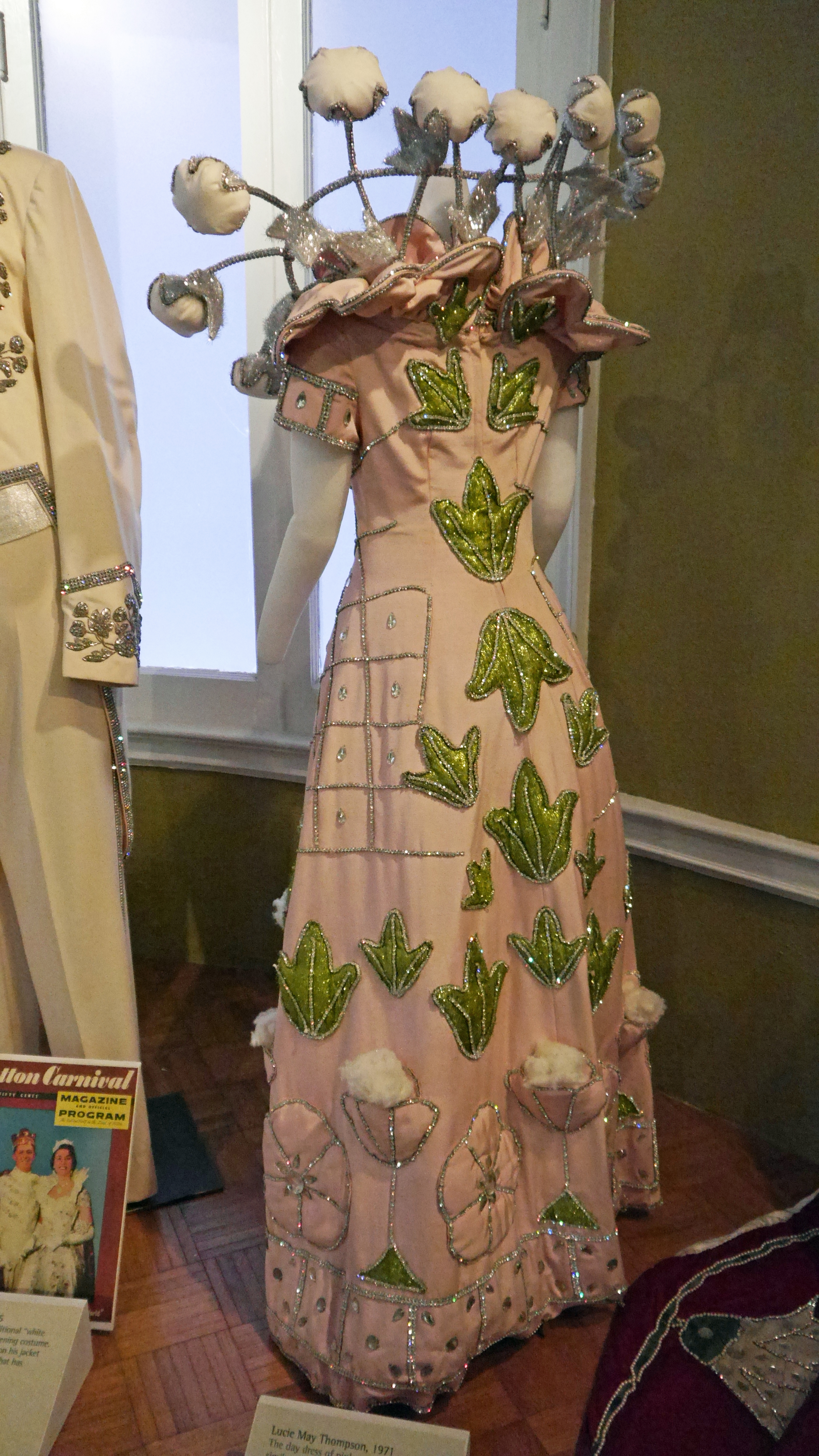
For many years, Memphis’ primary industry was cotton; originally built on the back of slavery. Every year, Memphis holds a Cotton Carnival where a Cotton Queen and a Cotton King are crowned. Here is the regal gown worn by the 1971 Cotton Queen, Lucie May Thompson.
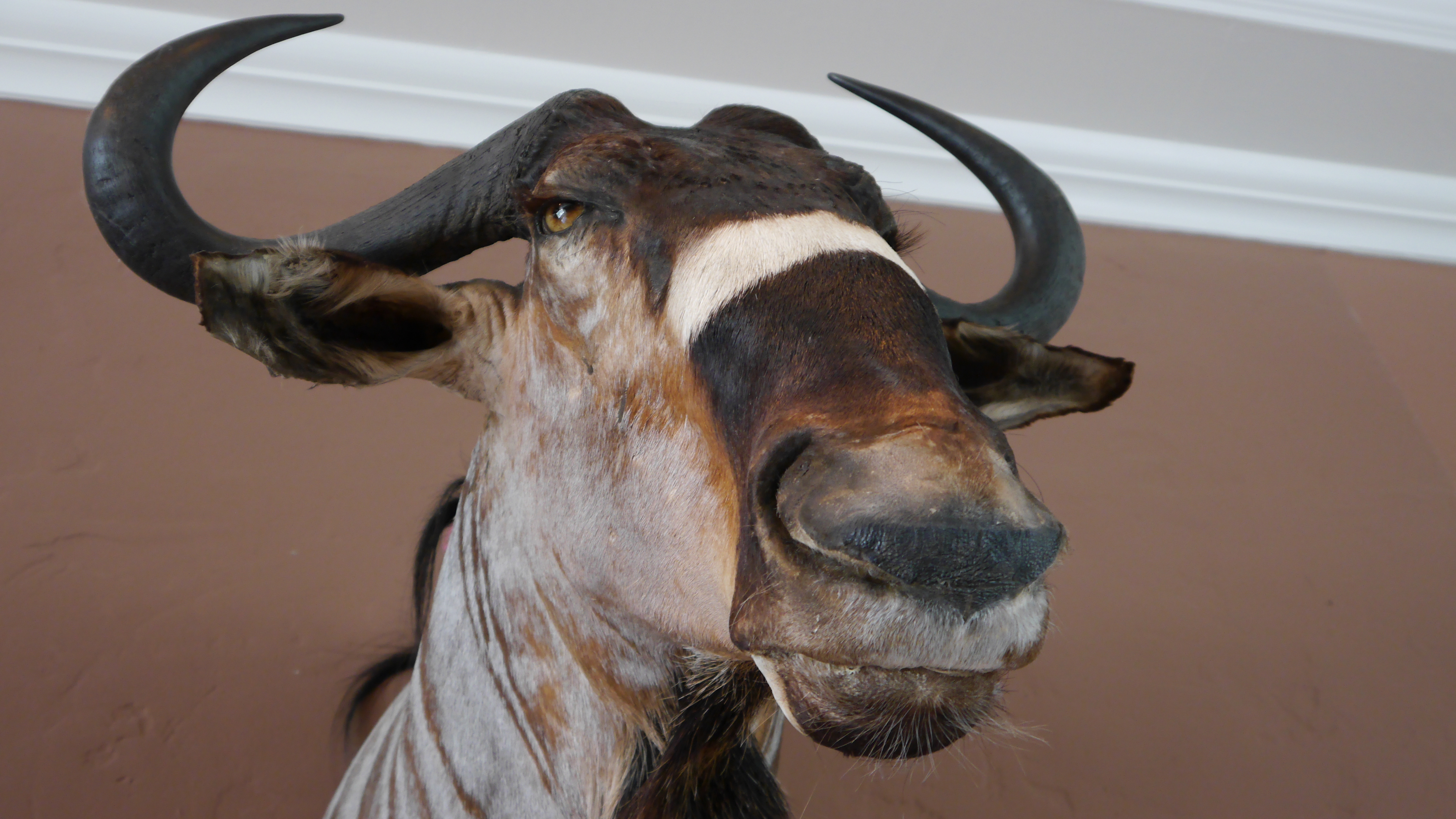
I hain’t an Helk, I’m a Gnu. The gnicest bit of gnature in the Zoo.
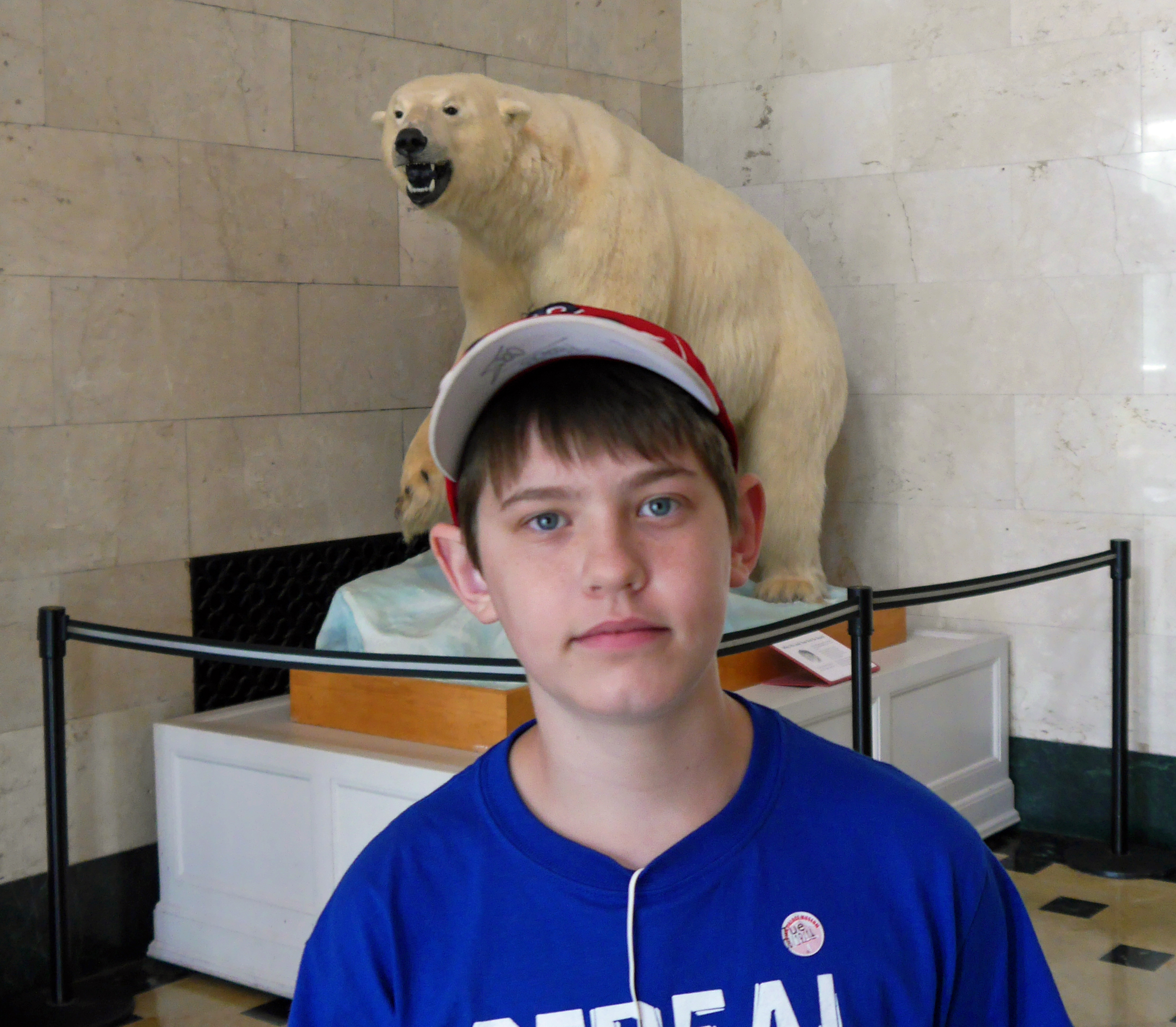
Polar bear and cub (sorry Scout).
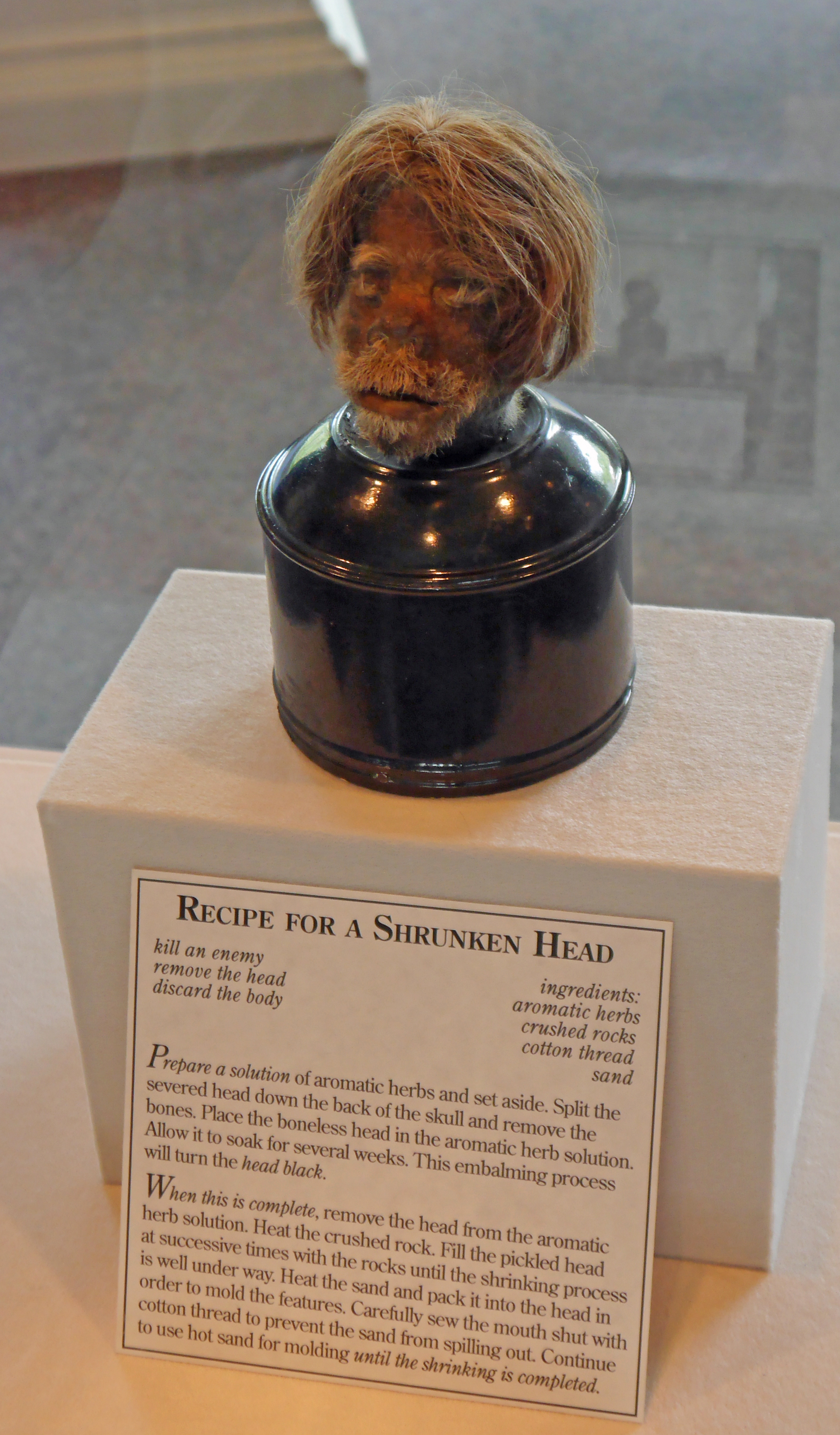
This was apparently the most popular exhibit in the museum when the museum first opened. It is so beloved by many Memphis residents, that when the museum announced it was going to remove it in the 1980s as it considered it to be in poor taste, there was such a public outcry, that the museum directors decided it was wiser to keep it.
The Rendezvous
As we were leaving the Pink Museum to drive to Arkansas, we asked an old timer who worked at the museum where to eat. He wanted to know if we had eaten at the Rendezvous and we said no. He shook his head as though saddened. “The Rendezvous has THE best ribs in all of America” he said. “You just can’t leave Memphis until you eat at the Rendezvous.”
So, we headed our car back in to town to try the best ribs in America. The restaurant itself was a bit of a seedy place. To get to it, you had to go down a dingy alley and then go downstairs into what looked like an old cellar. The ribs, beans and slaw were pretty good but I’m not sure if they were the best ribs in all of America. What was impressive was the testimonials from generations of celebrities and politicians from the 1940s to present day that lined the walls. Lots of people from all over America seem to love this place.

This picture is taken from the Internet but it gives you an idea of the unglamorous surroundings to the Rendezvous.
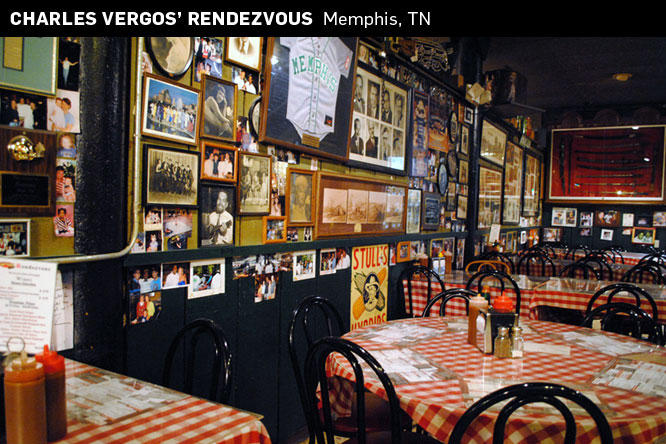
This is another picture form the Internet of the Rendezvous interior. Note, all of the testimonials on the walls.

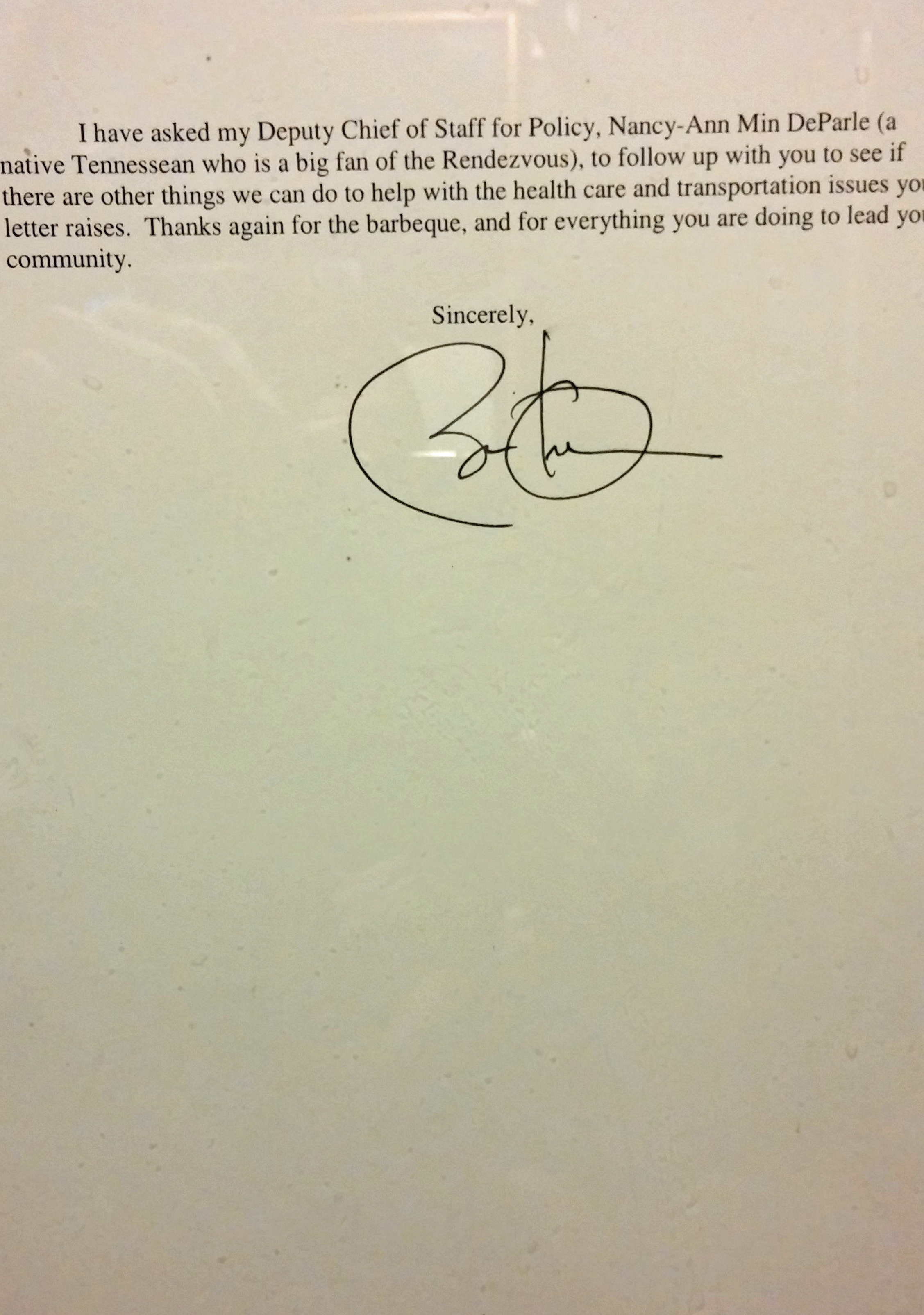
A testimonial from the President himself.
 ourtripyall.com
Pingback: Arizona – 26 August – 02 September 2014 |
Pingback: Washington – 18 July – 24 July 2014 |