
Louisiana – where we sipped mint julips on the mighty Mississippi, saw shotgun shacks and “Brad Pitt” houses, ate cajun comme un roi, wept at what black slaves endured and stood at ground zero where modern music exploded.
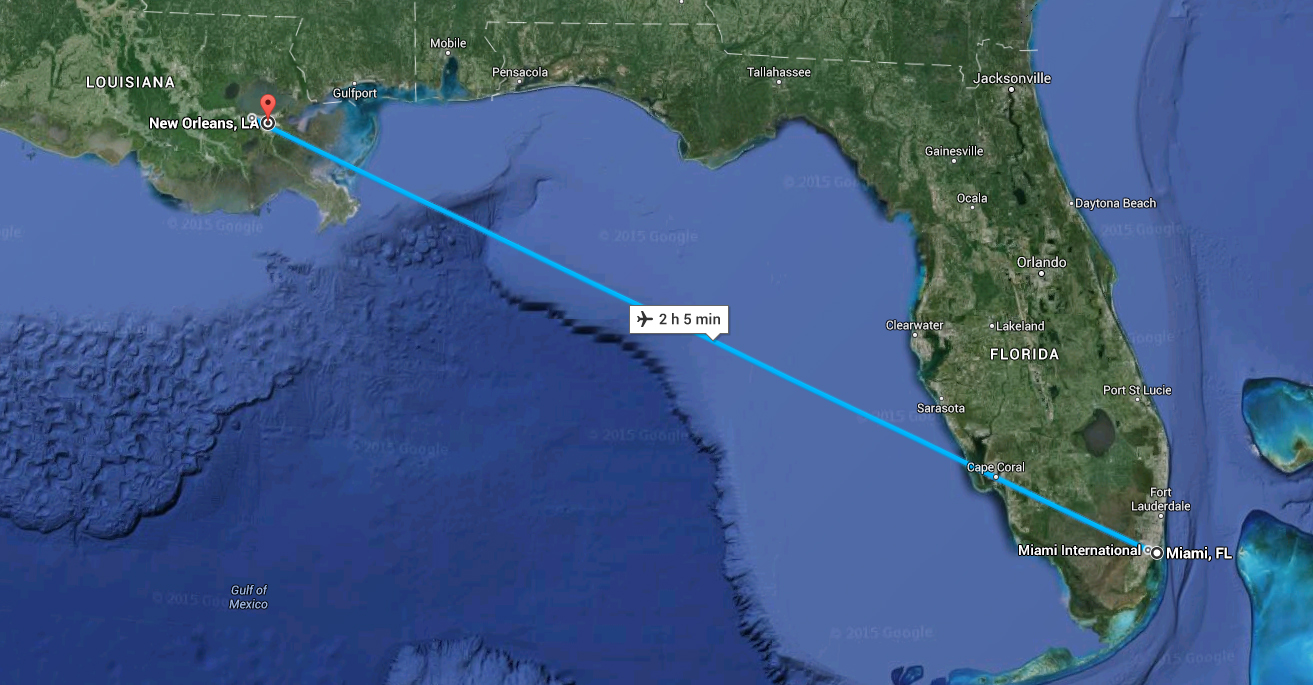
New Orleans
Gnawleans, WheezyAnna. How cool to land at Louis Armstrong Airport and be greeted by a portrait of Buddy Bolden when you get off the plane. This is where it all began folks. This is the birthplace of 20th Century popular music.
We left the airport to go to the French Quarter and were greeted by hundreds of people wearing red dresses. It turns out, we arrived during The Red Dress Run. It is organised (I use the word loosely) by the Hash House Harriers who describe themselves as “drinkers with a running problem” and it is to aid breast cancer research (although I’m not sure how this works in practice as everyone just gets drunk). These guys had been drinking since 7am and we arrived at about 7pm and they were crazy drunk. The taxi couldn’t get through the streets because of drunken revelers. It got a bit scary down Bourbon St when people started attacking the cab. The place where we were staying was right opposite the oldest continuously-run bar in America and party central for the red dress runners. Needless to say, it was a wild and crazy night. These guys were still partying when we got up the next morning!
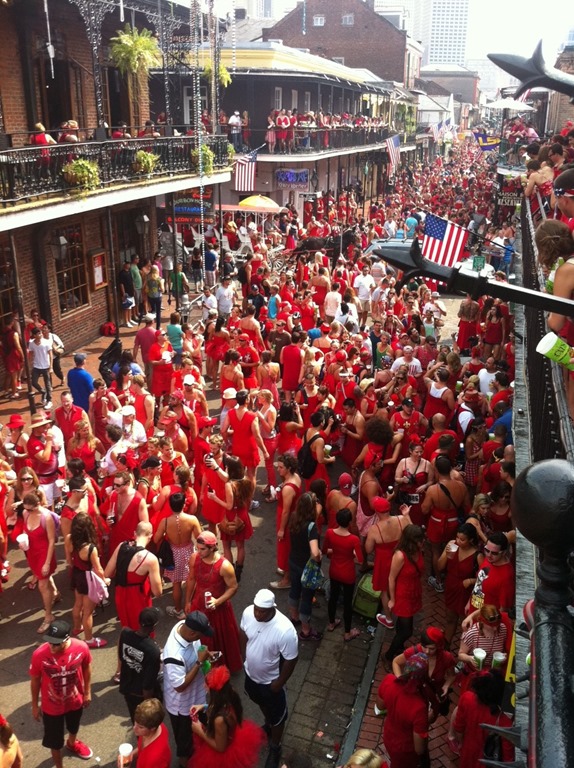
This is a picture from the Internet of the day. This shows what the ride down Bourbon St was like.
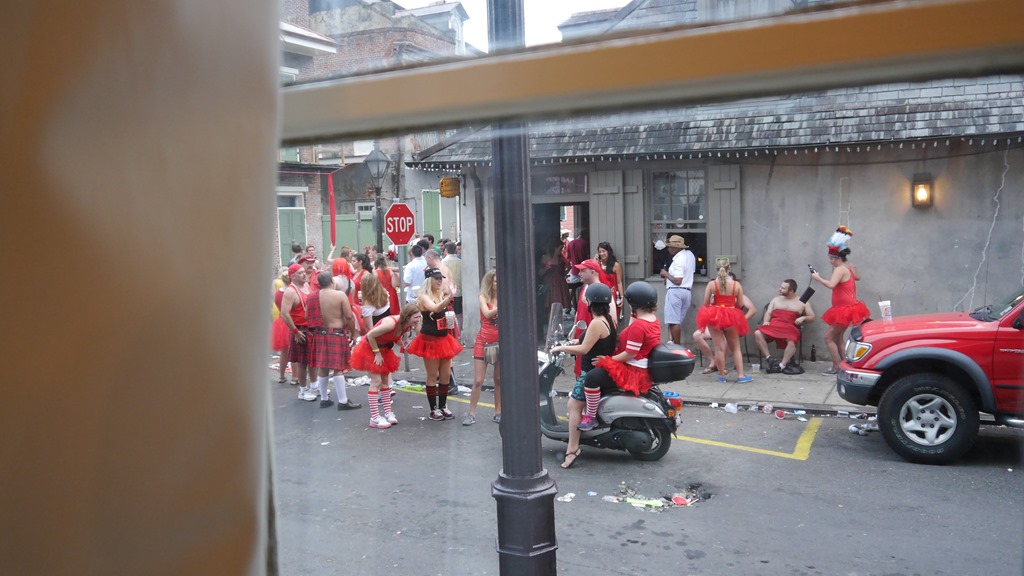
This was the view of the morning after from the Guest House where we stayed.

The morning after the Red Dress Run, a big cleaning truck cruised the French Quarter and instead of just hosing down the streets with water, it sprayed this industrial cleaning solution. This is apparently what is needed to clean the industrial strength partying that goes on here.
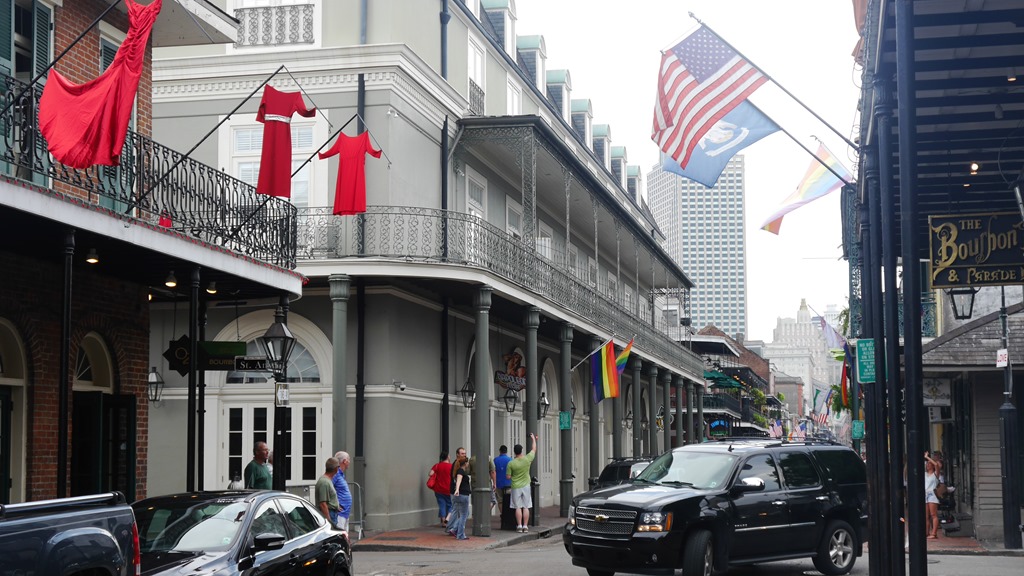
Red dress remnants from the morning after
Bourbon Street
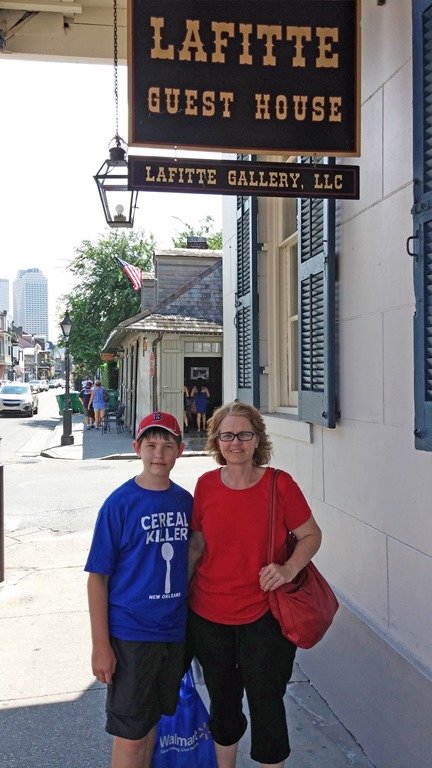
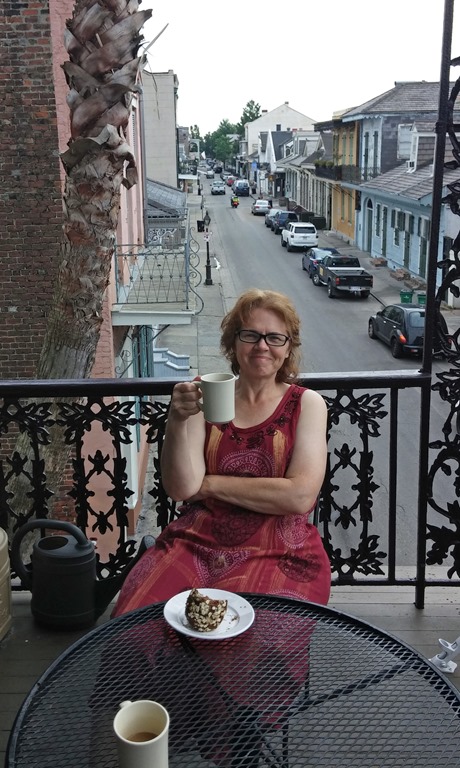
Rues de Bourbon or Bourbon Street. Named after the French House of Bourbon and as decadent as the Bourbon king Louis XVI. Bourbon St is both a crass venue for modern party goers as well as a home to quirky shops and charming architecture. We stayed at the Lafitte Guest House which was built in 1849 and is wonderfully elegant. The house had an upstairs shared kitchen with a fridge and pantry stocked with food for guests. Having breakfast on the outside balcony which overlooked Bourbon St was a lazy pleasure. I think this was the first point in the holiday, that I actually felt relaxed.

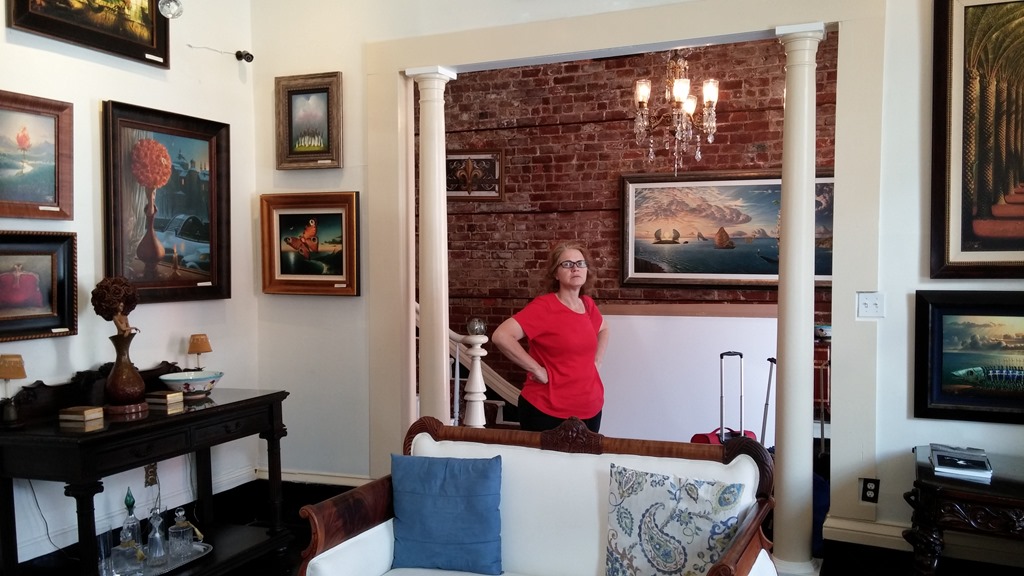
The shared living room of the Lafitte Guest House

Breakfast on the balcony at the Lafitte Guest House
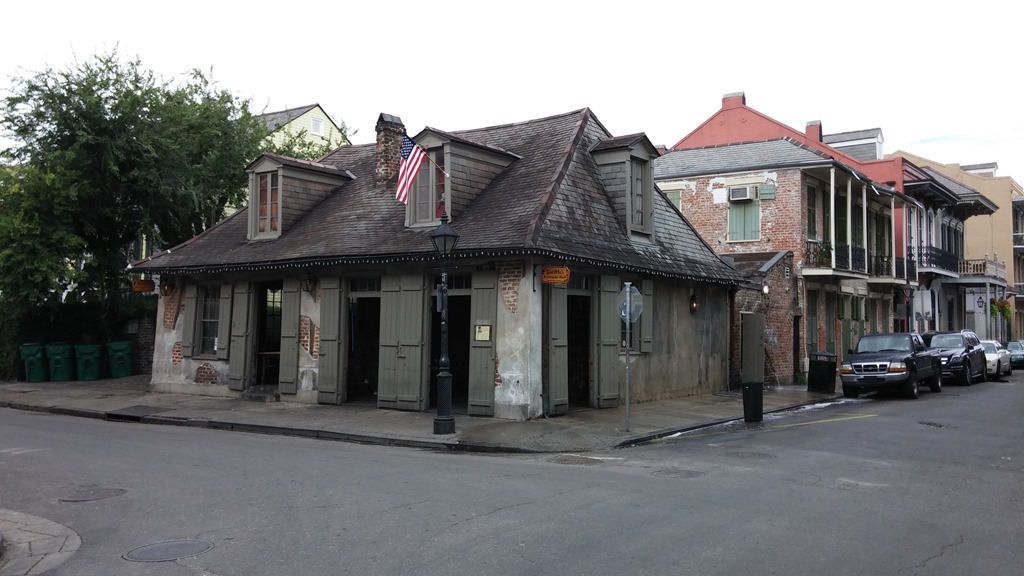
The Lafitte Blacksmith Shop Bar. Built in 1722 and owned by the great pirate Jean Lafitte, the bar has been in continuous operation since 1772.
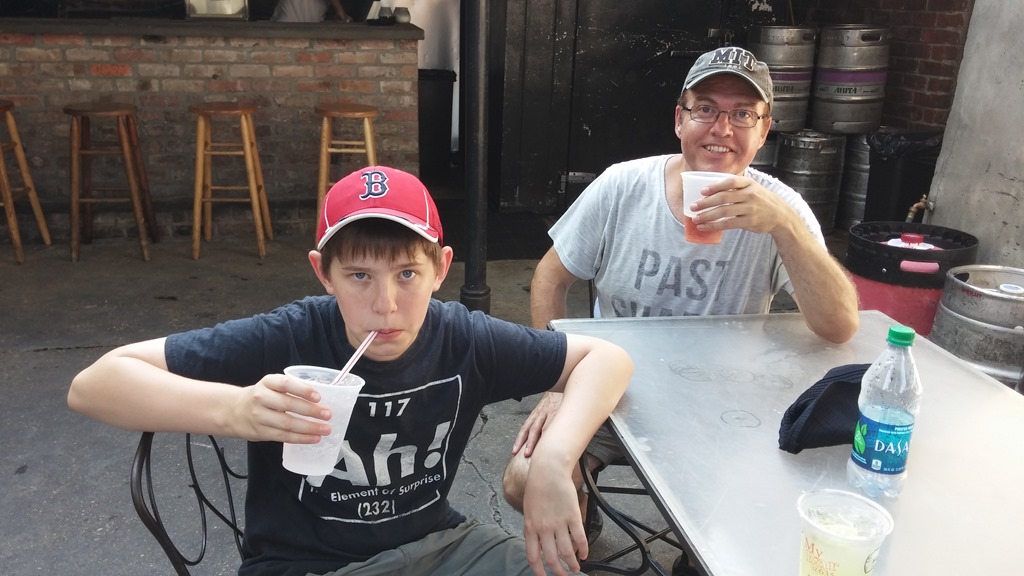
Slaking our thirst at the Lafitte Bar.

Bourbon St Gay Pride.

Liked this t-shirt in one of the Bourbon St shops.
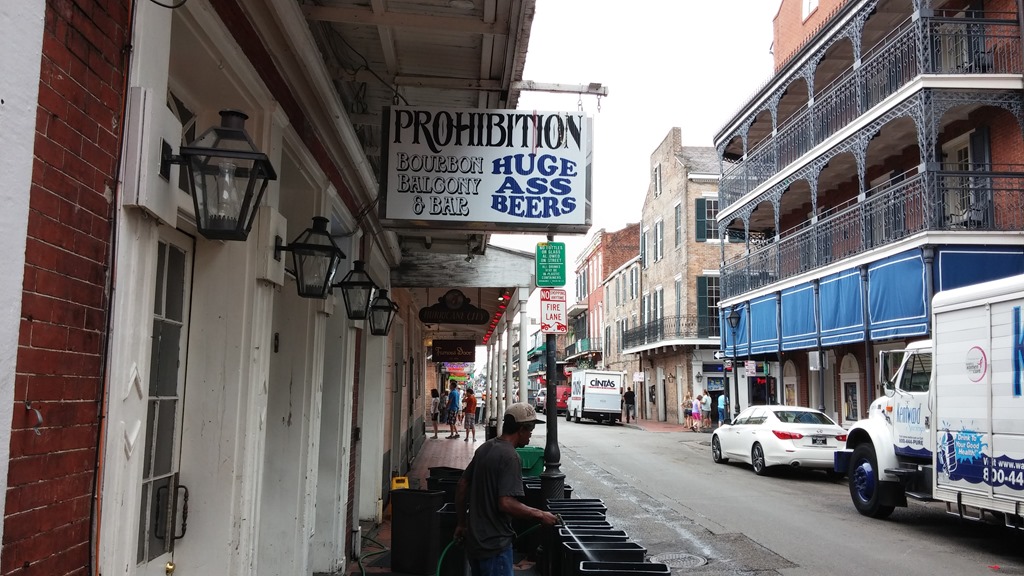
Huge Ass Beers are everywhere on Bourbon St.

One of the many voodoo shops that sell potions, lucky charms and curses.
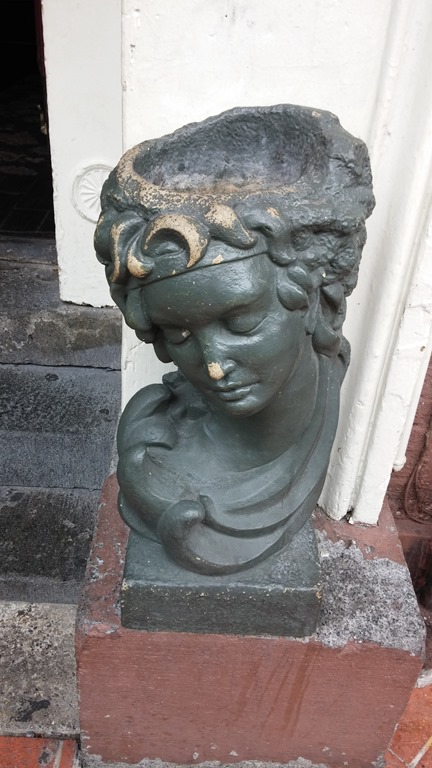
Possibly the most elegant ash tray I have ever seen.
Preservation Hall
We spent a very memorable night at Preservation Hall seeing the Preservation Hall All-Stars play. This is the place to hear traditional jazz. The venue oozes authenticity and is extremely intimate (it is about the size of a family living room). It is also hot and uncomfortable but who cares when the music is this good. The drummer failed to turn up at the beginning and came in mid-set receiving a dirty look from the band leader. In order to redeem himself, the drummer worked up a sweat doing crazy percussive beats on the floor and wall with his feet and drum sticks that got the crowd whooping and hollering so much that the band leader had no choice but to forgive him.
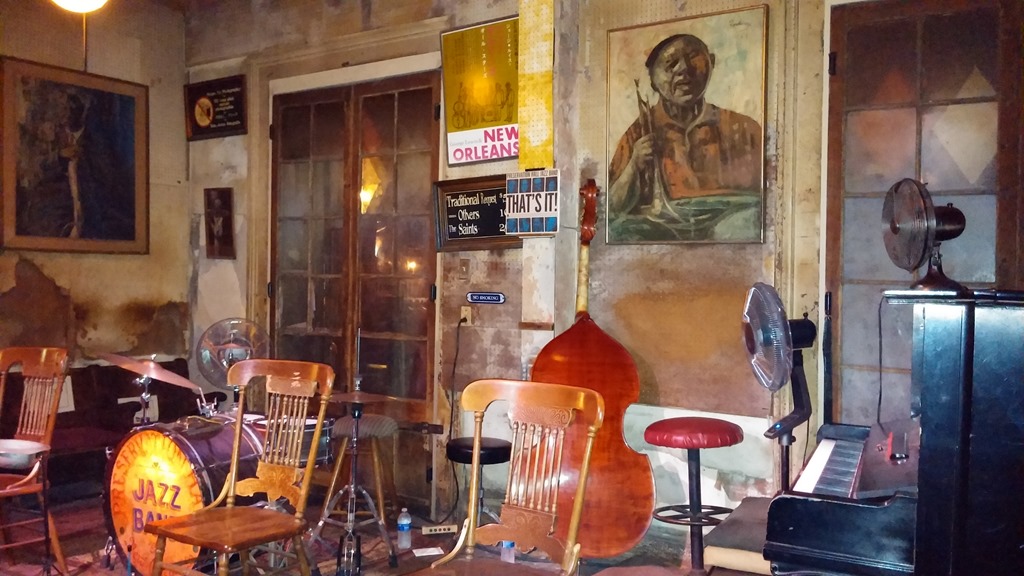
Preservation Hall.

The Saints referred to in the request list are When The Saints Go Marching In which most players don’t like playing as it is tiresome, hence the higher price if you ever dare ask.
French Quarter Food
Eating in NOLA (New Orleans, Louisiana) was a delicious experience. New Orleaners certainly like their food and nearly every restaurant and street food vendor in the French Quarter had great food. We ate all the dishes in Hank William’s Jambalya except for crawfish pie which was out of season. Harrie particularly liked the alligator po’ boy which is a baguette filled with alligator tail meat. But what really TNT-ed his taste-buds was the Beignet. This is a deep-fried choux pastry which takes the fight up to the cronut.
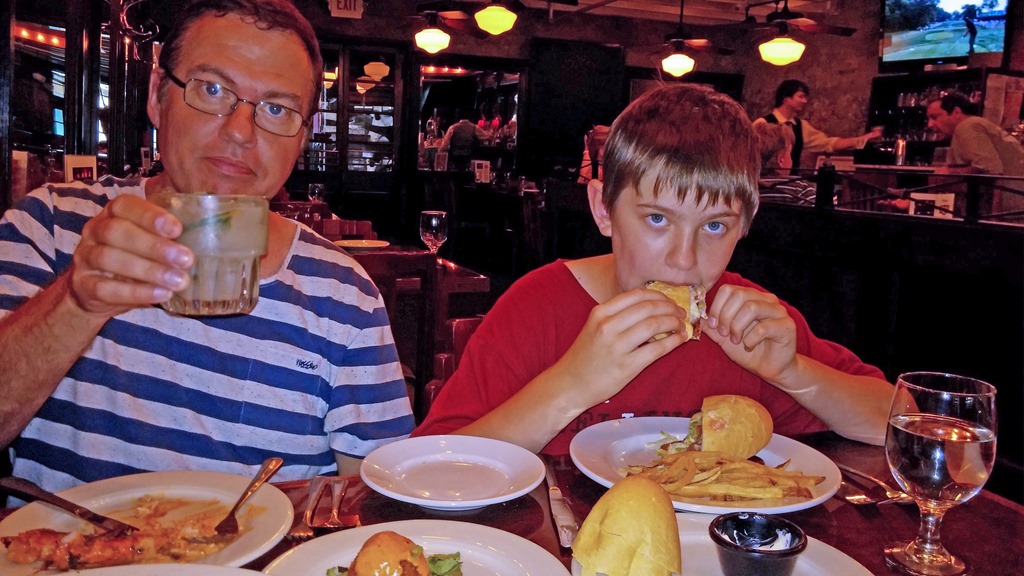
Creole food washed down with a mint julep. Harrie munching in on an alligator po’boy.
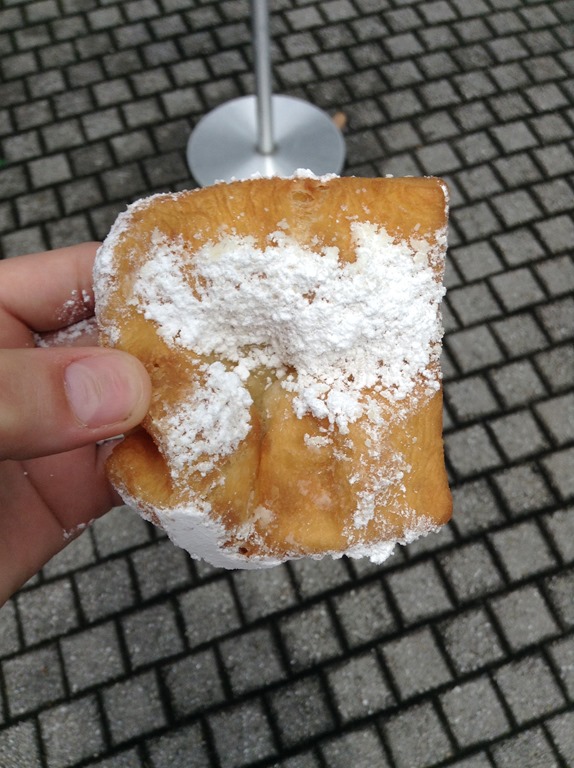
The bodacious beignet
The Mississippi River
An evening cruise up the mighty Mississippi on the Natchez steamboat. The Natchez was built in 1974 but is modelled on the original Natchez steamer from the 1800s and features 1920s steam engines. Apparently, it is one of only four operational paddle steamers in America. Guests can also tour the engine room while aboard. Lots of pistons heaving next to steam-clouded temperature gauges. A jazz band was playing up top and we had a Creole dinner and sipped mint julups into the evening. The band played a smoking hot version of Louis Prima’s A Banana Split For My Baby which really made my evening and which also seemed apt given that Prima grew up near the Mississippi in New Orleans. A great evening.
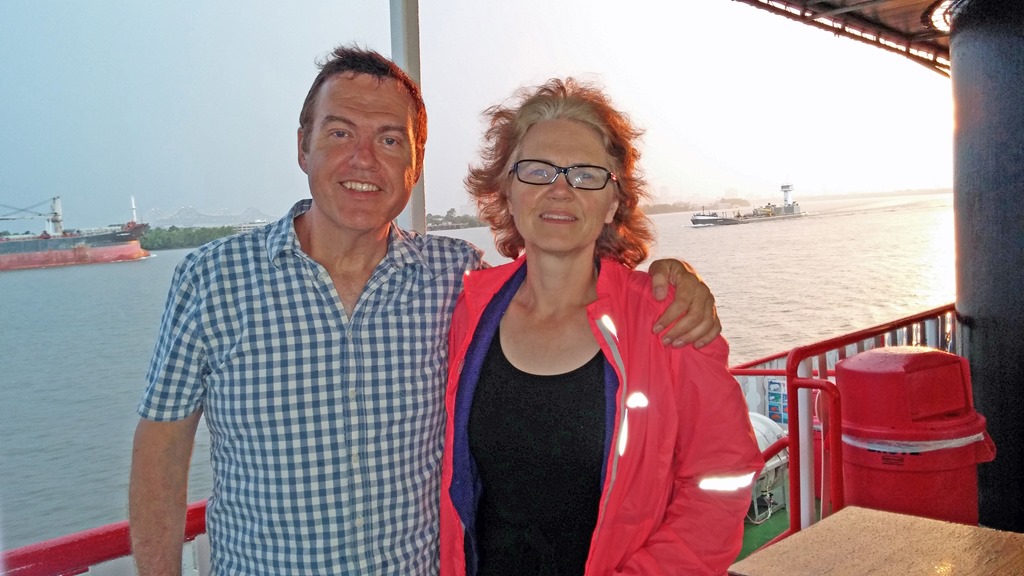
Early evening on the Mississippi

Beautiful reflections on the water as night descended.
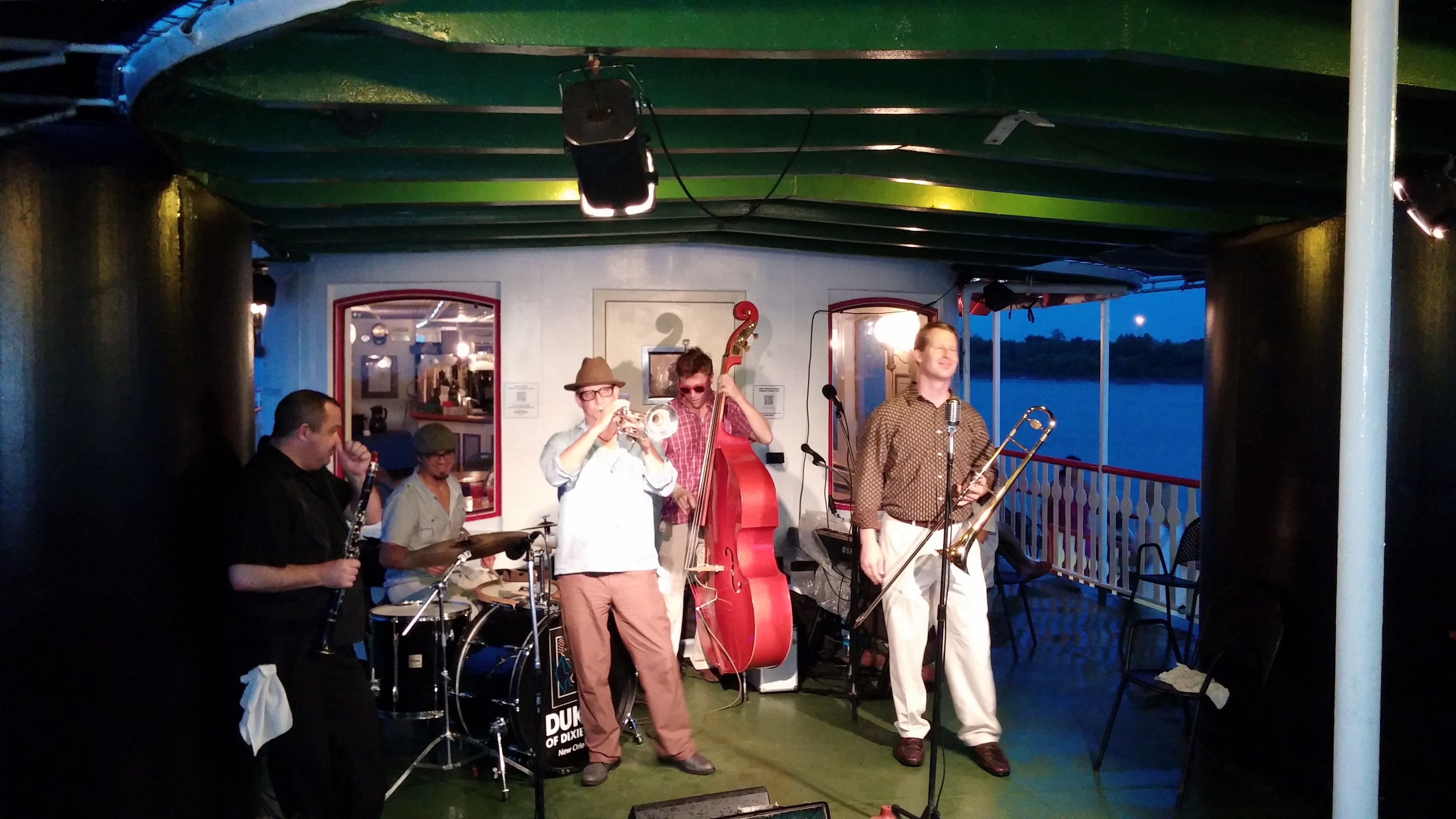
The Dukes of Dixie jazz band
Congo Square
As mentioned at the beginning of this post, New Orleans is ground zero for 20th Century popular music. And it all started in Congo Square. I had read about this place many times and never imagined I would one day be standing in the middle of it. This is where enslaved Africans would congregate on Sundays which was their one day of rest under the French (and later Spanish) Catholic Code Noir – the Church-sanctioned rules regarding slave ownership (and worth reading to see how barbaric things were). Here the different tribal dances and rhythms fused with traditional European music to form jazz.
It is simply amazing walking around the streets of the French Quarter and the borders of Treme. Almost every street is namechecked in a song. It also explained a lot of things. For example, the old St Louis cemetery is on Rampart St (named after the walls that protected the city) and the funeral parade would exit into Basin St where a second line parade (basically opportunists wanting to join the wake) would tag on to the original mourners eventually resulting in a Mardi Gras like parade. Suddenly, all the lyrics of Louis Armstrong’s Basin St Blues came alive before me. If you love music you have to come to this town. And this is not in the past. The French Quarter of New Orleans still lives and breathes music on every corner. You can’t walk a block without hearing live music being played. All of this is accompanied by some of the most beautiful architecture and a unique sense of style. Tennessee Williams once famously said ” “America has only three cities: New York, San Francisco and New Orleans. Everywhere else is Cleveland.” I haven’t been to Cleveland but I can vouch for the others.
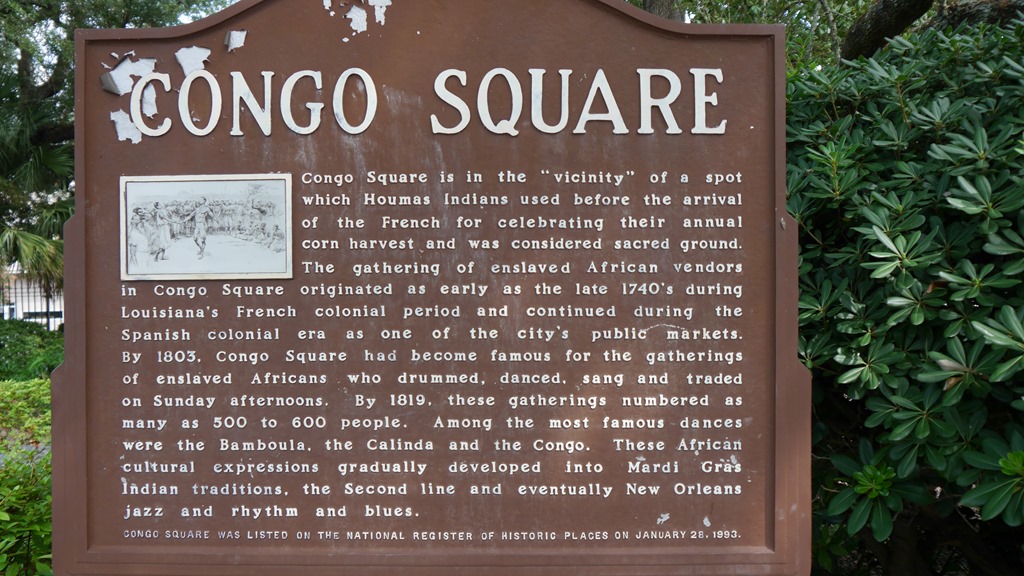
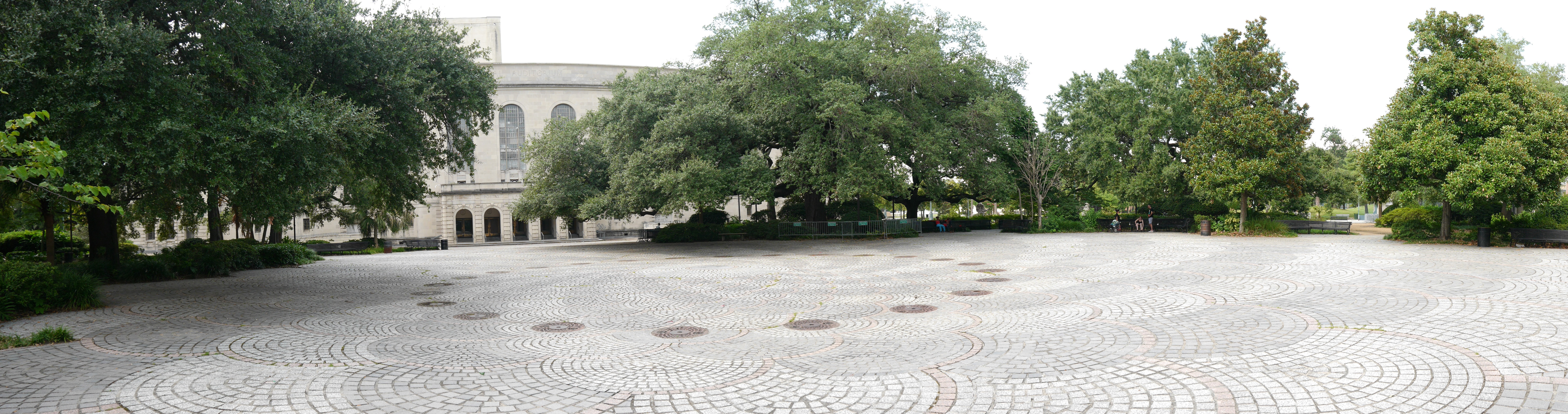
Congo Square

I had to pinch myself, that I was standing in Congo Square.
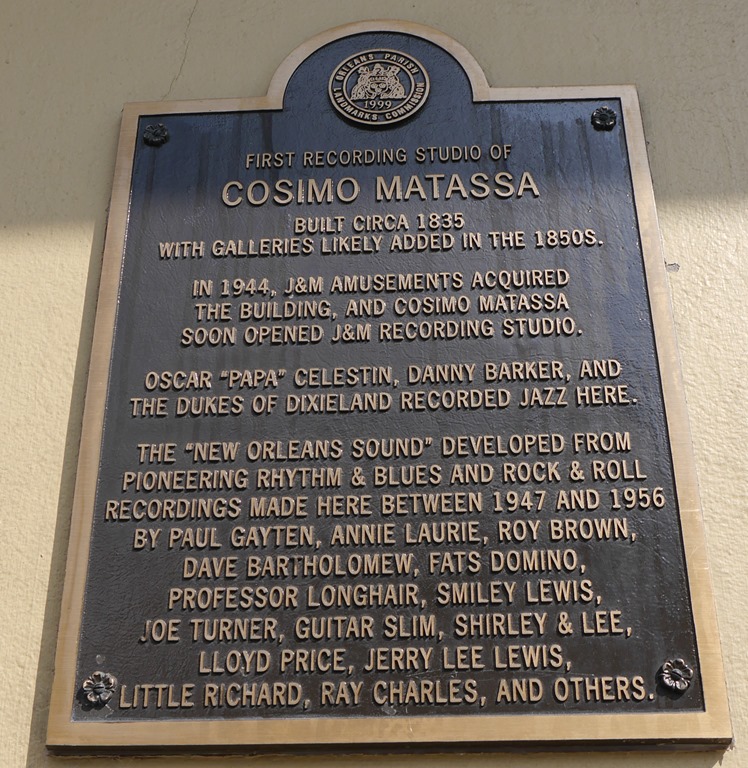
Cosimo Matassa – The great Rock and Roll pioneer
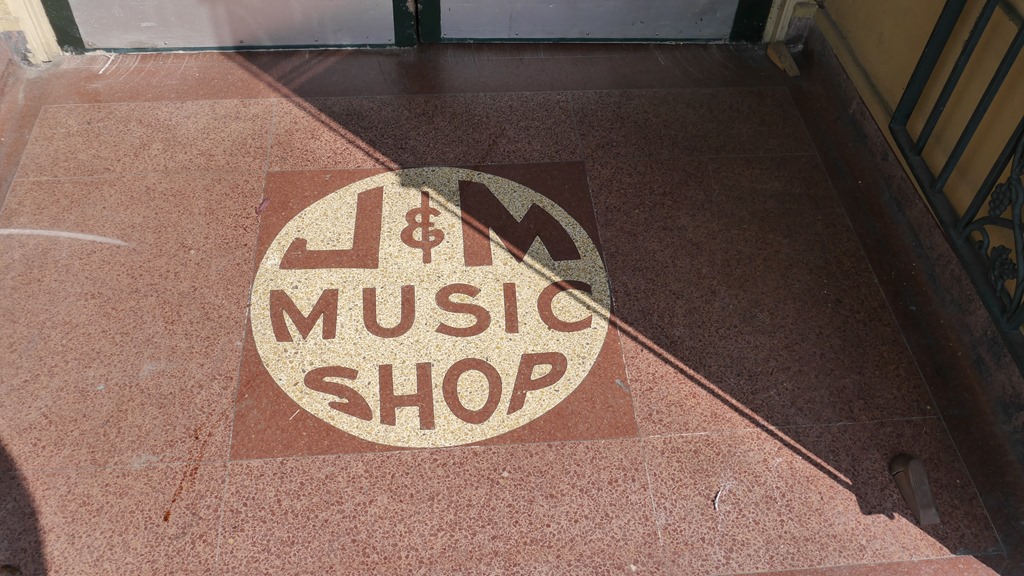
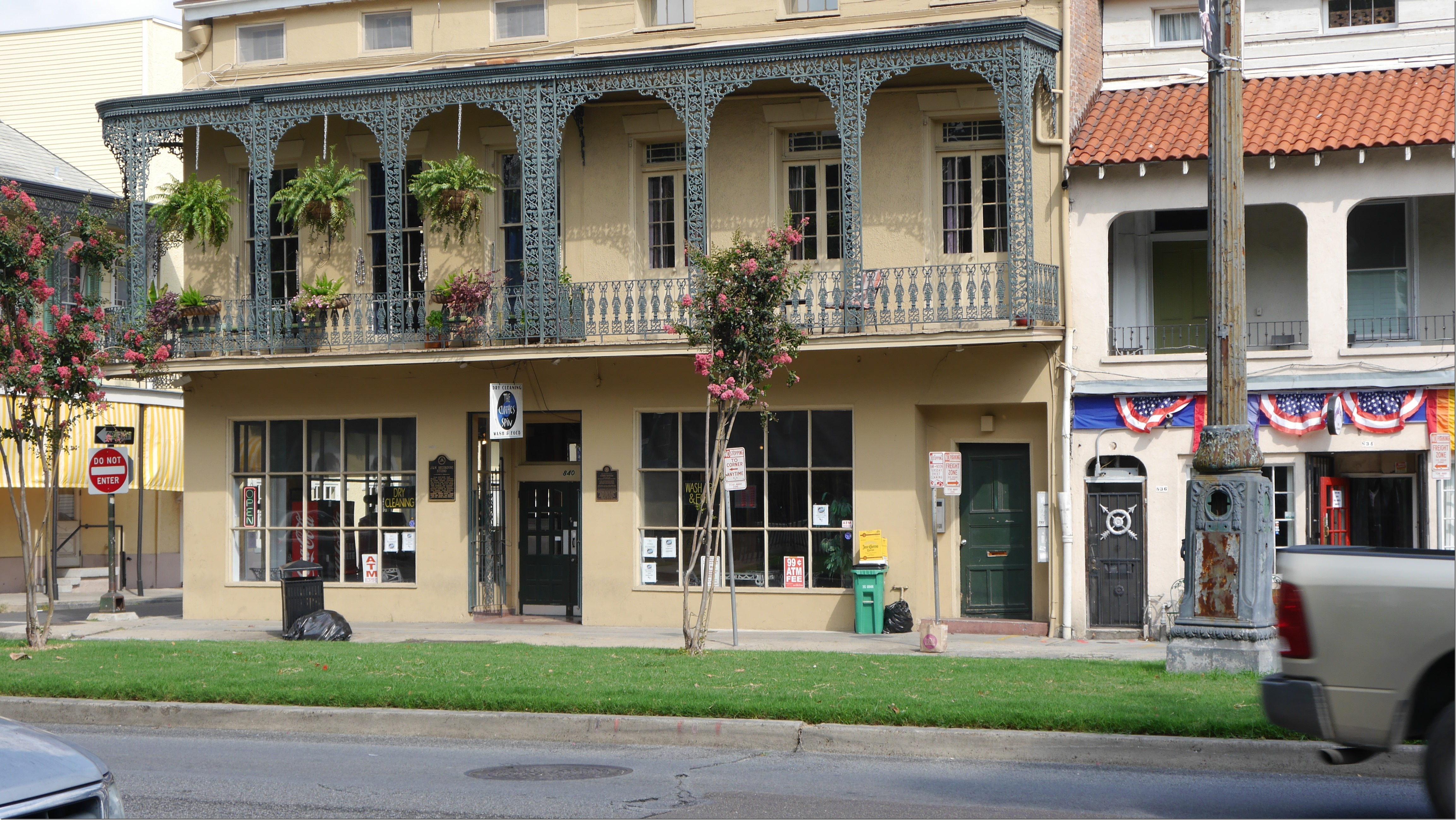
The famous J&M Recording Studios. Such a small venue for so many big hits. Little Richard’s Tutti Frutti, Fats Domino’s The Fat Man, Professor Lonhair’s Tipitina and Roy Brown’s Good Rockin Tonight were all recorded here. Allen Toussaint learned his craft as a producer here.
The streets of New Orleans.
Every day we stayed in the French Quarter, we would go for walks down different streets to check out what they offered. There were so many interesting shops, sights and sounds to keep us interested in coming back to explore more streets.
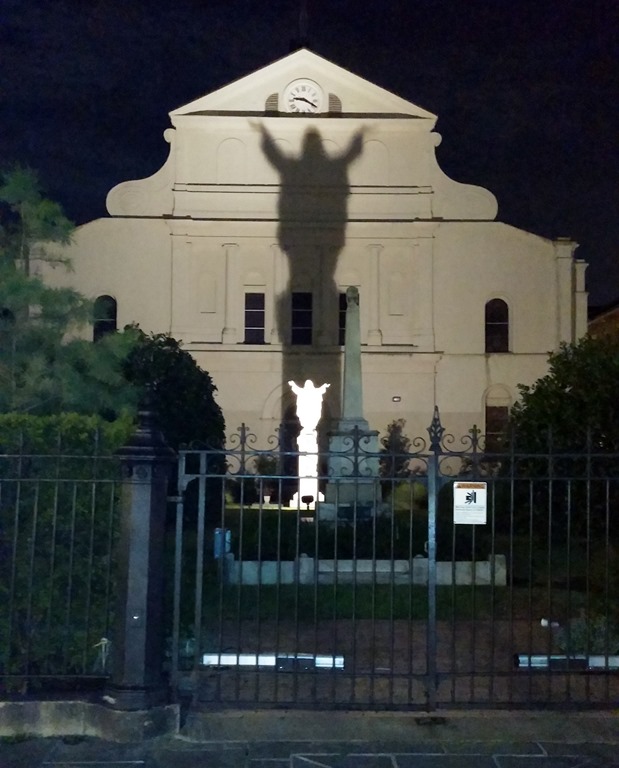
We saw this beautiful silhouette from a church when we were walking back to our hotel one night.

A freaky hominid next to a freaky arachnid from the New Orleans Museum of Art (NOMA) sculpture garden.
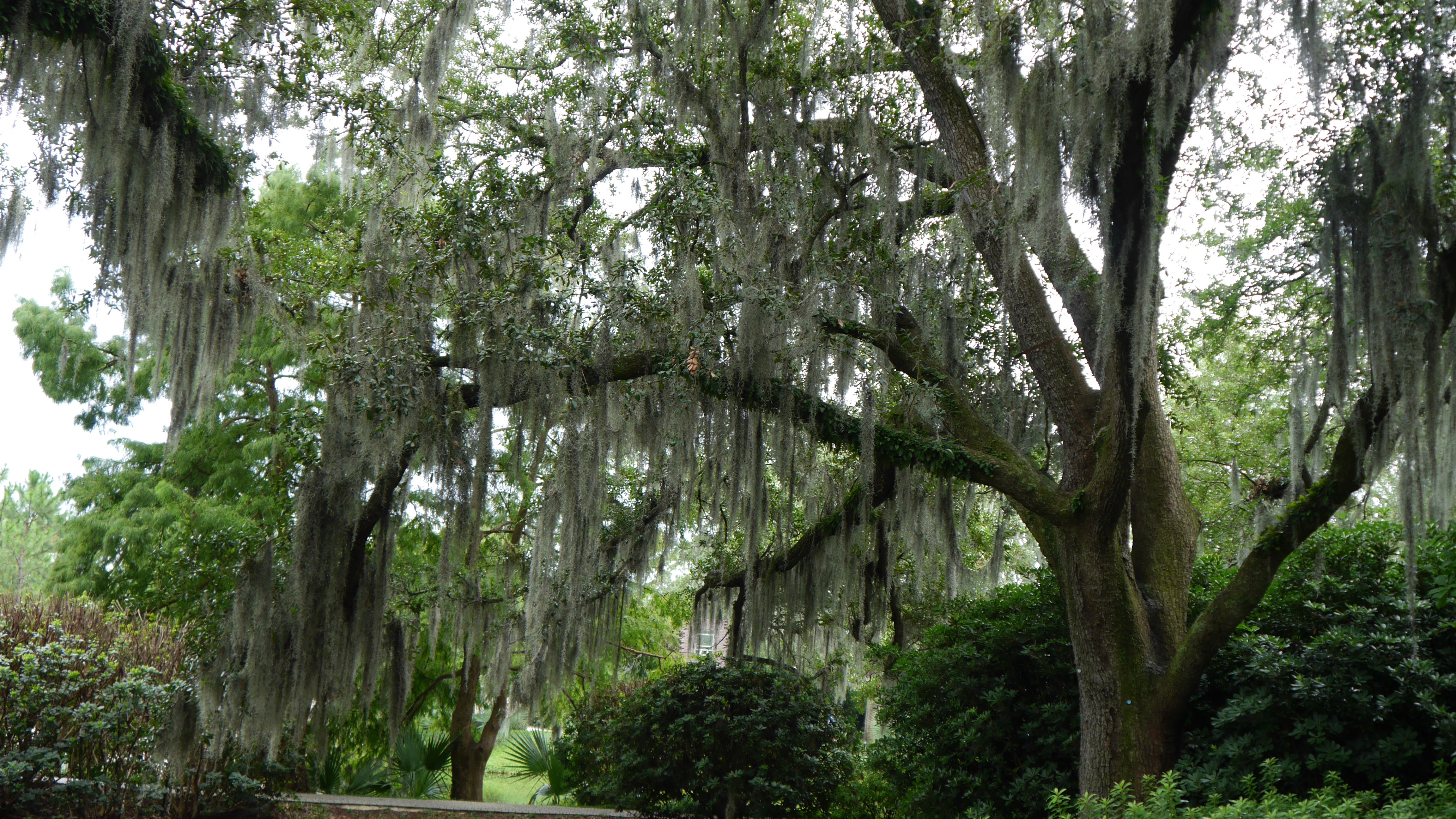
Grand old Live Oak trees in the New Orleans City Park.

Karma by sculptor Do-Ho Suh

Another view of Karma from the NOMA Sculpture Garden
The Lower Wards
Coming to New Orleans, we were interested in finding out about how things had improved since Hurricane Katrina hit in 2005. We found a Hurricane Katrina tour being offered by a local old-timer who had lived in one of the wards affected by Katrina and decided to take it.
The tour was peppered with commentary about local issues such as the general hopelessness of the local government (well, according to our tour guide George but also backed up by our own eyes). We got to visit the notorious 9th ward, which is still a mess nine years after Katrina. Most of the poorer wards of New Orleans are made up of what are known as “shotgun shacks” (yes, as quoted in the Talking Head’s song Once in A Lifetime). These are houses that are only one room wide. The idea is that you can shoot a shotgun shell through the front door and have it exit the back door. They are truly dismal but often livened up by residents who decorate them in colourful New Orleans style.
After Katrina, the Federal Government gave the New Orleans Government money to fix many of the poorer neighborhoods who had no housing insurance. However, according to our guide George “you needed to be some kind of a genius to fill in them forms to get any of that money.” So a lot of the money went unspent or was taken by people who knew how to rort the system. To demonstrate, George showed us a street in one of the middle class suburbs that had all sorts of luxury renovations paid for out of the Katrina funds.
Just when we we were beginning to despair, we had Brad Pitt come to the rescue. Recent New Orleans resident Brad Pitt has set up the Make It Right Foundation to rebuild houses in the poorer wards of New Orleans. These are not new shotgun shacks either but Frank Gehry designed eco houses with all the modern trimmings. The aim is to not only provide poorer residents with a nice modern home but also with a home that will save them money in energy bills (through, solar panels and energy efficient design). There have been some setbacks though with some of the earlier houses experiencing dryrot but the Make It Right Foundation are on track to complete 150 homes by 2017. Go Brad.
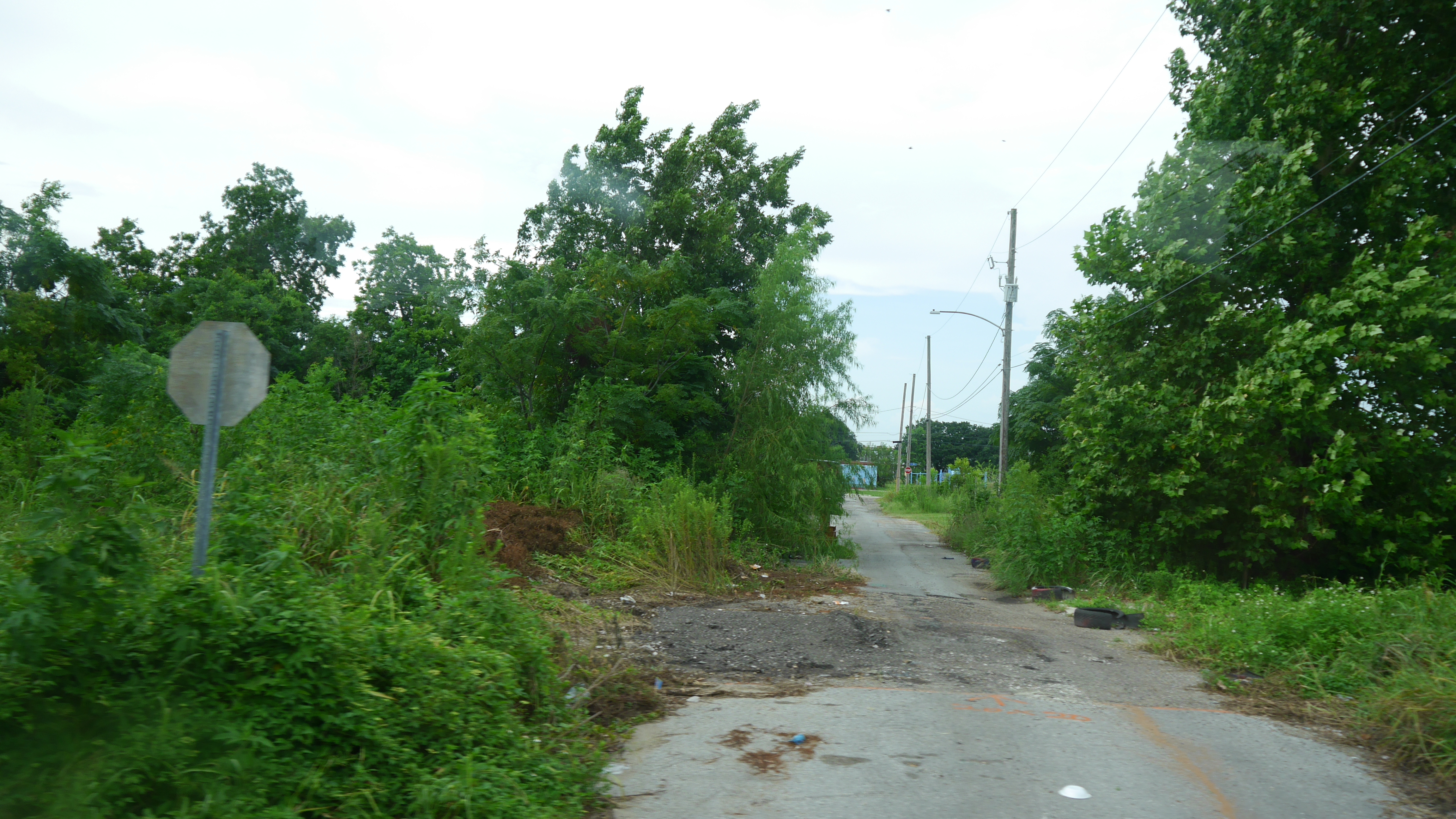
Not the set of The Walking Dead but an abandoned street in the 9th Ward.
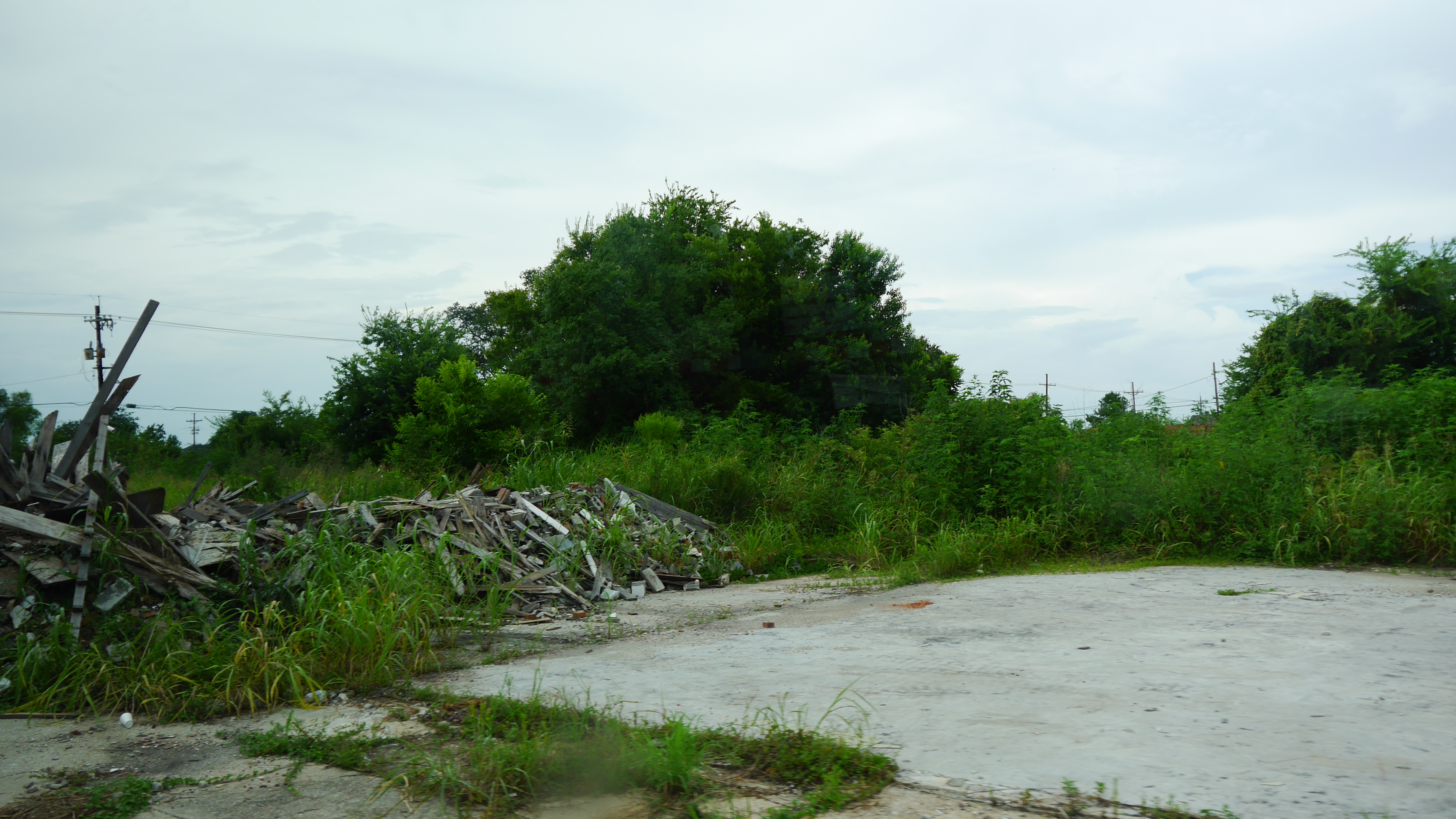
Many of the houses in the 9th Ward were demolished by the Government but not replaced.

An abandoned shop.


We saw quite a few quirky houses like this.

Call the police…
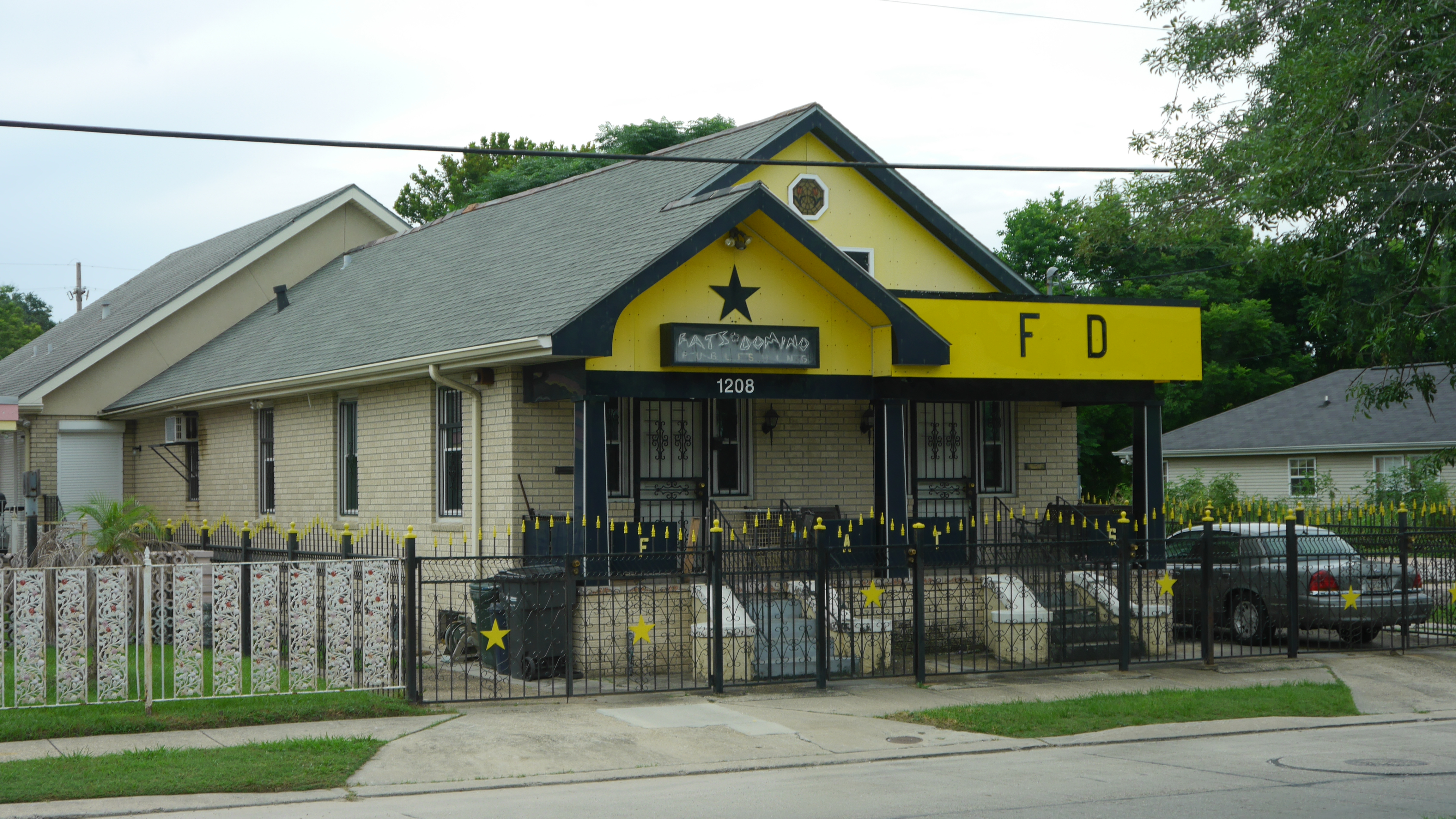
Fats Domino’s house in the lower 9th Ward.
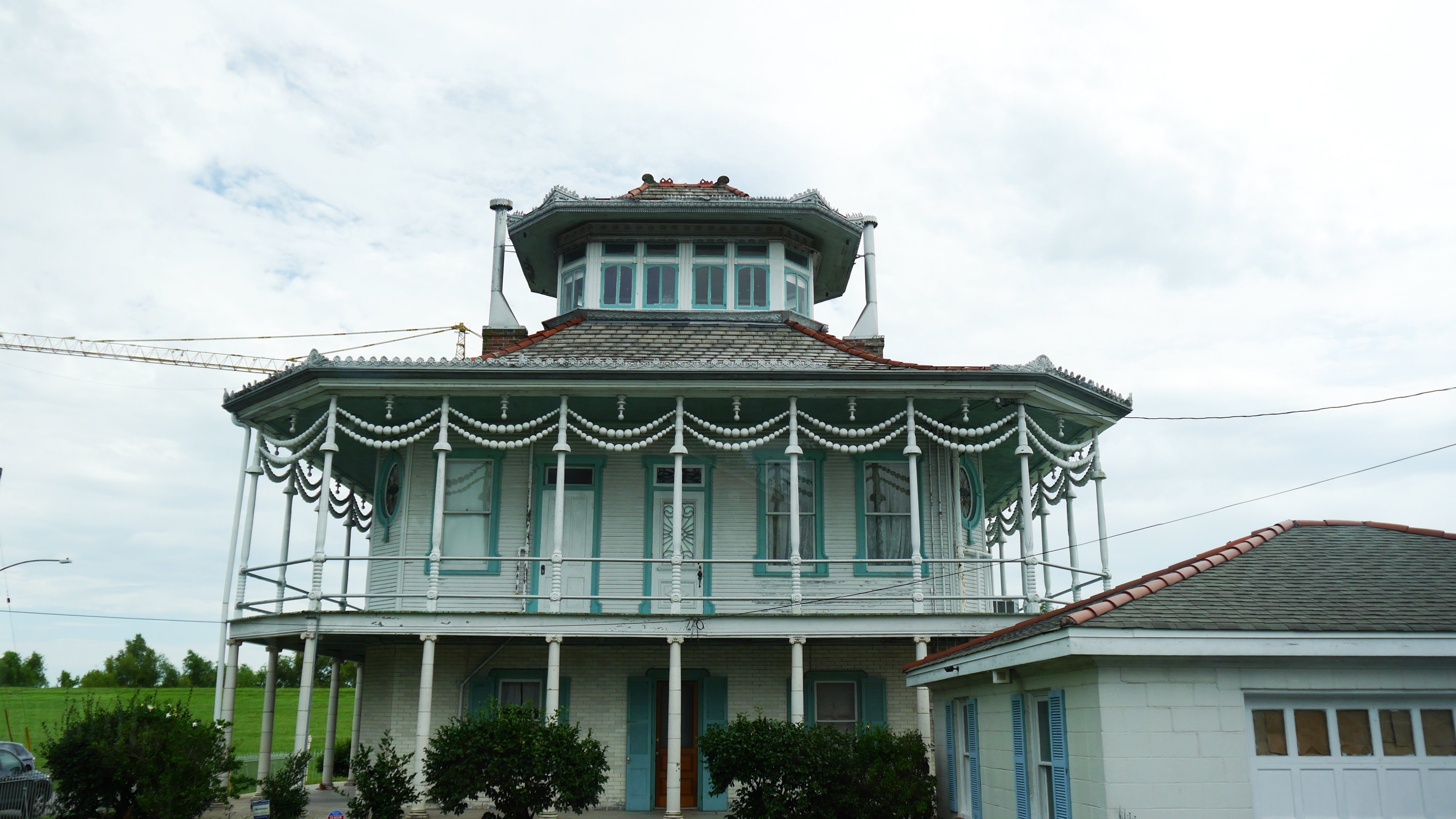
This magnificent folly is the house of a paddle steamer captain. It is meant to look like a paddle steamer.

Hopefully you won’t find yourself living in a shotgun shack.

An example of one of the new “Brad Pitt” houses. Less of a shotgun shack and more of a musket mansion.
Oak Alley and Laura Plantations, Vacherie
Oak Alley and Laura plantations on the banks of the Mississippi in Vacherie, Louisiana. Here the wealth of the old South is on display as well as the dirty stain of slavery. It was a bit if a hike to get to these old sugar plantations but the tours were great and really brought to life what it was like to be a Southern lady or gentleman in the 1800s as well as the life of a Southern slave.
The slaves really endured them most terrible of hardships and punishments; all sanctioned by the Catholic Church under their morally-corrupt Code Noir. But the plantation owners even flouted these awful rules in inflicting even crueler punishments such as face branding. Some plantation owners would forceably “breed” women so that they would produce more slaves for the plantation without extra cost to the owner. They would even make a profit by selling any excess or weaker children to other plantations. Meanwhile, these barbaric owners would parade around town as God-fearing Southern gentlemen or ladies of fine distinction.
Unbeknownst to us, Oak Alley was where the Uncle Remus Br’er Rabbit stories originated from. Apparently, folklorist Alcee Fortier snuck into the slave quarters on a regular basis to record the stories that African slaves told their children. These were later popularised by Joel Chandler Harris as the Br’er Rabbit stories we all know today (or possibly don’t know today. Not at least until the inevitable 3D CGI film is made to introduce these stories to a new generation of kids).

Laura Plantation. Named after Laura Locoul Gore who was its last resident, it was a thriving French sugar plantation in the early 1800s. We learnt about Laura’s cruel mother Elizabeth, who branded slaves with hot irons and forced them to breed as many children as they could in order to have more slaves for her plantation.
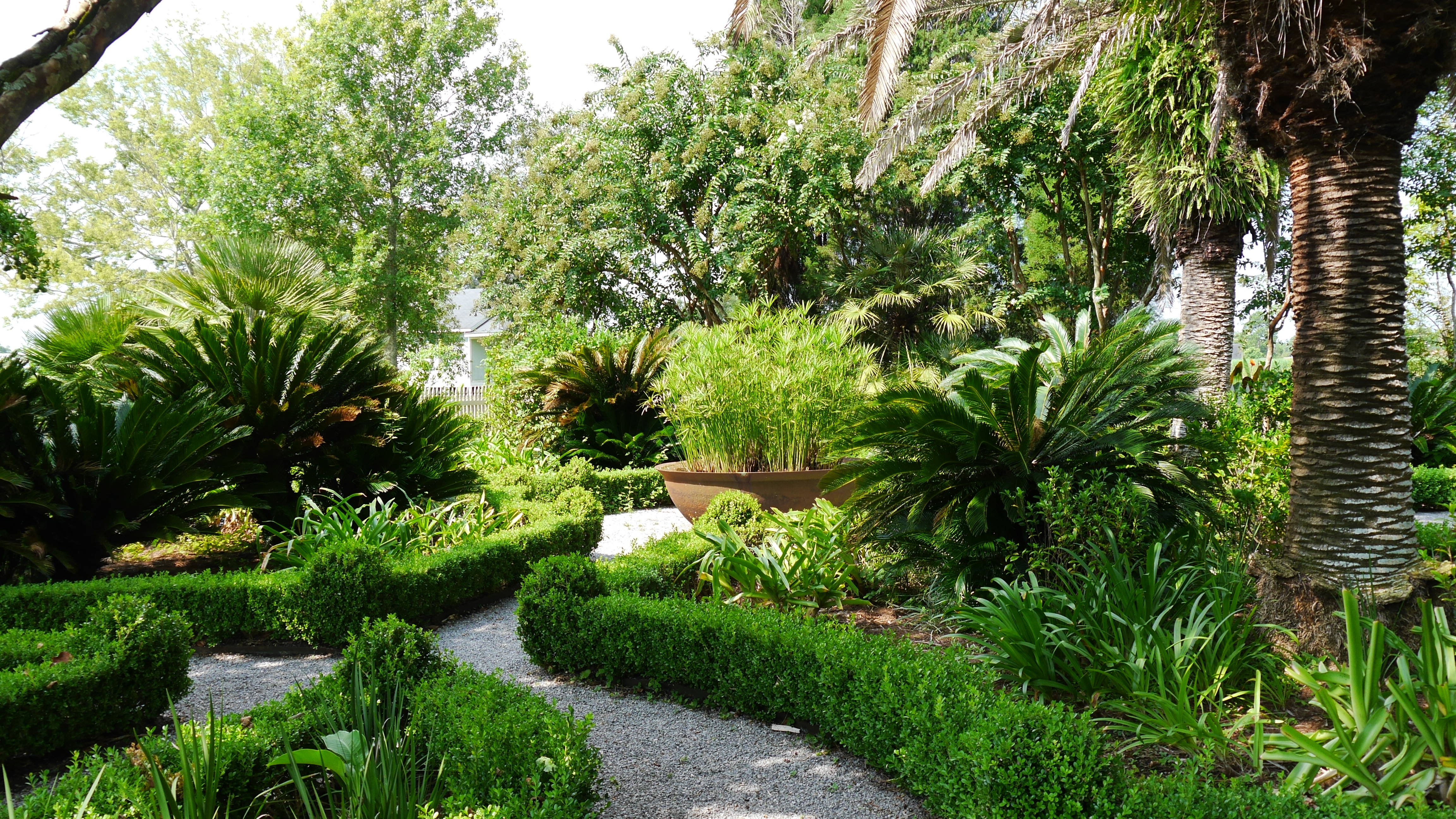
The beautiful gardens at the Laura plantation.
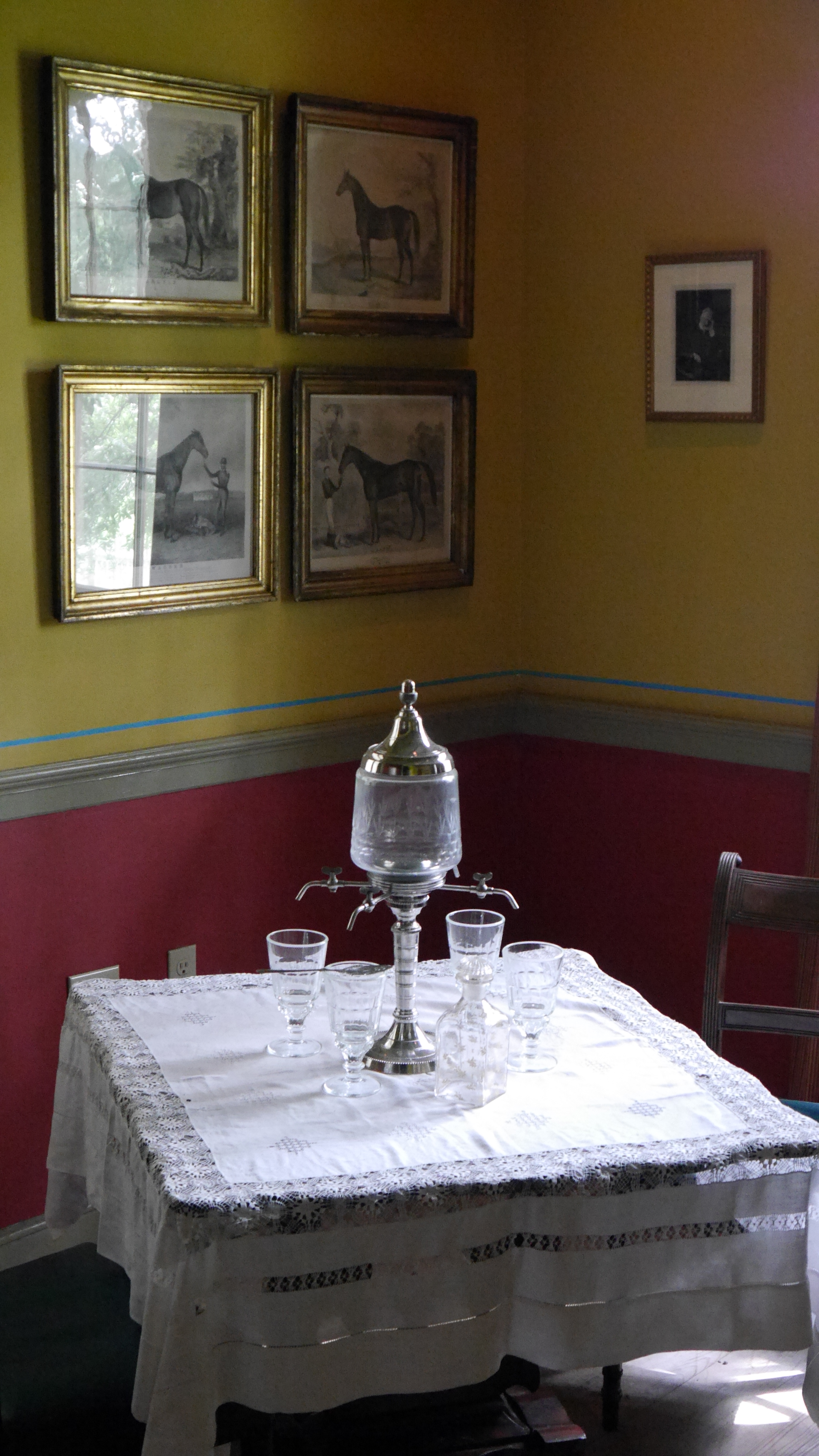
This is the room where business meetings took place with sugar buyers.
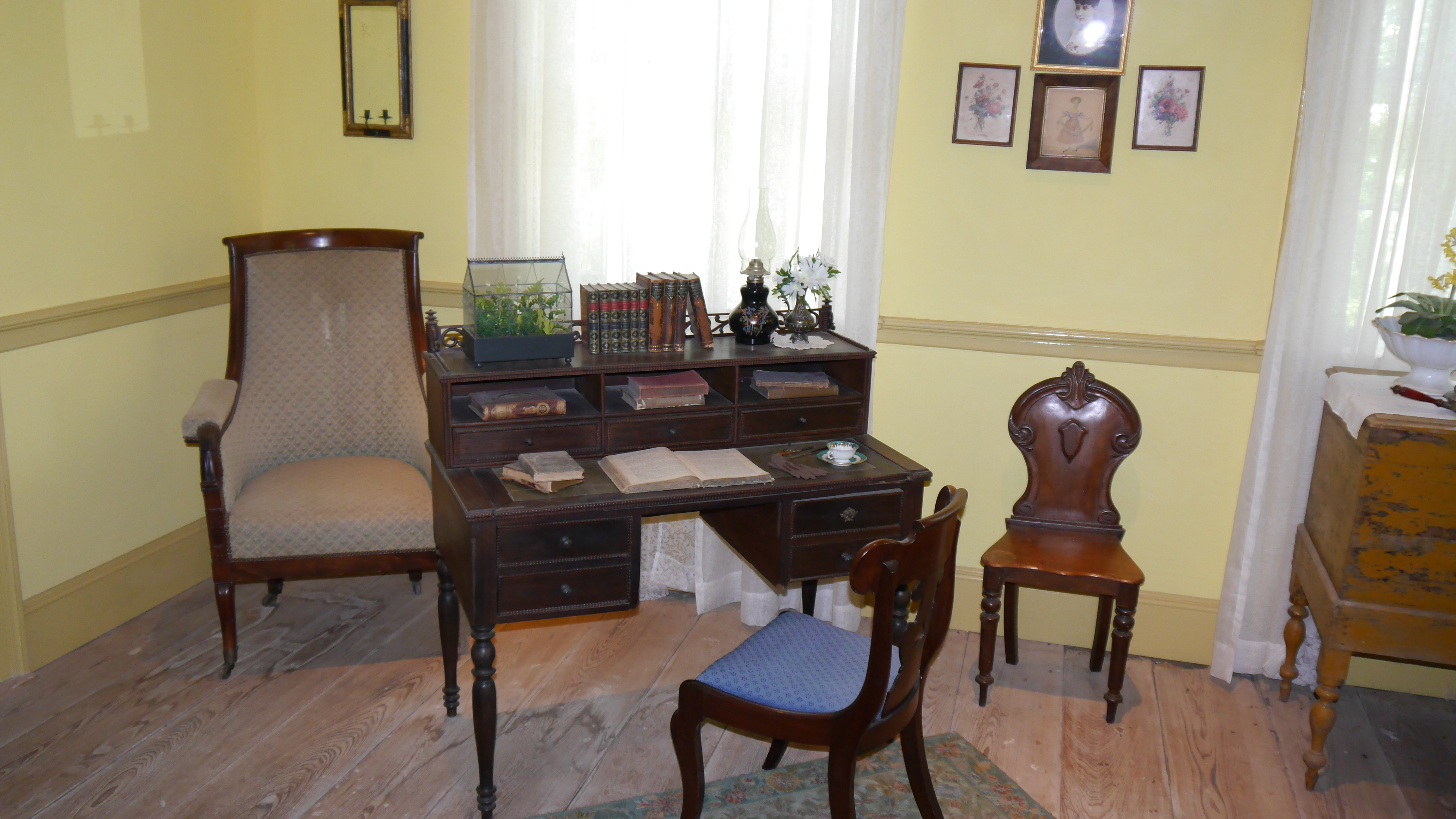
The drawing room at Laura Plantation.

The kitchen at Laura Plantation.

One of the slave quarters at Laura Plantation. Up to sixteen slaves would live in dwellings like this.

Inside the slave quarters at Laura Plantation
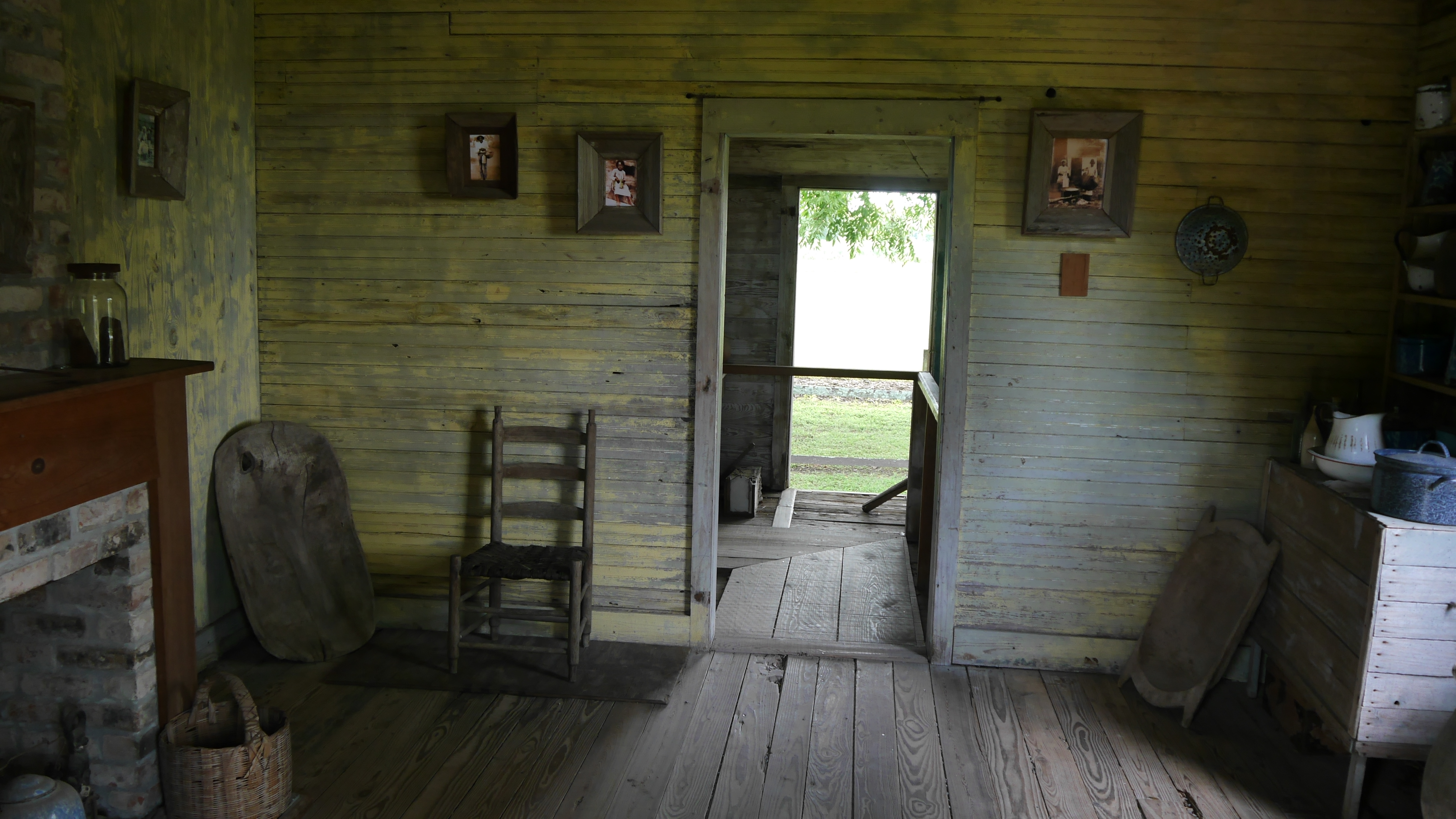
Inside the slave quarters.
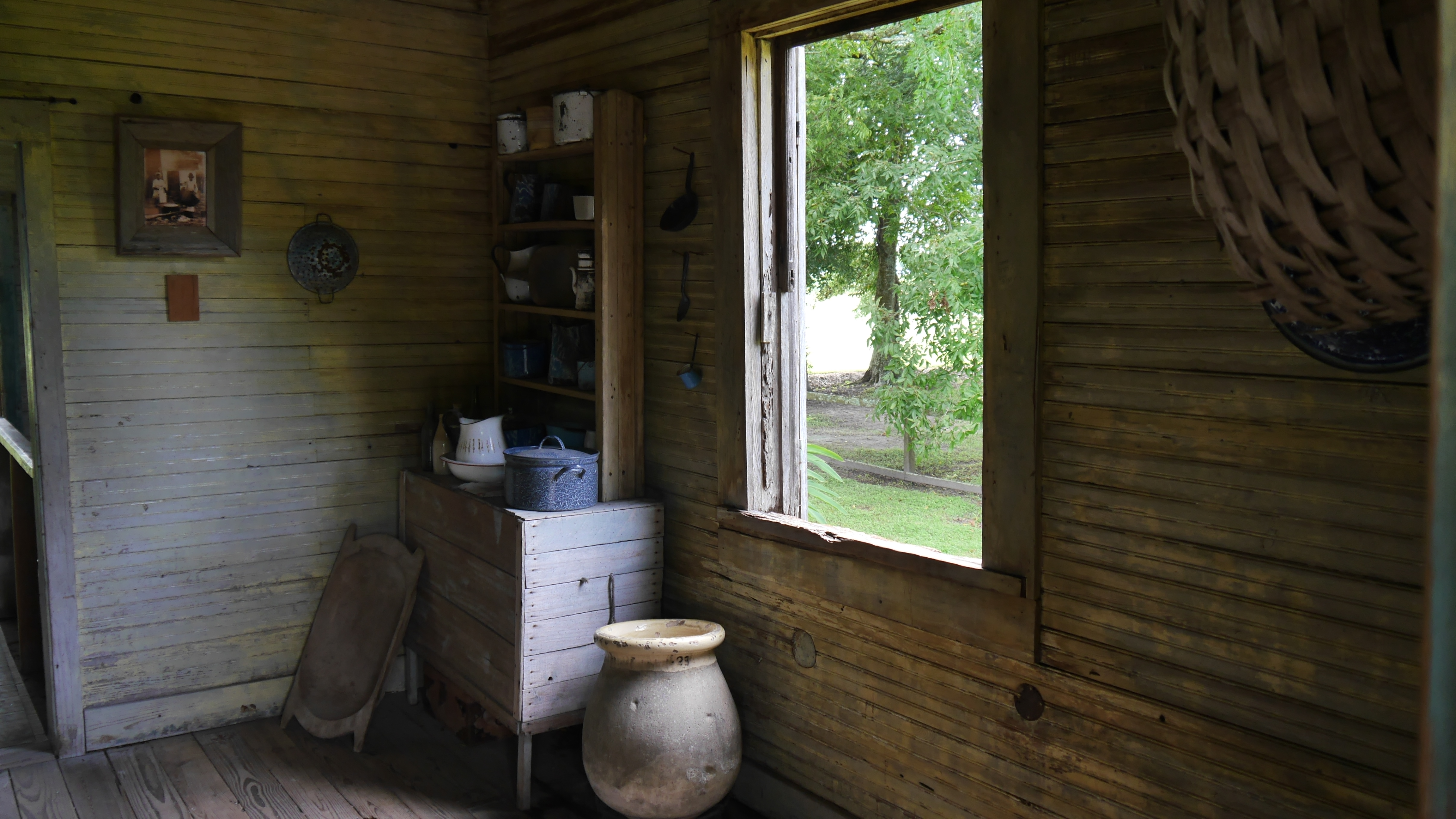
Another view inside the slave quarters.
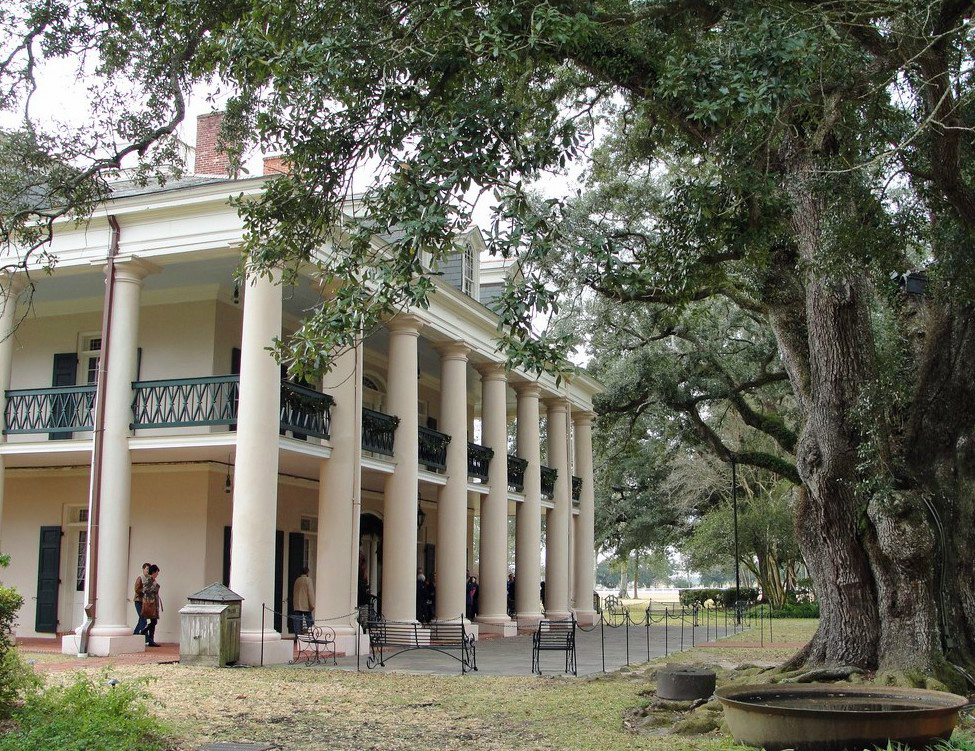
Oak Alley Plantation. Built by French sugar baron Jacques Roman in order to woo his object of affection, Celina Pilie. Miss Celina lived in posh dwellings in town and needed a grand mansion in order to be lured to live as a sugar baron’s wife in the backwaters of the Mississippi. When the mansion was completed, Celina was convinced and assented to marriage. Apparently, Celina loved having grand dinner parties to show off the place to her lady friends back in town.
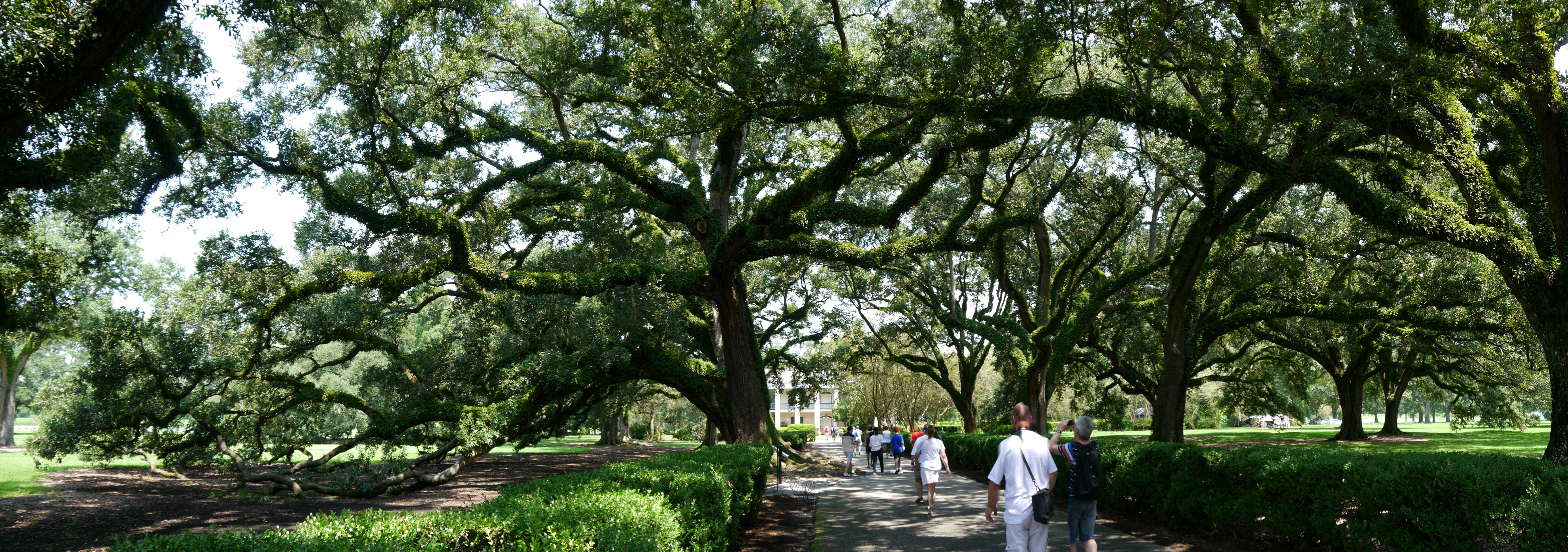
The three hundred year old oak trees that give the plantation its name.

This is the oak “alley.”
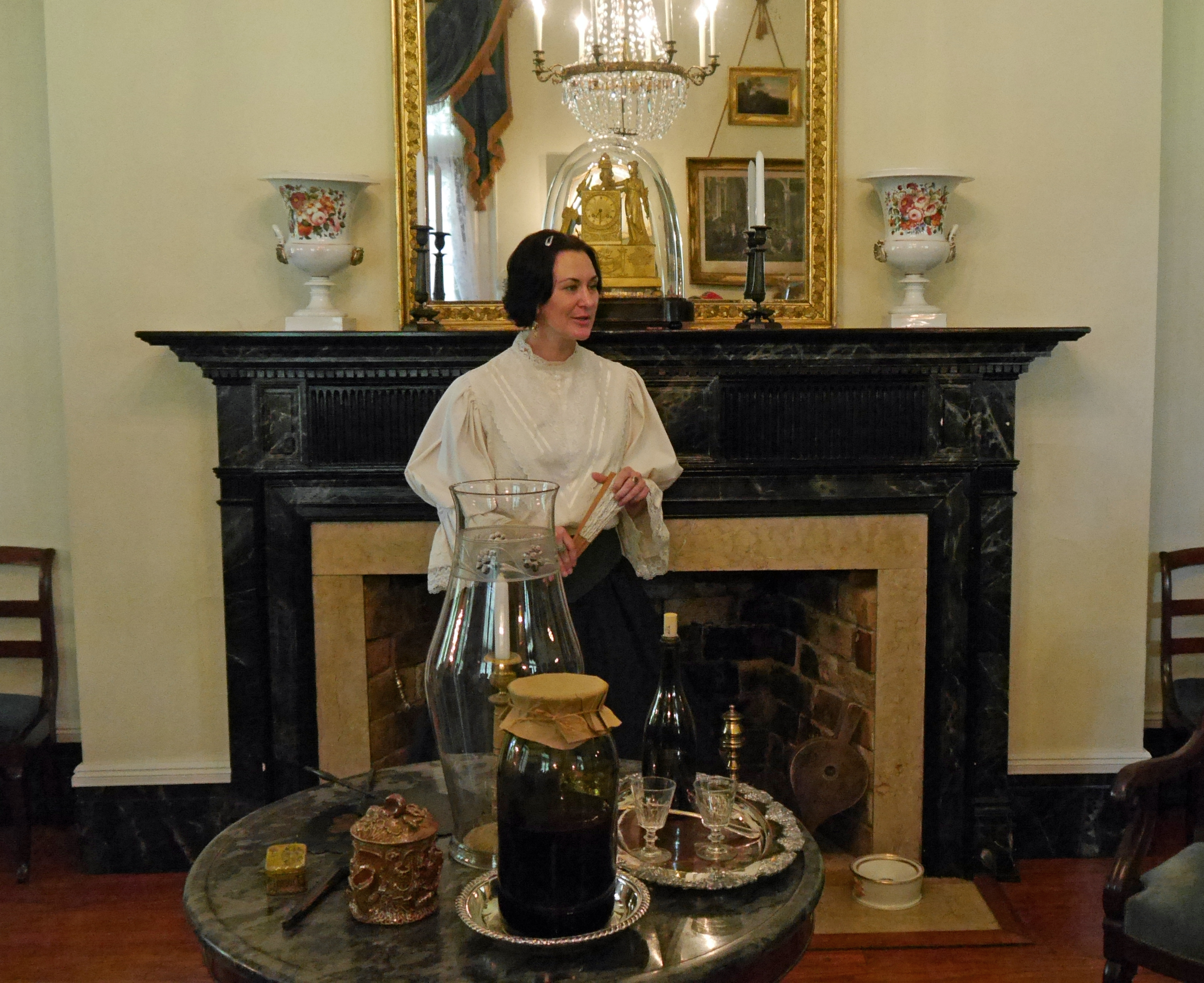
The parlor room in Oak Alley Plantation. Our tour guide was dressed in the clothes Celina would have wore back in the 1800s.
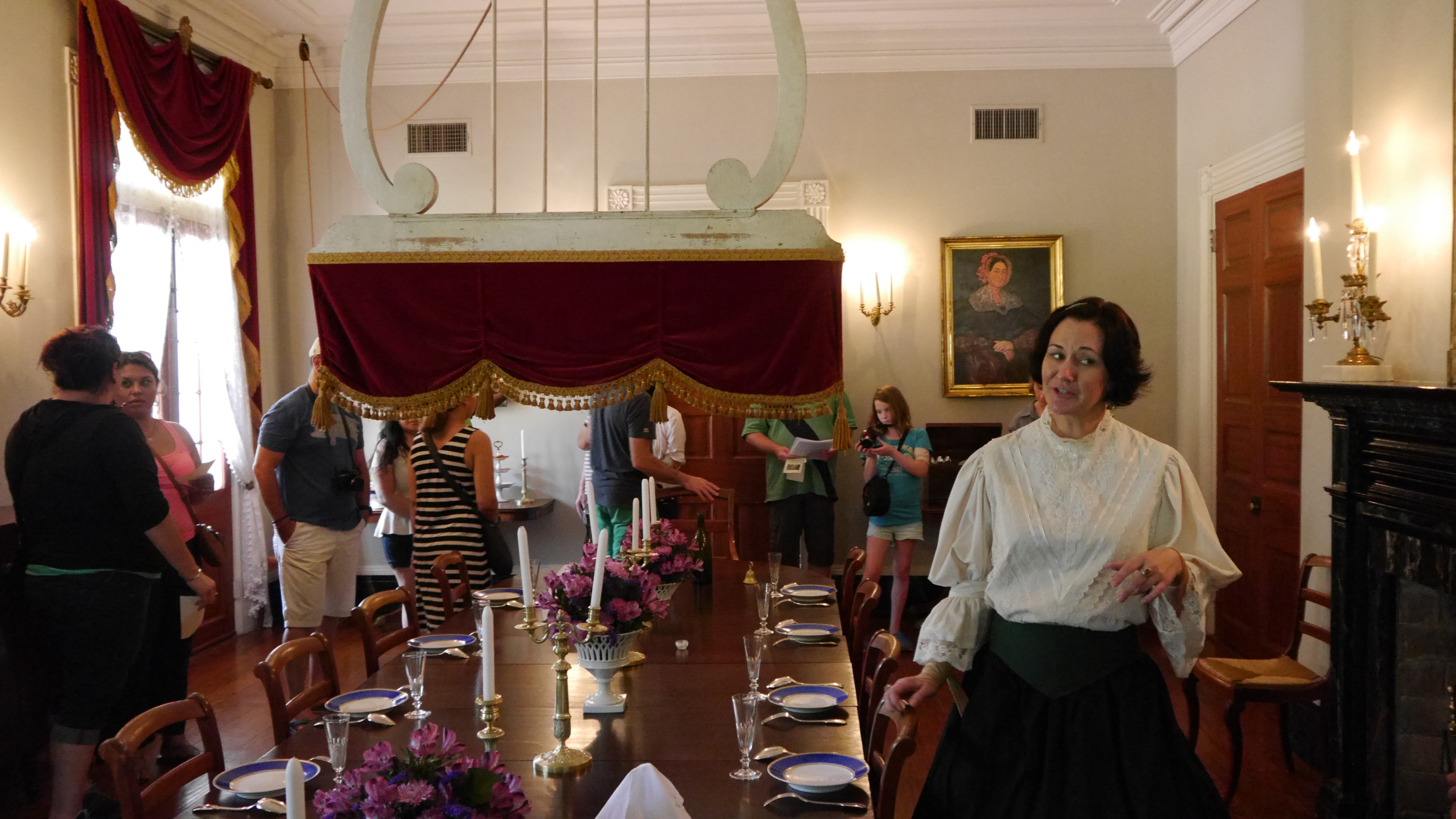
The dining room at Oak Alley. The elaborate fan over the table would be hand pulled by a slave standing in the corner (look closely where the chord goes) who would often have to stand for up to five hours fanning guests.
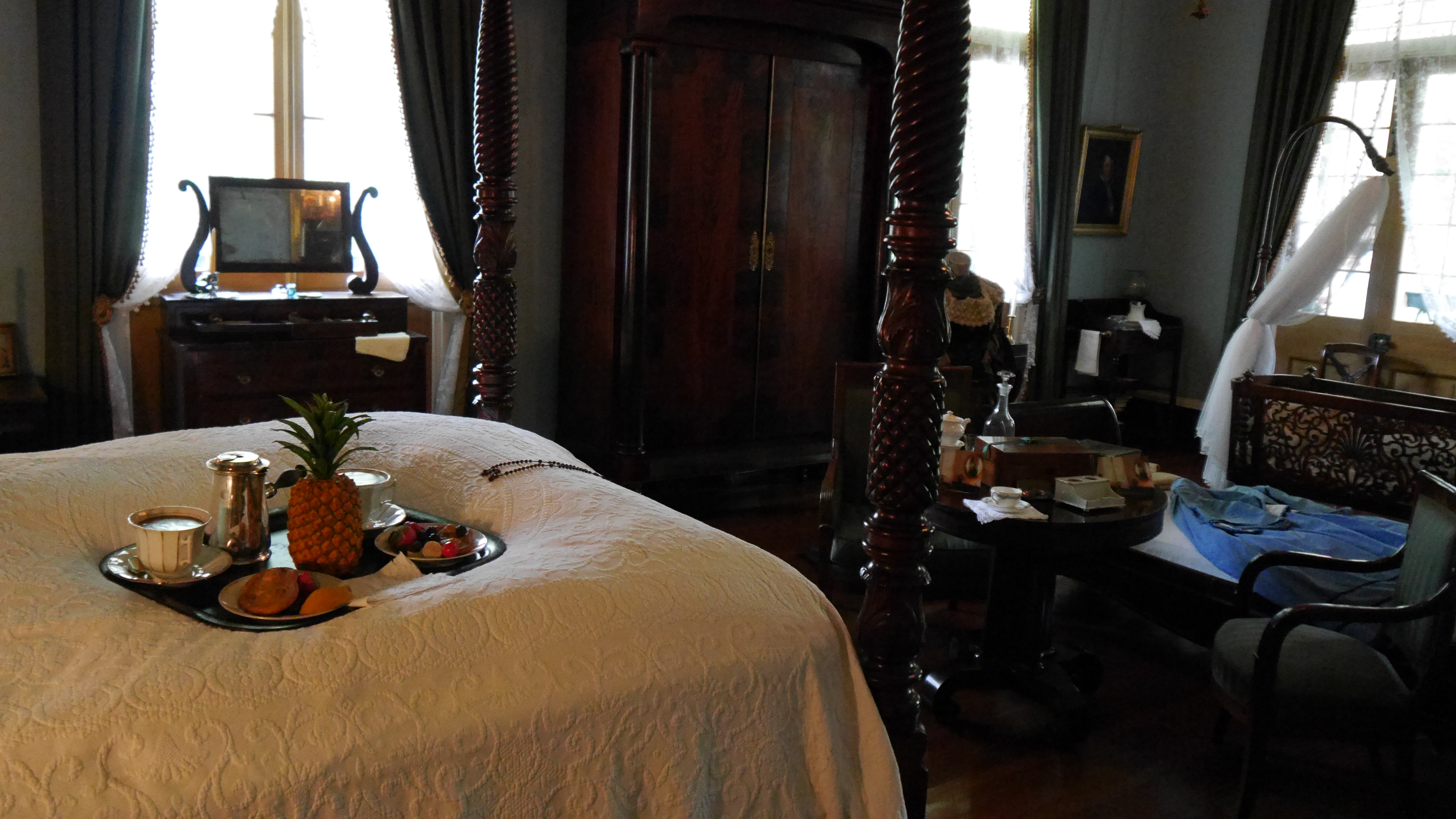
One of the guest bedrooms at Oak Alley. The pineapple on the bed is also significant. Apparently, there was an old Southern tradition of leaving a pineapple on a bed when you wanted a guest to leave but didn’t want to confront them about it. If you woke up to find a pineapple, you knew you had outstayed your welcome.
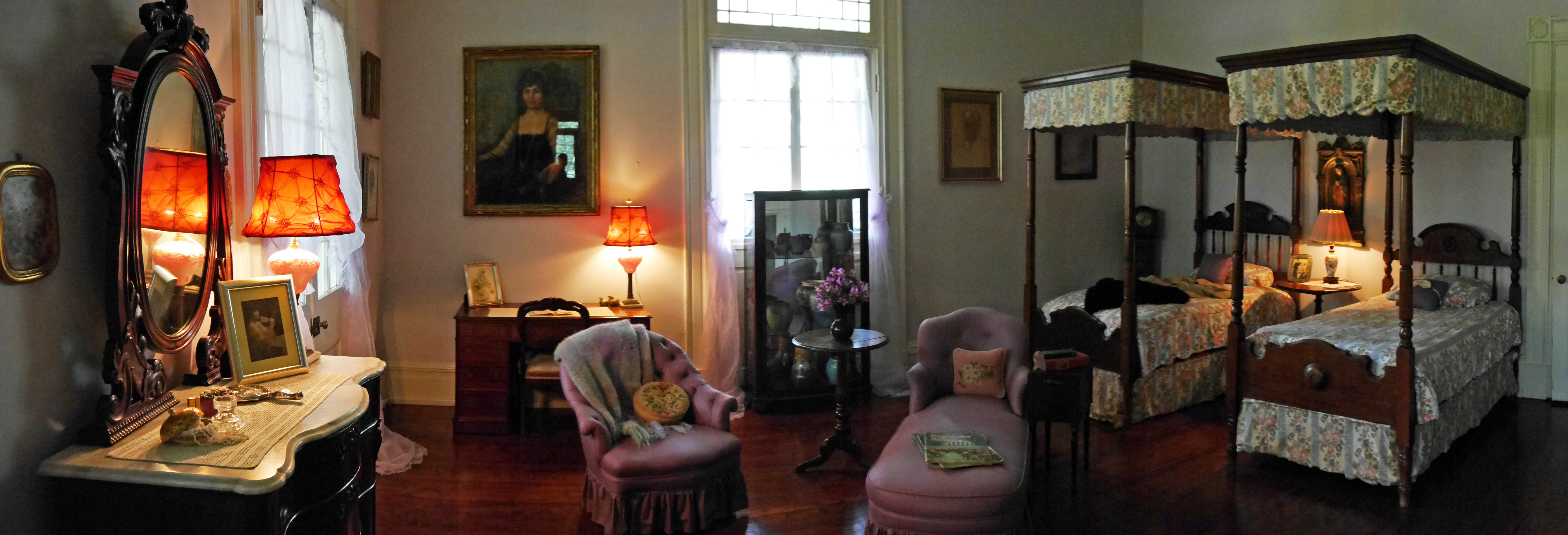
Another bedroom in Oak Alley.
We had such a glorious time in New Orleans. Its food enlivened our tastebuds and its music stirred our souls. It has a style and strangeness not found in other cities. It welcomes all and judges none. I think the best summation of the place comes from New Orleans journalist Chris Rose from his book 1 Dead in the Attic: After Katrina:
“I’m not going to lay down in words the lure of this place. Every great writer in the land, from Faulkner to Twain to Rice to Ford, has tried to do it and fallen short. It is impossible to capture the essence, tolerance, and spirit of South Louisiana in words and to try is to roll down a road of clichés, bouncing over beignets and beads and brass bands and it just is what it is. We dance even if there’s no radio. We drink at funerals. We talk too much and laugh too loud and live too large and, frankly,we’re suspicious of others who don’t. If there was no New Orleans, America would just be a bunch of free people dying of boredom.”
 ourtripyall.com