
Virginia – where we saw lots of aeronautical firsts and lasts.

Steven F. Udvar-Hazy Center
After seeing the Smithsonian Air and Space museum in Washington, we were keen to see its bigger sister in Virginia. We had an entertaining taxi ride to Dulles Airport with our first female taxi driver. She was a Sudanese woman who told us of her experiences as an American immigrant and profusely kissed our hands when we arrived at Dulles Airport.
My first impression of the second Smithsonian National Air and Space Museum was of an airplane nerd’s bedroom on steroids. Instead of hanging Airfix models on fishing line, these guys hang full size planes on steel wires.
We did a great tour with a retired fighter pilot who knew every plane and spacecraft inside out. To conclude, he bemoaned the state of piloting today. In his view, most combat pilots end up piloting drones before succumbing to the commercial sector. He said that “things ain’t what they used to be and ain’t what they should be.”
We didn’t have time to see the rest of Virginia but learned it was the birthplace of more US Presidents than any other state.
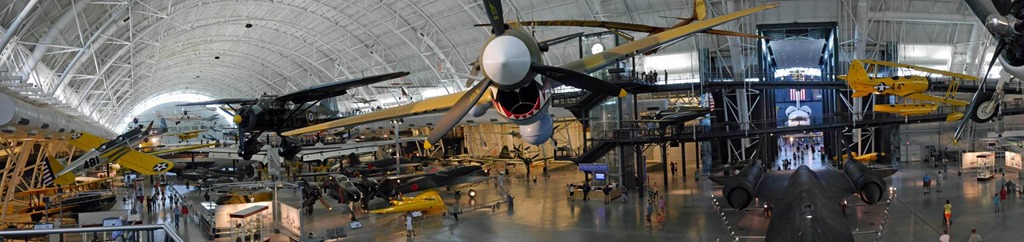
This ain’t Airfix!

The Lockheed SR-71 “Blackbird” – introduced in 1966 and still the fastest jet plane in the world at a highway-burning speed of 3,530km per hour

A beautiful 1912 Fowler-Gage biplane.
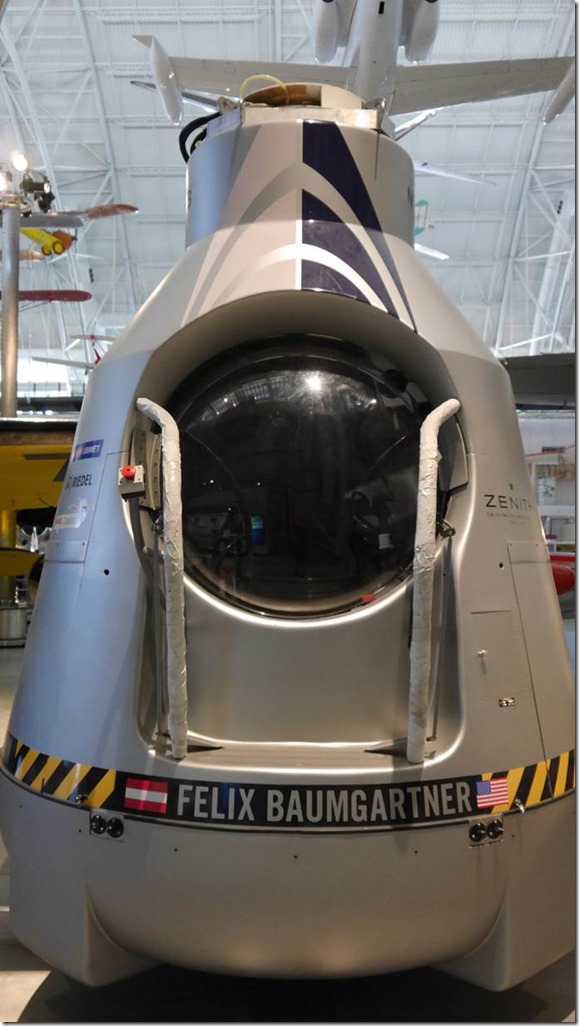
Felix Baumgartner’s capsule which he jumped out of to set the world’s sky diving record, diving 39km to earth. Click here to see the film clip.
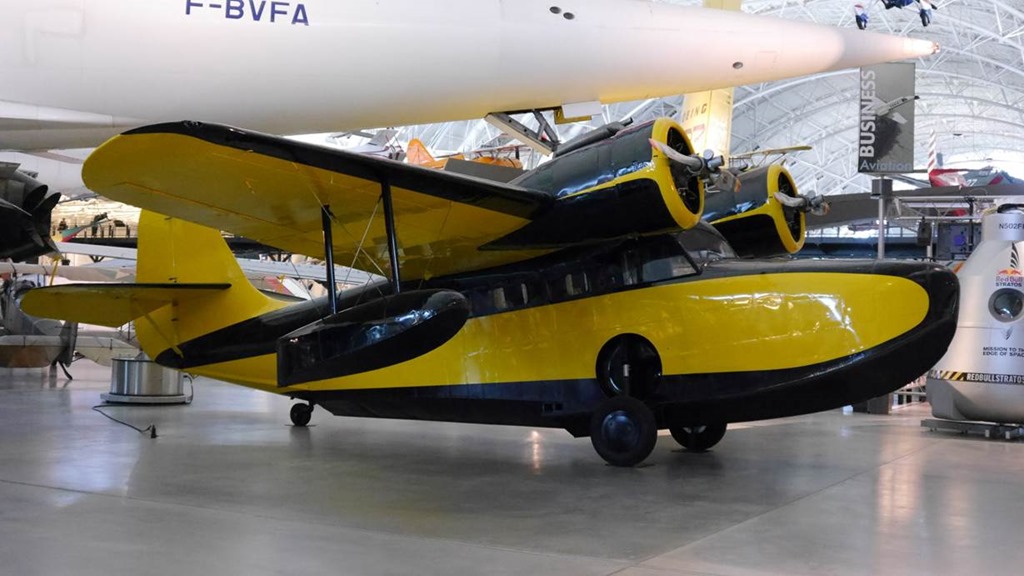
1937 Gruman G-21 Goose – The world’s first single wing airplane.

The gondola carriage from a 1925 Goodyear Pilgrim blimp.
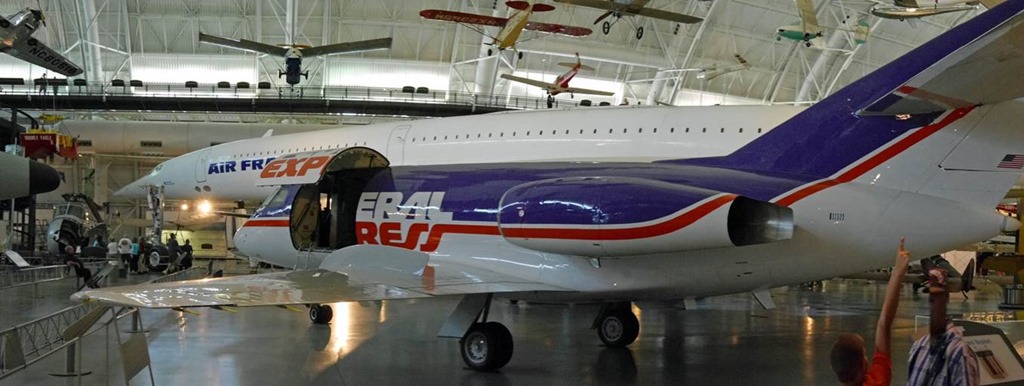
FedEx’s first airplane – a 1973 modified Dassault Falcon 20 named Wendy after the daughter of Federal Express founder Frederick W Smith. All subsequent FedEx planes were named after FedeEx employees.
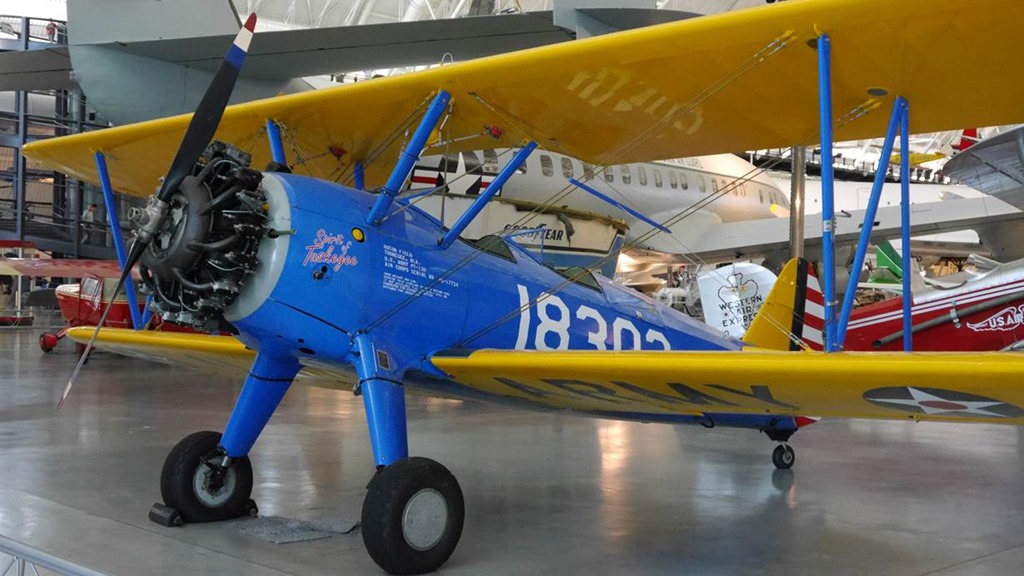
The Spirit of Tuskegee training plane as used by the famous all black World War II air squad.
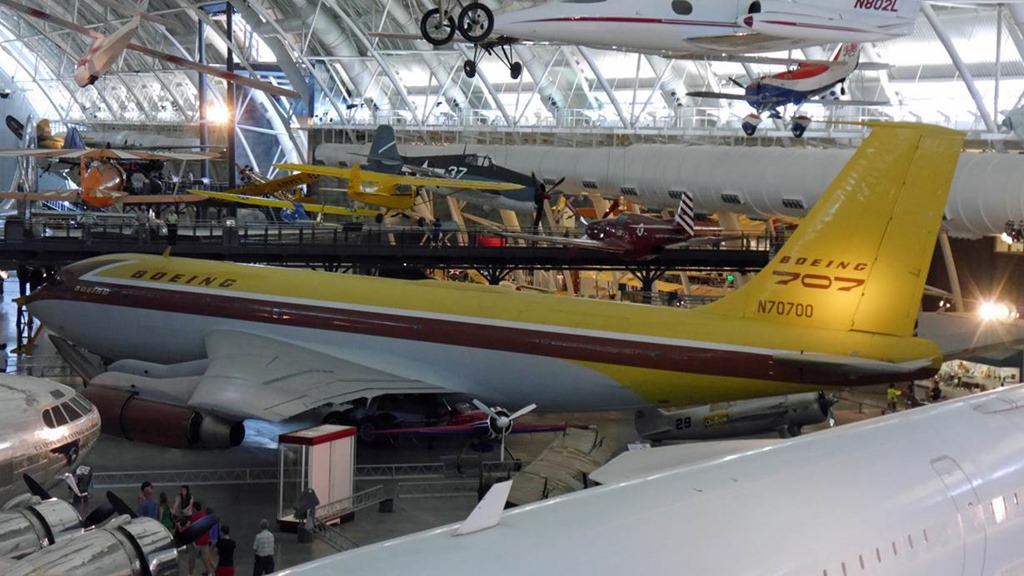
The Dash 80 prototype for the first Boeing 707 commercial airliner.
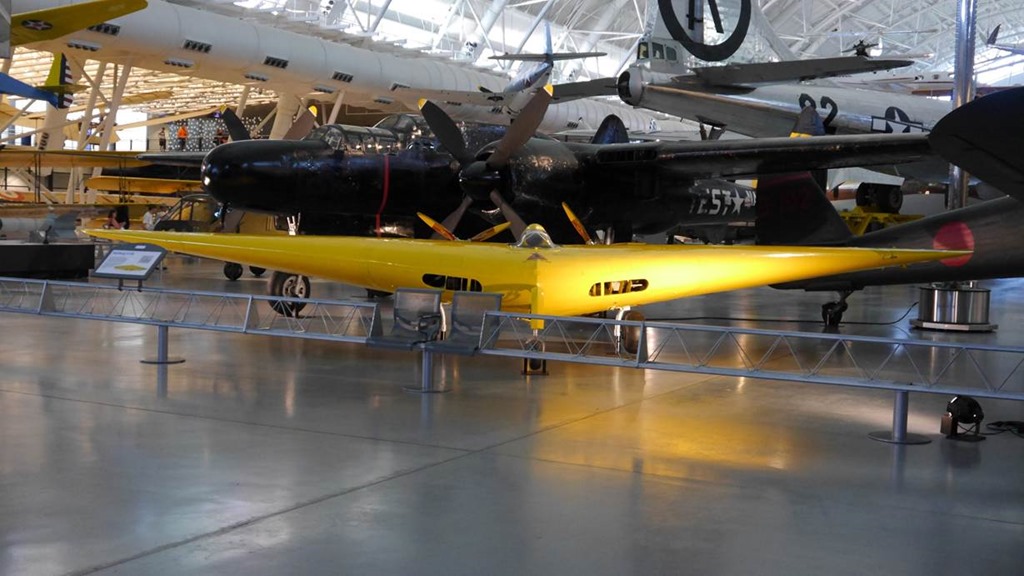
The 1940 Northrop N-1M – The world’s first flying wing and precursor to the B2 Stealth Bomber.

A beautifully shiny 1938 Boeing 307 Stratoliner Clipper – one of the first commercial passenger planes and favoured by Howard Hughes.

A 1944 Messerschmitt ME163 B-1a Komet – A bizarre Nazi-designed plane introduced in the dying days of World War II. It is the world’s first and last rocket powered jet. This is for a reason as the rocket thrust gave the plane speed but took away accuracy. As one German pilot said at the time “ït is like being in charge of a runaway train.” There was also the minor problem of being strapped to 120 litres of volatile rocket fuel.

The Enola Gay – the Boeing B29 bomber that dropped the bomb on Hiroshima in 1945. Named after Enola Gay Tibbets, the mother of pilot Colonel Paul Tibbets.

This is the quarantine centre that the Apollo 11 astronauts stayed in for 21 days when they returned from the moon in 1969. The fear at the time was that the astronauts could have been infected with deadly “moon bugs” that could destroy humanity.

A glimpse inside the quarantine facility.
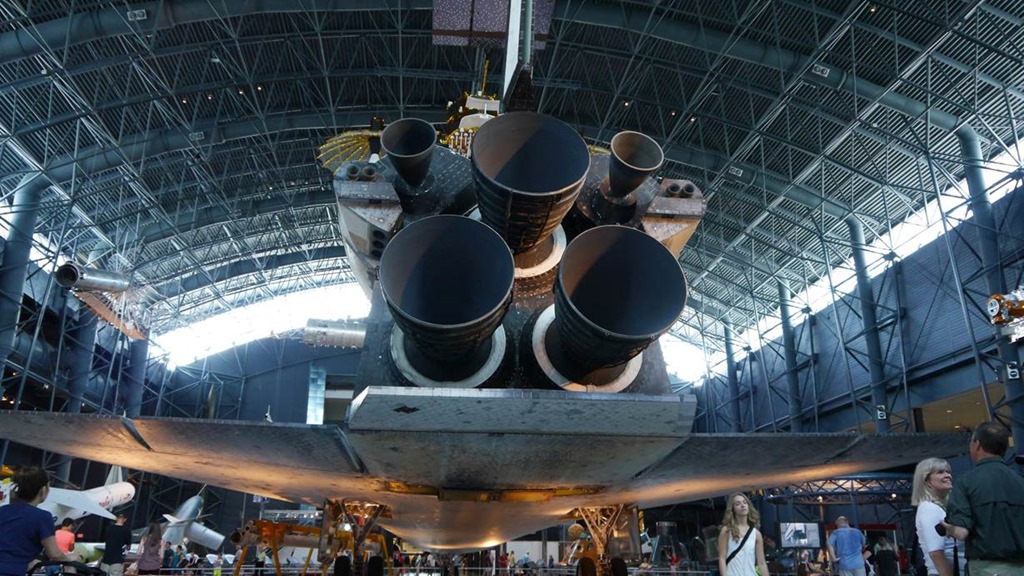
1984 Space Shuttle Discovery – I didn’t realise that it was named after Captain Cook’s ship, the HMAS Discovery which he sailed to “discover” Hawaii and other Pacific islands already known by their inhabitants.
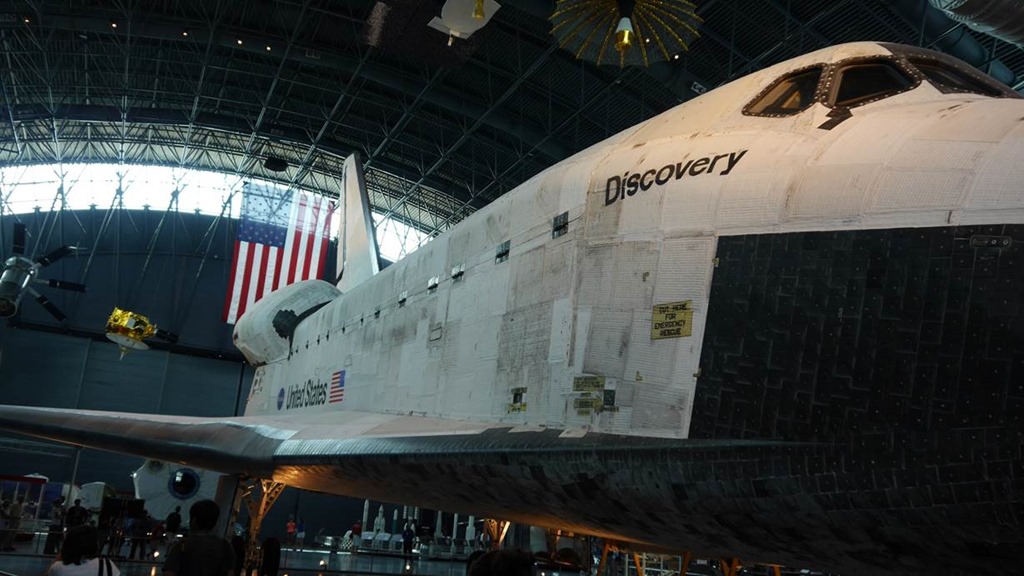

I was surprised at how flimsy the cloth-like tiles of the space shuttle looked when up close. They are apparently made of a mix of graphite and rayon and can withstand temperatures of up to 1,510 degrees celsius. Or they could just be cotton and the whole thing was faked in a Hollywood studio.

These are the underbelly tiles which are all unique in their dimensions and numbered to fit precisely on the space shuttle.
 ourtripyall.com