
Massachusetts – Where we embraced revolution, saw commercial buildings that people love, witnessed bureaucracy having a laugh at itself and ate lots of cheap seafood.

Leaving Australia
2013 was an atrocious year. My mother was diagnosed with cancer and died eight months later. I had left my job because I hated it while Michelle had kept her job but was hanging out for long service leave. Both of us were battling vainly the old ennui. Harrie was entering the obnoxious realm of tweenagerdom and was seeking as much independence as possible while we were going mad micro-managing unimportant things in his life like food, sleep and basic domestic duties. We all needed something different. We all needed an adventure.
We had often talked about replicating the big overseas trip that my parents took me on when I was Harrie’s age. Now seemed as good a time as any to do it. But where to? Harrie was keen on either the USA or Japan. We liked the idea of big road trip, so we settled on the USA. Lots of planning later, we were at Sydney airport with a single carry-on bag each but already divested of much emotional baggage and ready for adventure.
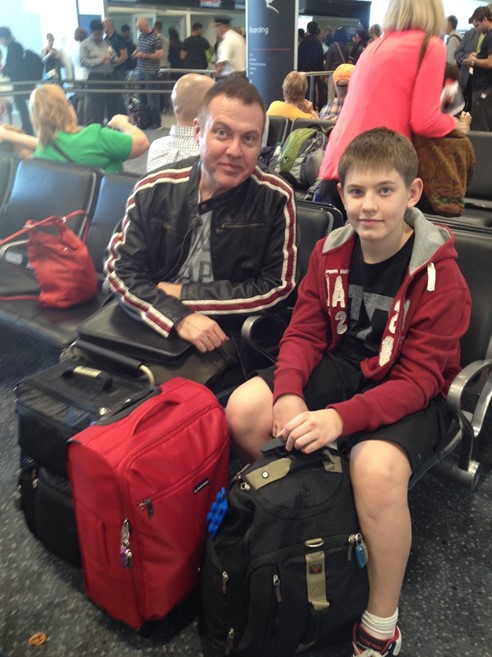
Waiting for a plane
When we were planning our trip, we wanted to mirror the progression of American history as much as possible. That meant starting in Boston where all the trouble began.
Boston
We arrived in Boston a few days before Independence Day and found patriotic fervor was at fever pitch as citizens took to the streets and taverns of Boston to express their support for the USA against oppressors, Belgium, in the World Cup. Draped in US flags and shouting “Yooh Ess Ayyy, Yooh Ess Ayyy”, it really gave a sense of what it must have been like during revolutionary times. Seeing congregations of rowdy patriots in the beautiful old taverns also brought to life the atmosphere of citizens rallying together to discuss unfair circumstances (Belgium trounced them).
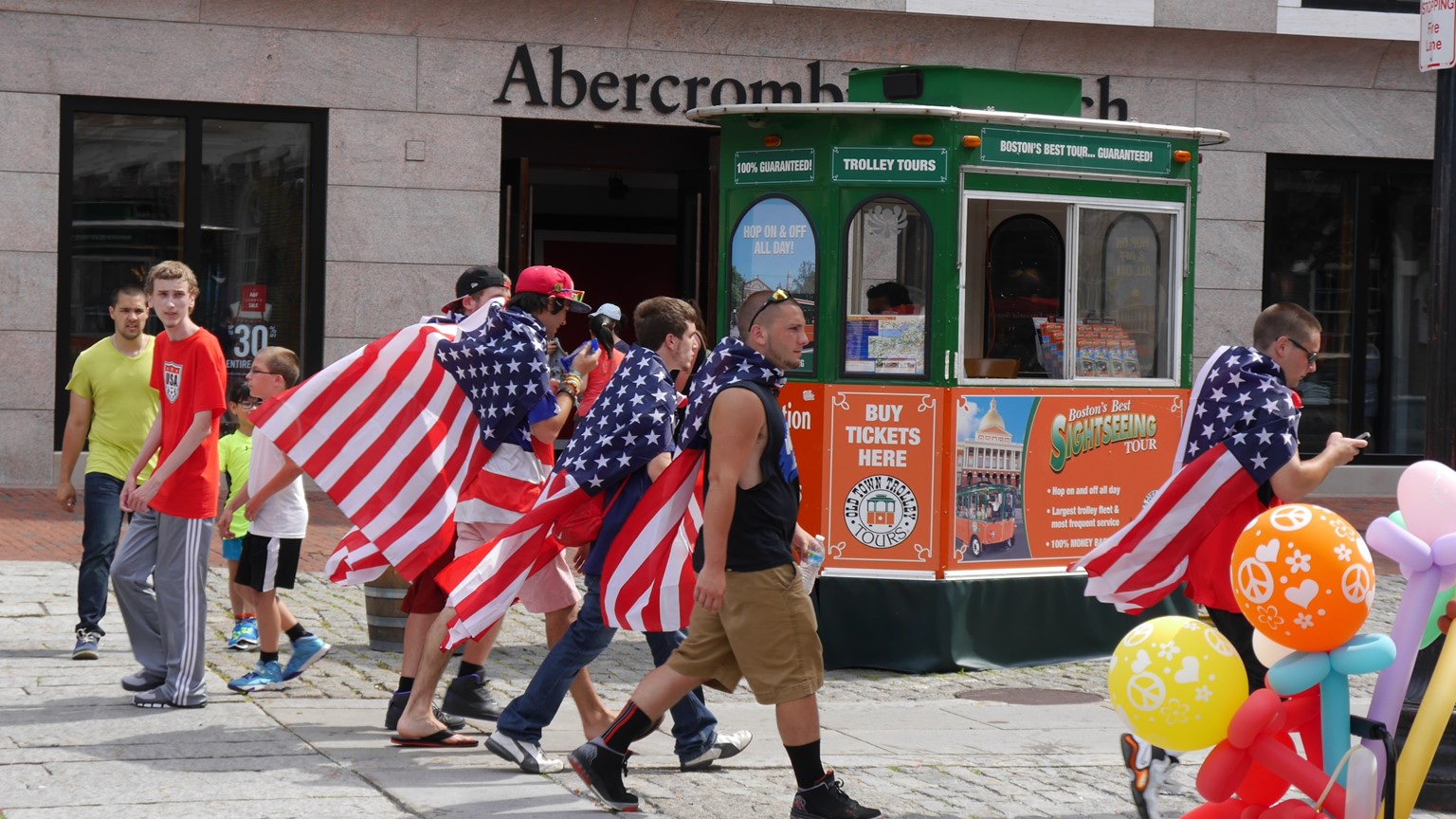
Patriots take to the street.
The Massachusetts State House
Built on founding father John Hancock’s cow pasture and with a copper dome built by Paul Revere’s company, this was the original house of government for the state of Massachusetts.
The place is steeped in history and oddities. Hanging in the House of Representatives is a statue of a fish known as the Sacred Cod. This was installed in 1784 to remind politicians not to pass any legislation detrimental to the Massachusetts fishing industry. There is another charming but forceful display in the Senate as well. Here, the display shows how the East was won with a gleaming British musket juxtaposed against a battered Boston farmer’s musket. This is to remind politicians with wavering courage that Bostonians can take on the world.
We also heard the story of William Francis Bartlett, who was a Union captain during the Civil War and who had carved out a fierce reputation for heroism and courage during battle. He was severely injured in almost every battle he fought because he always led the charge and became the obvious target for barrages from frontline infantrymen. Even the Union army thought he should be more careful. Despite losing his leg and having shrapnel in his wrists, he still kept coming back for more. It was at this point that I stated to question whether he was heroic or just a fool with a death wish. It got to the stage, that in one battle, Bartlett’s Confederate counterpart ordered his men not to fire on him out of respect. Either that or he felt sorry for his wife.

The House of Representatives

The Sacred Cod
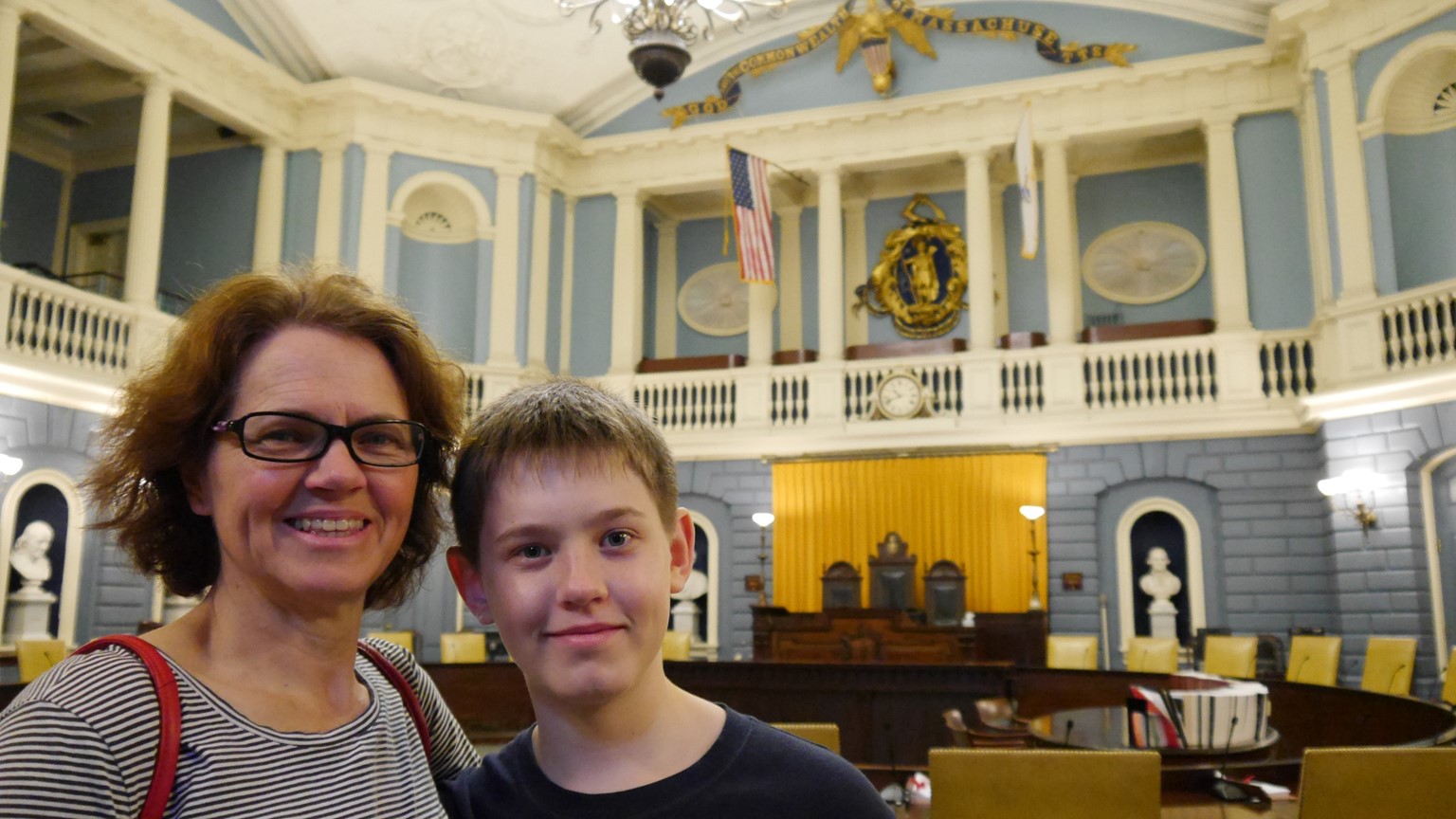
The Senate
Harvard University
We can now say we went to Harvard University but unfortunately we didn’t graduate… or even enrol. Instead, we went on a tour of the Harvard campus that was conducted by Harvard students. We were curious to know more about John Harvard the man. A statue of Harvard is prominently displayed looking handsomely erudite. It turns out that no one knew what Harvard looked like as no contemporary portraits survive so the artist who created the statue sculpted him as a chisel-jawed youth.
Born in England in 1607, John Harvard moved to America to become a pastor. He inherited a lot of money from his parents and as he never married, he decided to give it to the government to help add on a wing to a local college that had been set up in 1636. After Harvard’s substantial donation, they renamed the college after him.
In a jobs-for-the-boys move, John Harvard’s good friend Nathaniel Eaton became the first schoolmaster of Harvard College. Unfortunately, he was fired soon after for severely beating students and for making them eat turd pies (apparently goat poo was his favorite source of dung). Merit selection may have been a better way to go.
Harvard degrees start at US$60K a year which means people are either wealthy, in debt or have scored a scholarship.

Statue of John Harvard (that almost certainly doesn’t look like John Harvard). Apparently, students rub his foot for good luck before an exam.
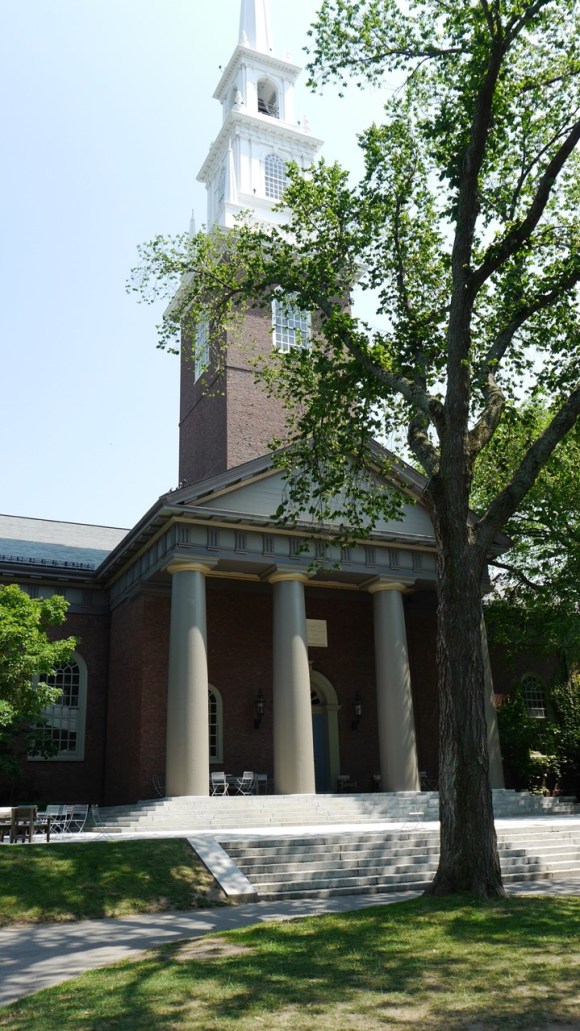
The halls of Harvard.
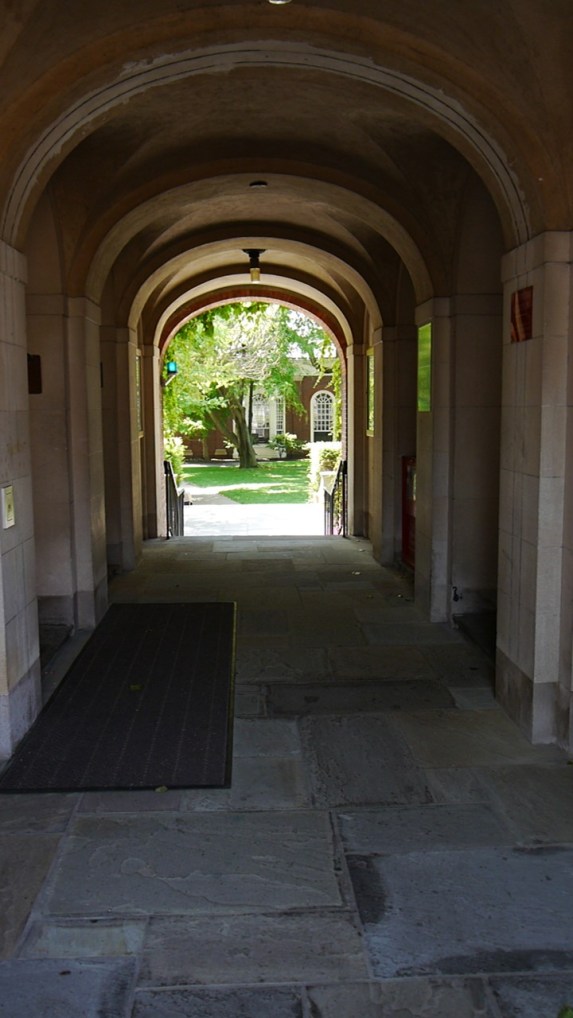

Harrie joins the Ivy League
More important than any academic achievements or old-boy alumni was standing in front of Comedy Hallowed Ground – the college house of Harvard Lampoon. Harvard Lampoon, which became National Lampoon, was founded in 1876 and is the second longest running humourous magazine in the world. Many great American comedic writers learnt their craft here and went on to write for shows such as Saturday Night Live, the Simpsons, Seinfeld, The Office and many more. Needless to say that Harvard alumni John F Kennedy and Barack Obama did not attend this house.

Harvard Lampoon Building – Yes, it is meant to look like a head with a helmet on it.
Kendall Square Station
We went to the Kendall Square train station to ride Boston’s MTA , the transport system made famous by the Kingston Trio song of the same name. The Massachusetts Bay Transportation Authority named their rail card the Charlie Card after the character from the song. I liked the fact that even though the song took the piss out of the MTA, the authorities in charge still had the good humour to embrace the insult. I thought it did that rare thing of making bureaucracies seem human.

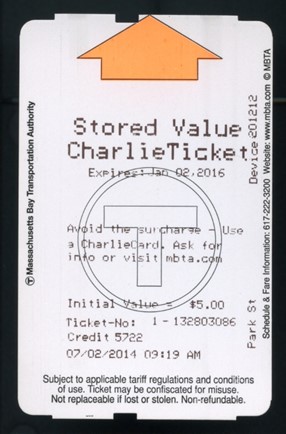
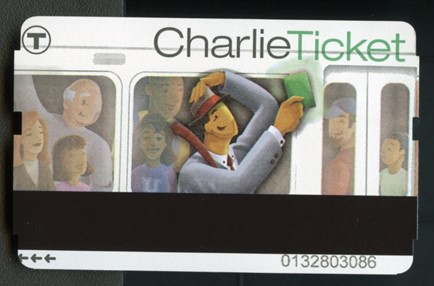
Massachusetts Institute of Technology
We got lost wandering around the sprawling campuses of the Massachusetts Institute of Technology. Apart from being involved with the invention of the digital computer, the Internet (its predecessor Arpanet as well as the World Wide Web consortium), video games, the fax machine, the graphical user interface, email, Ethernet, the transistor radio, and the microwave oven, graduates from MIT are pretty low achievers.
It is also interesting to look at the way the culture of the campus has changed since it was established in 1861. It was once the bastion of rocket scientists whose idea of a rocket was one that targeted an enemy. This gave way in the 1950’s to more enlightened uses of rockets to go to the moon and beyond. Then in the late 1960’s the rockets took on digital form in the guise of the first modern video game shoot-em-up, Space War (which was invented at MIT).
Fenway Stadium
From MIT, we visited the magical Fenway Stadium, home to the Boston Red Sox. Like a lot of things in Boston, it has warmth and charm that is absent from most cities. It was built in 1912 but rather than rip it down and build a shiny new stadium, it has been kept in all its tattered glory.
It is claimed to be America’s most loved stadium and that is because it embraces a continuity with the past. There is a special red seat where Ted Williams knocked a spectator unconscious. There is a hidden Morse code message in the mechanical scoreboard (the last mechanical board in the US and operated by three people during a game). There are generations of families who buy the same seats their parents and grandparents sat in (and yes they are the same old wooden seats). This is why people love it unlike your regular ANZ/Telstra/Allphones/Acer stadium which are interchangeable and forgettable. To feel the love, listen to Jonathan Richman’s song about the Fenway area.
Harrie bought a Boston Red Sox cap that he wore it every day we were away. As we travelled further west, people would take one look at Harrie and assume we were from Boston. This would often lead to jibes of “hey Boston!” and thus Boston became Harrie’s new nickname.
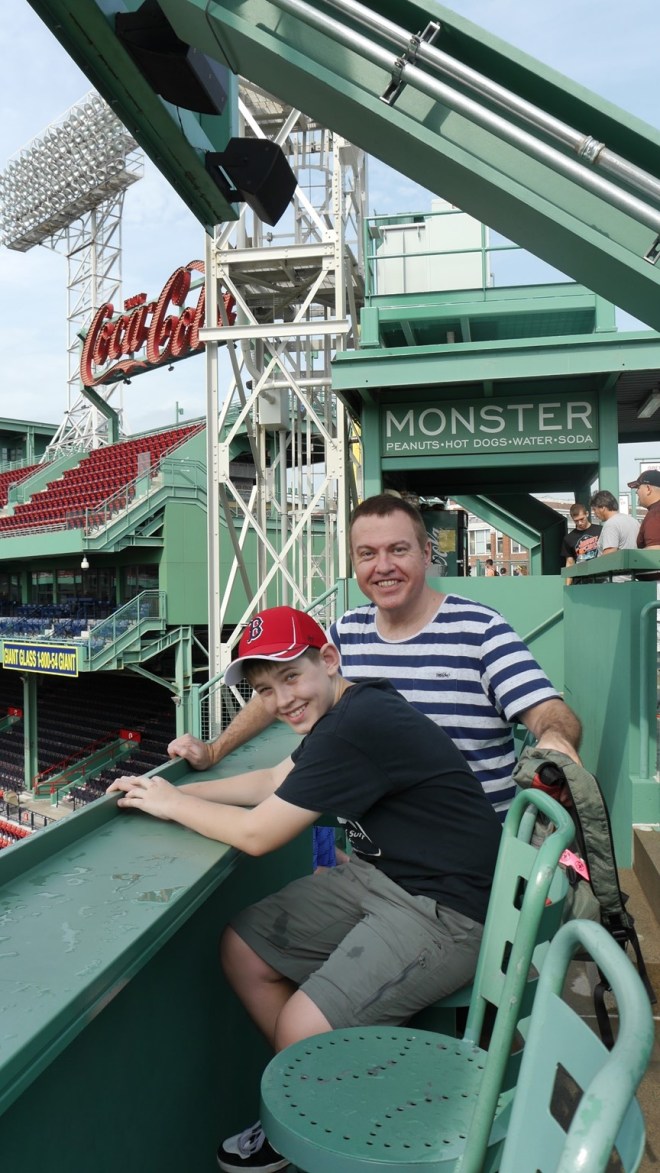
The Green Monster seats high up at the top of the stadium


The great Ted Williams -great in that he was a good guy as well as a great sportsman
The Streets of Boston
The streets of Boston were pretty and vibrant. History was all around us but we were also very much aware of the present. And for seafood lovers like me, it was nothing short of paradise. Maine lobsters are delicious and cost less than ten dollars at a Boston fish shop. In fact, lobsters are so cheap here that they are mainly served as lobster rolls (much like the ubiquitous chicken roll in Australia) for about eight dollars. Beautiful clam chowder can be had for just under five dollars a bowl which is served in a cob of freshly baked bread.
One night, we went the whole whale and ordered a seafood platter for two for about fifty dollars. It came with two lobsters, two large crabs, about twelve jumbo shrimp (the equivalent of king prawns), calamari, a large clam chowder, a large fish and lots of scallops with an array of condiments and eating utensils. It was all too much and all too good.
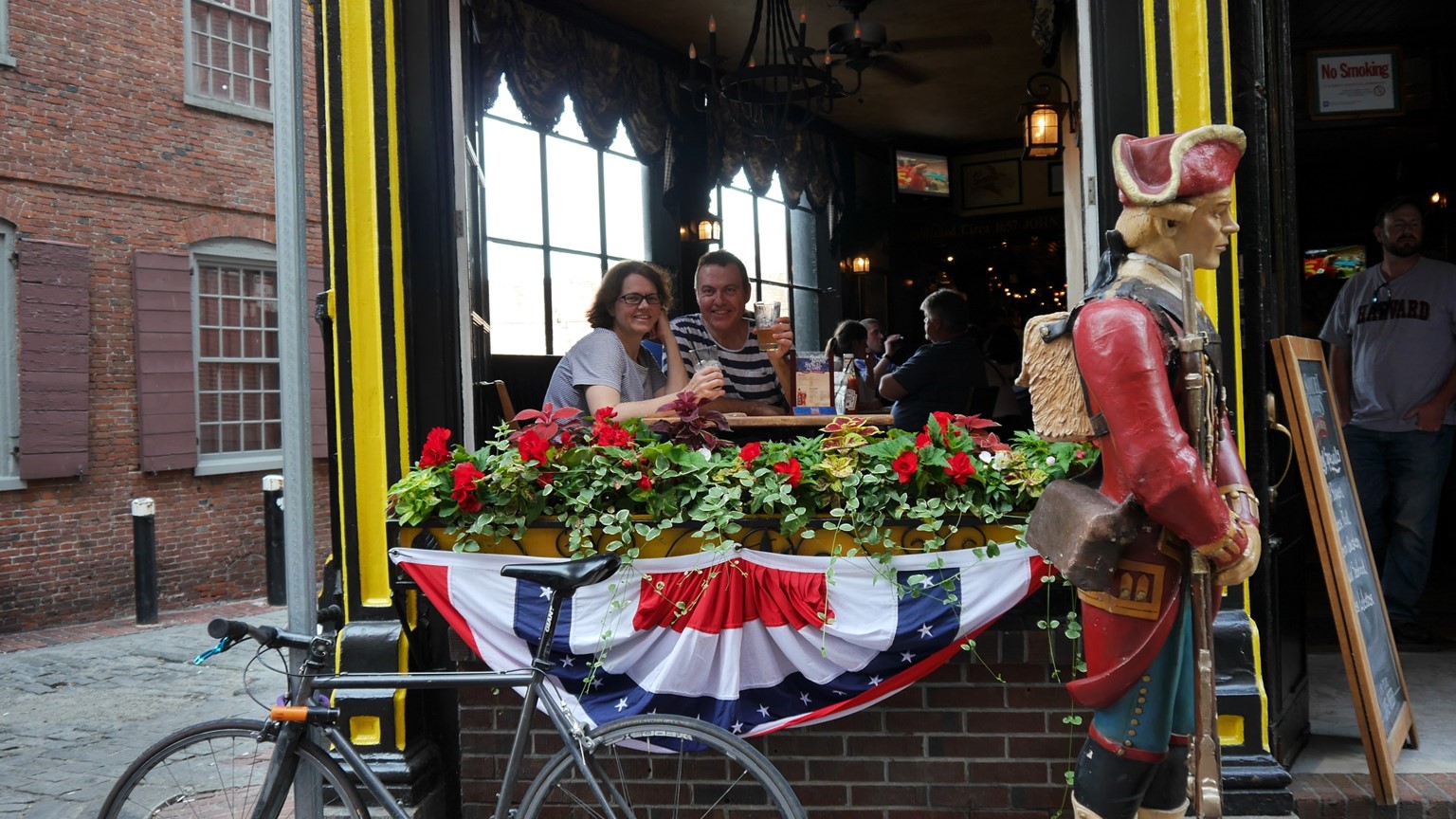
Having an ale at The Green Dragon Inn.
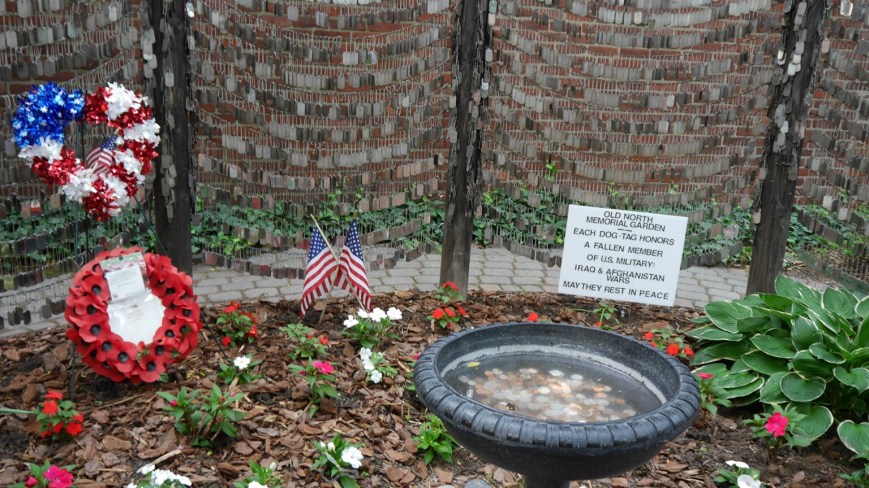

The dog tags from a war memorial made for a beautiful photo

A Subterranean Homesick Blues kind of alleyway

Street performers outside Faneuil Hall

Harrie gripped by the revolutionary spirit throwing tea into Boston Harbor.

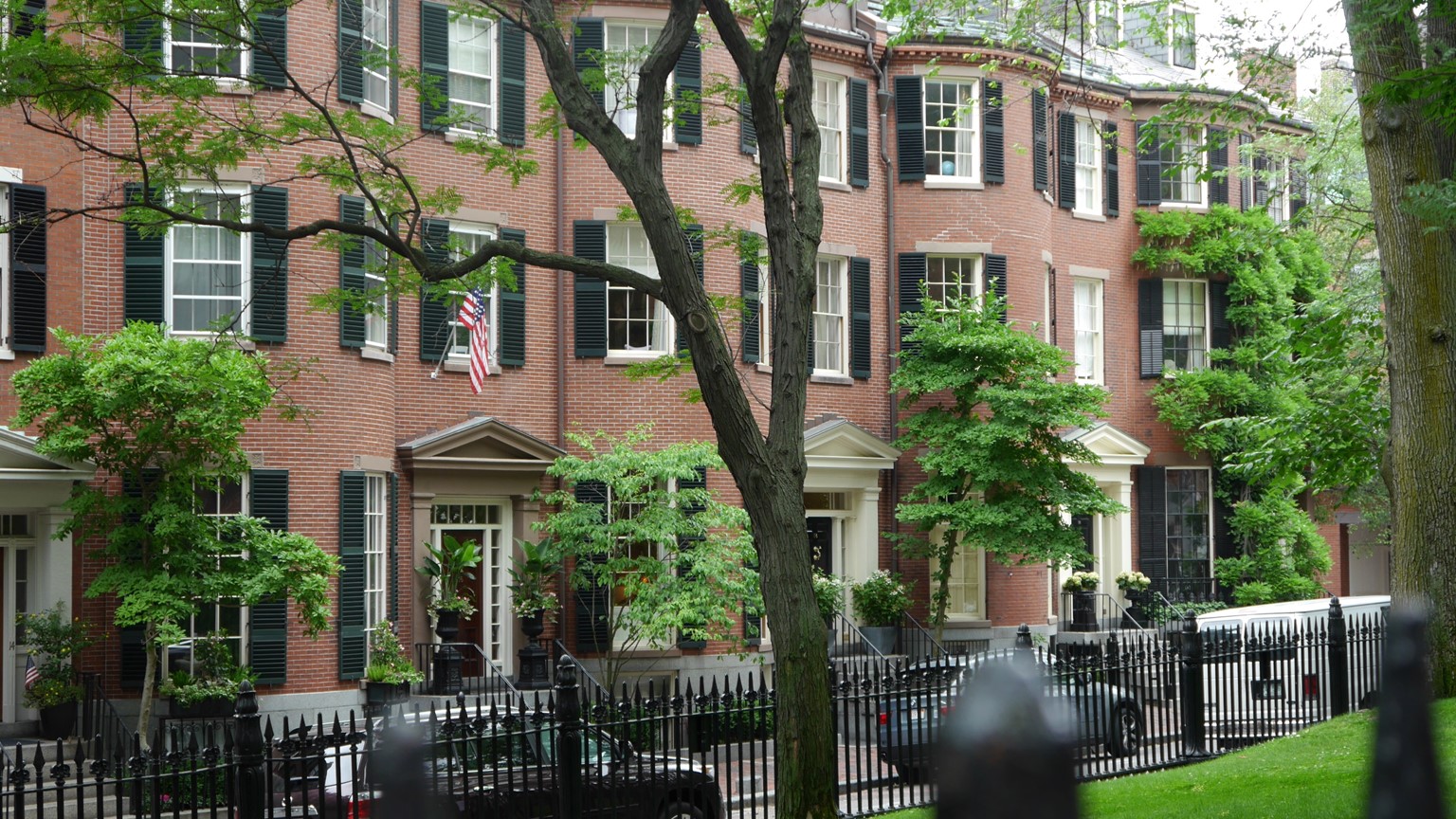
Beacon Hill, where all the wealthy Bostonians live (John Kerry lives here).

The beautiful Acorn St
Having walked the Freedom Trail and had our heads filled with revolutionary notions we headed off to Philadelphia for Independence.
 ourtripyall.com